



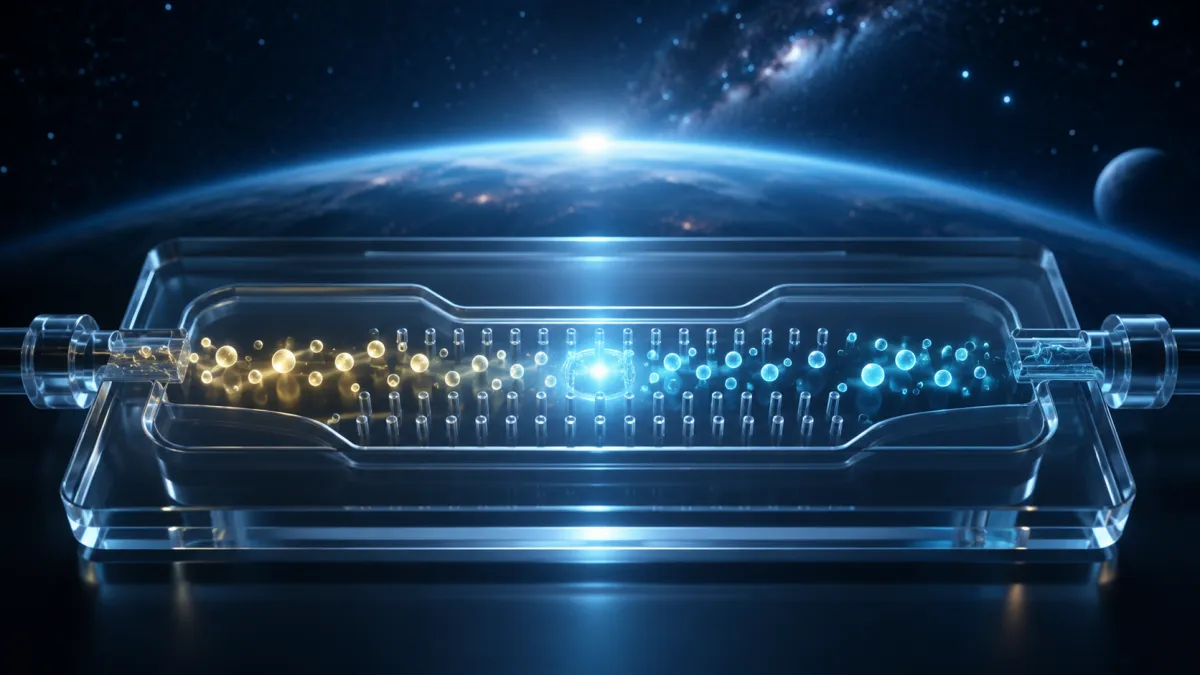
Revolutionary Microfluidic Technology Unveils Exosome Extraction and Detection
Introduction
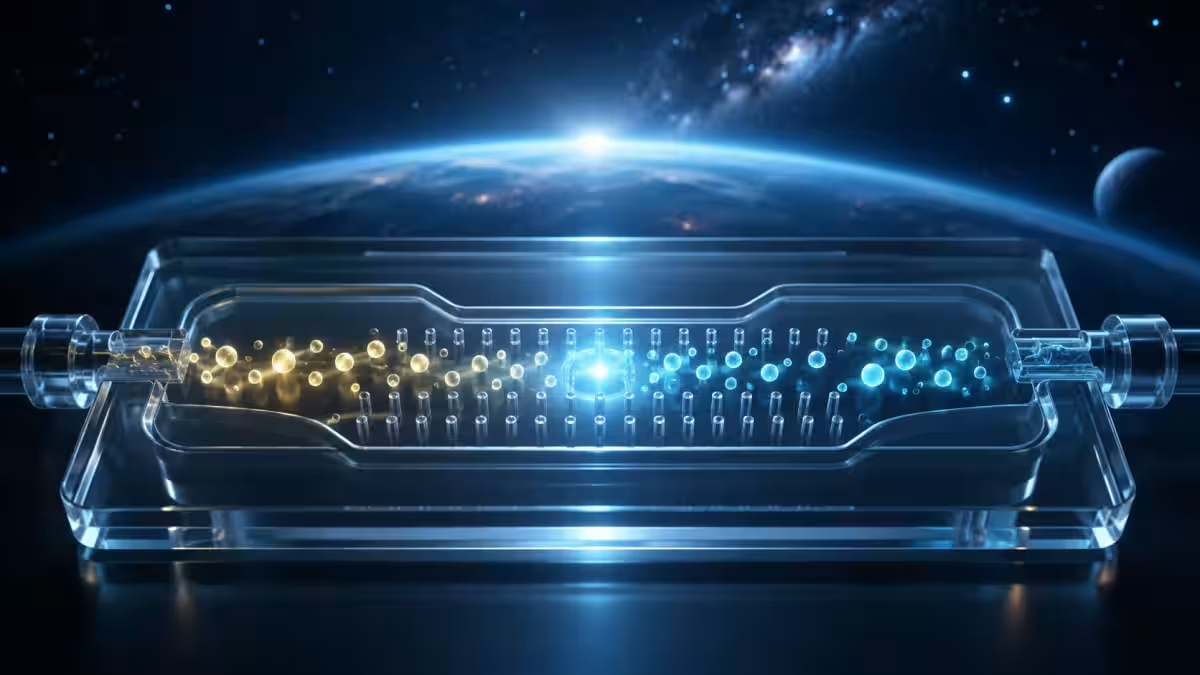
In a significant advancement in the field of biomedical research, Space Seed Holdings, located in Minato, Tokyo, and its affiliated company, Regenerator Soup Co., have jointly filed a patent application regarding an innovative microfluidic technology. This technology simplifies the extraction, detection, and retrieval of nano-particles such as exosomes from bodily fluids like saliva and plasma. The patent application number is 特願2026-120790, and it was made in collaboration with Yodaka Laboratory, a specialist in microfluidic technology based in Kawasaki, Kanagawa.
Background
Exosomes and extracellular vesicles (EVs) are essential for cellular communication and are recognized as potential biomarkers for various diseases. Traditionally, extracting these nano-particles required large-scale equipment, such as ultracentrifuges, followed by separate observation and measurement processes. This separation led to significant limitations in terms of time, resources, and sample quantities.
The Innovation
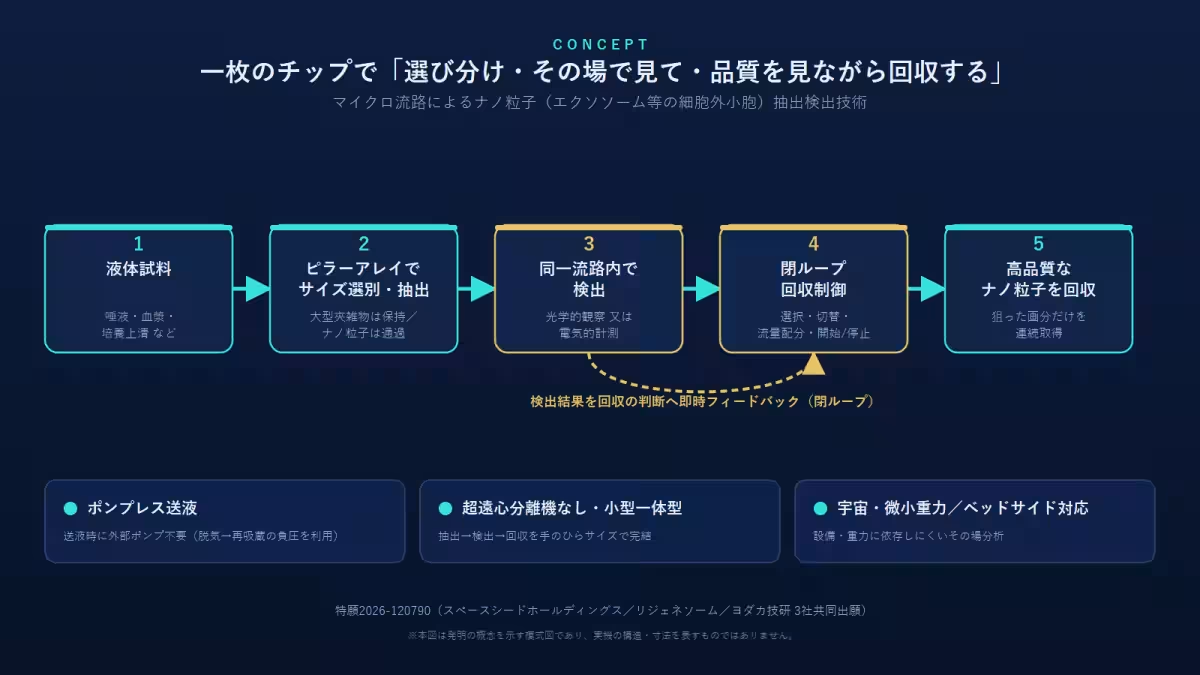
The new invention integrates several critical processes into a single microfluidic device:
1. Selective Extraction: By employing a pillar array structured in microchannels, nano-particles can be separated and extracted based on size directly from liquid samples.
2. In-Situ Detection: The same microfluidic setup allows for optical observation and electrical measurement of the extracted nano-particles. This dual-approach ensures a comprehensive analysis of particle characteristics.
3. Closed-Loop Recovery Control: The system uses information obtained from detection (e.g., quality, particle number, size, intensity, and purity) to govern the selection and management of the collected fractions. This direct feedback mechanism enables continuous collection of samples that meet specific quality criteria.
This revolutionary system embodies a core principle: detecting while controlling recovery. With immediate verification of nano-particle quality, the process allows for targeted collection of desired fractions continuously.
Compact Design
Another remarkable feature of this invention is its compact and integrated design. It operates without requiring external pumps by harnessing the properties of polymers that can expel and absorb gas, thereby creating a negative pressure to propel the liquid. Consequently, the need for bulky centrifuges or external pumping equipment is eliminated.
This approach means that the entire process from extraction to detection and recovery can be completed within a small device, making it less dependent on infrastructure like power supply or gravity. This trait is particularly beneficial for experiments in microgravity environments, such as space or during at-home medical analyses where immediate results are required.
Business Implications
Positioned as a deep-tech venture builder in the space sector, Space Seed Holdings aims to innovate at the intersection of space and medicine. Extracellular vesicles hold promise as biomarkers for aging and disease, as well as carriers for treatment options. The capability to promptly select, observe, and recover nano-particles from bodily fluids has practical implications for advancing research in the fundamental causes of aging and related conditions.
This technology is aligned with autonomous research initiatives in space and terrestrial settings. Devices capable of conducting complete analyses without reliance on gravity or extensive setups could serve as platforms for independent studies in orbital or confined environments. The collaboration between Space Seed Holdings and Yodaka has resulted in this collective invention, merging the strengths of three pioneering companies.
About Space Seed Holdings
Space Seed Holdings operates with the mission of transforming science fiction into reality. As a deep-tech venture builder focused on investment, research, and business creation, they are dedicated to addressing social challenges and implementing the necessary technologies for human habitation in space by 2040. One of their key initiatives includes the Fermentation and Longevity Fund program, which supports the social implementation of fermentation and longevity technologies. Learn more here.
Topics Health)
【About Using Articles】
You can freely use the title and article content by linking to the page where the article is posted.
※ Images cannot be used.
【About Links】
Links are free to use.