



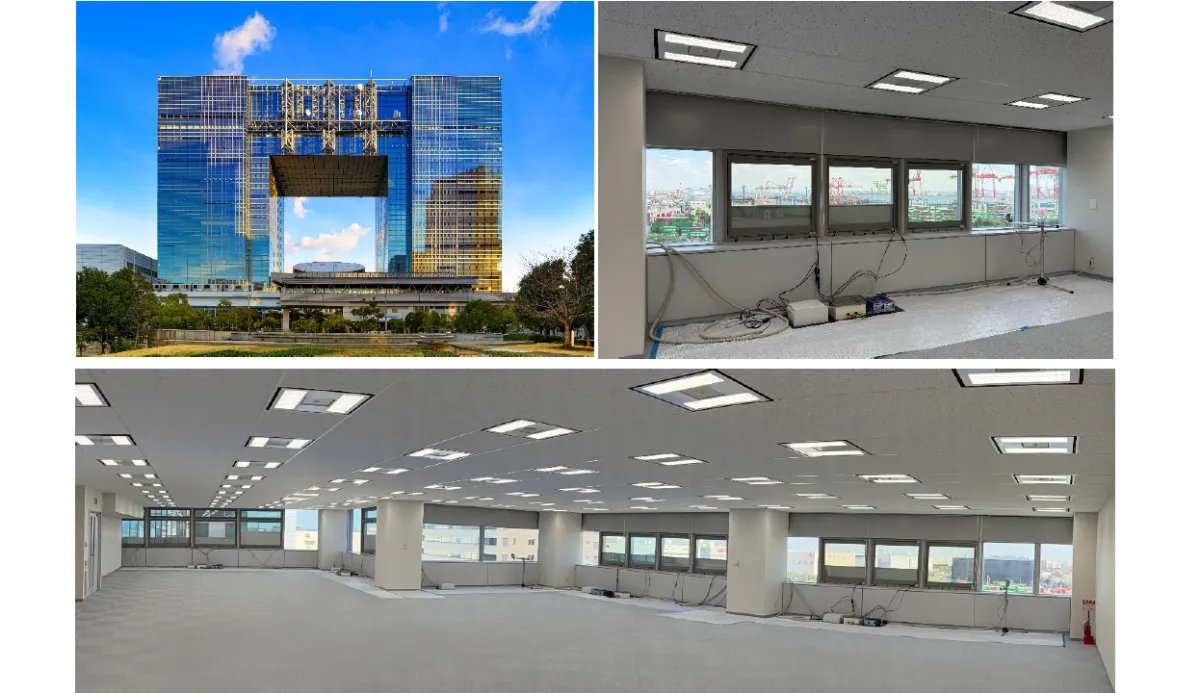
Implementation Testing of Building Integrated Photovoltaics at Telecom Center Tower
Advancing Solar Technology in Tokyo: BIPV Testing at Telecom Center Tower
YKK AP Corporation, headquartered in Chiyoda, Tokyo, has announced the commencement of implementation testing for Building Integrated Photovoltaics (BIPV) at the Telecom Center Tower in the Aomi District of Tokyo Bay. This initiative, focusing on next-generation solar technology utilizing film-type perovskite solar cells, aims to accelerate their social integration in construction materials.
Collaborative Efforts for Innovation
In partnership with Kandenko Co., Ltd., YKK AP is progressing in the development of BIPV that harnesses energy from windows and walls. Previous experiments have taken place in various locations, including the Akihabara demonstration house, the Sapporo Snow Festival, and at Haneda Innovation City. Through these trials, YKK AP has collected valuable data on power generation under various conditions and contexts, such as the effects of surrounding buildings and snowfall on vertically installed panels.
On August 5, YKK AP expanded their testing to real-world environments, specifically within the office building setting of the Telecom Center Tower, moving beyond the confines of experimental houses and labs. This new phase aims to determine optimal installation techniques for BIPV windows, while gathering data on power production through heat-reflecting glass.
Objectives of the Implementation Test
The project pursues several key objectives:
1. Power Generation Verification: Examine how heat-reflective glass windows, commonly utilized in office buildings since the 1990s, impact power generation.
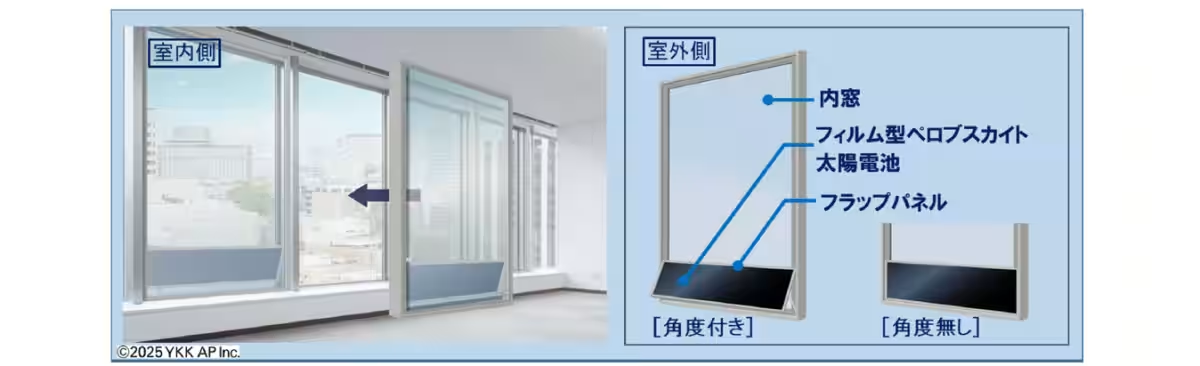
2. Long-term Installation Methods: Explore installation strategies for film-type solar cells, employing flap panels that allow for non-invasive mounting on existing windows.
3. Test Installation Methods: Determine effective ways to install BIPV windows in existing office structures.
4. Data Collection: Gather power generation data from multiple BIPV windows positioned at various orientations and angles.
5. Reflective Light Effects: Investigate methods to replicate the reflective light effects observed during the Sapporo experiments involving snow.
Through these efforts, YKK AP aims to enhance energy efficiency and carbon neutrality in architectural designs by integrating energy-generating features directly into windows.
Overview of the Telecom Center Tower Testing
- - Testing Period: August 5, 2025 – January 20, 2026 (tentative)
- - Location: Indoor area of Telecom Center Tower, Aomi District, Koto City, Tokyo.
- - Solar Modules: Initially, 12 solar panels will be installed, with plans for two additional panels during the testing phase.
- - Panel Specifications: The setup includes nine film-type perovskite solar cells measuring approximately 1,100mm x 300mm, one measuring 900mm x 300mm, and two film-type silicon solar panels measuring about 1,200mm x 600mm for comparative analysis.
- - Window Installations: A total of 13 windows are expected, with further plans to add two more, of which 12 will feature BIPV technology.
This initiative marks a significant step toward realizing a future where solar energy generation becomes a standard aspect of building design, contributing to sustainable urban environments. YKK AP is committed to promoting energy generation solutions that not only insulate but also bring power production into our living spaces, supporting the broader goal of achieving carbon neutrality.
Topics Other)

【About Using Articles】
You can freely use the title and article content by linking to the page where the article is posted.
※ Images cannot be used.
【About Links】
Links are free to use.