



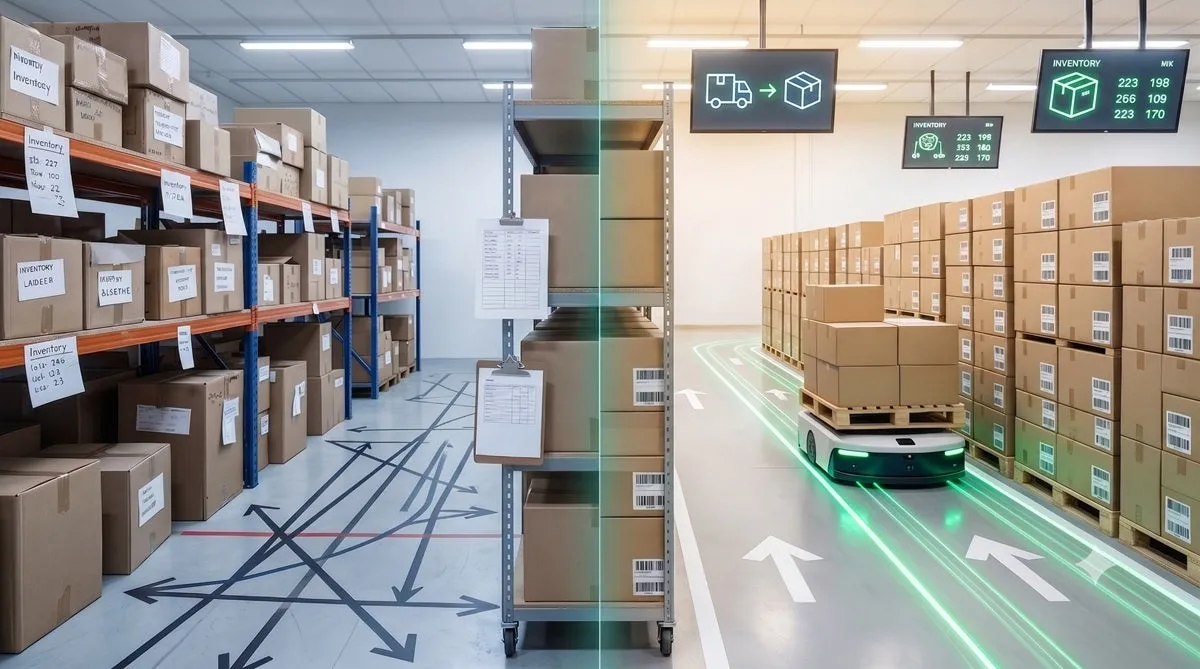
Understanding the Strength of Non-Thinking Warehousing in Logistics Management
SEAOS Unveils New White Paper on Efficient Warehousing
On July 8, 2026, SEAOS Corporation, based in Shibuya, Tokyo, released a groundbreaking white paper titled "Why 'Non-Thinking Warehousing' is the Strongest". This document aims to assist logistics managers faced with growing issues of labor shortages and dependency on experienced personnel in 3PL and in-house warehouse operations.
Overview of the White Paper
The white paper elaborates on warehouse design philosophies that don’t rely on veteran skills but rather focus on systematic processes. These methodologies are essential for ensuring operations can continue unimpeded for the next decade, making it crucial reading for operational managers and executives in the field. The philosophy introduced is aimed at minimizing distress caused by sudden employee turnover and pressure from clients regarding quality and costs.
Identifying Risks in Warehouse Operations
One key component discussed is the significant risk if a veteran manager were to unexpectedly leave. The document highlights that productivity often hinges on individual effort, leaving facilities vulnerable if key personnel become unavailable. This risk can be assessed objectively through the Operational Risk Diagnosis, which gauges a company’s level of dependency on its staff. The paper provides insights into ensuring that operations are not solely reliant on the motivations and capabilities of a few individuals.
The Trap of Unused Software Investments
SEAOS also provides compelling insights into the challenges that lead to underutilized IT investments. Many operations invest heavily in systems like WMS (Warehouse Management Systems), aiming to alleviate human error and reliance on traditional methods. However, misalignments between system developers and on-the-ground requirements often lead to a return to conventional Excel and paper methods. By sharing real-world experiences, the document illustrates how these traps can be avoided to create an efficient, technology-driven working environment.
Streamlining Processes Throughout the Organization
The white paper advocates for eliminating the time spent on decision-making by simplifying workflows and enhancing visibility within operations. By reducing the ‘searching, asking, and temporary storing’ times, the overall productivity can see significant improvement. Detailed methods and special procedures are explained for creating standardized practices that enable consistent output quality and cost-effectiveness in warehousing operations. This operational clarity not only aids in maintaining efficiency but also ensures that new personnel can reach productivity swiftly during peak periods.
Key Takeaways
- - The white paper guides operational heads and managers dealing with complexities in their logistics frameworks, especially amidst the labor shortages that threaten the industry.
- - It elucidates the systemic deficiencies that can cause reliance on 'superstar' employees by delivering a framework to distribute roles effectively across the team.
- - Explaining the concept of ‘non-thinking warehousing’, the document serves as a blueprint for managers aiming to transition to a more automated and less labor-dependent model.
For more in-depth insights, the complete white paper can be accessed at SEAOS’s dedicated resource page: SEAOS White Paper.
About SEAOS Corporation
Established in December 1997, SEAOS is a solution company specializing in logistics consulting for over 25 years. With a focus on the intersection of logistics processes and business value, SEAOS has partnered with numerous enterprises across manufacturing, retail, and eCommerce sectors, providing tailored solutions that address complex operational challenges. The company prides itself on a comprehensive suite of services, from strategic consulting and software development to managing logistics operations across two major locations in Japan. Their goal is to enhance efficiency through profound understanding of operational challenges and aligned strategic initiatives. By transitioning to a non-thinking warehouse model, SEAOS aims to reduce its clients' dependencies on individual skill sets, enhance productivity, and ultimately provide a robust solution to modern logistical demands.
Topics Business Technology)
【About Using Articles】
You can freely use the title and article content by linking to the page where the article is posted.
※ Images cannot be used.
【About Links】
Links are free to use.