



Understanding the Middle Ground: Japanese Housewives and Foreign Worker Acceptance
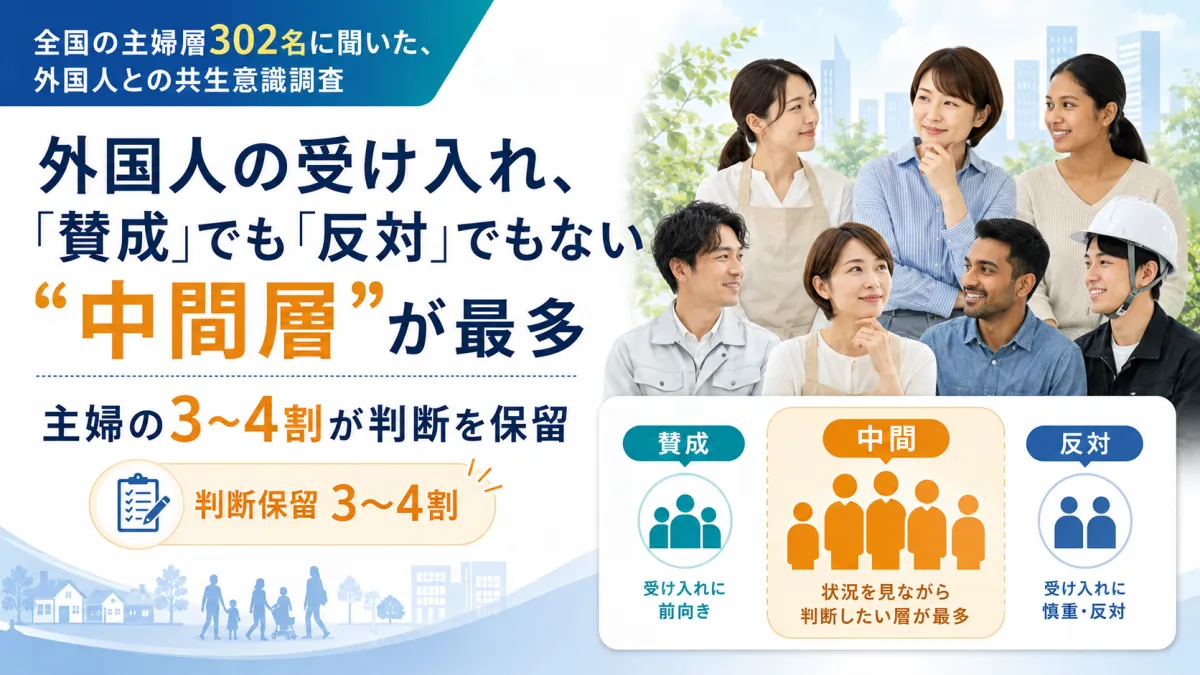
In recent discussions surrounding the acceptance of foreign workers in Japan, a noteworthy trend has emerged: a substantial middle group, comprising around 30-40% of Japanese housewives, remains undecided. This demographic, surveyed by the 21st Century Manpower Business Cooperative, reveals that opinions on this crucial topic are not merely divided into supporters and opponents.
The survey, which included responses from 302 housewives across Japan, shows that the most common response to inquiries regarding foreign worker acceptance was 'neither agree nor disagree.' This reluctance to take a clear stance suggests that many individuals are still uncertain and need more information or exposure to form a solid opinion.
This middle layer is not anti-foreign worker; rather, they simply lack the necessary information to form a complete view on the matter. The survey indicated that 50.5% of participants reported having little to no interaction with foreigners in their daily lives. This suggests a deficiency in personal experiences or knowledge, leading many to withhold judgment on the topic.
Conversely, this presents a significant opportunity: if this segment is given adequate information and personal experiences, they may be inclined towards understanding and acceptance. It's thus essential to focus efforts on engaging this middle ground, as they represent the potential for growth and acceptance of foreign workers in Japanese society.
The findings from the survey indicate that the future of foreign worker acceptance in Japan hinges on this middle ground, rather than on polarizing debates. The cooperative emphasizes the importance of providing accurate information and fostering local networks that allow for everyday interactions between foreign workers and the community. They advocate for a balanced approach, emphasizing educational initiatives prior to and support for foreign workers post-arrival. By fostering opportunities for foreign workers and local communities to connect and understand each other, the cooperative aims to build bridges that enhance mutual comprehension.
Before diving deeper, let’s outline the survey conducted by the 21st Century Manpower Business Cooperative:
This cooperative operates on principles of mutual assistance and aims to facilitate the acceptance of foreign technical trainees and skilled workers. They focus on bridging relationships between foreign nationals—particularly from countries such as Myanmar, Vietnam, and Indonesia—and member companies, ensuring compliance with regulations while providing comprehensive support. Their goal is to create an environment where both foreign workers and Japanese businesses benefit and contribute to a cohesive, multicultural society.
They strive for a stable cohabitation society that allows every foreign worker to thrive in Japan for as long as they wish. The cooperative emphasizes that creating a stable, welcoming environment for foreign workers contributes to broader social contributions and international cooperation.
In conclusion, addressing the concerns and needs of the middle ground is vital to the future of foreign labor acceptance in Japan. The collective role of the 21st Century Manpower Business Cooperative in demystifying foreign professionals and promoting intercultural understanding will significantly influence the prevailing attitudes towards foreigners in the years to come.
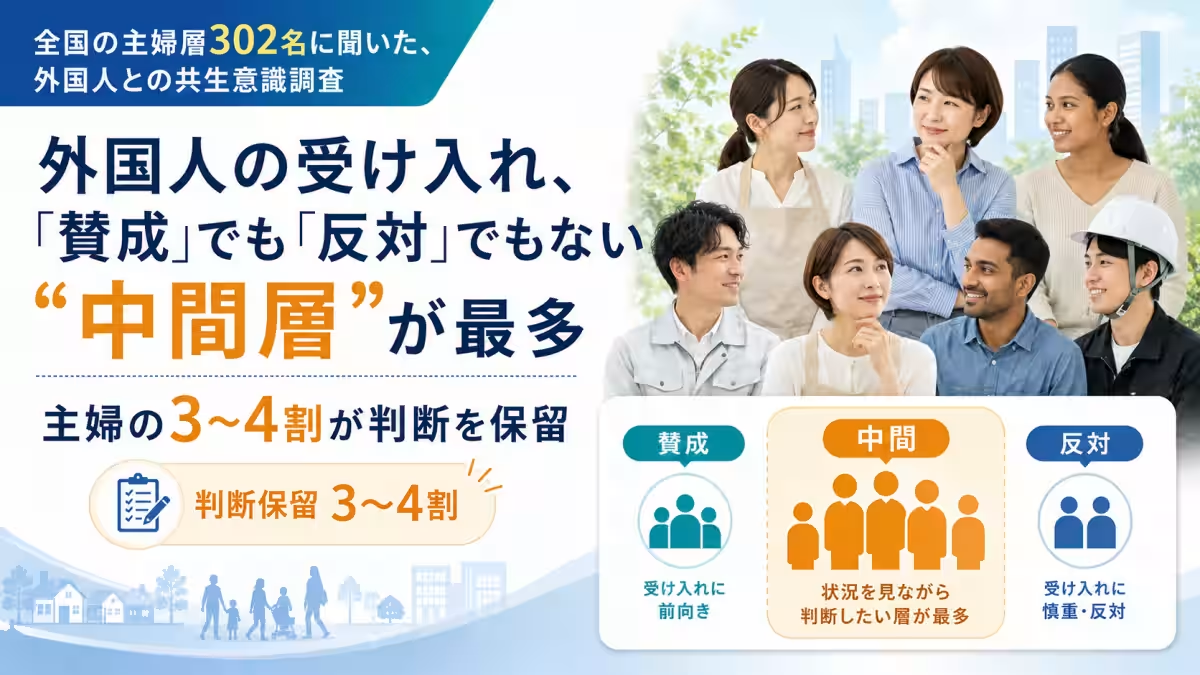

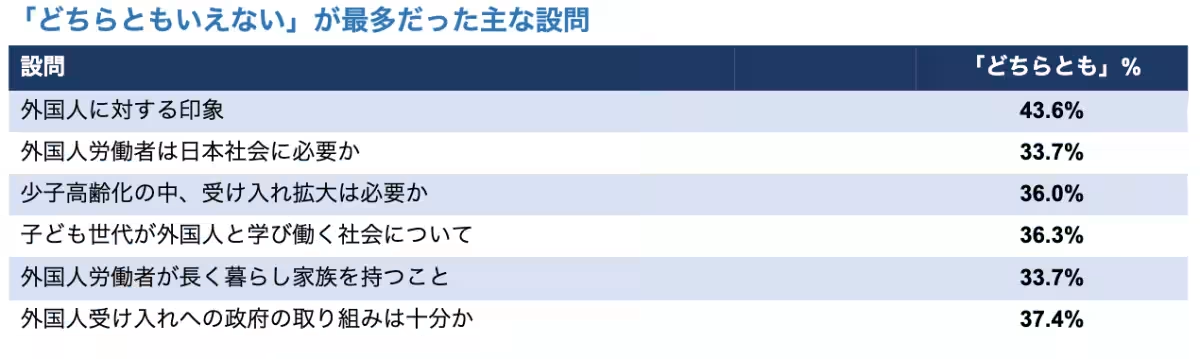
The survey, which included responses from 302 housewives across Japan, shows that the most common response to inquiries regarding foreign worker acceptance was 'neither agree nor disagree.' This reluctance to take a clear stance suggests that many individuals are still uncertain and need more information or exposure to form a solid opinion.
The Nature of the Middle Ground
This middle layer is not anti-foreign worker; rather, they simply lack the necessary information to form a complete view on the matter. The survey indicated that 50.5% of participants reported having little to no interaction with foreigners in their daily lives. This suggests a deficiency in personal experiences or knowledge, leading many to withhold judgment on the topic.
Conversely, this presents a significant opportunity: if this segment is given adequate information and personal experiences, they may be inclined towards understanding and acceptance. It's thus essential to focus efforts on engaging this middle ground, as they represent the potential for growth and acceptance of foreign workers in Japanese society.
Insights from 21st Century Manpower Business Cooperative
The findings from the survey indicate that the future of foreign worker acceptance in Japan hinges on this middle ground, rather than on polarizing debates. The cooperative emphasizes the importance of providing accurate information and fostering local networks that allow for everyday interactions between foreign workers and the community. They advocate for a balanced approach, emphasizing educational initiatives prior to and support for foreign workers post-arrival. By fostering opportunities for foreign workers and local communities to connect and understand each other, the cooperative aims to build bridges that enhance mutual comprehension.
Survey Overview
Before diving deeper, let’s outline the survey conducted by the 21st Century Manpower Business Cooperative:
- - Survey Title: Awareness Survey on Coexisting Societies with Foreigners among Housewives
- - Target Group: Housewives across Japan, both male and female
- - Valid Responses: 302
- - Method: Internet-based survey
- - Period: August 1-7, 2026
- - Conducted by: 21st Century Manpower Business Cooperative
The Vision of 21st Century Manpower Business Cooperative
This cooperative operates on principles of mutual assistance and aims to facilitate the acceptance of foreign technical trainees and skilled workers. They focus on bridging relationships between foreign nationals—particularly from countries such as Myanmar, Vietnam, and Indonesia—and member companies, ensuring compliance with regulations while providing comprehensive support. Their goal is to create an environment where both foreign workers and Japanese businesses benefit and contribute to a cohesive, multicultural society.
They strive for a stable cohabitation society that allows every foreign worker to thrive in Japan for as long as they wish. The cooperative emphasizes that creating a stable, welcoming environment for foreign workers contributes to broader social contributions and international cooperation.
In conclusion, addressing the concerns and needs of the middle ground is vital to the future of foreign labor acceptance in Japan. The collective role of the 21st Century Manpower Business Cooperative in demystifying foreign professionals and promoting intercultural understanding will significantly influence the prevailing attitudes towards foreigners in the years to come.
Topics Other)






【About Using Articles】
You can freely use the title and article content by linking to the page where the article is posted.
※ Images cannot be used.
【About Links】
Links are free to use.