



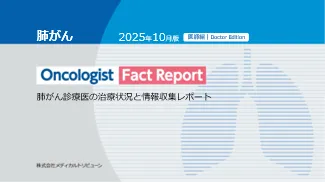
Visualizing the Frontlines of Lung Cancer Treatment with Oncologist Fact Report
Visualizing Lung Cancer Treatment Landscape
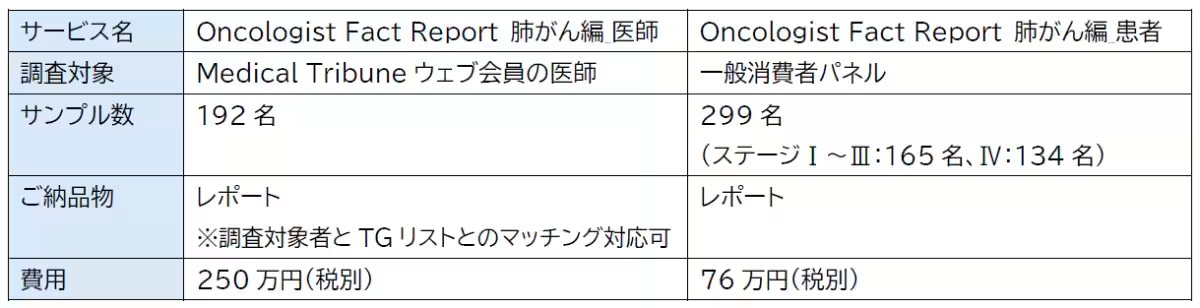
In an important move for the oncology field, Medical Tribune Corporation has unveiled the latest report titled "Oncologist Fact Report: Lung Cancer Edition (Physicians and Patients)." This groundbreaking report aims to bridge the gap between physician insights and patient experiences in lung cancer treatment through comprehensive surveys conducted among both professionals and those receiving care.
What is the Oncologist Fact Report (OFR)?
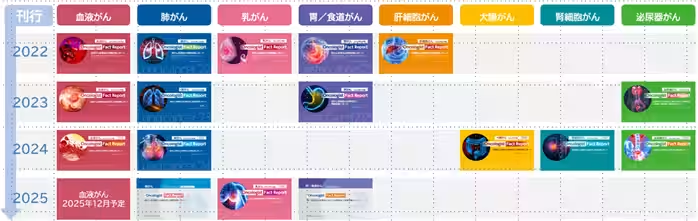
The OFR series is a unique market data initiative developed by a specialist oncology team. It integrates perspectives from both physicians and patients, providing a holistic view of the challenges and opportunities in the treatment landscape. The report has previously been published for nine different types of cancer, showcasing varying trends and insights tailored to each type.
Key insights provided by the OFR include the following:
- - Evaluation of physician prescription experiences and drug assessments across numerous medications, including those newly approved or adapted.
- - Awareness and expectations concerning drug candidates and their impending approvals.
- - An examination of Shared Decision Making (SDM) practices among patients and physicians.
- - Identification of perception gaps by comparing responses from doctors and their patients.
This report not only serves as a valuable resource for pharmaceutical companies in strategizing their approaches but also aids a diverse range of stakeholders in the healthcare sector. From guiding market trend analyses to informing business strategies and investing decisions, the OFR is set to be a critical tool in today’s healthcare dialogue.
Insights from the OFR Lung Cancer Edition
The report is structured into two main sections, focusing on both physicians and patients:
Physician Insights
- - Prescribing Trends: Detailed assessments of various drugs and treatment regimens currently in use, alongside evaluations and future prescribing intentions.
- - Biomarker Testing: An overview of the use of companion diagnostics and comprehensive genomic profiling tests in practice.
- - Pharmaceutical Representatives Ranking: Evaluations of medical representatives (MR) and the medical division's performance assessed by physicians.
- - Awareness and Expectations: Insights into recognition and anticipation regarding emerging drug candidates.
- - Current Treatment Approaches: Analysis of treatment strategies, focusing on Shared Decision Making and teamwork in medical care.
Patient Insights
- - Awareness Journey: A narrative on how patients first recognized their lung cancer and their methods for selecting healthcare facilities.
- - Perspectives on Drug Therapy: Patient views on medication and the current state of Shared Decision Making during their treatment journeys.
- - Information on Side Effects: A look into the adequacy of information regarding side effects patients receive during treatment and their preferred sources for gathering information.
- - Work-Life Challenges: Identifying obstacles in balancing healthcare and employment.
- - Utilization of Digital Health: An exploration of how digital health tools are being adopted among patients in treatment.
Conclusion
This report represents a significant step forward in understanding lung cancer treatment from both clinical and patient perspectives. For any pharmaceutical company, it provides invaluable data for strategic planning, enhancing patient-centered initiatives, and ensuring informed decision-making in healthcare. Stakeholders in the health sector are encouraged to leverage this report to stay informed about the evolving landscape of lung cancer treatment.
For More Information
Interested parties can contact the Oncology Group at Medical Tribune Corporation via email at [email protected]. To request further documentation, visit this link.
Topics Health)
【About Using Articles】
You can freely use the title and article content by linking to the page where the article is posted.
※ Images cannot be used.
【About Links】
Links are free to use.