



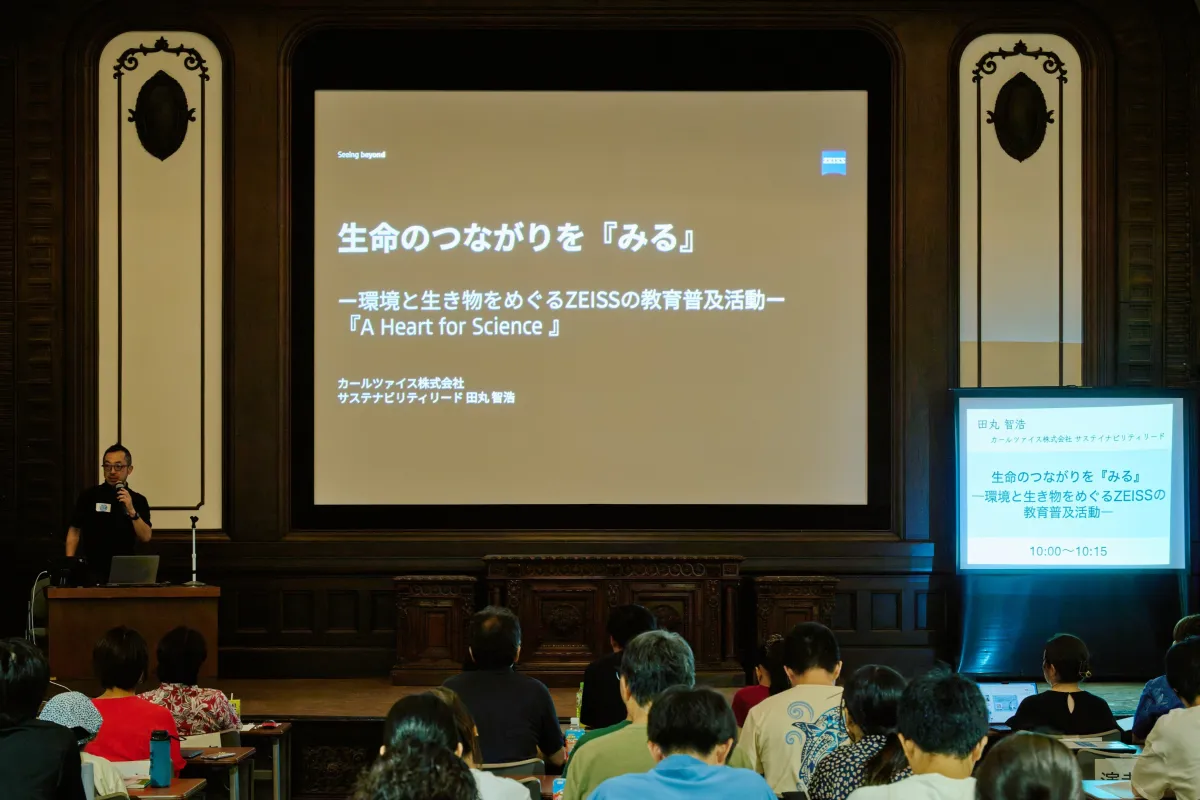
ZEISS Showcases Ocean Ecosystem Initiatives at Symposium
ZEISS at the Ocean Ecosystem Symposium
On August 8, 2026, ZEISS participated in the Ocean Ecosystem Symposium hosted by the National Museum of Nature and Science in Ueno Park, Tokyo. The event aimed to foster collaboration among researchers, NGOs, and corporate entities to share insights on marine ecosystems. A total of 139 participants gathered to promote practical activities and citizen science initiatives.
Background of ZEISS's Participation
Founded in 1846 in Jena, Germany, ZEISS has been a pioneer in optical technology across various domains such as research, healthcare, and industry. As a foundation-owned enterprise, ZEISS places a strong emphasis on scientific development and societal contributions over short-term profits.
At this symposium, experts and representatives from various organizations participated, discussing how businesses can engage positively with the environment and biodiversity. ZEISS took the opportunity to share its global initiative, “A Heart for Science,” which seeks to inspire the younger generation to engage with nature, technology, and science through observational learning. This volunteer program currently involves over 600 ZEISS employees in 25 countries.
In Japan, between 2025 and 2026, approximately 210 participants, including children and company employees, will engage in this program, utilizing optical instruments like microscopes and binoculars to observe and document living organisms firsthand.
Event Highlights
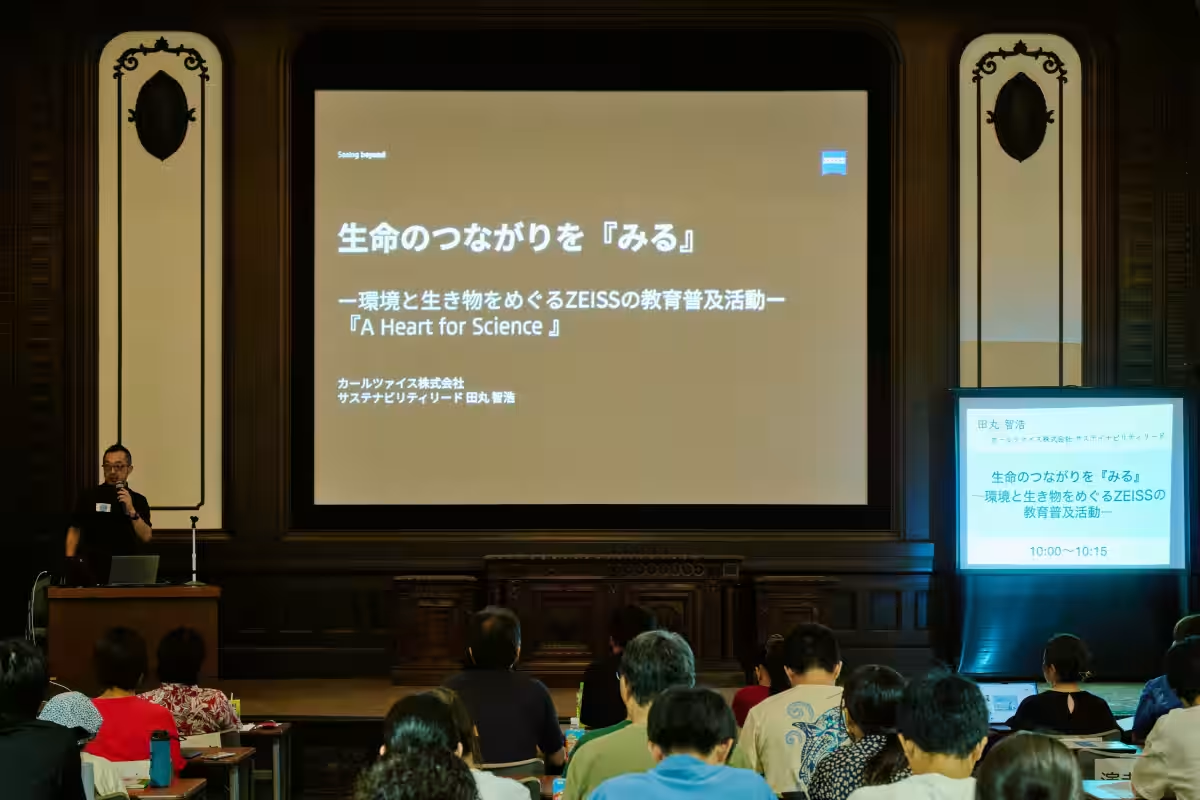
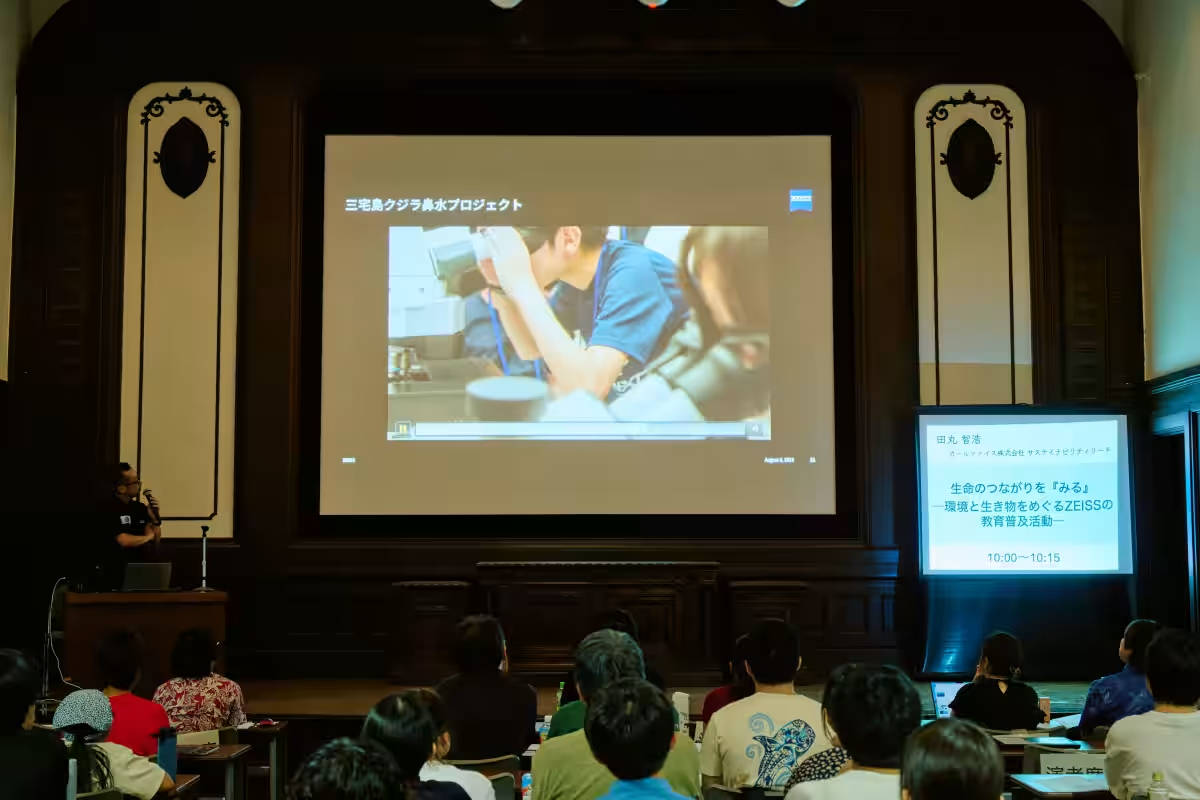
Takahiro Tamaru, ZEISS's sustainability lead, delivered a talk titled "Seeing the Connections of Life: ZEISS's Educational Outreach Activities - 'A Heart for Science'." He shared insights into collaborative efforts like the Whale Snot Project, which investigates the respiratory vapor of humpback whales through drone technology, showing how these samples can yield data about marine life. The presentation highlighted how ZEISS's optical technologies facilitate the visibility of life forms, from microscopic organisms to large marine mammals, fostering curiosity and understanding towards biodiversity.
The symposium included a video presentation explaining the Whale Snot Project. It showcased how researchers systematically collect and analyze data, gradually revealing the previously hidden aspects of whale ecology. Tamaru emphasized that understanding marine ecosystems requires looking beyond just large animals, encouraging a focus on the microscopic organisms that are crucial to the ecosystem's health.
Insights from Meiji Jingu
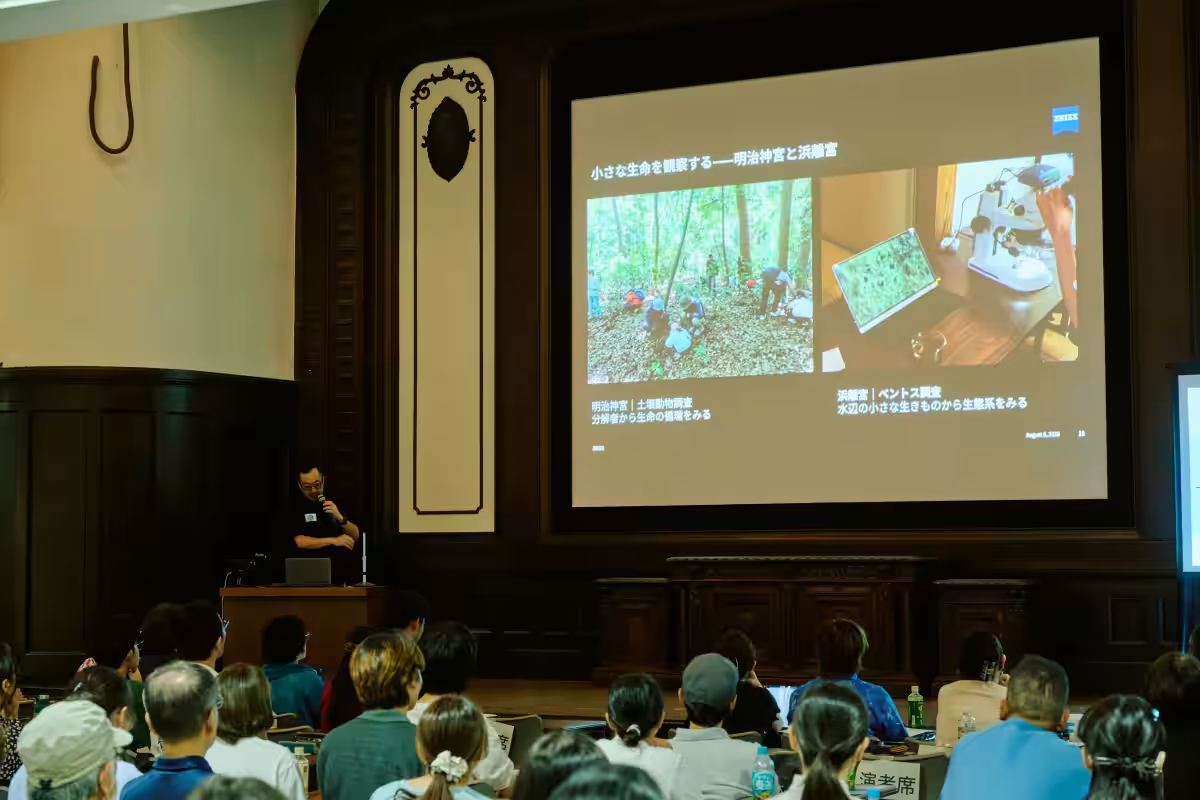
In addition to marine ecosystems, Tamaru discussed ZEISS's initiatives within more accessible natural environments. For instance, in a program at Meiji Shrine, children collected soil-dwelling organisms for microscopic examination, experiencing the diversity of life that populates even familiar settings. This hands-on activity illuminated the rich biodiversity hidden in the soil, linking it to the marine environment's foundational organisms, such as phytoplankton.
By engaging with these 'invisible' life forms, ZEISS aims to transform abstract ecological knowledge into tangible experiences for participants, highlighting the interconnectedness of ecosystems both on land and in the water.
Fostering Scientific Curiosity
Concluding his talk, Tamaru reiterated the core values of the “A Heart for Science” initiative. He emphasized the importance of creating opportunities for children and citizens not just to learn from experts, but to explore, observe, and verify the world around them independently.
ZEISS acknowledges the limitations of what a single company can do but believes that by leveraging its optical technologies, it can create moments of discovery that spark curiosity about nature and science. These interactions could bridge researchers and the public, ultimately fostering a deeper understanding of science and biodiversity.
In the future, ZEISS plans to continue empowering communities through state-of-the-art optical technologies and educational initiatives, connecting people to the unseen wonders of life. The company aims to contribute to the advancement of life sciences and promote sustainable biodiversity awareness.
Upcoming Broadcast on FM Yokohama
Listeners can tune into FM Yokohama’s “Keep Green & Blue” program, airing from August 31 to September 3, 2026, to hear more about the symposium and ZEISS’s contributions. The broadcast will feature interviews with participants, including Takahiro Tamaru, detailing how optical technologies illuminate the unseen aspects of marine life and enhance public comprehension of science and biodiversity challenges.
Conclusion
ZEISS's active participation in the Ocean Ecosystem Symposium illustrates its commitment to environmental stewardship and scientific education. Through innovative initiatives like 'A Heart for Science,' ZEISS empowers the next generation to embark on a journey of discovery in nature, ensuring that the significance of biodiversity is recognized and celebrated in all its forms.


Topics Other)
【About Using Articles】
You can freely use the title and article content by linking to the page where the article is posted.
※ Images cannot be used.
【About Links】
Links are free to use.