



GMO Flatt Security Announces New Features for Takumi After Mythos Model Launch
Introduction
GMO Flatt Security, under the mission of supporting engineers, has recently declared its plans to implement advanced features in its security AI agent, Takumi, following the public launch of Anthropic's innovative Mythos-class model. This announcement includes the introduction of a groundbreaking feature called the AI Penetration Testing capability, aimed at elevating cybersecurity standards in Japanese enterprises.
Overview of Takumi
Takumi, developed by GMO Flatt Security, is a tailored AI agent focused on cybersecurity. Launched in March 2025, it autonomously conducts security diagnostics through dynamic and static analyses (DAST/SAST) and offers features like automated vulnerability remediation, enabling software development organizations to safeguard their systems effectively. In its continuous evolution, Takumi has already showcased its adaptability to various aspects of software security, enriching workflows with tools such as Takumi Guard for blocking malicious package downloads from software supply chains and Takumi Runner for visualizing operational flows in CI/CD environments.
The Significance of the Mythos-class Model
The Mythos-class model, introduced by Anthropic in April 2026, boasts high efficiency in the cybersecurity domain, evidenced by over 23,000 identified vulnerabilities. Such data has prompted various governmental agencies in Japan to mandate compliance with new security protocols amidst heightened cybersecurity threats. With Anthropic’s future model releases, including the Claude Opus 4.8, scheduled for the coming months, the need for proactive measures has never been more crucial. Japanese companies are urged to fortify their defenses against sophisticated attackers whose skills are on the rise.
Future Integration Plans
GMO Flatt Security is committed to enhancing Takumi's features by systematically incorporating the Mythos-class model post its public release. Key features set for integration include:
- - AI Penetration Testing Capability (New Feature)
- - Security Diagnostics and Automated Remediation
- - Takumi Guard and Takumi Runner Functionalities
This integration is designed to establish a more robust cybersecurity ecosystem by leveraging advanced AI insights and operational guidance.
New Feature: AI Penetration Testing Capabilities
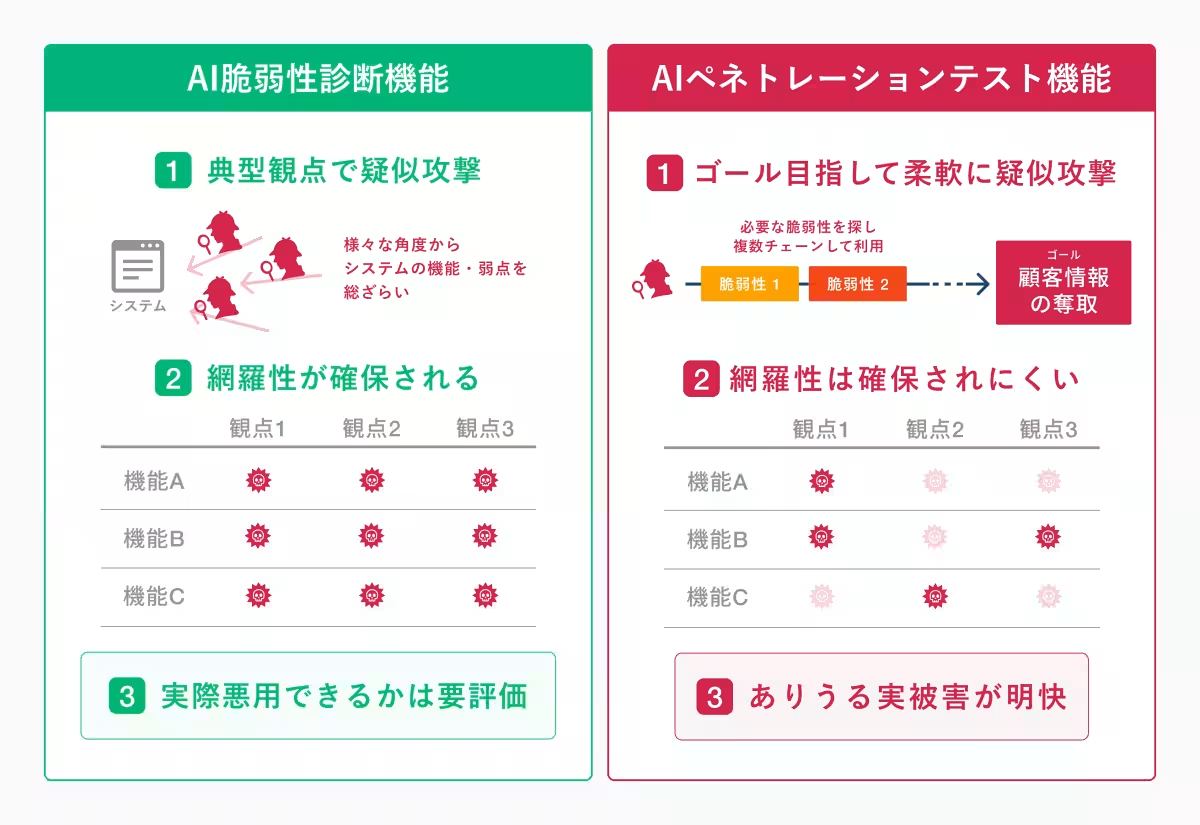
The newly introduced AI Penetration Testing function promises to expand conventional vulnerability assessments significantly. Unlike traditional approaches that merely detect vulnerabilities, this feature investigates the practical exploitability of identified vulnerabilities and evaluates potential impacts stemming from their combination, thereby simulating possible real-world attack scenarios. The AI Penetration Testing function stands out by not just ensuring thorough checks for vulnerabilities but also assessing the actual implications these vulnerabilities could have on business operations.
Looking Ahead
The launch of the Mythos-class model is a strategic movement not just for Takumi, but for the cybersecurity framework in Japan as a whole. By continually integrating the latest AI models into Takumi's functionalities, GMO Flatt Security aims to maintain the highest quality of security services for software developers. The company's philosophy of supporting engineers emphasizes a secure environment where they can prioritize their development efforts without security concerns hindering their progress.
About GMO Flatt Security
GMO Flatt Security is a security professional company based in Japan, committed to supporting the digital transformation of businesses across all industries. By offering tailored security products, comprehensive support services, and engaging in thorough user research, the company provides a partnership-focused approach to cybersecurity. Their offerings include vulnerability diagnostics, continuous cloud assessments, and secure coding education platforms, all underpinned by the mission of safeguarding engineers’ efforts in the face of evolving digital threats.
In summary, the integration of the Mythos-class model into Takumi post-launch stands as a pivotal step towards not only advancing individual enterprises’ cybersecurity frameworks but also fortifying the overall safety of the Japanese corporate landscape against increasingly sophisticated cyber threats.
Topics Consumer Products & Retail)
【About Using Articles】
You can freely use the title and article content by linking to the page where the article is posted.
※ Images cannot be used.
【About Links】
Links are free to use.