




Key Changes in ROBOPRO Fund's Investment Allocation: July Rebalance Overview
In July, the ROBOPRO Fund implemented a strategic rebalance of its investment allocation, guided by expert advice from FOLIO. This adjustment highlights a significant shift toward greater diversification and a balanced approach in portfolio management. The fund now increases its equity assets while incorporating all eight types of assets, which helps to spread risk effectively across various sectors.
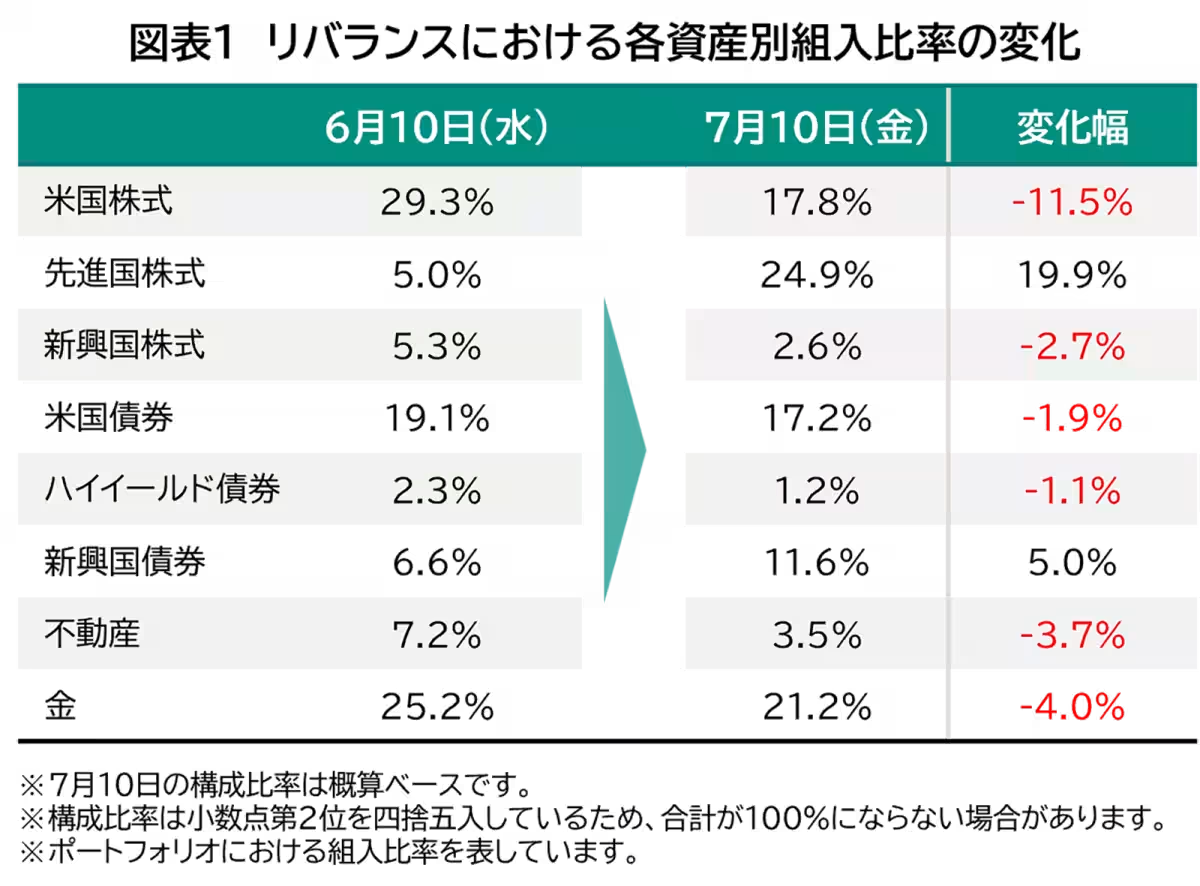
The latest reallocation marks a notable shift since the last rebalance, with American and emerging market equities seeing a reduction in their allocation. Conversely, advanced country stocks have gained a larger share in the portfolio. Moreover, emerging market bonds have also experienced an increase in allocation, while most other asset classes have seen declines. Overall, the equity assets now constitute approximately 45% of the portfolio. Though real estate holdings have diminished, the combined total of high-risk assets—which include equities and real estate—has slightly risen to about 49%. The bond assets and gold collectively represent around 51% of the portfolio, reflecting a mild decrease from previous levels but still maintaining over 50%, showcasing an ongoing commitment to diversification.
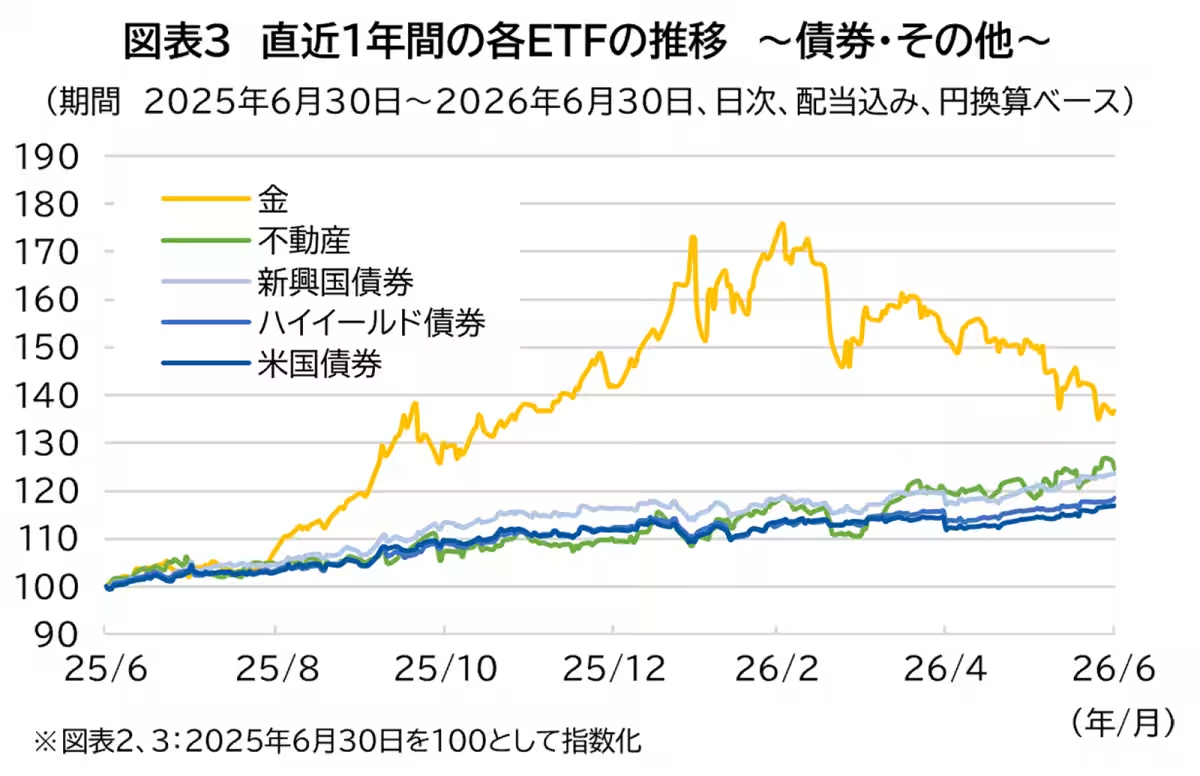
According to the latest predictions powered by AI, advanced country stocks and gold present relatively favorable outlooks, while the expectations for bond assets and real estate appear less promising. Compared to earlier evaluations, the forecast for U.S. bonds has diminished, but advanced country stocks exhibit significant improvements in their outlook. However, it’s important to note that the disparity in predicted returns across different asset classes is narrowing, which limits substantial differences in asset allocation decisions going forward. Thus, the actual distribution of assets is determined by balancing expected returns and associated risks.
Some of the primary ETFs involved in the fund’s strategy include:
It’s crucial to highlight the associated investment risks and costs involved. Investors are reminded that their principal investment is not guaranteed and may suffer losses due to declines in value. Unlike traditional savings accounts, mutual fund investments are subject to market fluctuations. Any generated profits and losses from the fund's holdings belong entirely to the investors.
For detailed information on investment risks and fees, prospective investors can refer to the links shared above. Additionally, it’s advisable to consult the fund's explanatory documents carefully before making any investment decisions.
Investment management is conducted by SBI Okasan Asset Management Co., Ltd., a registered financial service provider in Japan. The fund is subject to market risks, and previous performance does not assure future results. Investors are encouraged to make informed decisions based on their individual financial situations.


Changes in Asset Allocation
The latest reallocation marks a notable shift since the last rebalance, with American and emerging market equities seeing a reduction in their allocation. Conversely, advanced country stocks have gained a larger share in the portfolio. Moreover, emerging market bonds have also experienced an increase in allocation, while most other asset classes have seen declines. Overall, the equity assets now constitute approximately 45% of the portfolio. Though real estate holdings have diminished, the combined total of high-risk assets—which include equities and real estate—has slightly risen to about 49%. The bond assets and gold collectively represent around 51% of the portfolio, reflecting a mild decrease from previous levels but still maintaining over 50%, showcasing an ongoing commitment to diversification.
Insights from AI Predictions
According to the latest predictions powered by AI, advanced country stocks and gold present relatively favorable outlooks, while the expectations for bond assets and real estate appear less promising. Compared to earlier evaluations, the forecast for U.S. bonds has diminished, but advanced country stocks exhibit significant improvements in their outlook. However, it’s important to note that the disparity in predicted returns across different asset classes is narrowing, which limits substantial differences in asset allocation decisions going forward. Thus, the actual distribution of assets is determined by balancing expected returns and associated risks.
Sector Analysis
- - Outlook for U.S. Stocks: The relative advantage of U.S. equities among risk assets has slightly declined, leading to a reduced allocation in this segment.
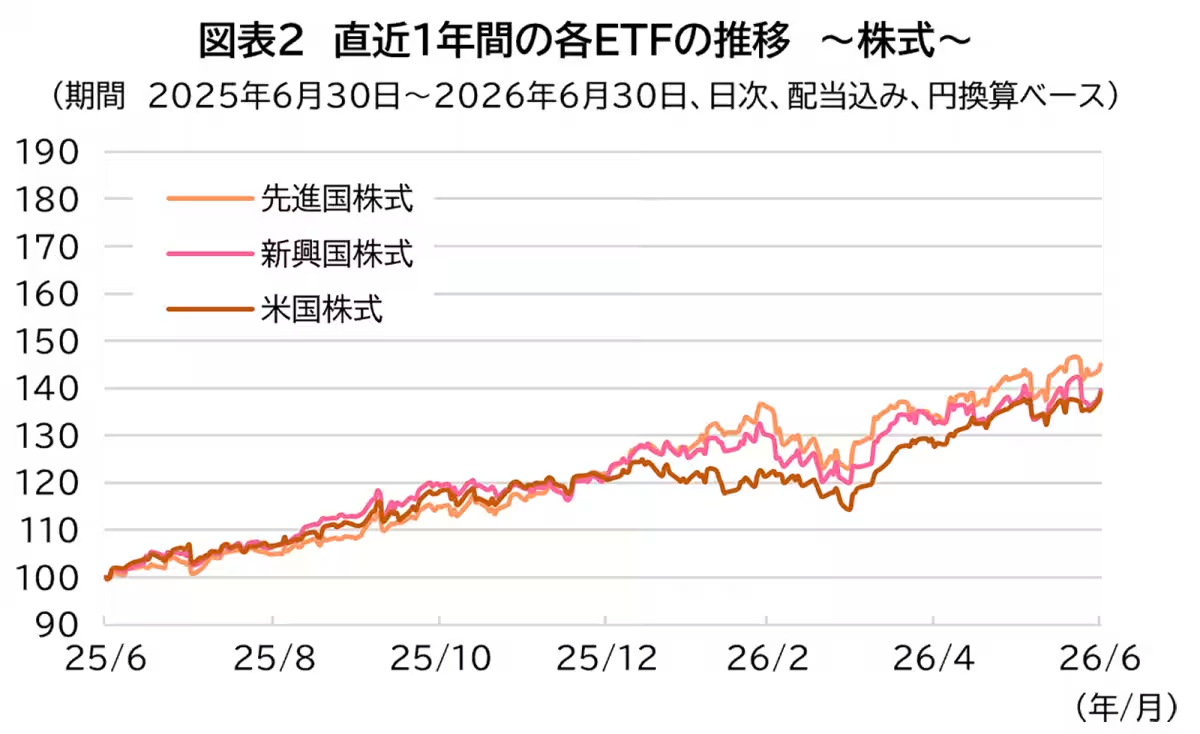
- - Outlook for Advanced Country Stocks: The improved outlook for advanced country stocks, particularly due to European equities catching up in performance, has warranted an increased allocation to this asset class.
- - Emerging Market Bonds: Notably, emerging market bonds have recorded an increase in their allocation. Their relatively favorable outlook and low correlation with equity assets suggest that these bonds serve as an effective risk adjustment measure within the fund.
Key Investment ETFs
Some of the primary ETFs involved in the fund’s strategy include:
- - U.S. Equities: Vanguard Total Stock Market ETF
- - Advanced Country Equities: Vanguard FTSE Developed Markets ETF (excluding U.S. stocks but including Japanese equities)
- - Emerging Market Equities: Vanguard FTSE Emerging Markets ETF
- - U.S. Bonds: Vanguard Total Bond Market ETF
- - High-Yield Bonds: iShares iBoxx USD High Yield Corporate Bond ETF
- - Emerging Market Bonds: iShares JPMorgan USD Emerging Markets Bond ETF
- - Real Estate: iShares U.S. Real Estate ETF
- - Gold: SPDR Gold MiniShares Trust
It’s crucial to highlight the associated investment risks and costs involved. Investors are reminded that their principal investment is not guaranteed and may suffer losses due to declines in value. Unlike traditional savings accounts, mutual fund investments are subject to market fluctuations. Any generated profits and losses from the fund's holdings belong entirely to the investors.
For detailed information on investment risks and fees, prospective investors can refer to the links shared above. Additionally, it’s advisable to consult the fund's explanatory documents carefully before making any investment decisions.
Investment management is conducted by SBI Okasan Asset Management Co., Ltd., a registered financial service provider in Japan. The fund is subject to market risks, and previous performance does not assure future results. Investors are encouraged to make informed decisions based on their individual financial situations.
Topics Financial Services & Investing)
【About Using Articles】
You can freely use the title and article content by linking to the page where the article is posted.
※ Images cannot be used.
【About Links】
Links are free to use.