



Okayama University Develops Innovative Imaging Technology for Early Diagnosis of Heart Failure and Parkinson's Disease
Okayama University’s Breakthrough in Medical Imaging
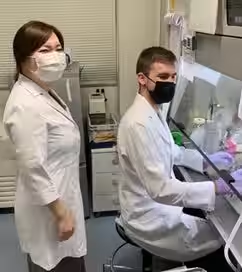
In an impressive stride towards healthcare innovation, Okayama University has unveiled a cutting-edge imaging technology that may significantly enhance the early diagnosis of heart failure and Parkinson's disease. This breakthrough stems from international collaboration among researchers at the university's Medical Innovation Institute and their German counterparts. Led by Assistant Professor Naoko Nose and Specially Appointed Professor Takahiro Higuchi, this groundbreaking research has led to the development of a new PET tracer, [18F]fluproxadine, which allows for a clear visualization of the sympathetic nervous system, a critical component in regulating heart function.
Advancements in Diagnostic Technology
The new PET tracer not only marks a significant advancement in imaging technology but also contributes to the medical community’s understanding of diseases that have long evaded early detection. During studies conducted at Kobe City Medical Center General Hospital, the tracer was administered to humans for the first time, evaluating its safety, biodistribution, and radiation exposure. The promising results indicate that this new technology brings new possibilities for diagnosing conditions like heart failure and Parkinson's disease, along with specific nerve-related tumors much earlier in their progression.
Nose expressed her enthusiasm about the potential impact of this research, stating, "Our goal is to bring this tracer to practical use, benefitting patients as soon as possible. We welcome collaborative research to expedite this process." The study detailing these findings was published in the esteemed journal Clinical Nuclear Medicine on June 6, 2026.
Clinical Implications
The implications of this breakthrough could be profound. Current diagnostic methods for conditions like heart failure and Parkinson's disease often involve late-stage detection, which limits treatment efficacy. With [18F]fluproxadine, healthcare professionals might now have the means to diagnose these diseases in their early stages, leading to timely and potentially life-saving interventions.
Furthermore, this new method might streamline how clinicians decide on treatment strategies, ensuring each patient receives tailored care based on precise diagnostic information. This integrated approach can enhance patient outcomes, reduce hospitalization rates, and lower overall healthcare costs over time.
Future Research and Development
Okayama University’s initiative reflects a growing trend in medical imaging research, where collaborations can accelerate the path from laboratory discoveries to real-world applications. As the university continues its research, there are plans to implement [18F]fluproxadine in clinical settings as soon as possible, marking a critical step in revolutionizing diagnostic procedures.
In addition to focusing on heart and neurological conditions, there’s also potential for this technology to be adapted for detecting other types of diseases influenced by the sympathetic nervous system. The flexibility of this PET tracer could ultimately lead to broader applications in medical diagnostics, driving forward personalized medicine.
Funding and Support
The development of this innovative imaging technology was partly supported by the Startup Ecosystem Co-Creation Program, ensuring that academic advancements align with market needs. Ongoing efforts to commercialize this technology are underway, with university researchers actively seeking partnerships and funding through various grant systems.
The collaborative spirit surrounding this research exemplifies the dedication of Okayama University to not only advance medical science but also to translate these advancements into practical applications that can improve patient care. As the healthcare sector continues to innovate, technologies like [18F]fluproxadine could set a new standard for early diagnosis and management of chronic illnesses.
To learn more about Okayama University's research and initiatives, visit their official website at Okayama University.
This breakthrough highlights the importance of innovative research in addressing some of the most pressing health challenges of our time, and it serves as an inspiring example of how academic institutions can lead the way in medical advancement.




Topics Health)

【About Using Articles】
You can freely use the title and article content by linking to the page where the article is posted.
※ Images cannot be used.
【About Links】
Links are free to use.