




A Comprehensive Study of Learning Tools for Professional Self-Development in Japan
Overview of the Study
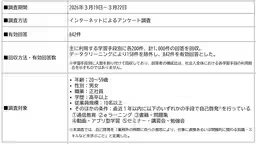
The Sanno Institute of Management in Setagaya, Tokyo, has conducted an extensive survey on the learning methods utilized by working adults in Japan for self-improvement. Involving 842 full-time employees aged between 20 and 59, this study highlights the motivations, topics, and perceived benefits of various learning channels, including correspondence education, e-learning, books, video/app-based learning, and seminars/workshops. Additionally, the survey explored the emerging influence of generative AI in educational contexts.
Key Findings
The survey uncovered several notable trends regarding professional self-development:
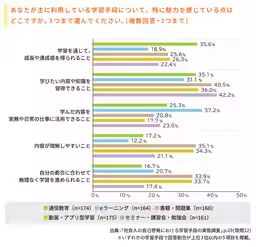
1. The appeal of each learning tool varies significantly among users, with growth and a sense of achievement identified as prominent benefits.
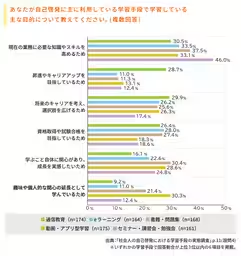
2. The most common learning objective across all formats is enhancing necessary knowledge and skills for current job responsibilities.
3. Learning topics display diversity depending on the method chosen, focusing on specialized knowledge, business skills, and skills relevant to job performance.
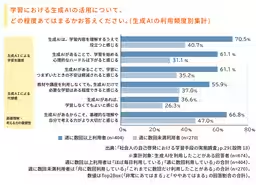
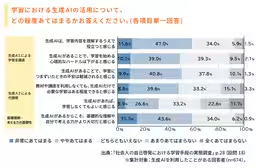
4. Among users familiar with generative AI, 58.6% acknowledge its usefulness for comprehending learning materials.
5. High-frequency users of generative AI tend to emphasize the importance of foundational understanding and independent thinking.
Detailed Insights
1. Distinct Benefits per Learning Method
Survey participants identified various attractions for each learning method:
- - Correspondence Education: 35.6% highlighted achieving personal growth and a sense of accomplishment.
- - E-Learning: 37.2% find practical application of learned content in their daily work to be the main draw.
- - Books and Problem Sets: 40.5% appreciate the absorption of knowledge they desire, alongside ease of understanding and flexibility in pacing their studies.
- - Video/App-Based Learning: Similar trends emerged, with 36.0% valuing the acquisition of desired knowledge, while 42.2% appreciated mastery of preferred content in seminars and workshops.
2. Common Learning Objectives
When asked about the primary learning objectives, responses indicated that improving necessary skills for their current roles ranked the highest across all methods:
- - Notably, in seminars and workshops, 46.0% referenced knowledge enhancement for existing job functions.
- - Correspondence education users also looked towards future career flexibility (29.9%) and advancement opportunities (28.7%).
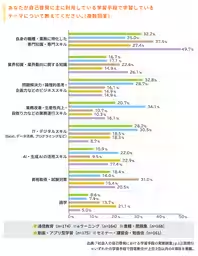
3. Varied Learning Topics
The survey further indicated variations in learning focus by method:
- - Correspondence Education: 32.8% are pursuing business skills like problem-solving and logical thinking.
- - E-Learning: A focus on productivity and operational skills was reported by 34.1%.
- - Users of books and video learning primarily seek specialized knowledge pertinent to their job roles, at 37.5% and 27.4% respectively.
4. Understanding Generative AI's Role
When asked about generative AI's impact on learning:
- - 58.6% of users believe it aids understanding of course content.
- - Additional supportive experiences included reduced anxiety during study hurdles (50.7%) and lowered psychological barriers to beginning studies (49.1%).
5. The Importance of Independent Learning
The analysis of responses based on generative AI usage frequency revealed that:
- - Users with higher engagement (multiple times a week) identified a greater need for foundational understanding and critical thinking skills (66.8%) compared to lower frequency users (47.0%).
- - Over time, frequent users displayed a stronger belief in generative AI's ability to facilitate comprehension and support independent learning, highlighting its transformative potential in adult education.
Further Reading and Resources
For a detailed report of this significant study, interested parties may visit Sanno Institute's Research Report.
About the Sanno Institute of Management
The Sanno Institute of Management serves as a comprehensive education and research institution dedicated to management. It aims to cultivate individuals capable of applying management theories in practical settings, bridging the gap between theory and real-world applications.

Topics Other)

【About Using Articles】
You can freely use the title and article content by linking to the page where the article is posted.
※ Images cannot be used.
【About Links】
Links are free to use.