




Accelerating the Social Implementation of Cooperative ITS in Japan: ITS Japan's Proposals to Government Agencies
Introduction
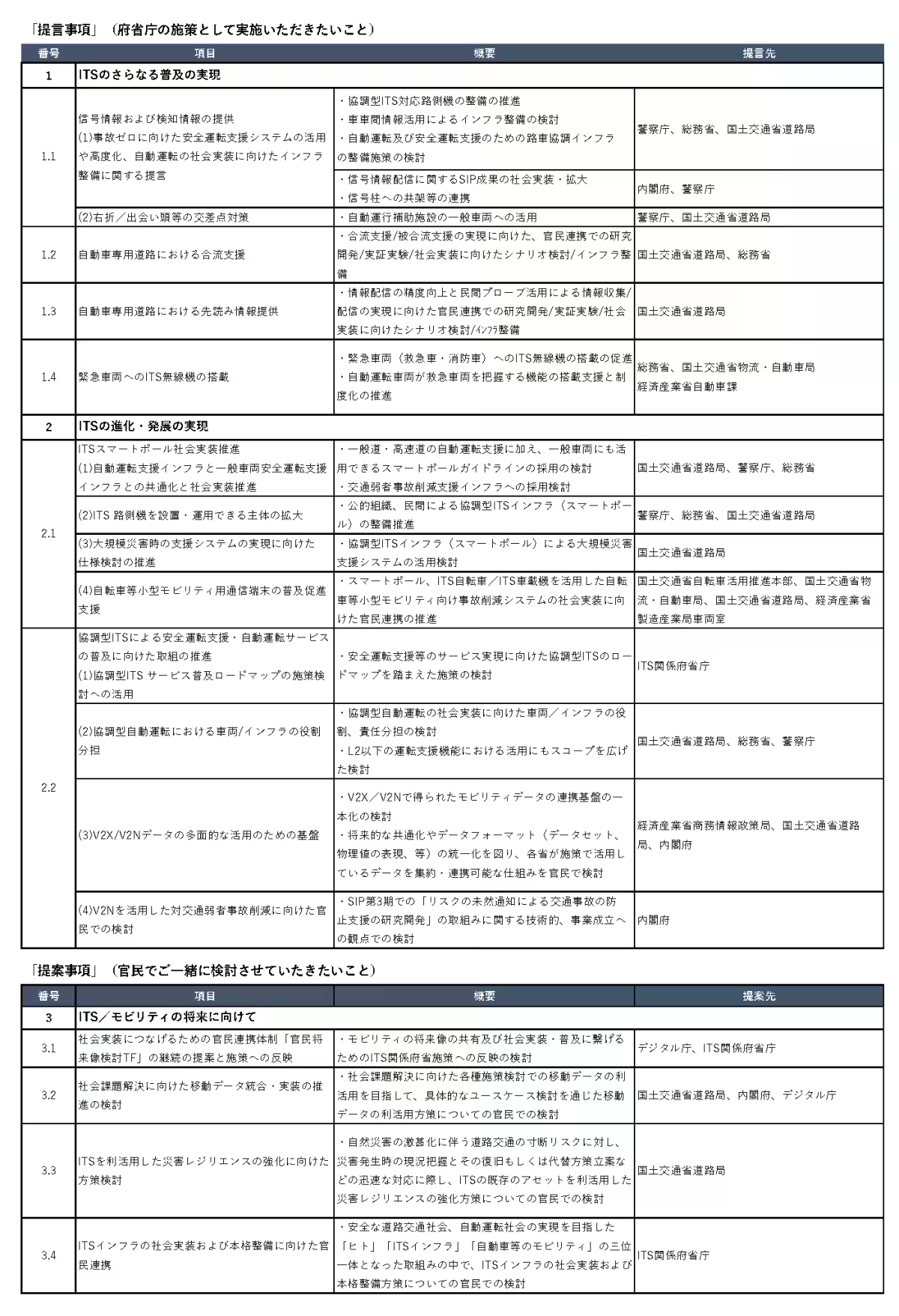
On May 11 and 12, 2026, the non-profit organization ITS Japan presented a comprehensive set of proposals to six Japanese government agencies, including the Cabinet Office, the National Police Agency, and the Ministry of Land, Infrastructure, Transport and Tourism. These proposals, aimed at achieving a society with zero traffic accidents and accelerating the societal implementation of autonomous driving, emphasize critical components such as the full-scale introduction of smart poles and the utilization of V2X/V2N data.
Key Points of the 2026 Proposals
The 2026 proposals build upon previous suggestions focused on cooperative Intelligent Transport Systems (ITS) infrastructure and the societal implementation of autonomous driving. The initial recommendations primarily targeted the provision of signal information, support for safe driving, and response measures for emergency vehicles. The new recommendations take a significant step forward, transitioning to actionable strategies aligned with the practical implementation phase.
1. Implementation of Smart Poles and Standardization
A focus on deploying smart poles will provide essential infrastructure for traffic management and enhance safety, facilitating smooth communication between vehicles and roadway systems.
2. Establishing a Data Utilization Base for V2X/V2N
The proposals advocate for a robust infrastructure for linking and utilizing V2X (Vehicle-to-Everything) and V2N (Vehicle-to-Network) data. This integration will significantly improve traffic management, enabling real-time updates and better decision-making capabilities for both drivers and transportation authorities.
3. Addressing Vulnerable Road Users
To curb accidents involving vulnerable road users, data utilization is crucial. The proposals insist on an approach that harnesses data insights to minimize risks associated with pedestrians and cyclists, ensuring their safety in a rapidly evolving transport landscape.
4. Clarifying Roles in Cooperative Autonomous Driving
The recommendations outline clear divisions of roles between vehicles and infrastructure in the context of cooperative autonomous driving, paving the way for unified operations that rely on shared information and technology.
5. Responding to Driver Shortages in Rural Areas
The proposals address the urgent need for autonomous driving services to support the dwindling number of drivers in rural areas, emphasizing the importance of ITS infrastructure in facilitating these services and ensuring accessibility for communities.
Continuous Collaboration and Government Engagement
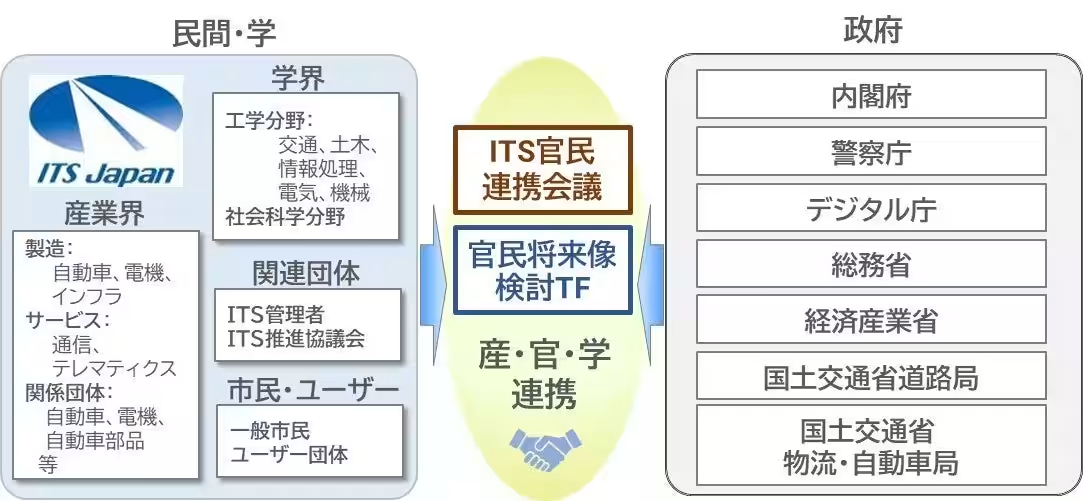
ITS (Intelligent Transport Systems) encompasses a range of technologies and strategies aimed at resolving various societal challenges associated with road traffic, including traffic accidents, congestion, and environmental impacts. ITS Japan sees ITS as a crucial mechanism for contributing to societal and personal challenges through mobility solutions and services. The organization has been collaborating with government agencies, industry stakeholders, and academia to identify hurdles and devise strategies for the practical application and promotion of ITS.
Through the

Topics Other)
【About Using Articles】
You can freely use the title and article content by linking to the page where the article is posted.
※ Images cannot be used.
【About Links】
Links are free to use.