



Japan Pioneers AI On-Demand Mobility with Mixed Cargo Services
Introduction to Mile One Project
In an innovative effort to address pressing local mobility issues, major companies such as Sumitomo Corporation, Seino Holdings, Daisinto Co., and REA have collaborated with the Japanese government. They have secured approval from the Ministry of Land, Infrastructure, Transport and Tourism to launch Japan's first AI-driven on-demand mobility service, “Mile One,” which will integrate passenger and freight transportation. Scheduled to begin on October 1, 2025, in Toyota Town, Shimonoseki City, this project aims to offer sustainable mobility solutions through the use of advanced technologies.
The Need for Innovative Mobility Solutions
Japan is experiencing significant challenges in public transportation usage due to a decrease in ridership and a shortage of logistics drivers. These issues severely limit the ability of residents to access essential services, such as grocery shopping and medical appointments, particularly impacting the elderly and those who cannot drive.
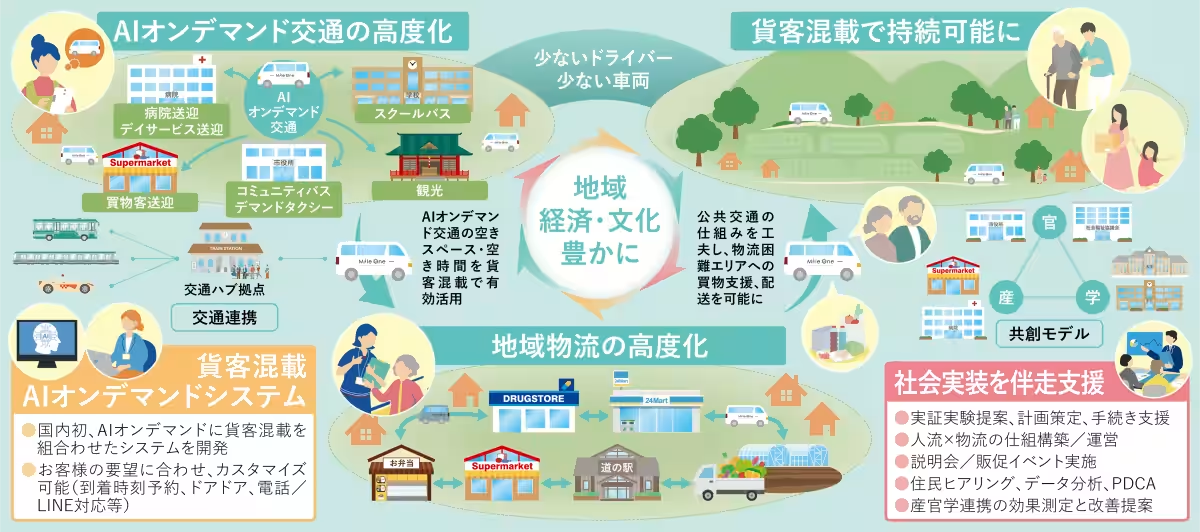
Recognizing this challenge, the Mile One project aims to meld AI-powered on-demand transport with mixed freight and passenger services. By effectively utilizing the existing vehicle fleet, the project endeavors to enhance service efficiency and accessibility for residents. The project’s objective is to improve local community mobility while also addressing the pressing logistics demands faced by local businesses and citizens.
Detailed Operation of Mile One in Shimonoseki City
In Shimonoseki City, the current transport system consists of four “living bus” routes that operate on a pre-scheduled phone reservation basis. The introduction of an AI on-demand feature aims to provide a more user-friendly public transport system tailored for a broad range of residents. The project will also include mixed cargo functionality, whereby the same vehicles used to transport passengers will also deliver supermarket goods directly to the homes of residents, particularly benefiting those who face challenges getting to stores.
The effectiveness of this venture will be monitored through a partnership with Shimonoseki City University, which will define relevant evaluation criteria and methods that reflect local circumstances. The project will gather quantitative data, supplemented by user surveys and interviews, to facilitate continuous improvement of the service.
This integrated approach aims to create a new business model that supports daily life through enhanced transport and logistics solutions. Moreover, plans are in place to improve convenience further, by collaborating with existing transport operators and services, thereby providing customized solutions for movement and delivery needs.
Project Implementation and Collaborative Efforts
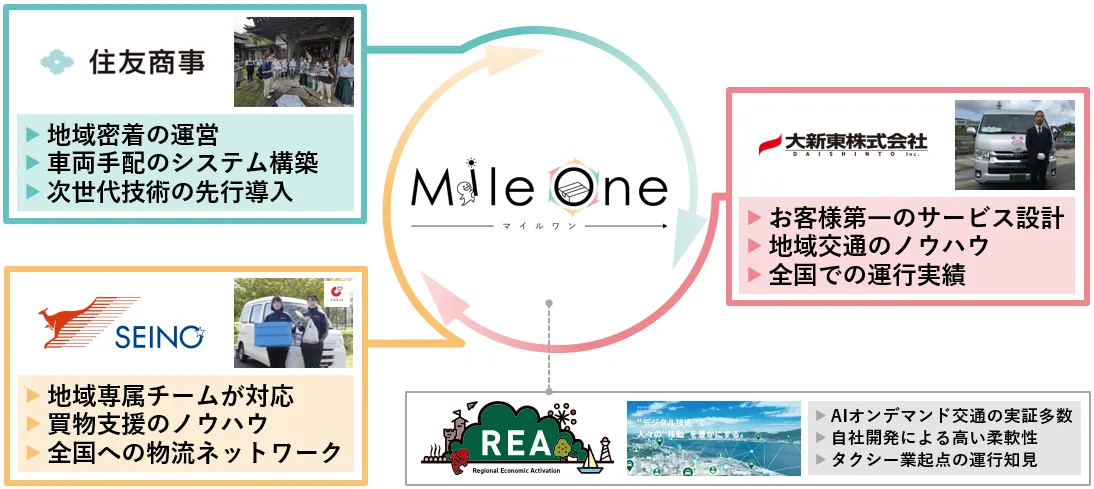
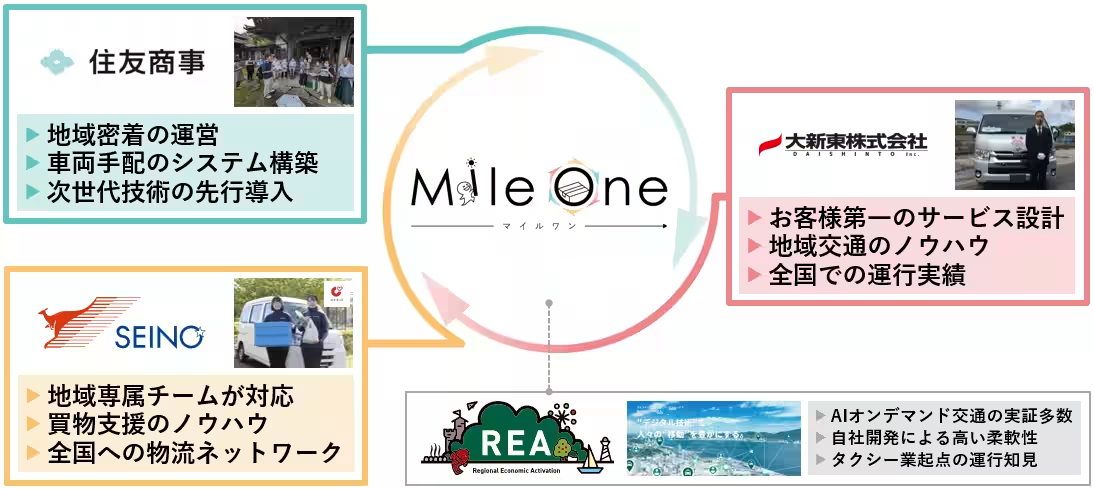
The operational partner for the project is Fuji Daiichi Kotsu, which will manage the transport operations as contracted by Shimonoseki City. Sumitomo Corporation will oversee the overall operations, aiming to establish the Mile One service, integrating the AI on-demand delivery system. Seino Holdings will focus on building logistics schemes, leveraging their experiences in supporting shopping and mixed transport solutions across various locations. Daisinto will facilitate human flow schemes based on their record in on-demand transport, while REA will be responsible for the development, maintenance, and operation of the AI on-demand dispatch system.
Additionally, numerous local organizations are joining efforts to ensure seamless operation. Shimonoseki City’s Social Welfare Council will promote resident engagement, while Shimonoseki City University will assist in evaluation measures. Local child clubs will contribute to vehicle branding designs, and various supermarkets, including Co-op Yamaguchi and Yume Mart Kitakyushu, will coordinate to facilitate shopping support.
Looking Ahead: Nationwide Implementation
Following this pilot project in Toyota Town from October 1, 2025, to March 31, 2026, there are plans to expand the service nationwide based on the insights gained. Meanwhile, a similar initiative has been running in Yamagata Prefecture since March 2025, where a collaboration with the Green Store aims to resolve shopping barriers through transport and mixed freight deliveries.
Conclusion
Through the implementation of the Mile One project, Japan sets the stage for a transformative approach to regional mobility and logistics. By integrating transportation and freight, leveraging advanced AI technologies, and fostering collaboration between public offices and private entities, this initiative aims to create a sustainable mobility model that can adapt to the evolving needs of local communities across the nation.
Topics Consumer Technology)
【About Using Articles】
You can freely use the title and article content by linking to the page where the article is posted.
※ Images cannot be used.
【About Links】
Links are free to use.