



AI Recruitment Insights: Candidates Are Open to AI If Content Resonates
AI Recruitment Insights: Understanding Candidate Sentiments
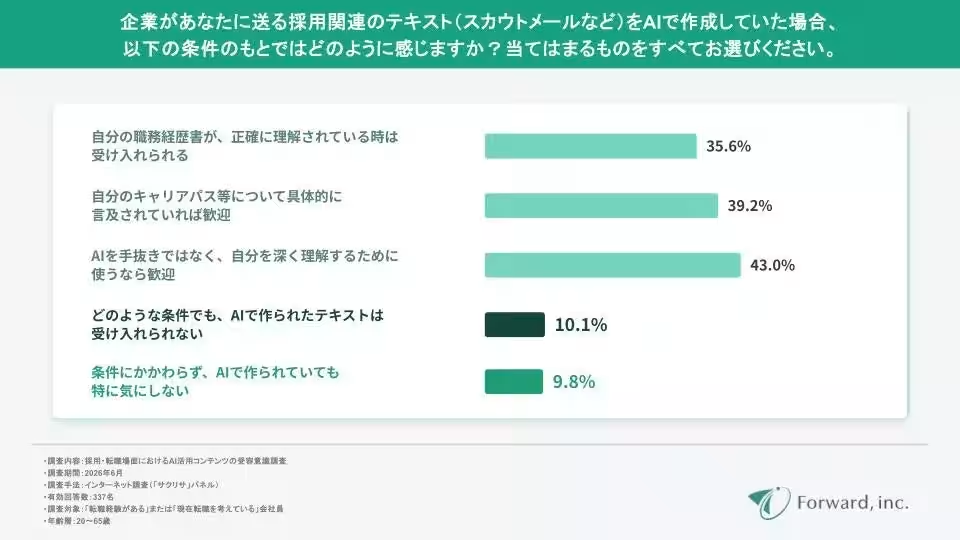
In a recent survey conducted by Forward, a Tokyo-based HR tech company, it was found that only a small fraction of candidates reject AI-generated recruitment messages outright. Out of 337 employed individuals aged 20 to 65, who have experienced job changes or are considering them, only 10.1% expressed that they would not accept AI-created texts under any circumstances. The remaining participants demonstrated a more nuanced perspective towards AI usage in recruitment.
Key Findings
Understanding AI's Role
A significant 43% welcomed the use of AI, provided it was employed thoughtfully to understand their profiles better. Specifically, candidates indicated they would be open to AI-generated content if it demonstrated comprehension of their career paths and personal histories. A solid 39.2% stated they’d appreciate references made to their specific career trajectories while 35.6% were satisfied if their resumes were accurately interpreted. Moreover, about 9.8% of respondents remained indifferent to whether a text was AI-generated.
This indicates that nearly 90% of candidates do not inherently oppose the use of AI in recruitment; rather, their acceptance hinges heavily on the quality and relevance of the content. Candidates care more about the depth of personalization rather than the mere presence of AI.
Candidate Reactions to AI Texts
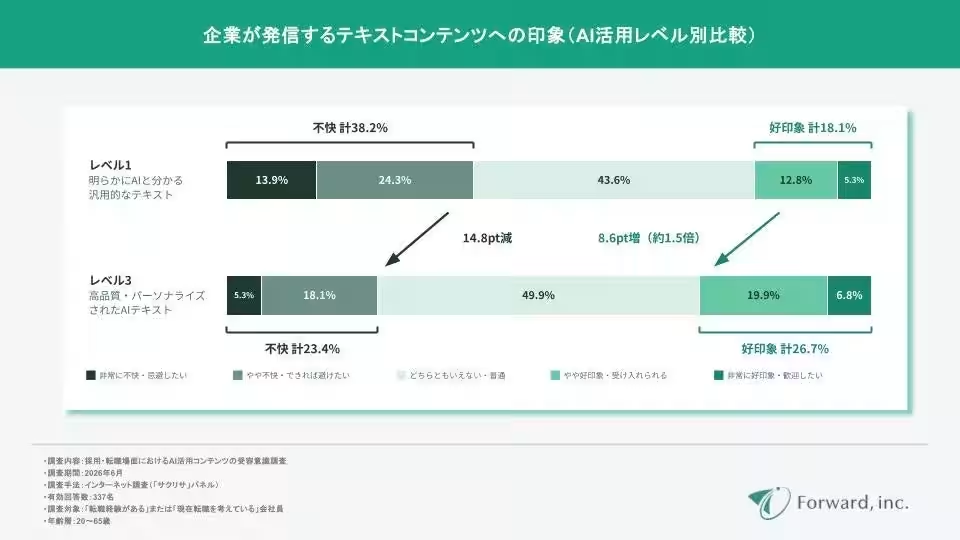
The perception of AI-generated communications varied considerably based on content quality. When exposed to generic AI-created texts, labeled as low quality (Level 1), 38.2% of respondents reported feeling uncomfortable or dissatisfied. This template-like communication often led candidates to feel like mere numbers in a mass approach, thereby damaging employers' reputations.
Conversely, when candidates encountered high-quality, personalized AI content (Level 3), discomfort reduced to 23.4%, and positive perceptions surged by 1.5 times, climbing from 18.1% to 26.7%. This demonstrates that effective personalization can significantly improve candidates’ impressions, affirming that the essence lies not in the AI itself, but in the experience it crafts.
Mutual AI Utilization by Candidates
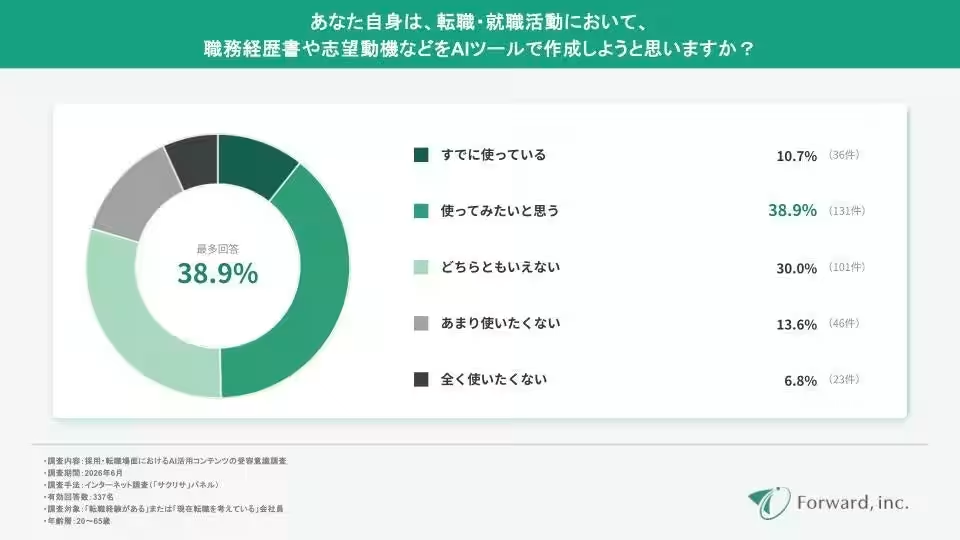
Interestingly, candidates themselves are becoming increasingly open to leveraging AI in their job hunt processes. Approximately 49.6% expressed a willingness to use AI tools for preparing resumes and cover letters, with 10.7% indicating they have already done so. Negativity towards AI usage was limited to around 20%, revealing a significant shift in job seekers' attitudes toward the technology.
This growing acceptance signals a mutual relationship between candidates and companies in AI adoption, where both sides are expected to reap benefits from these tools.
Conclusion
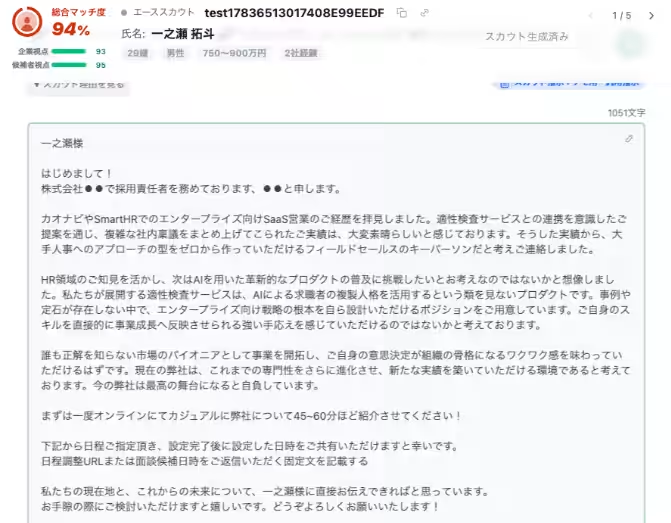
This survey reinforces the idea that candidate acceptance of AI in recruitment is not a black-and-white situation. Instead, it is shaped by expectations for richer, tailored content that enhances their application experience. Forward’s AceJob, a specialized AI recruitment tool, aims to meet these expectations by generating personalized narratives that reinforce the candidate's unique value proposition. Through sophisticated algorithms, AceJob presents candidates with messages that not only resonate with their personal journey but also convey an authentic understanding of their potential contributions in the workplace.
The insights drawn from this study highlight the ongoing evolution of recruitment alongside technological advancements, explaining how the dialogue between AI and candidates can be navigated for mutual gain. Such an approach can potentially reshape the recruitment landscape, inviting a new wave of innovative practices in the hiring process.
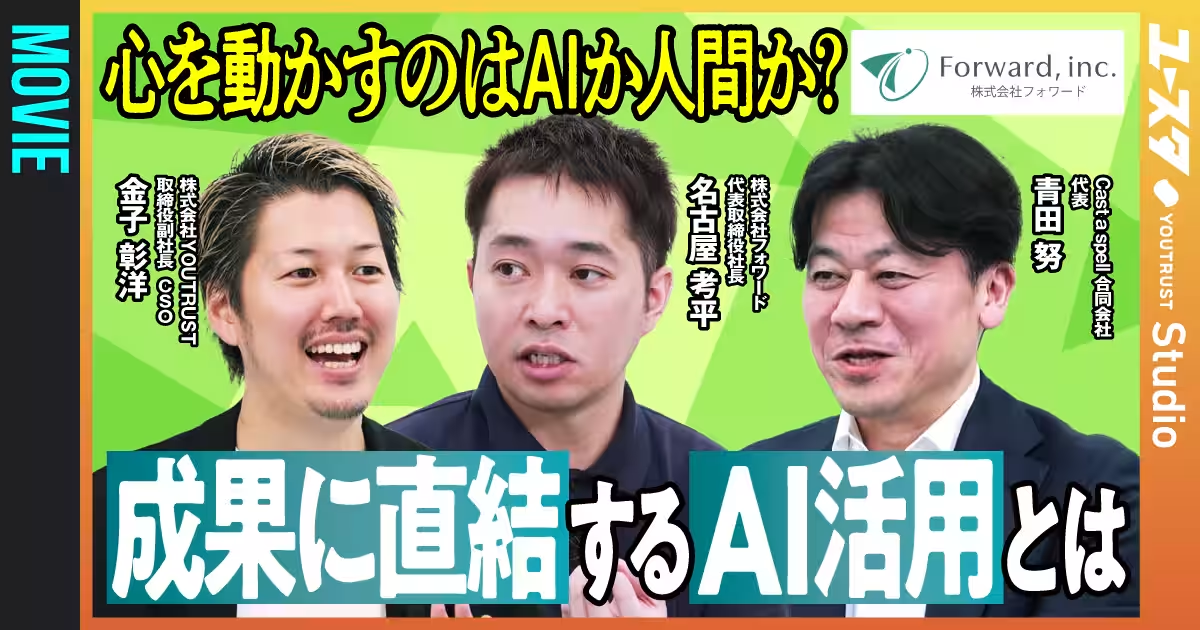
To delve deeper into these findings, check out our collaborating video on YOUTRUST Studio, where discussions on AI recruitment are further explored. For more information about AceJob’s capabilities and how it assists businesses, please visit AceJob or Forward.
Topics Business Technology)

【About Using Articles】
You can freely use the title and article content by linking to the page where the article is posted.
※ Images cannot be used.
【About Links】
Links are free to use.