



The Rising Trend of Solo Drinking: Survey Reveals Habits and Health Concerns Among Employees and Doctors
Understanding the Surge in Solo Drinking Habits
Introduction
According to a recent survey by Sizen Shokken, a company based in Oita, Japan, the practice of solo drinking at home, particularly among employees aged 20 to 60 and healthcare professionals, is becoming increasingly common. The survey's findings indicate that 80% of doctors and 60% of employees indulge in solo drinking three or more times a week. In this article, we will delve into the reasons behind this trend, the frequency of solo drinking, and the health implications it carries.
Survey Details
Sizen Shokken conducted their survey between February 26 and February 27, 2026, through PRIZMA’s internet research platform. A total of 1,011 individuals participated, encompassing a demographic of both employees and physicians specializing in internal medicine and gastroenterology. The focus was on the habits surrounding solo drinking and its potential chronic effect on liver health.
Trends Revealed in Solo Drinking Frequency
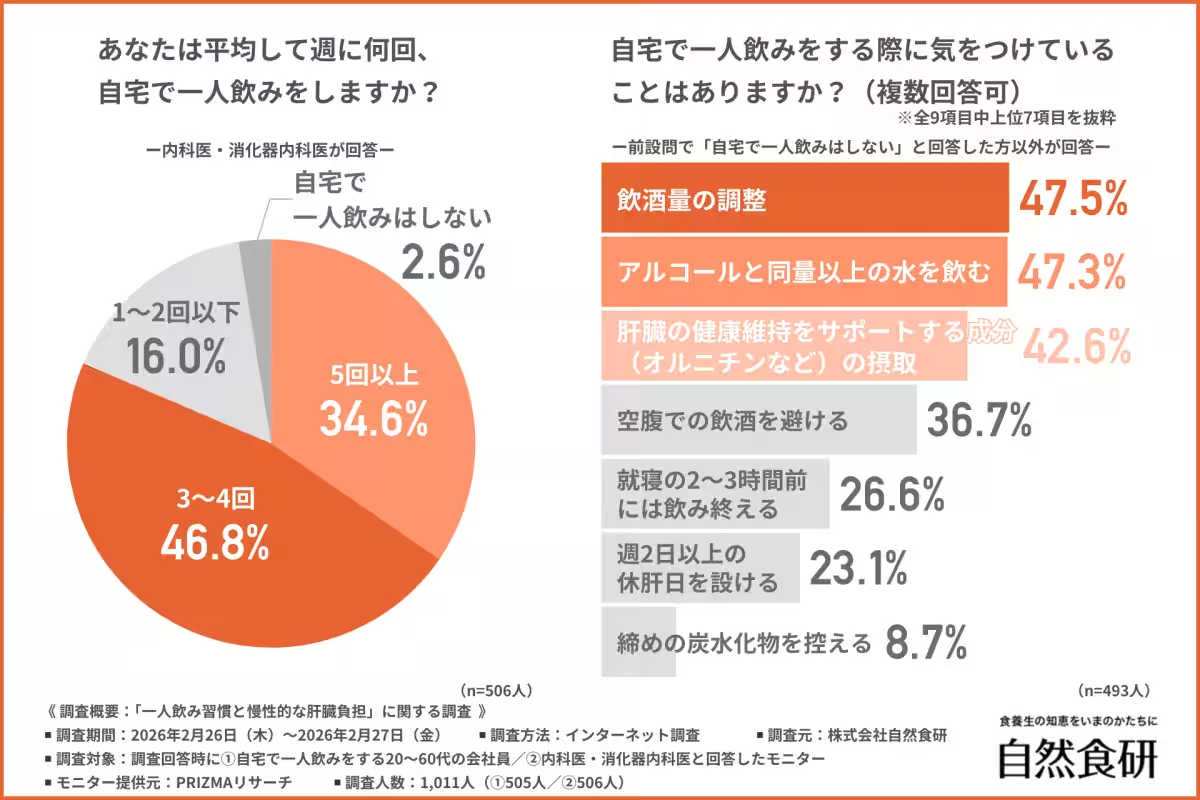
The responses concerning the frequency of solo drinking revealed a significant polarization:
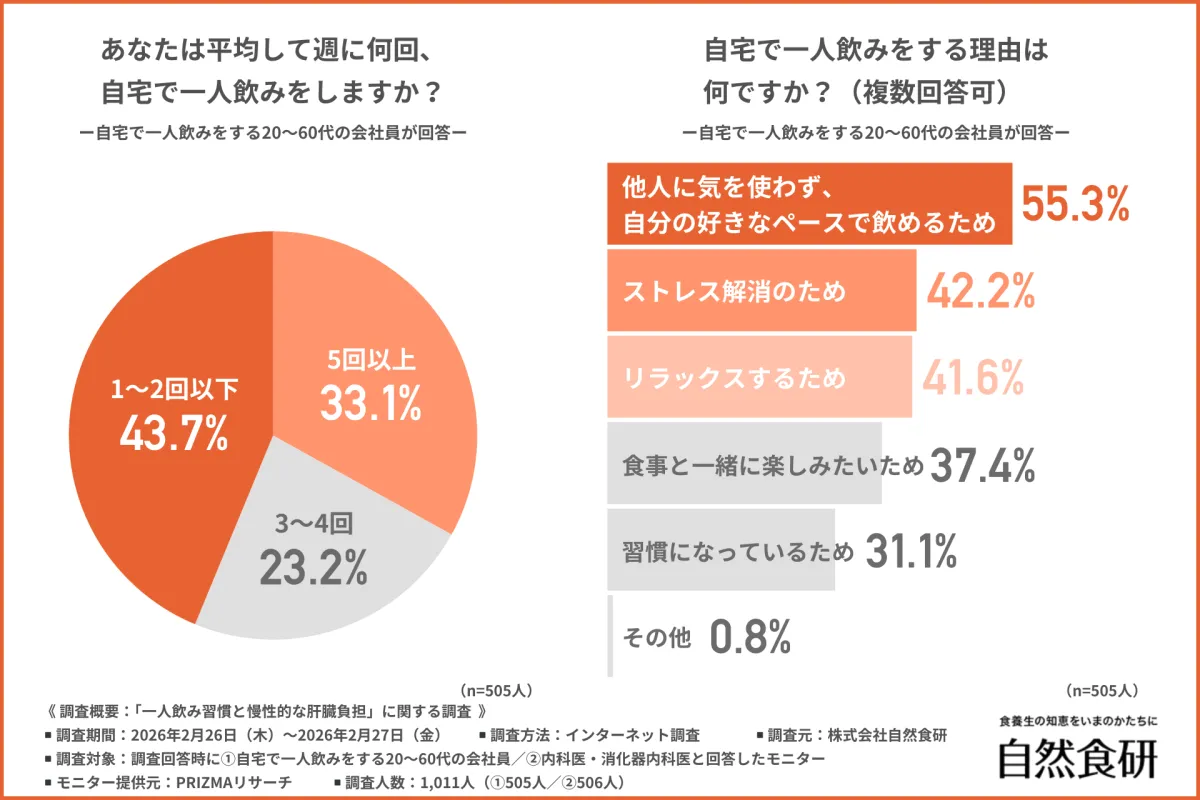
- - 5 times a week or more: 33.1%
- - 3 to 4 times: 23.2%
- - 1 to 2 times or less: 43.7%
While many participants limit their solo drinks to once or twice weekly, a notable portion report drinking five times or more, indicating a diverse range of drinking habits. It is evident that for many, solo drinking forms an integral part of their daily routine.
Reasons for Preferring Solo Drinking
When asked why they prefer solo drinking at home, most respondents cited the following reasons:
- - Ability to drink at their own pace without concern for others: 55.3%
- - Stress relief: 42.2%
- - Relaxation: 41.6%
These results suggest that solo drinking provides a comfortable setting where individuals can unwind without external pressures, effectively serving as a coping mechanism for modern-day stressors.
Changes in Drinking Habits Over Recent Years
The survey also examined whether respondents experienced changes in their solo drinking frequency over the last few years. The responses were:
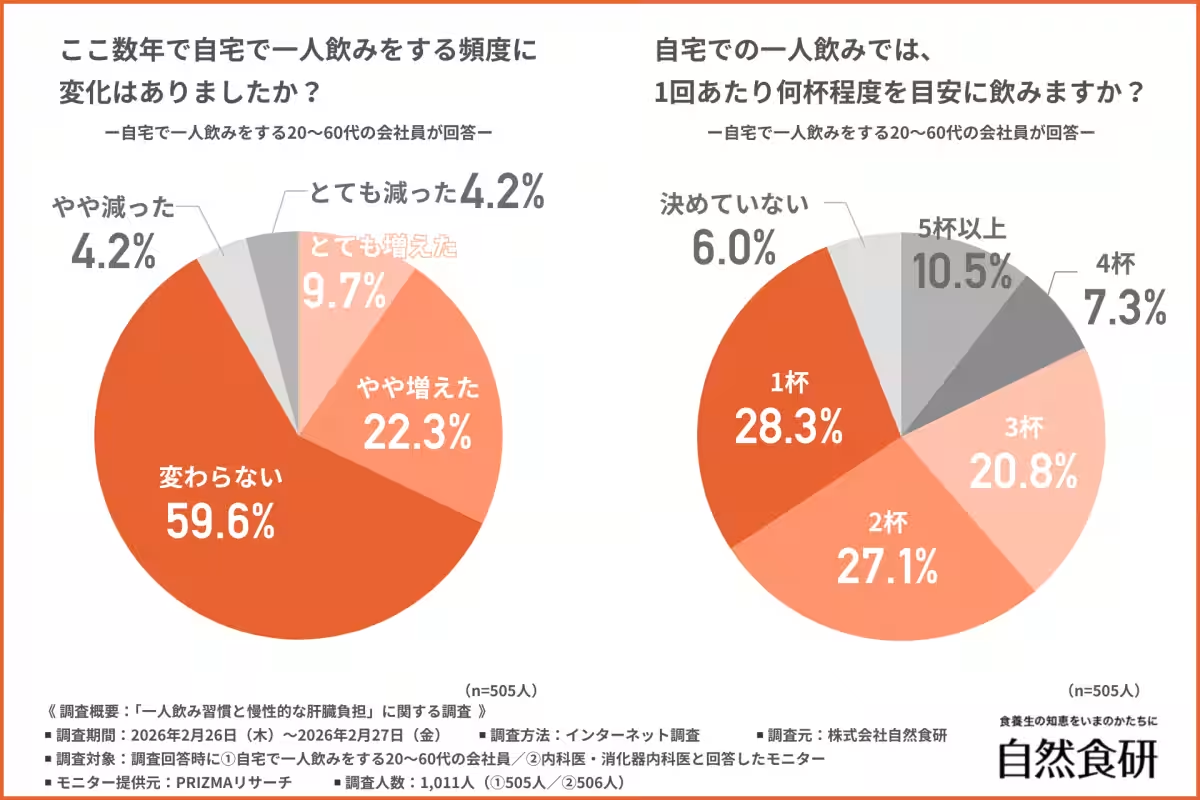
- - Increased significantly: 9.7%
- - Increased slightly: 22.3%
- - Remained the same: 59.6%
- - Decreased slightly: 4.2%
- - Decreased significantly: 4.2%
Nearly 60% of individuals reported no changes, while about 30% indicated an increase in their drinking frequency, likely connected to the shift towards remote work and reduced social activities.
Patterns in Alcohol Consumption Per Session
Participants were asked how many drinks they typically have during a solo drinking session:
- - 5 or more drinks: 10.5%
- - 4 drinks: 7.3%
- - 3 drinks: 20.8%
- - 2 drinks: 27.1%
- - 1 drink: 28.3%
- - No set limit: 6.0%
Most responses indicated a moderation strategy, with over half drinking one or two glasses. However, the combination of those drinking three or more drinks totaled about 40%, highlighting the risk of increased alcohol consumption due to the comfort of home settings.
Health Considerations and Self-Care Practices
Respondents were also asked how they manage their health during solo drinking. The majority indicated they take preventive measures:
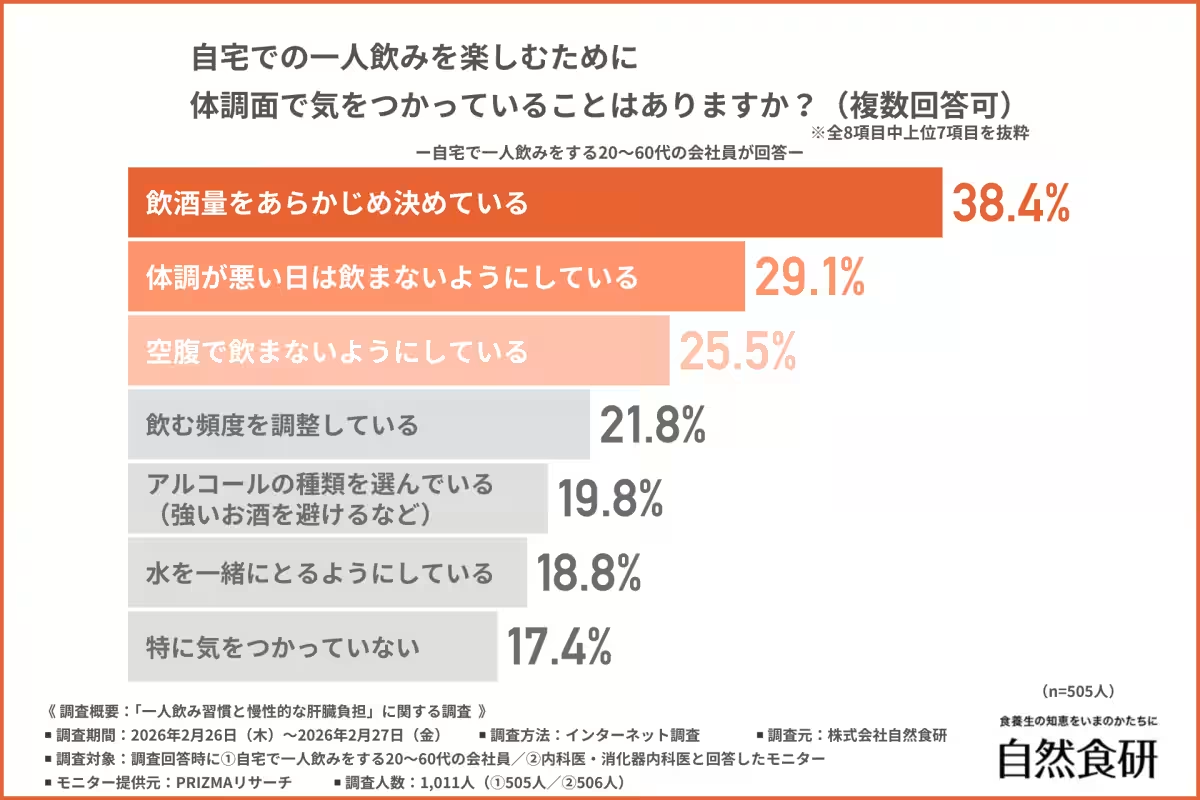
- - Setting a limit on alcohol intake: 38.4%
- - Avoiding alcohol when feeling unwell: 29.1%
- - Not drinking on an empty stomach: 25.5%
This shows a level of self-awareness regarding personal health and alcohol consumption.
Doctor's Perspective on Solo Drinking
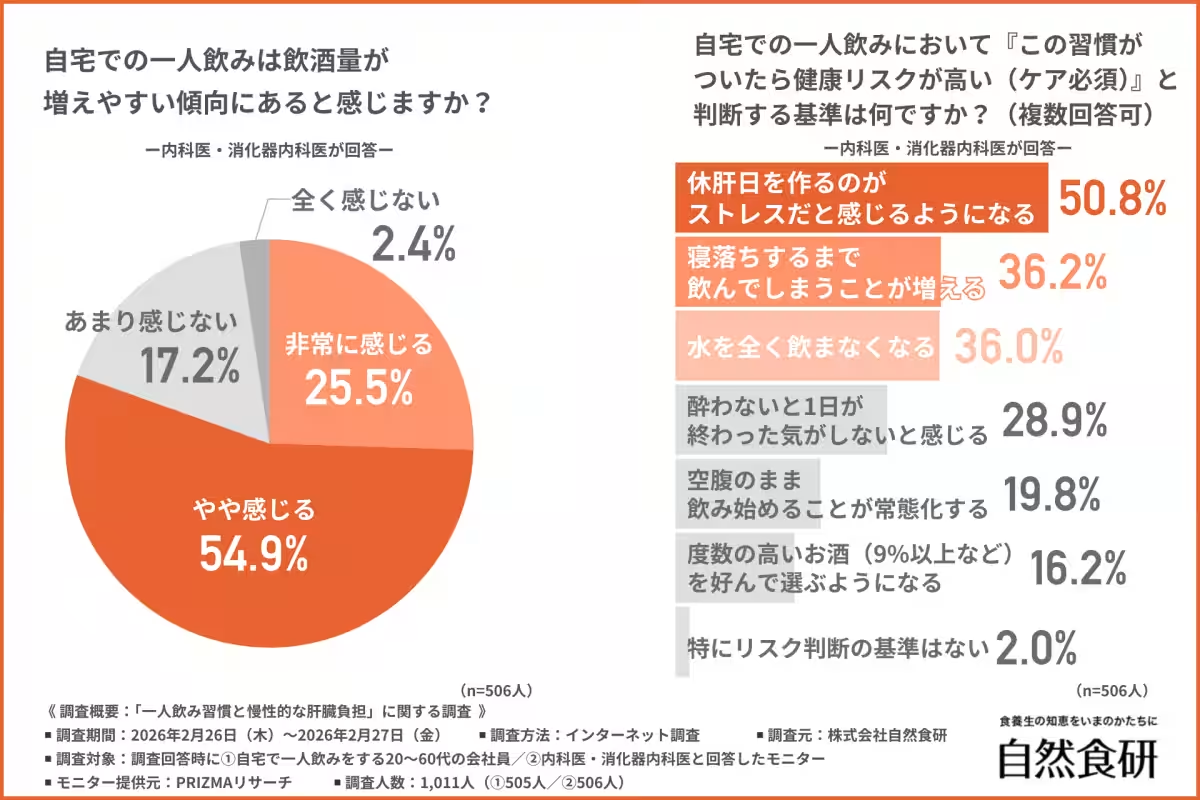
Among doctors, the survey revealed that approximately 80% report solo drinking three times or more weekly. More than 80% of doctors expressed a higher tendency to drink alone compared to the employees surveyed. Acknowledging potential risks associated with solo drinking, experts pointed to the challenge of managing alcohol intake in a non-regulated environment.
Recommendations for Healthy Drinking Habits
Many physicians highlighted the importance of regulated drinking practices, citing methods such as:
- - Adjusting alcohol intake: 47.5%
- - Drinking equal amounts of water: 47.3%
- - Incorporating liver-supporting nutrients: 42.6%
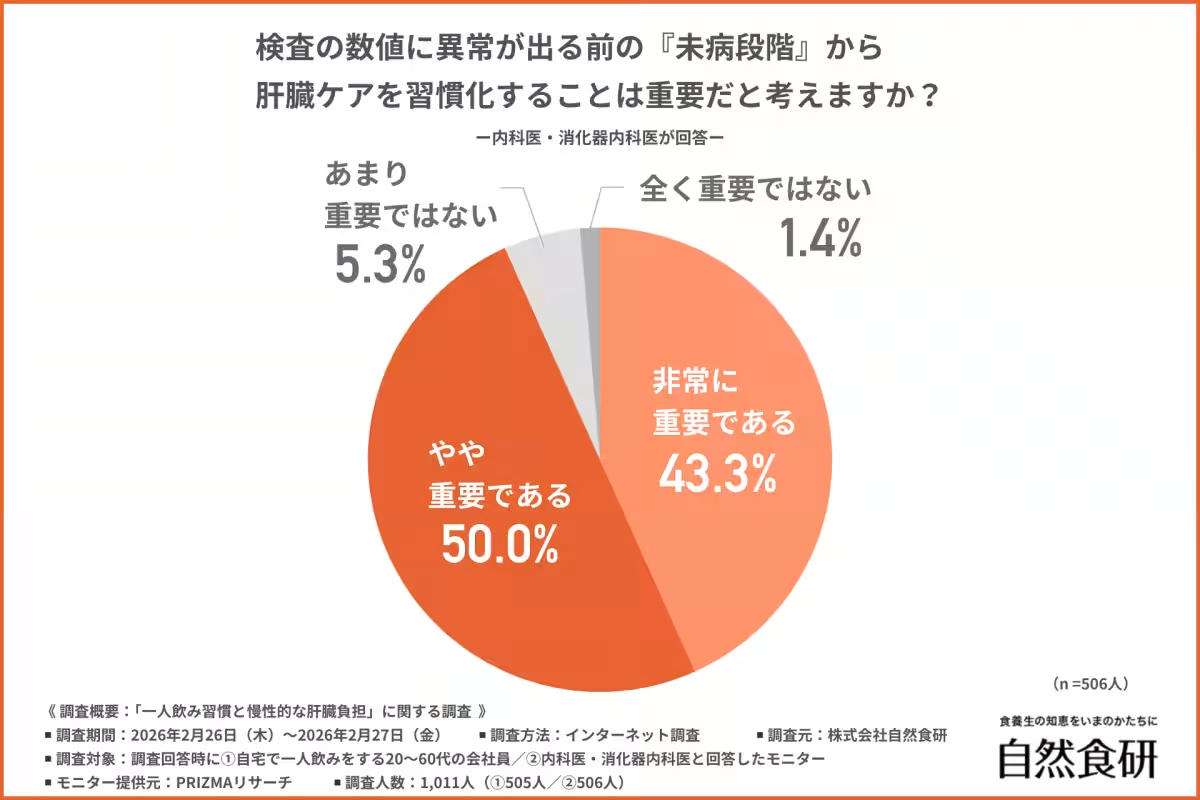
Through establishing such measures, individuals can better regulate their drinking habits and maintain good health. Many health professionals also noted indicators of excessive drinking, such as difficulty taking breaks or significantly increasing drinking frequency, which could compromise liver health over time.
Conclusion
The survey conducted by Sizen Shokken provides valuable insights into the growing trend of solo drinking. While individuals enjoy the comfort of home drinking, it is essential to maintain self-care practices to mitigate health risks associated with alcohol consumption. By fostering habits that include monitoring intake and staying hydrated, people can continue to enjoy their drinking routines without jeopardizing their liver health. Maintaining such awareness may lead to sustainable drinking habits that promote health longevity.
For more resources and products aimed at supporting liver health, consider exploring Sizen Shokken's offerings, including their popular “Shijimi” supplements.
Topics Health)
【About Using Articles】
You can freely use the title and article content by linking to the page where the article is posted.
※ Images cannot be used.
【About Links】
Links are free to use.