



Vietnam's Political Landscape: Implications of the New Leadership for Japanese Businesses (2026-2030)
Understanding Vietnam's New Political Landscape (2026-2030)
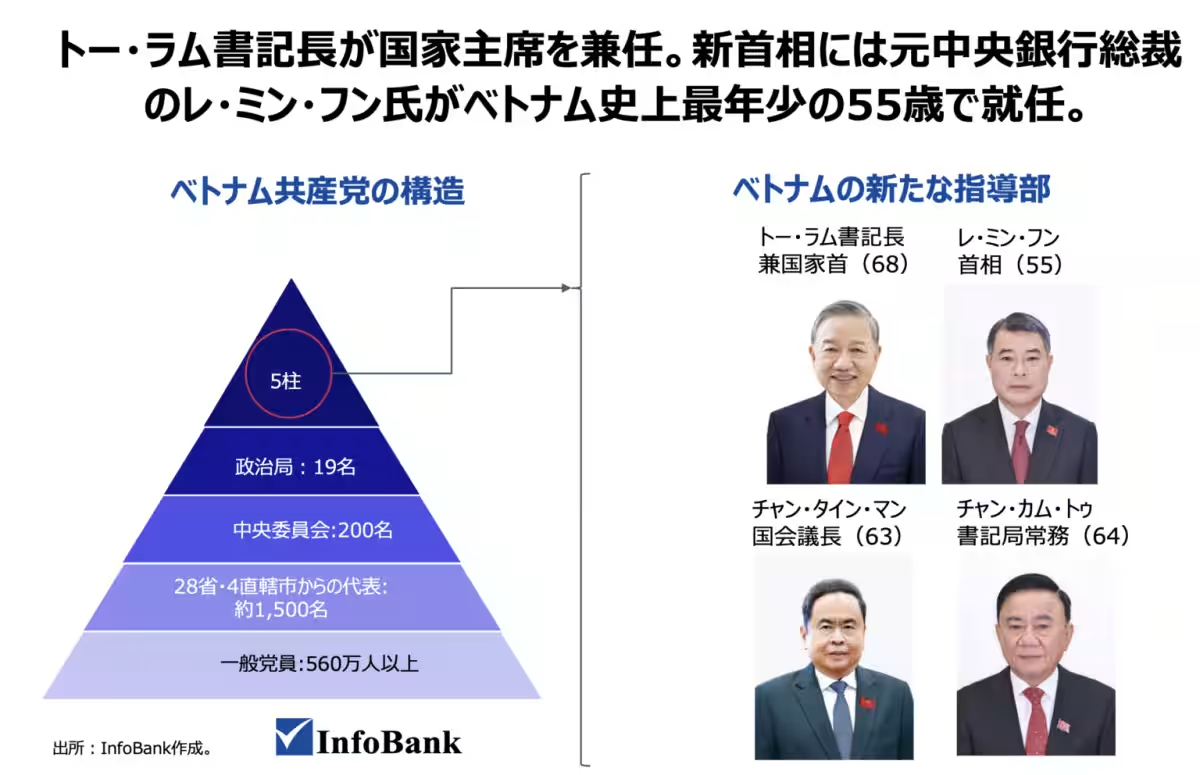
In 2026, Vietnam underwent a significant political transition with the reappointment of To Lam as Secretary General and the election of Le Minh Khai as Prime Minister. This shift marks a pivotal point for Vietnam as it embarks on a path towards reform, promising implications for foreign investors, especially Japanese businesses.
Context of the Political Transition
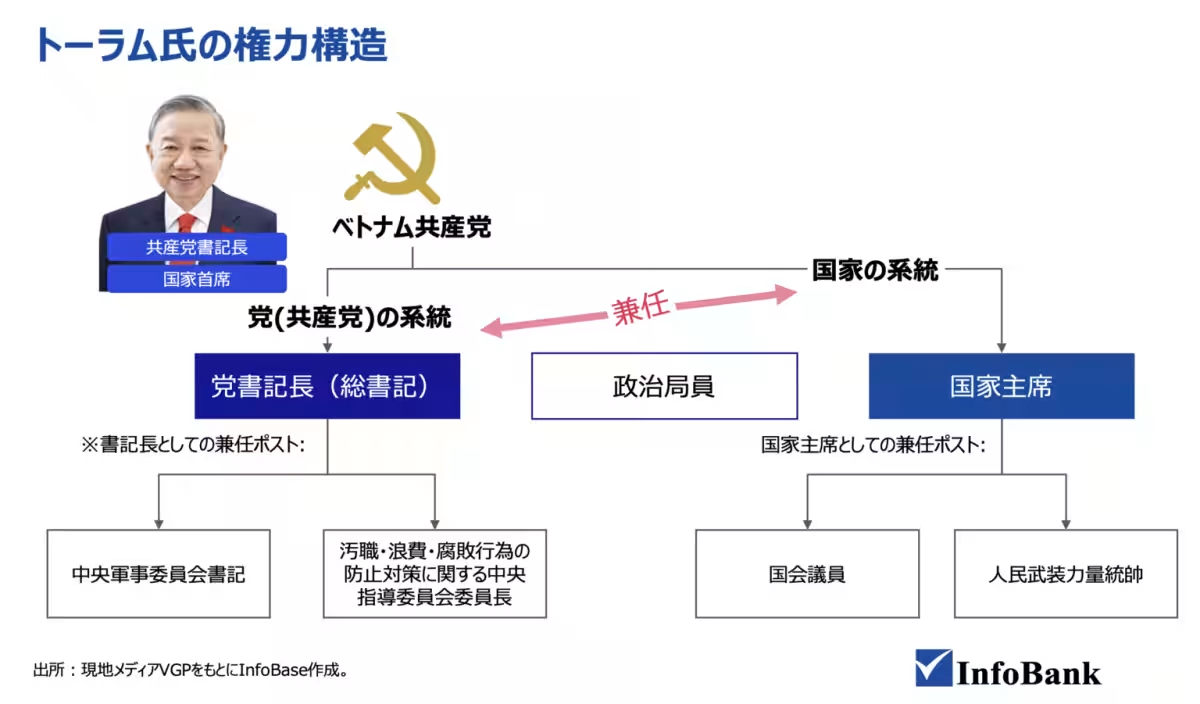
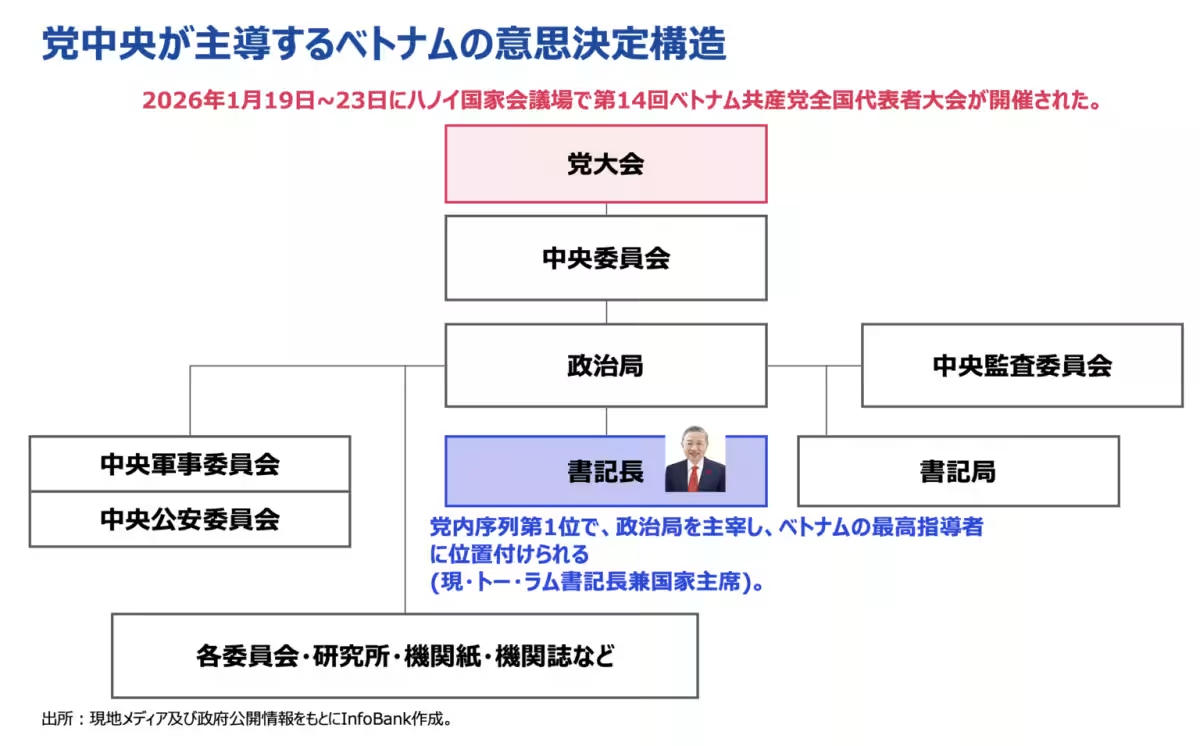
Vietnam's political framework has historically been characterized by collective leadership. However, the recent establishment of a dual role for To Lam as both Secretary General and President of Vietnam has raised eyebrows. This unusual arrangement signifies a concentration of power not typically seen in the nation's political culture, which has often favored shared authority among top officials.
The 14th National Congress of the Communist Party of Vietnam in January 2026 solidified To Lam's position, while a new lineup of leadership, including Le Minh Khai, was affirmed in April during the first session of the 16th National Assembly. This new administration is tasked with steering Vietnam through a transformative 2026-2030 period, wherein major economic and political decisions will be made.
Key Players in the New Leadership
To Lam's dual role as Secretary General and President allows him to wield significant influence over both government and party decisions. This duality presents potential risks, as it concentrates the power traditionally dispersed among various officials. Meanwhile, Le Minh Khai, at the age of 55, becomes one of the youngest Prime Ministers in Vietnam's history.
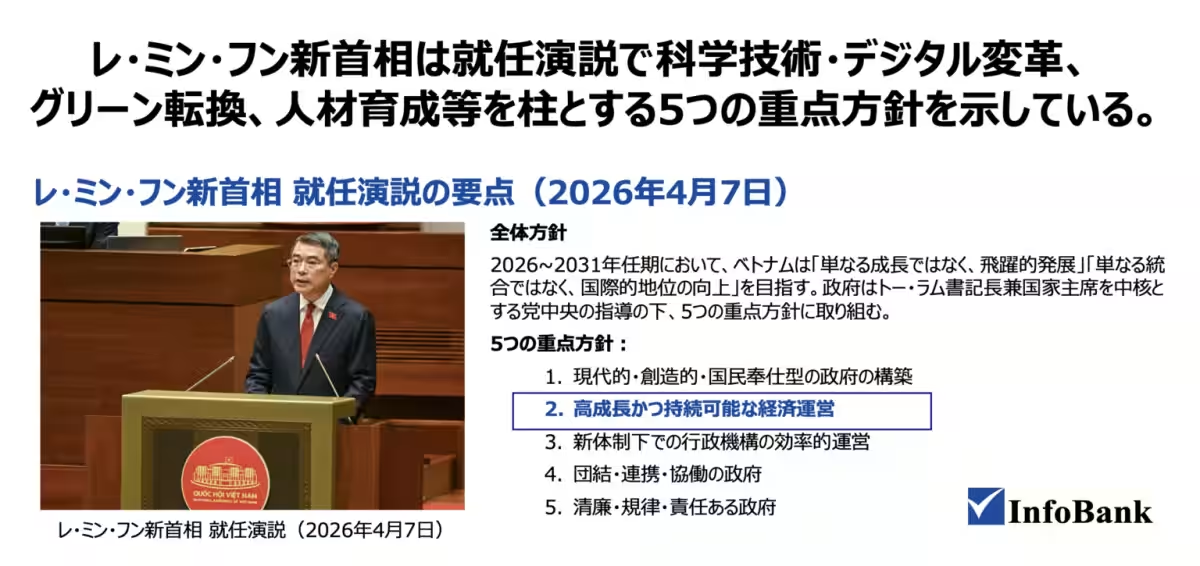
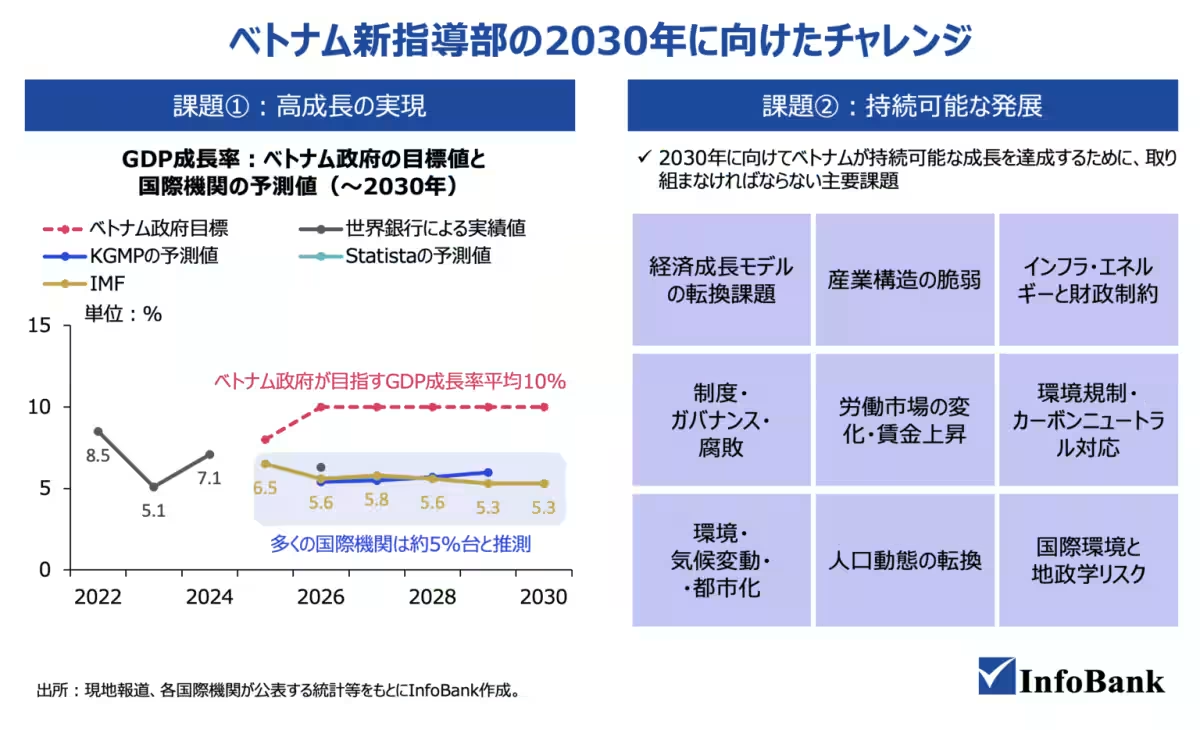
Khai has a wealth of experience in financial and macroeconomic policy, having previously served as the Governor of the State Bank of Vietnam. His vision aims for an average GDP growth rate exceeding 10% during his term, focusing on modernization and innovation through digital transformation and sustainable development. This ambition resonates well with the expectations of Japanese investors keen on tapping into Vietnam's rapid economic growth.
Implications for Japanese Businesses
The emergence of this new political framework brings forth opportunities and challenges for Japanese companies operating in Vietnam. First, the concentration of power may streamline decision-making processes in policies affecting foreign investments. To Lam’s established relationships and understanding of the economic landscape could benefit Japanese enterprises seeking to navigate regulatory environments effectively.
Moreover, Prime Minister Khai's focus on digital transformation and green investment aligns perfectly with the interests of many Japanese corporations specializing in technology and sustainable solutions. Areas such as renewable energy, smart infrastructure, and advanced manufacturing are expected to be prioritized, thus opening avenues for collaboration.
While the leadership change encourages optimism, challenges remain. The government’s ambitious growth targets face skepticism from international observers, with forecasts from organizations like the World Bank and IMF suggesting much lower expectations. Structural issues such as middle-income traps, aging populations, and geopolitical tensions, notably in US-China relations, present substantial hurdles that need to be addressed to achieve the desired economic stability and growth.
Conclusion
The 2026 political developments in Vietnam under the new leadership herald significant changes that will affect not just domestic governance but also Vietnam's relations with foreign investors. Japanese businesses, well-regarded for their quality and innovation, stand to gain from the shifts in policy and governance style under To Lam and Khai’s administration. As the country pushes towards 2030, closely monitoring these dynamics will be crucial for effectively strategizing investments and fostering profitable partnerships.
This evolving landscape represents both an opportunity and a challenge, and companies must remain adaptable and well-informed to navigate the changes ahead.
Topics Business Technology)
【About Using Articles】
You can freely use the title and article content by linking to the page where the article is posted.
※ Images cannot be used.
【About Links】
Links are free to use.