



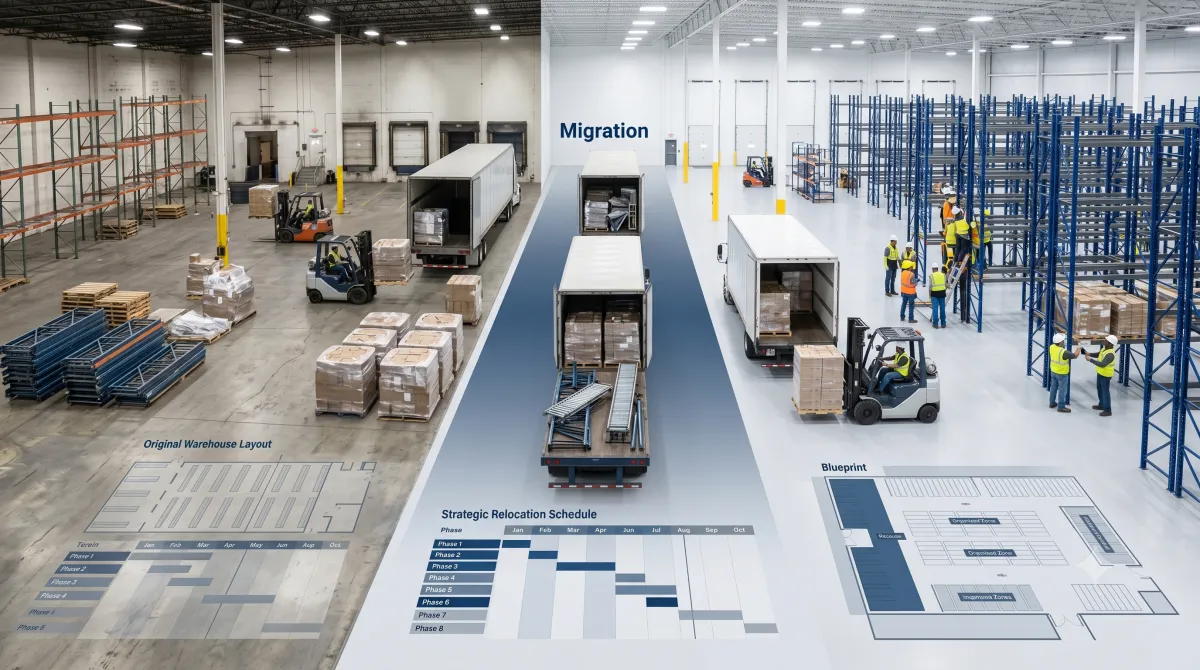
Practical Guide to Preventing Operational Standstill and Cost Overrun in Logistics Facility Integration and Relocation
SEAOS Unveils Essential Guide for Logistics Facility Integration
On June 12, 2026, SEAOS, a consulting firm specializing in logistics, released a new white paper titled "Practical Guide to Preventing Operational Standstill and Cost Overrun in Logistics Facility Integration and Relocation." This document addresses the ongoing urgencies faced by businesses in the logistics sector due to factors like the expansion of the e-commerce market, labor shortages, and the anticipated 2024 logistical challenges.
Understanding Logistics Relocation
The process of relocating or integrating logistics facilities is not merely a matter of moving from one location to another; it represents a complex task that is fundamentally different from routine operations. Even organizations that excel in daily logistics management may find themselves losing sight of critical decision-making criteria when it comes to relocation projects. This often leads to unexpected situations such as budget overruns—sometimes skyrocketing to 150% of the original estimate—and delays that halt operations on the relocation day.
To combat these issues, SEAOS's white paper outlines their practical approaches to investment optimization and adherence to timelines. The strategies detailed aim to prevent the dual pitfalls of cost overruns and operational standstill, ensuring a smoother transition with minimized risks.
Key Points Highlighted in the White Paper
1. Avoiding the Trap of Familiarity: The white paper explains how organizations that are highly proficient in daily logistics operations often fall into the "trap of familiarity" during relocation projects. This occurs when the decision-making criteria are overlooked, and the planning becomes overly reliant on expert vendors, leading to inadequate oversight and potential misallocation of resources. Moreover, when various stakeholders seek to optimize only their segments of the operation, it raises the risk of costly investments and the creation of inefficient facilities.
2. Reverse Engineering Operations for Optimal Zoning: SEAOS emphasizes the importance of adopting a reverse engineering approach to layout design to maximize investment efficiency. Relying solely on vendor estimates can result in oversizing and subsequent project delays, while a detailed zoning analysis derived from the actual operations allows for a 20% reduction in investments without sacrificing deadlines.
3. Utilization of WBS and Tactical Calculations in Project Management: The white paper also describes the significance of Work Breakdown Structures (WBS) in planning relocation strategies, underlining the need for a focus on operational aspects rather than mere construction. By implementing objective numerical assessments through tactical calculations, companies can address the inherent physical constraints and preemptively mitigate issues that might arise on relocation day.
Who Should Read This Guide?
This white paper is designed for executives and decision-makers from mid-sized manufacturing and logistics companies, including those in strategic planning, logistics leadership, and Digital Transformation roles. The content aims to equip these individuals with the necessary tools and insights to make informed decisions regarding logistics facility changes.
As SEAOS has specialized in the logistics domain for over 25 years, the company understands the nuances of merging strategic and operational perspectives—offering a unique blend of expertise that is vital for today’s competitive landscape. Their comprehensive suite of services ranges from strategic consulting to system development, including innovative robotic solutions, thereby supporting logistics operations from end to end.
About SEAOS, Inc.
Founded in August 2000 and officially registered in December 1997, SEAOS, Inc. has established itself as a trusted partner in logistics consulting, providing tailored solutions for businesses involved in manufacturing, retail, and e-commerce. The company's headquarters is located at 1-18-18 Ebisu, Shibuya-ku, Tokyo, offering services that guarantee measurable improvements in operational efficiency.
For more information about SEAOS and to access the white paper, visit SEAOS - Logistics Center Relocation Guide.
Topics General Business)
【About Using Articles】
You can freely use the title and article content by linking to the page where the article is posted.
※ Images cannot be used.
【About Links】
Links are free to use.