



Revealing the Reality of UI/UX Development Setbacks and the Rise of Vibe Coding
Understanding the Setbacks in UI/UX Development
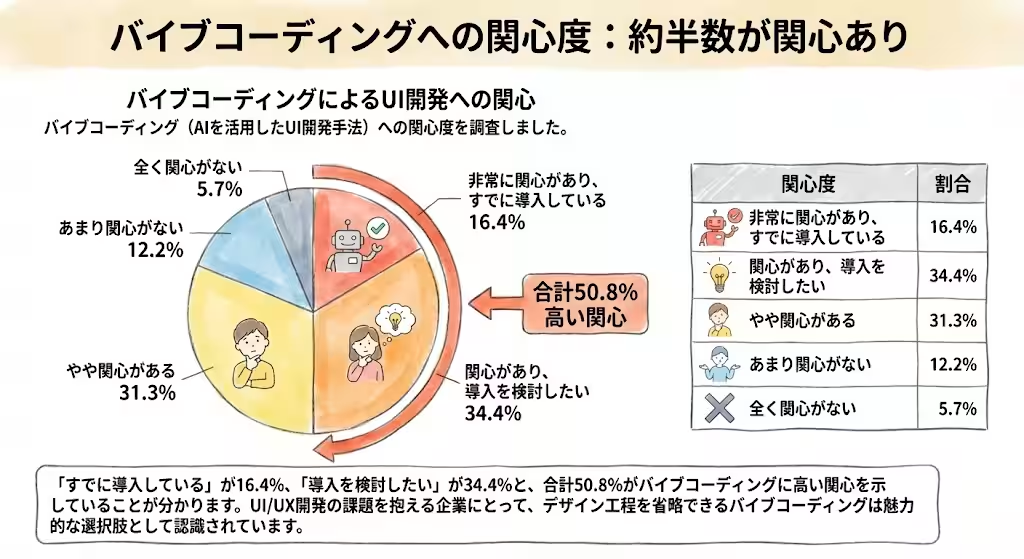
Ragate, Inc. recently conducted an in-depth survey involving 544 business professionals to explore the realities of setbacks in UI/UX development. The results reveal a staggering fact: approximately 50% of projects encounter some form of rework when transitioning from design to implementation. Furthermore, interest in Vibe Coding—an AI-driven UI development methodology—has reached 50.8%. This article delves into the findings of the study and the implications for the future of digital product development.
Background of the Research
In the competitive landscape of digital product development, UI/UX (User Interface/User Experience) design is pivotal. However, many companies find themselves grappling with traditional processes that often result in discrepancies between design and implementation. The survey aimed to shed light on these structural challenges and gauge the industry’s interest in emerging solutions like Vibe Coding.
Key Findings of the Survey
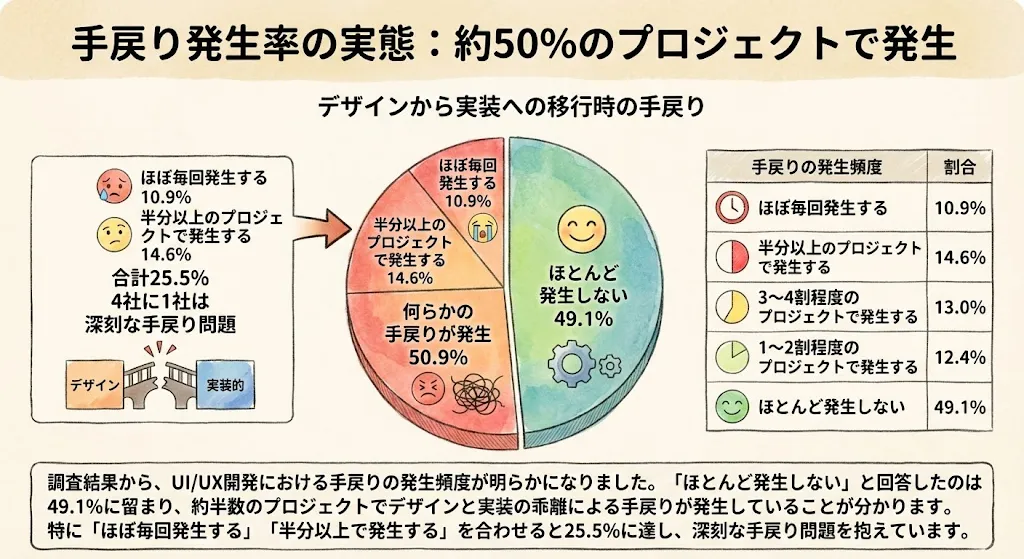
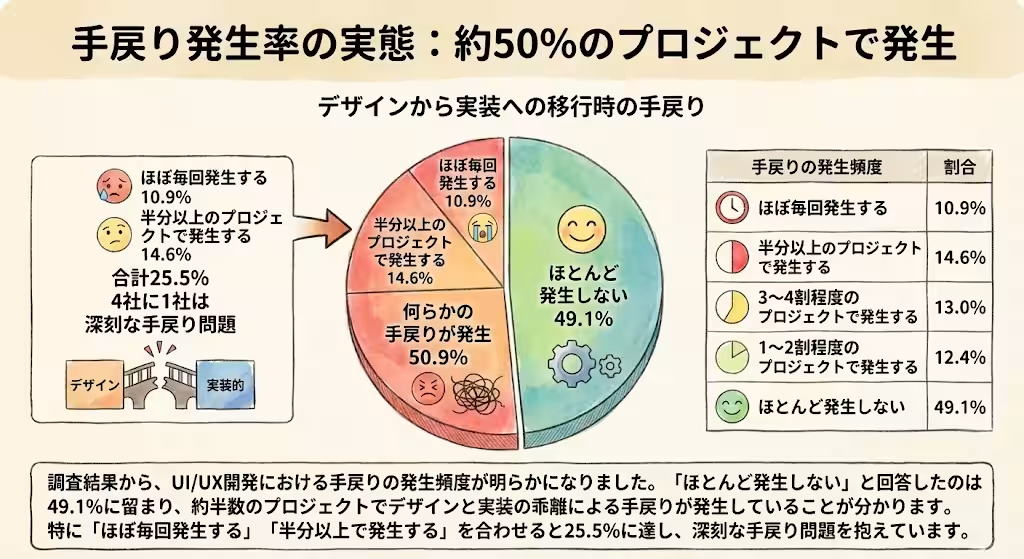
1. Setback Occurrence: The survey highlighted that nearly half of the participants experience setbacks during the transition from design to implementation. Specifically, 49.1% reported minimal setbacks, while 50.9% acknowledged some level of rework occurring in various projects:
- 10.9% reported almost always facing setbacks
- 14.6% indicated setbacks in more than half of their projects
- 13% faced setbacks in about 30-40% of projects.
These statistics reveal that one in four companies is struggling with significant reworking issues, pointing to a systemic problem in the industry.
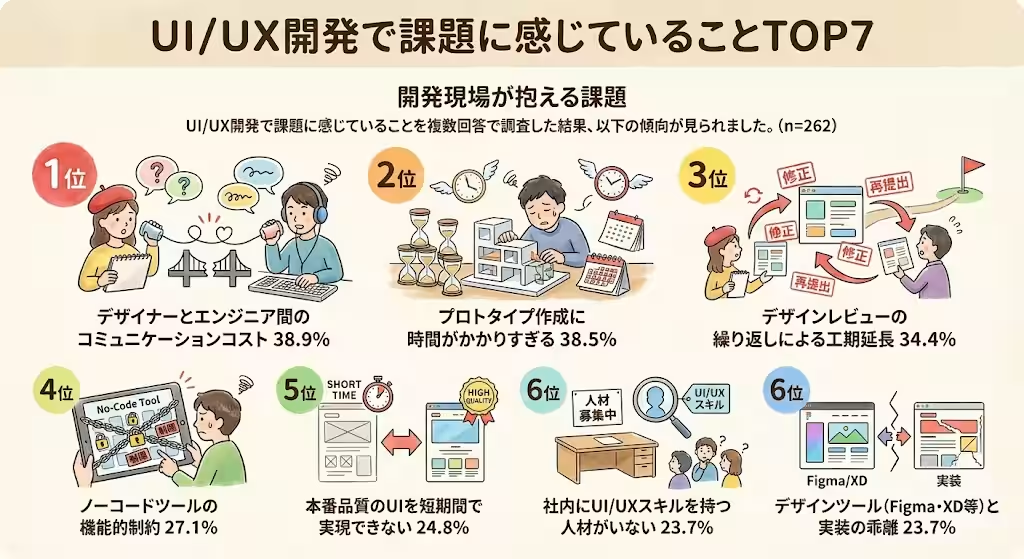
2. Communication Costs: When asked about challenges in UI/UX development, the most significant issue identified was the communication gap between designers and engineers, cited by 38.9% of respondents. Other notable issues included slow prototyping times (38.5%) and repeated design reviews leading to extended timelines (34.4%). This highlights the pressing need for improved communication processes to minimize misunderstandings and the resulting setbacks.
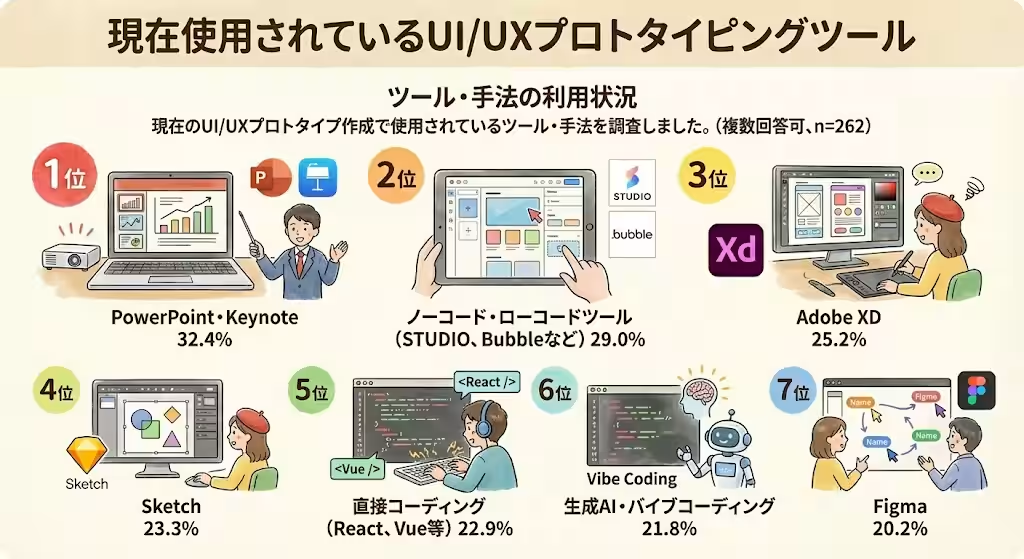
3. Prototyping Tools: Interestingly, the survey found that traditional tools such as PowerPoint and Keynote remain the most popular choices for prototyping, favored by 32.4% of respondents. The ease of use for individuals without specialized skills drives their popularity, though these static tools fall short in testing actual user interactions.
4. Interest in Vibe Coding: The data suggests a strong interest in Vibe Coding, with 50.8% of participants either actively using the method or considering its integration. Specifically, 16.4% have already implemented it, while 34.4% are open to adopting this innovative approach that aims to eliminate the traditional design-to-implementation gap.
Ragate's Insights and Future Outlook
Ragate's survey underscores the universal nature of setbacks in UI/UX development. It points to the “conversion costs” that exist between design and implementation as a primary culprit. The limitations of static prototypes often lead to discrepancies, creating a demand for processes that bridge this gap effectively.
Vibe Coding offers a compelling solution. By bypassing traditional design steps and directly generating functional interfaces through prompt engineering, this method promises several advantages:
- - Eliminating discrepancies between design and actual implementation
- - Transforming prototypes directly into production code, thereby avoiding redundant development efforts
- - Significantly reducing lead time from validation to deployment
Given that 16.4% of businesses are already implementing Vibe Coding, with nearly one-third considering it, it is safe to predict that this methodology will increasingly become a standard in UI/UX development.
For businesses looking to stay ahead in digital product development, embracing innovative methodologies like Vibe Coding may prove essential. Such changes could very well resolve many of the persistent challenges highlighted in this study and redefine standards in the industry.
Topics Consumer Technology)
【About Using Articles】
You can freely use the title and article content by linking to the page where the article is posted.
※ Images cannot be used.
【About Links】
Links are free to use.