



How Huawei's Innovations at MWC Shanghai Empower Global Carriers in Token Monetization
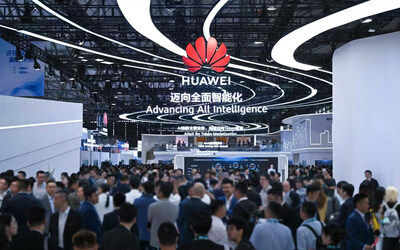
Huawei Empowers Global Carriers at MWC Shanghai 2026
At the recently concluded Mobile World Congress (MWC) Shanghai 2026, Huawei drew significant attention by unveiling a range of innovations designed to integrate services, networks, and computing capabilities. As the telecommunications industry grapples with rapid advancements in artificial intelligence (AI), these innovations are tailored to assist carriers in effectively monetizing tokens and enhancing connectivity.
Key Highlights from Huawei's Presentation
During the event, Huawei's Deputy Chairman, David Wang, highlighted how mobile networks are evolving due to AI technologies. His keynote addressed the transformative potential of AI in shaping the future of mobile communications. Wang outlined six crucial imperatives necessary for the growth of the telecommunications sector over the next decade. These include: 1) the introduction of new services for future mobile networks; 2) the integration of AI into mobile communications to create advanced intelligence layers; 3) the establishment of an integrated architecture for satellite-ground communications; 4) strategic planning for sustainable spectrum allocation; 5) the development of specifications for AI-native core networks; and 6) the exploration of modern business models and applications for mobile services.
Innovative Solutions for Enhanced Connectivity
Huawei introduced several groundbreaking innovations at MWC Shanghai. One of the notable announcements was the launch of a new AI-centric target network, which is envisioned to boost the competitiveness of carriers in both byte and token monetization. This target network shifts focus from traditional traffic-centric methods to a more dynamic real-time interaction approach, thereby ensuring reliable connectivity for users.
Moreover, an emphasis was placed on enhancing high uplink and downlink services, utilizing guaranteed technologies to provide robust user experiences. The new computing network is set to transition from merely transporting data to orchestrating comprehensive network-wide computing resources, ensuring users have seamless access to computing power.
To date, the global adoption of 5G-A has surpassed 100 million users, and Huawei is actively collaborating with carriers to accelerate the monetization of 5G-A experiences. Their aim is to ensure that 5G integrates smoothly into current operational frameworks, retaining mid-range and high-end users and enhancing average revenue per user (ARPU).
Meeting the Demands of Mobile AI
As AI-driven applications expand in scope, the demand for high uplink capacities has surged. Huawei noted that modern AI applications, including AI glasses for translation and immersive experiences, require substantial bandwidth, with mobile uplink needs often reaching up to 20 Mbps. Amidst this transition, global carriers are swiftly exploring commercial high-uplink services to secure peak speeds and ensure low latency.
The anticipated growth of AI services is expected to catalyze the expansion of token-based offerings, necessitating ultra-broadband networks characterized by high reliability. The upper 6 GHz (U6 GHz) spectrum is being eyed as the future of mobile telecommunications, with many nations planning for its integration. This coming year is significant as it marks 2026, the projected commercial introduction of U6 GHz, with aspirations for the Middle East to launch the first commercial 5G-A network utilizing this frequency.
Collaborations for Future Growth
Huawei has pledged to continue its partnerships with carriers across various regions, including Guangdong and Shanghai, to redefine both B2C and B2H services through AI integration. The drive for token utilization is projected to be substantial in sectors like smart home integrations and personal communication systems.
In the B2B arena, Huawei's roadmap includes offering AI-centric computing services that bridge network and computing functions, unlocking pathways for new business opportunities.
Aims for AI-Native Technology Implementation
Looking to the future, Huawei aims to lead the charge in applying AI-native technologies to create more autonomous networks. Their ongoing efforts to incorporate domain-specific intelligence across various networking realms promise to optimize maintenance, enhance energy efficiency, and improve user experience across different environments such as high-speed transit systems and large venues.
The advancements presented at MWC Shanghai illuminate Huawei's commitment to revolutionizing telecommunications by intertwining AI with existing network infrastructures. As they continue to collaborate with industry players, the vision for a more interconnected and efficient telecom landscape seems well within reach.
Topics Telecommunications)
【About Using Articles】
You can freely use the title and article content by linking to the page where the article is posted.
※ Images cannot be used.
【About Links】
Links are free to use.