



Revealing the True Cost of Road Maintenance: How Komobility's Innovations Cut CO2 Emissions and Save Money
An In-Depth Look into the True Cost of Road Maintenance in Japan
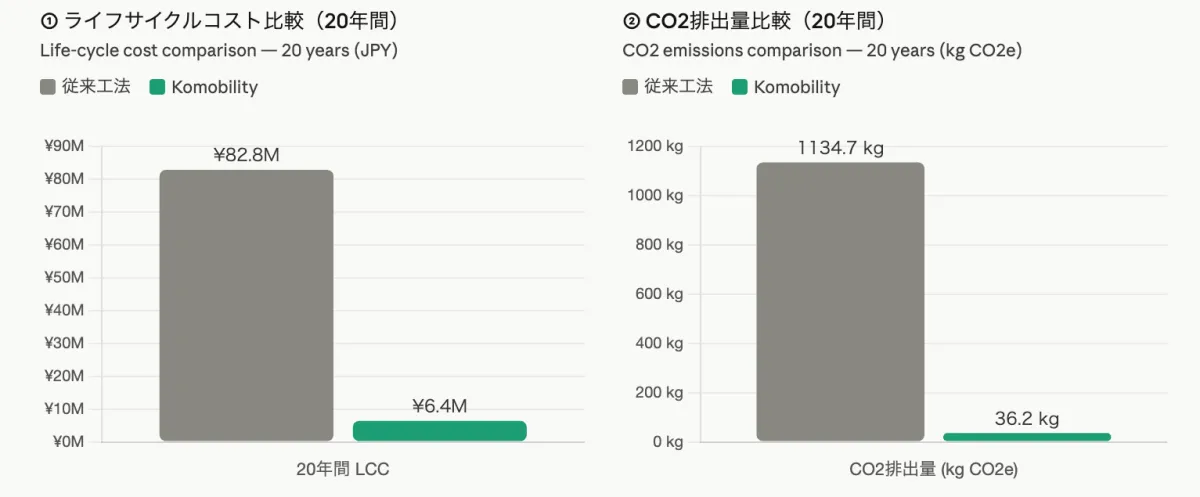
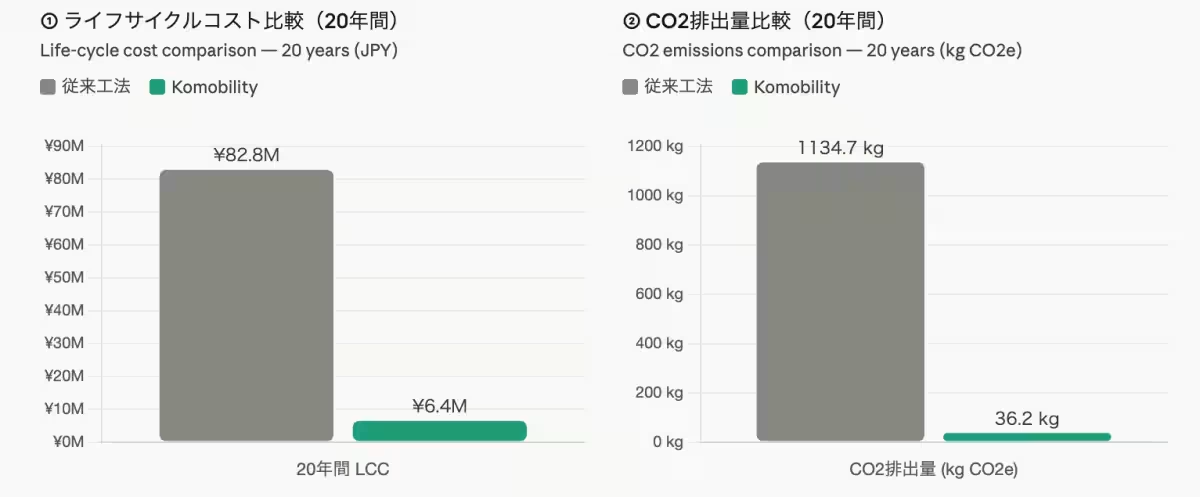
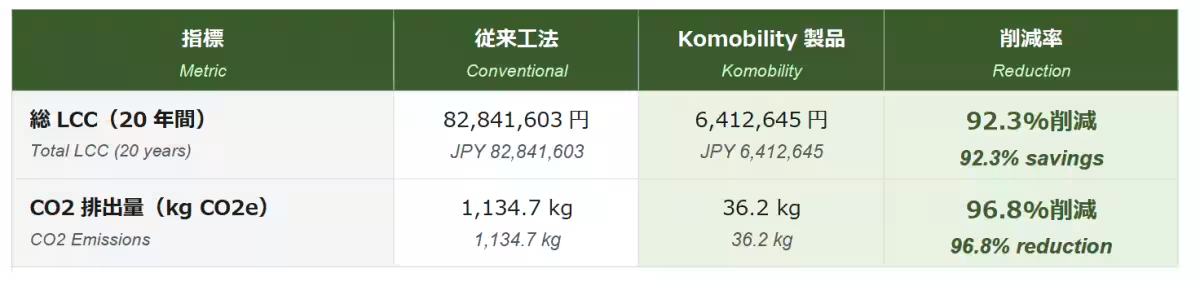
In an enlightening study released by Komobility Japan Co., Ltd., a Tokyo-based company led by CEO Danny Nadri, the real costs associated with road maintenance in Japan have been analyzed over a 20-year lifespan. The study compared traditional repair methods with Komobility's products, ‘KomoRoad’ and ‘KomoFix’. Results indicate that by adopting these innovative solutions, costs can be reduced by an astonishing 92.3%, with CO2 emissions dropping by 96.8%.
Understanding the Hidden Costs of Road Maintenance
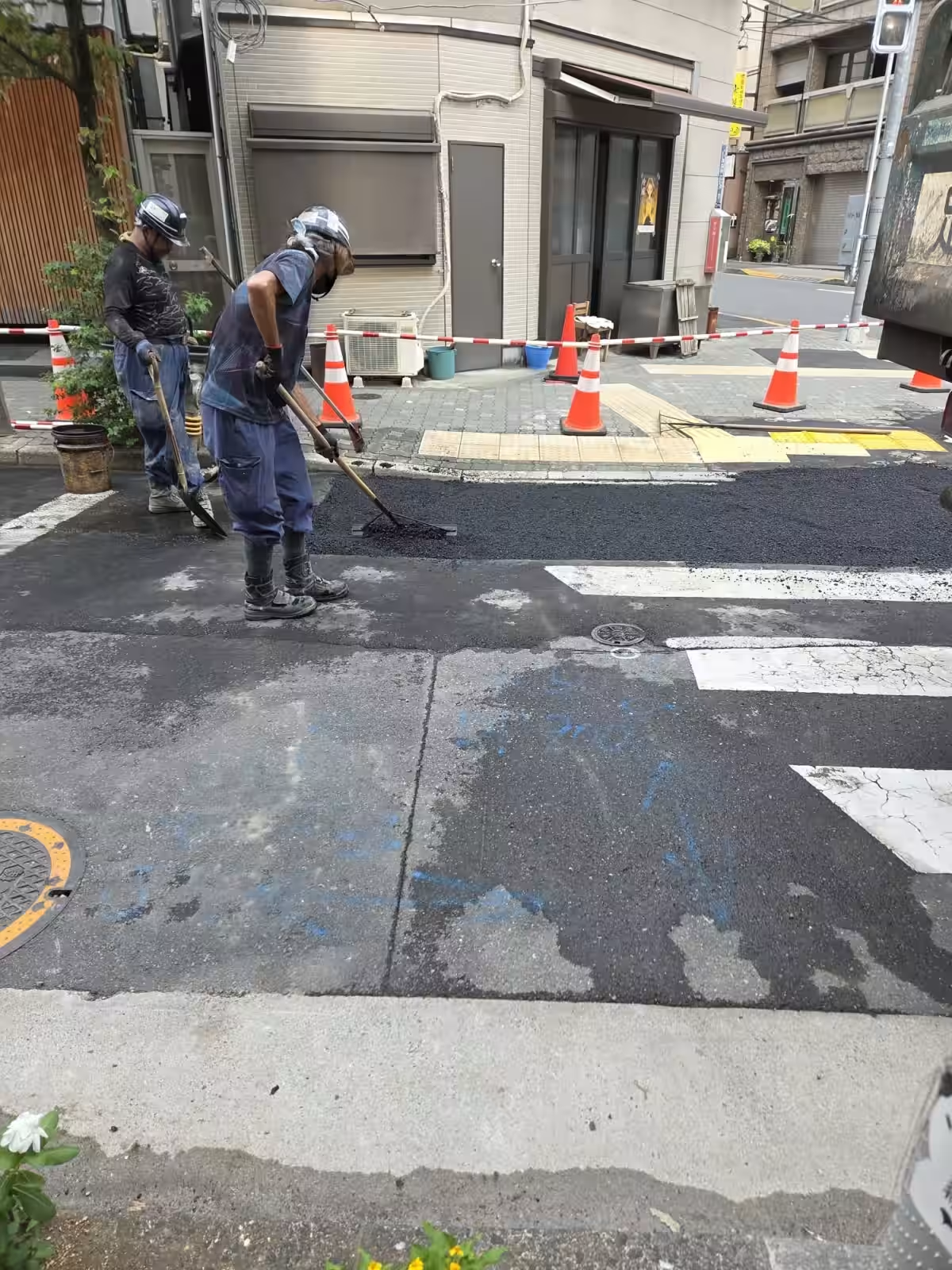
At first glance, the expenses incurred during road repairs may seem straightforward, comprising materials, labor, and traffic management. For example, repairing a single square meter of pothole using conventional methods costs approximately 3,853,676 yen, where the gainfully spent amount on actual materials and labor is merely 73,676 yen. The staggering difference of about 3,780,000 yen reflects losses from user delays caused by traffic restrictions during repairs.
According to estimates from Japan's Ministry of Land, Infrastructure, Transport and Tourism, traffic congestion results in an annual economic loss of around 12 trillion yen and approximately 38.1 billion hours nationwide, largely due to construction-induced traffic regulation.
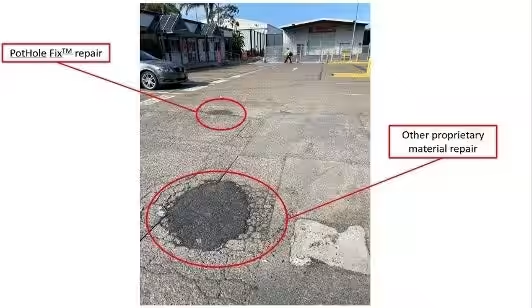
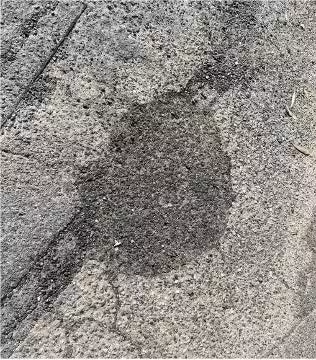
Thus, the reality is clear: the delays caused by repairs surpass the costs of the repairs themselves. Komobility's product, KomoFix, offers a total repair cost of about 107,794 yen per instance, allowing completion in just 15 to 20 minutes while managing traffic flow, which leads to overall delays costing significantly less—specifically, 1/48 of conventional methods' delay costs.
Long-Term Projections Based on Past Data
When considering long-term maintenance, the disparity in costs is even more pronounced. Over 20 years, continuing to repair the same pothole with traditional methods requires approximately 13.3 repairs, summing up to about 51.38 million yen. In contrast, KomoFix only necessitates four repairs during this same period, drastically lowering total costs to about 431,000 yen—representing a startling difference of approximately 120 times.
For comprehensive treatments covering 100 m², traditional hot asphalt methods incur lifecycle costs of about 31.46 million yen over 20 years, whereas preventative maintenance via KomoRoad lowers that figure to approximately 5.98 million yen, achieving an 81% reduction in costs.
Aligning with International Benchmarks
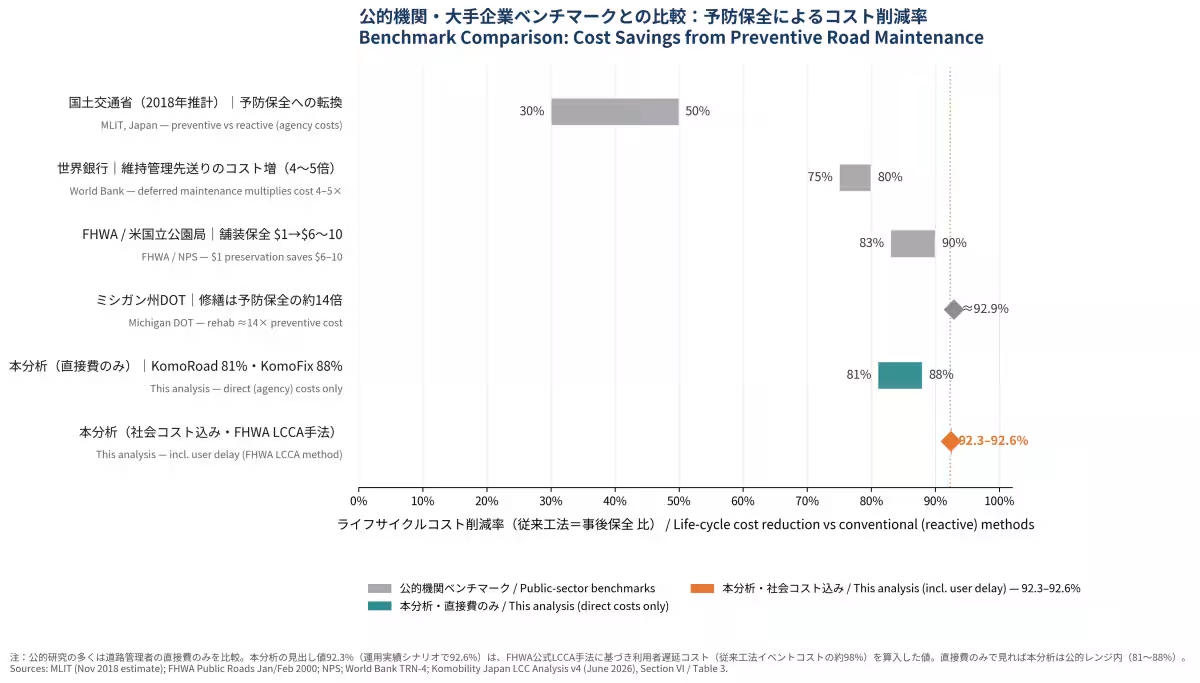
The insights from Komobility's analysis align closely with independent government studies, confirming the 92.3% reduction when factoring in social costs. Past research from the Ministry of Land indicates that transitioning to preventative maintenance could reduce agency costs by 30-50%. Moreover, the World Bank emphasizes that delaying maintenance can cause costs to balloon by 4-5 times. Research by the U.S. Federal Highway Administration (FHWA) illustrates that investing a dollar in roadway maintenance can save six to ten dollars in future costs.
The True Value Lies in Preventing Repairs
While the study highlights the cost-effectiveness of performing repairs faster and cheaper, the true value of Komobility extends to its proactive measures—using KomoRoad to prevent damage before it occurs. By inhibiting ultraviolet oxidation and moisture infiltration, KomoRoad significantly reduces the chances of pothole formation. For every pothole prevented, not only is the cost of the repair nullified, but the associated delays and traffic disruptions—which could amount to about 51.38 million yen over 20 years—are also avoided. If a cautious estimate conservatively predicts KomoRoad can inhibit pothole formation by as much as 80%, the potential savings of approximately 41 million yen per location emerge as profound.
Why Can Komobility Achieve Such Significant Cost Reductions?
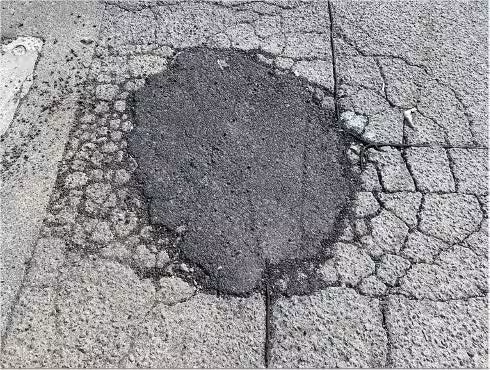
1. Decreased Repair Frequency: Traditional hot asphalt repairs often fail within 1-2 years, whereas KomoFix demonstrates durability with a conservative lifespan estimate of 5 years. KomoRoad can protect road surfaces for 5-7 years, effectively reducing the necessity for repeated repaving.
2. Minimized Delay Costs: KomoFix requires only a brief window of 15-20 minutes for completion, allowing traffic to open much faster compared to traditional approaches, which can take hours. This leads to substantially lower delay costs, thus addressing the hidden expense previously identified.
3. Eco-friendly Process: The use of hot asphalt necessitates energy-intensive processes, such as the extraction and heating of materials. On the other hand, Komobility's products utilize cold application techniques, which lead to a significant reduction in CO2 emissions by approximately 96.8% over 20 years.
Conclusion: Moving Towards a Sustainable Future
Japan faces structural challenges regarding the supply of natural aggregates, something that KomoFix addresses with its method of using 98% recycled asphalt at room temperature. This approach does not require the additional energy input needed during conventional recycling processes. Additionally, KomoRoad incorporates 70% waste aggregate filler, aligning well with Japan's goals toward a circular economy and carbon neutrality.
About Komobility Japan
Founded in Tokyo, Komobility Japan is focused on developing sustainable material science solutions for asphalt mixtures. With products that have been validated in over 50 countries, including high-traffic environments like Los Angeles International Airport (LAX), their technology proves resilient in demanding conditions while conforming to international standards.
CEO Danny Nadri emphasizes the importance of awareness among stakeholders in Japan regarding the actual costs of road maintenance, pointing out that the best repairs are those that prevent further damage altogether. Through innovative practices like those offered by Komobility, the future of sustainable road maintenance looks promising.


Topics Other)
【About Using Articles】
You can freely use the title and article content by linking to the page where the article is posted.
※ Images cannot be used.
【About Links】
Links are free to use.