


Japan Chemical Industry Launches Innovative Ventilation Material for Zero-Eave Homes
Introduction to TM5N Series
In response to the increasing severity of natural disasters such as heavy rain and typhoons, Japan Chemical Industry Inc., led by President Hiroki Kakutani, will launch the TM5N series of ventilation materials specifically designed for zero-eave homes on October 1, 2026. This innovative product aims to provide safety and longevity for residential buildings, contributing to their durability in the face of escalating challenges posed by climate change.
The Growth of Zero-Eave Homes
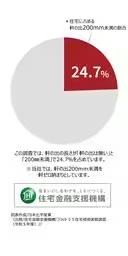
With rising land prices and construction costs, efficient use of limited space and budget has become essential. At the same time, the demand for simple and modern exterior designs has surged, leading to a rapid increase in zero-eave homes in urban areas. A recent survey by the Japan Housing Finance Agency reveals that 24.7% of surveyed homes nationwide feature eaves less than 200mm long, with even higher percentages in metropolitan regions like Tokyo and the Tokai and Kinki areas, underscoring the trend.
Performance Requirements for Ventilation Materials in Zero-Eave Homes
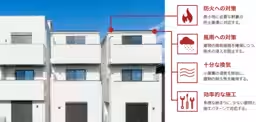
Zero-eave homes present unique challenges compared to traditional homes with overhangs, as their walls and ventilation materials are directly exposed to wind and rain. This necessitates the need to minimize water intrusion while adhering to fire safety standards established by the Building Standards Act. Additionally, ventilation pathways must be ensured in accordance with the Housing Quality Assurance Act to maintain building durability.
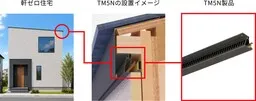
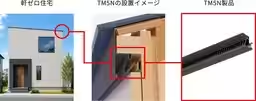
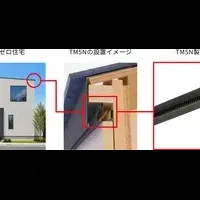
Japan Chemical Industry has drawn on its extensive experience in developing ventilation materials and metal processing products tailored to large housing manufacturers to create the TM5N series, fulfilling various performance conditions necessary for zero-eave homes.
Water Intrusion Prevention with Water Stop Flaps
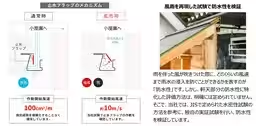
The TM5N series uniquely combines ventilation performance with waterproof capabilities. To prevent rainwater from entering, while maintaining adequate ventilation, it incorporates a proprietary water stop flap developed from the company’s long-standing "BM2" series. This flap activates at wind speeds of approximately 10m/s, blocking rainwater during inclement weather yet allowing for sufficient airflow under normal conditions, thus ensuring the protection of zero-eave homes.
Standardized Construction Methods for Improved Efficiency
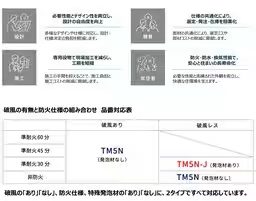
The rise of zero-eave homes, characterized by new design features, has resulted in construction methods that are not yet fully standardized. This variability can lead to dependency on a contractor's experience and skill, creating challenges in achieving the required performance and consistent quality. The TM5N series introduces multi-purpose components that can be customized for various architectural designs, roof shapes, and fire safety needs, enabling comprehensive installation of the entire zero-eave home perimeter. This innovation significantly reduces installation time, stabilizes construction quality, and streamlines the entire process from design to product selection, purchase, and installation.
Conclusion
The launch of the TM5N series marks a pivotal development in the housing industry, particularly for zero-eave homes. With the dual focus on safety against severe weather and enhancing the longevity of residential buildings, Japan Chemical Industry aims to meet the evolving needs of modern architecture. As climate change continues to challenge conventional building standards, innovations like the TM5N series are vital for ensuring the resilience and durability of homes across Japan and beyond.
Topics Consumer Products & Retail)





【About Using Articles】
You can freely use the title and article content by linking to the page where the article is posted.
※ Images cannot be used.
【About Links】
Links are free to use.