



Next-Gen AI Unveils Causes of Energy Loss in Magnetic Materials, Paving Way for Energy-Efficient EVs
Groundbreaking Research on Magnetic Materials
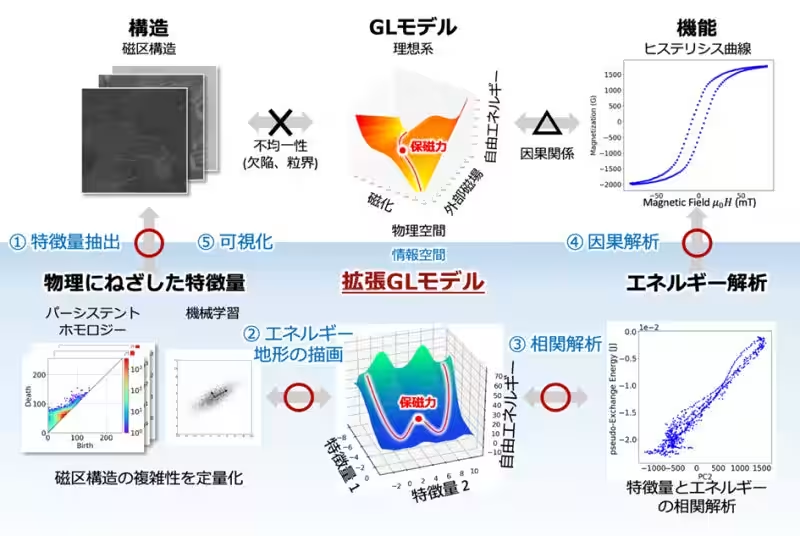
In a remarkable collaborative effort between Tokyo University of Science, Tsukuba University, Okayama University, and Kyoto University, researchers have leveraged next-generation explainable AI—a model termed the 'Extended Free Energy Model'—to uncover the root causes of energy loss in magnetic materials. This innovative research can significantly advance the development of energy-efficient electric vehicles (EVs), a sector increasingly vital in combating climate change.
The focus of the study was on non-oriented electrical steel, a critical material used in motors for electric vehicles. Energy loss, or iron loss, has been identified as a major contributor to efficiency drop in these motors, responsible for as much as 30% of the energy loss and contributing to a staggering 600 million tons of CO₂ emissions annually worldwide. Despite its significance, the mechanisms behind this energy loss had remained elusive, acting as a considerable bottleneck in material design and optimization for advanced electrical applications.
Introduction to the Extended Free Energy Model
The research team, led by Michiki Taniwaki and Professor Masato Kotsugi, employs the Extended Free Energy Model to analyze energy loss in these practical magnetic materials. This model uniquely integrates concepts from topology and thermodynamics, providing a robust framework to connect structure, function, and causality within material science, aptly allowing researchers to visualize energy loss hotspots.
Through the utilization of this model, the researchers visually pinpointed where energy losses proliferate within the material at a microscopic level. This was particularly groundbreaking as it allowed them to differentiate the complex roles of magnetic domain walls that were previously treated as a single unit. As a result, they successfully visualized the distribution of energy loss contributors for the first time. This methodological innovation paves the way for deeper insights into the physical properties of materials, transcending traditional barriers in material science.
Implications for Electric Vehicles and Sustainable Energy
The implications of this research extend beyond just magnetic materials; the general applicability of the Extended Free Energy Model means it could be instrumental in optimizing not only electric motors but also semiconductor devices and battery materials. By harnessing the universal principles of thermodynamics, the model promises a pathway to an overarching framework in the analysis of environmental energy materials, which is crucial as society shifts toward greener technologies.
The successful implementation of this advanced AI technology epitomizes the growing field of 'AI for Science (AI4Science)', showcasing the potential to uncover hidden insights within practical materials that could ultimately lead to optimized energy use in various sectors.
The Future is Bright
As researchers continue to delve deeper into the potential of AI in material science, the hope is to translate these findings into practical applications, contributing to the realization of a sustainable future. This work exemplifies the collaborative efforts among universities aimed at creating superior materials that will play a critical role in energy-efficient technologies, driving forward the ongoing transition towards sustainable electric vehicles.
This promising research was published online on July 15, 2025, in the esteemed journal 'Scientific Reports'. The team’s efforts were supported by grants from the Japan Society for the Promotion of Science and various governmental initiatives aimed at fostering innovation in the fields of science and technology.
For more detailed information on this transformative research, you can refer to the full press release from Okayama University here.

Topics Consumer Technology)
【About Using Articles】
You can freely use the title and article content by linking to the page where the article is posted.
※ Images cannot be used.
【About Links】
Links are free to use.