



Survey Reveals Delays in Consumer Goods Development Processes and Key Challenges
Understanding the Current State of Consumer Goods Development
Centric Software® recently conducted a survey targeting 319 professionals involved in product information management within consumer goods sectors such as apparel, cosmetics, food, and home appliances. The goal was to examine the product development process through various stages—from planning and development to market introduction. The survey revealed several contributing factors to delays in product development.
Key Findings from the Survey
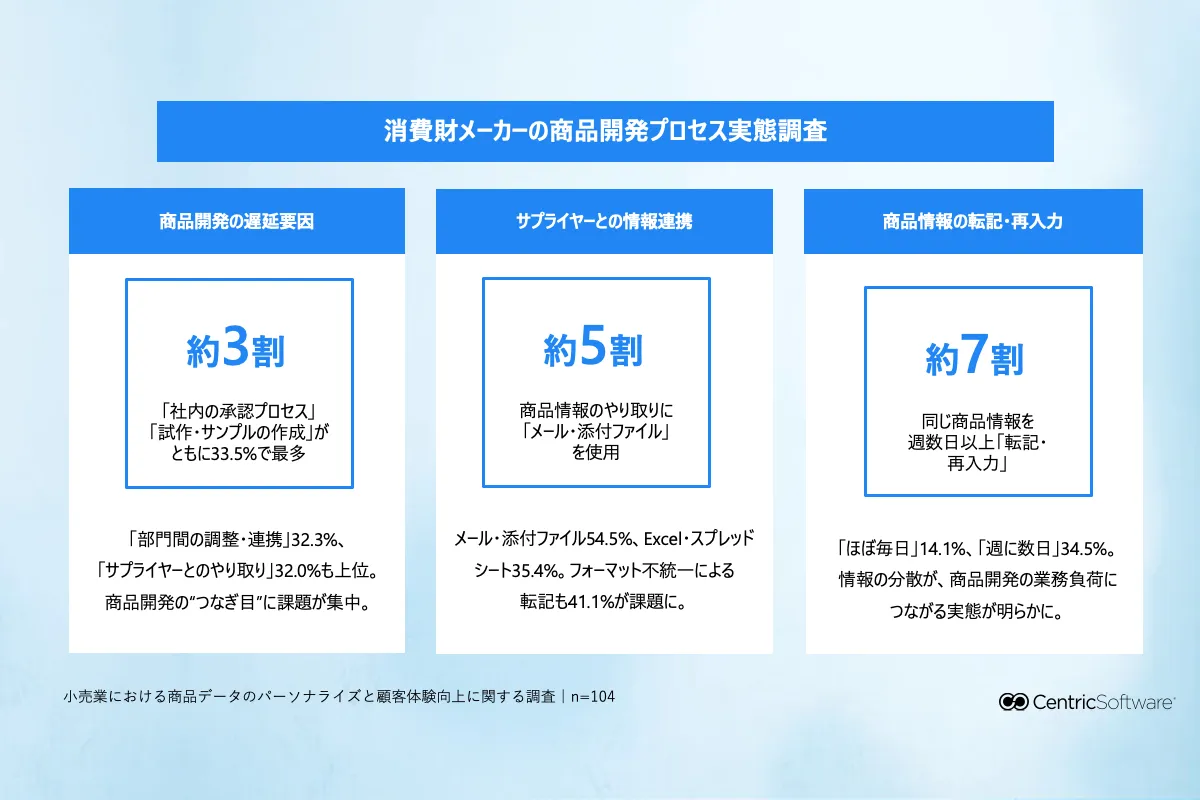
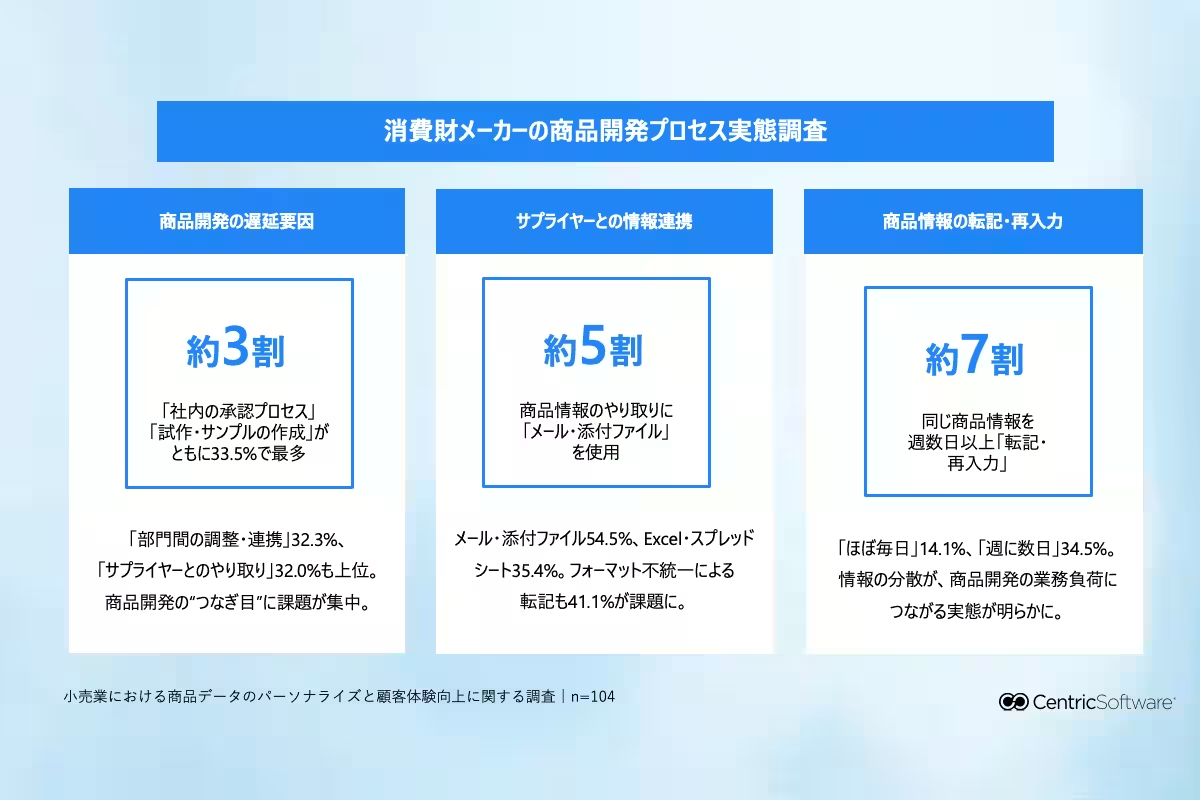
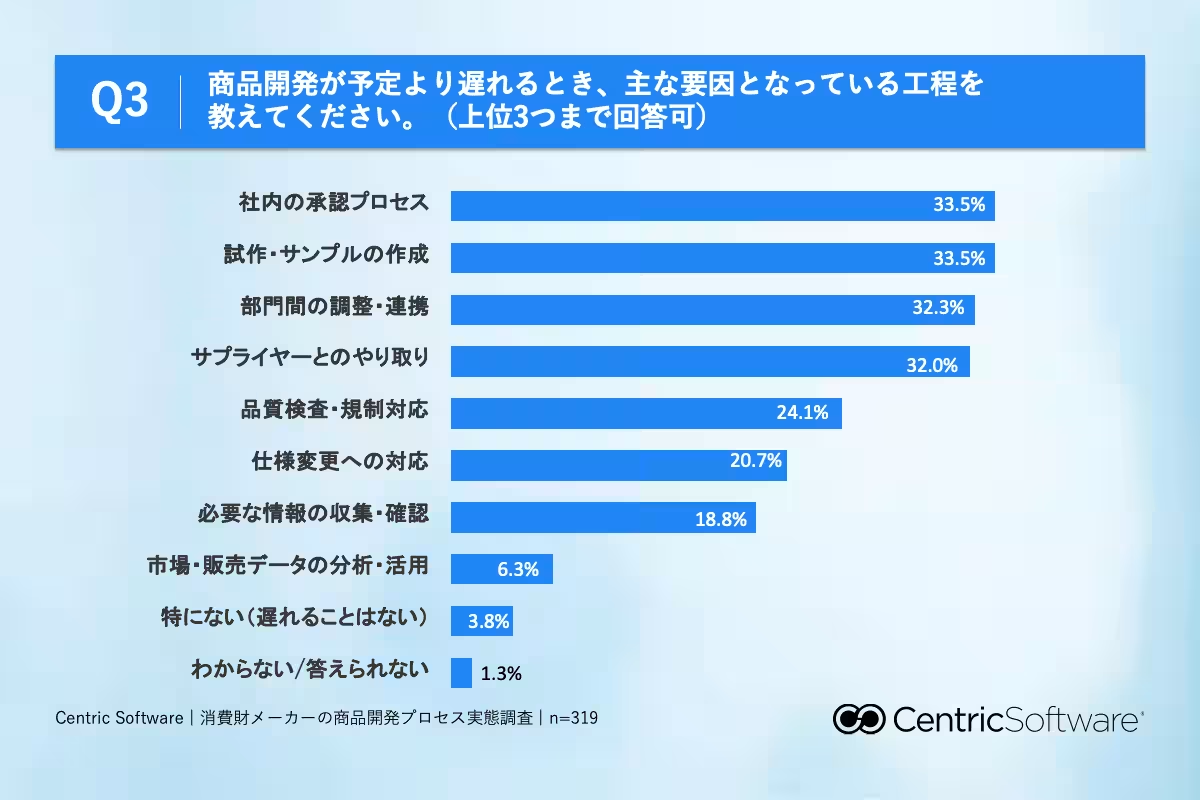
In the face of rapidly changing market and consumer demands, consumer goods manufacturers are under increasing pressure to effectively coordinate product development across various departments and suppliers. The survey identified that 33.5% of respondents pointed to both internal approval processes and prototype/sample creation as the leading factors causing delays. Additionally, 32.3% cited interdepartmental coordination as a challenge, while 32.0% noted difficulties with supplier communications.
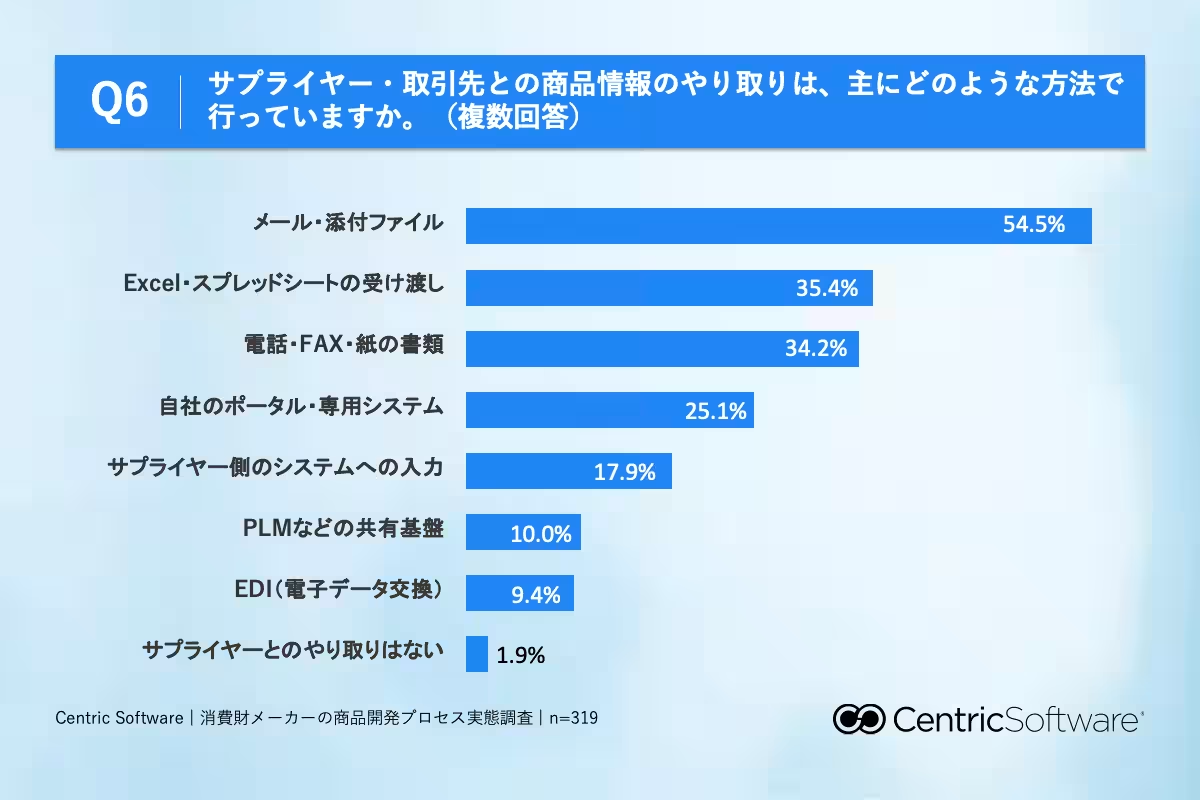
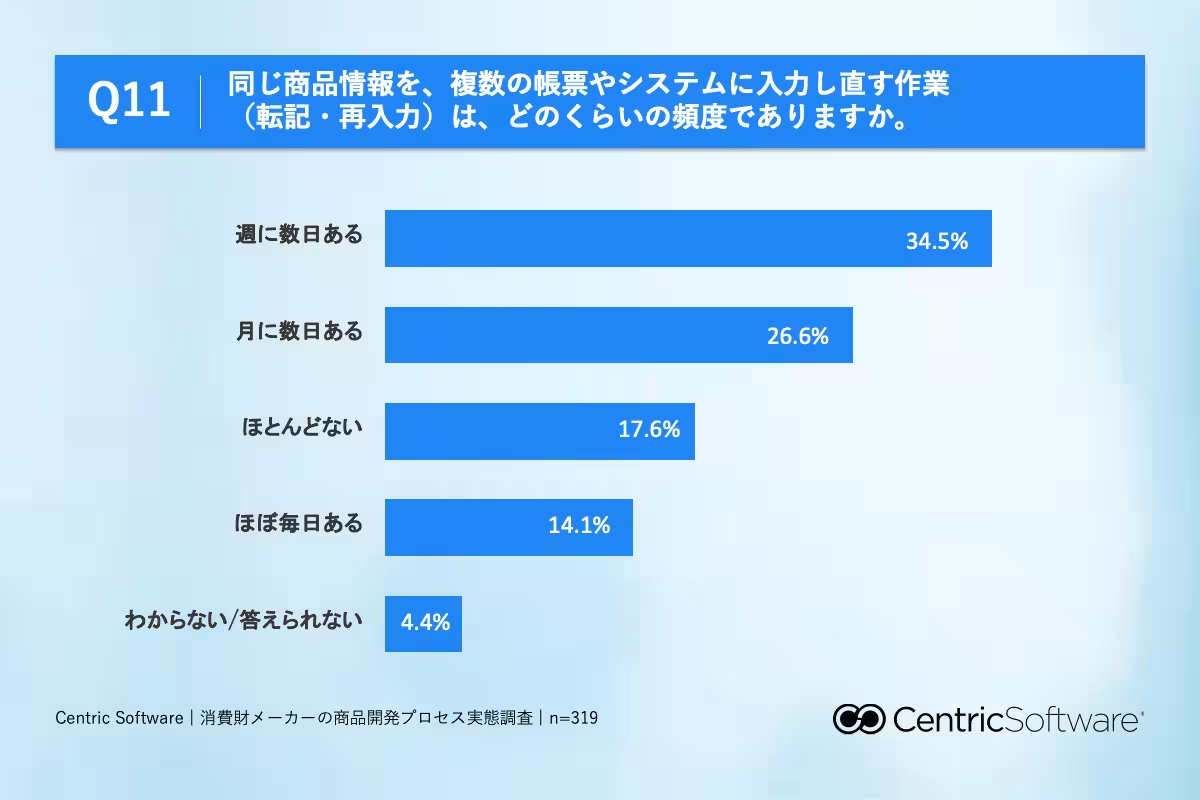
A staggering 54.5% of companies reported that they primarily exchange product information with suppliers via email and attachments, underlining a significant area for improvement. Furthermore, 48.6% of participants acknowledged that they regularly engage in duplicate data entry across multiple forms or systems, adding unnecessary workload and potential for errors.
The Challenge of Internal Approval Process
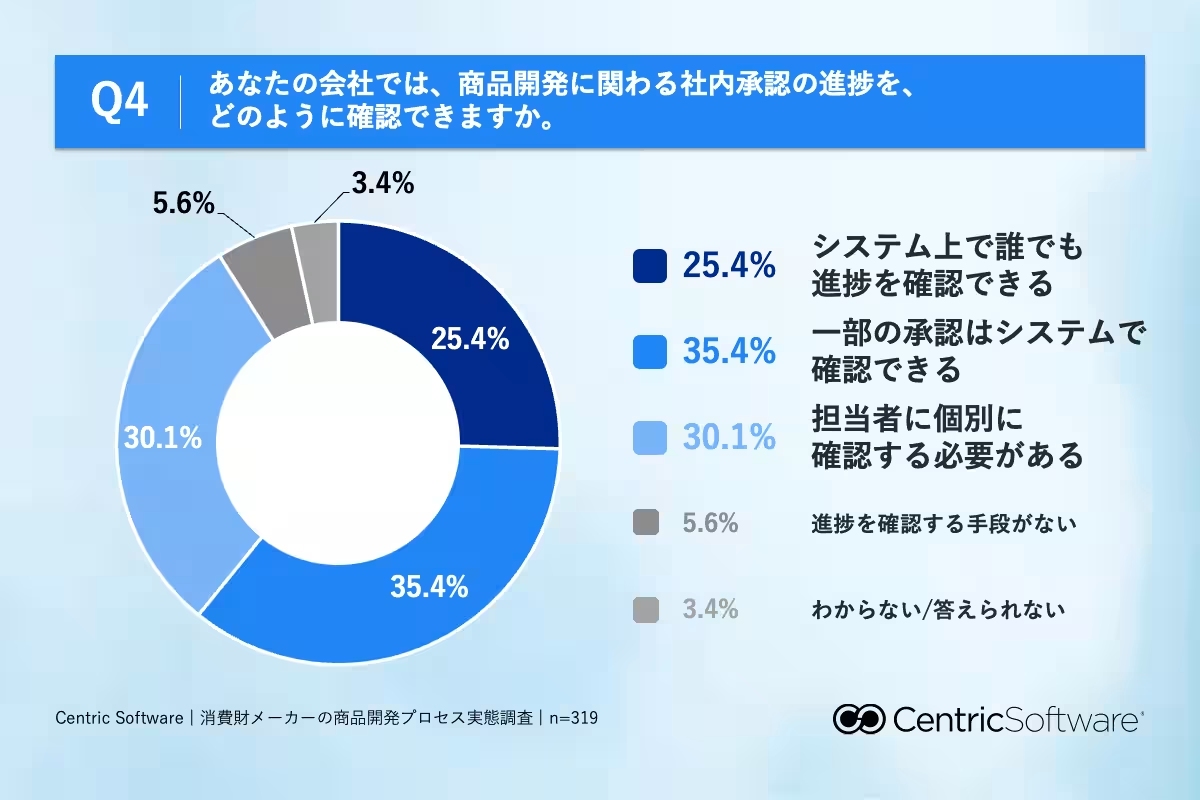
When exploring the internal approval processes, only 25.4% of companies allow progress tracking through a system accessible to everyone. In contrast, 30.1% require individual confirmations, while 5.6% possess no means to verify progress at all. Delays in approvals were largely attributed to the time-consuming nature of the process (34.2%), unclear approval criteria (32.9%), and the unavailability of approvers (29.8%). This lack of visibility highlights the need for transparent communication and efficient workflow solutions in collaborative environments.
Handling Specification Changes
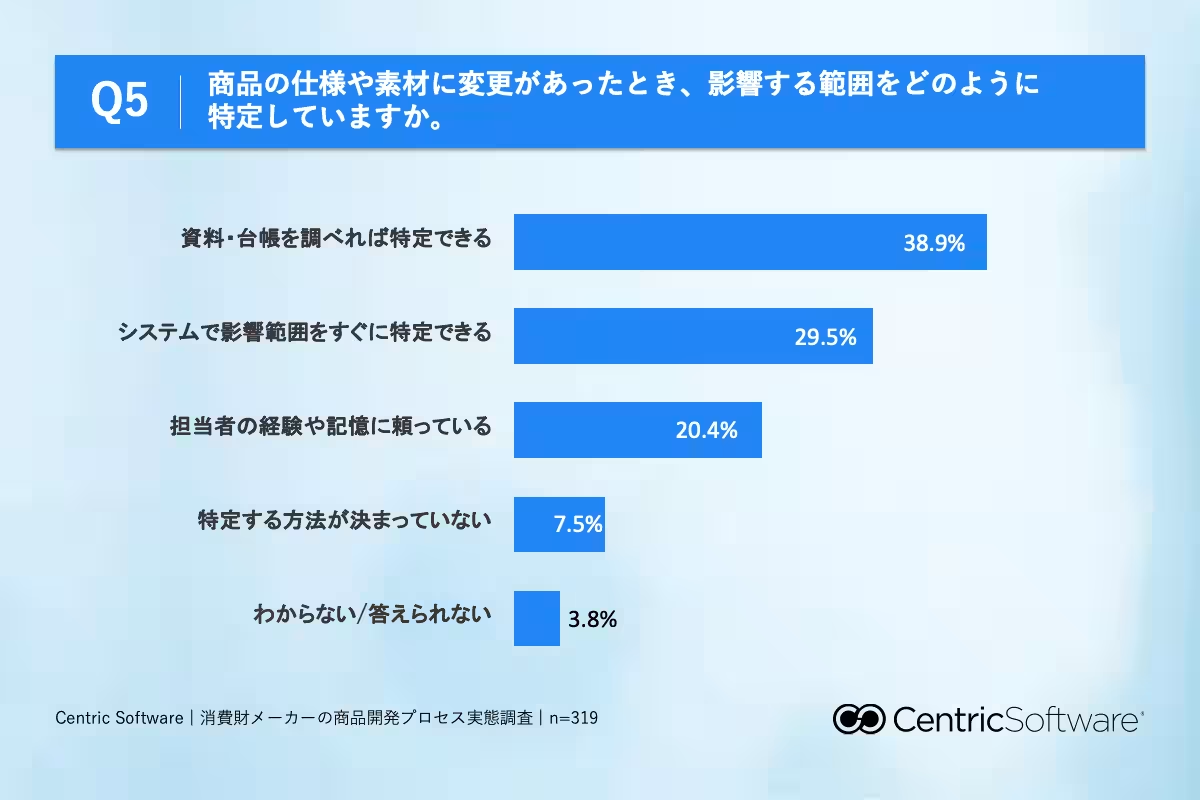
In the context of handling changes in specifications or materials during development, only 29.5% of respondents indicated that their systems enable immediate identification of the impact scope of such changes. Comparatively, 24.8% rely on personal experience, while another 23.2% need to cross-reference multiple documents. Managing the complexities from changes is crucial, as they can impact costs, sourcing, quality, and packaging.
Supplier Communication Remains Basic
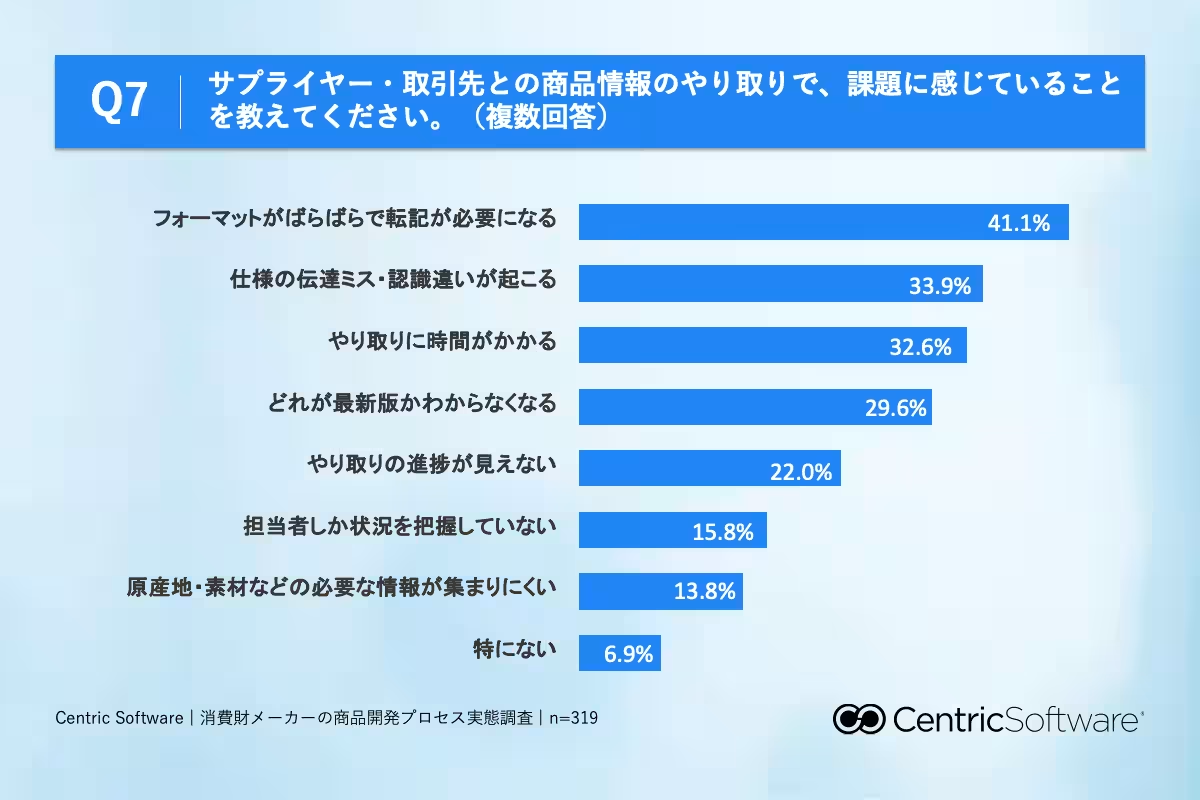
Current practices denote a heavy reliance on traditional communication methods with suppliers, where 41.1% find themselves needing to revise formats, resulting in more opportunities for errors. Information exchange platforms, integrating real-time communication with suppliers, are essential to ensure that all participants are on the same page and can access updated data as necessary.
Streamlining Data Entry
It’s noteworthy that nearly half (48.6%) of participants regularly encountered the burden of re-entering data, with 14.1% stating they perform this task nearly every day. The survey revealed significant fragmentation across departments, with 31.0% reporting that information is often siloed, while 29.2% confirmed it is scattered across various locations. The time invested in locating essential data cannot be understated and indicates an urgent need for a cohesive data management strategy.
Future Investment Areas
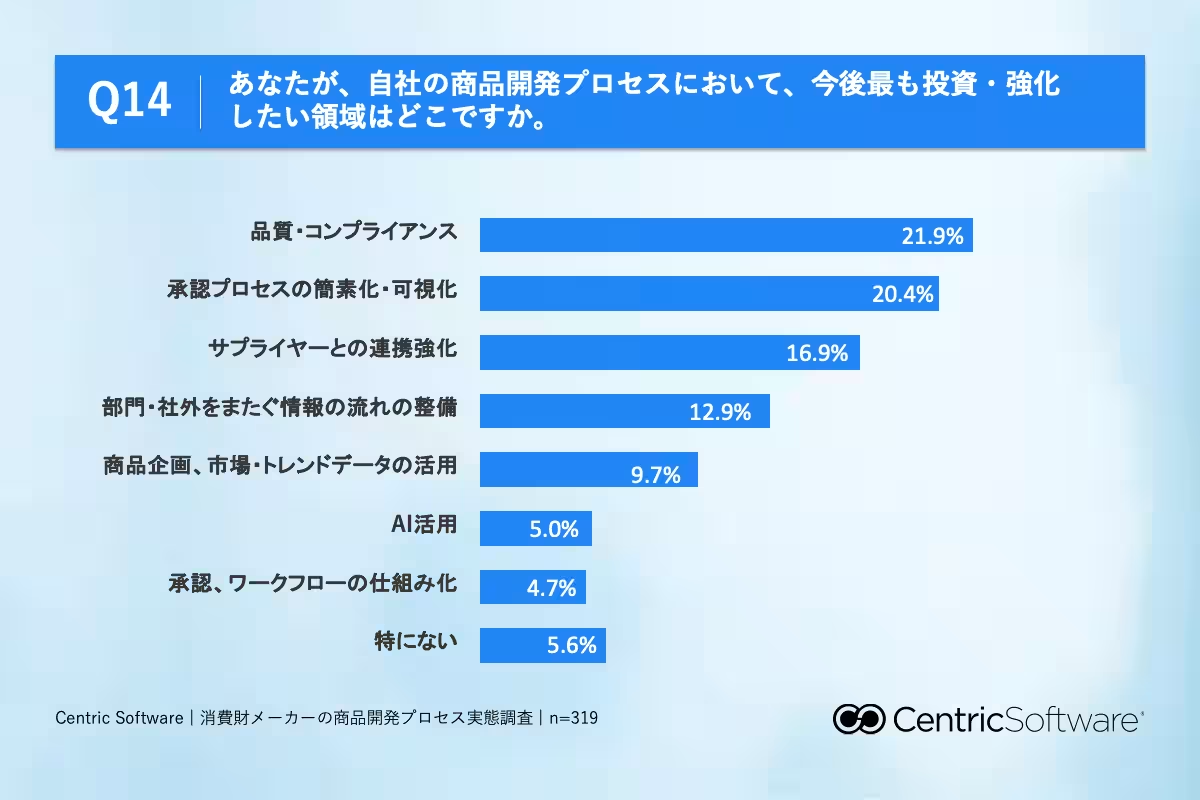
Addressing these challenges is paramount for manufacturers, with 21.9% of respondents indicating that enhancing quality and compliance is their top investment priority moving forward. Following closely are improvements to the approval process (20.4%) and strengthening supplier partnerships (16.9%). These priorities reflect the broader goal of not just enhancing speed but also maintaining high standards throughout product development processes.
Conclusion: The Importance of Integrated Processes
This survey sheds light on many inefficiencies in the consumer goods development domain, revealing that challenges span not only creation and approval but also extend to interdepartmental coordination and supplier interactions. By fostering an environment where data and workflows are integrated across product development, companies can enhance speed and product quality simultaneously.
Centric Software aims to support these transformations with its AI-driven platform, designed to unify product data and processes, bolster collaboration across departments, and facilitate rapid decision-making during product development. For those seeking to delve deeper into optimizing product development, Centric Software offers various resources, including insights on enhancing collaboration and integrating technology to meet evolving market needs.

Topics Consumer Products & Retail)
【About Using Articles】
You can freely use the title and article content by linking to the page where the article is posted.
※ Images cannot be used.
【About Links】
Links are free to use.