



Tech Doctor Establishes Standard Values for Wearable Data Among Japanese Workers
Overview of Tech Doctor's Research on Wearable Data
Tech Doctor, a Tokyo-based company, has conducted a comprehensive analysis of wearable data from approximately 2,000 employees over a span of 15 months. This groundbreaking study aims to establish standard values related to activities, sleep, and heart rate variability, tailored for the working-age Japanese population. The findings were presented at the 99th Annual Meeting of the Japan Society for Occupational Health, showcasing the impact of age, gender, and temperature on health metrics derived from wearable devices.
Research Background
In recent years, the utilization of data from wearable devices has surged. Numerous studies have linked daily activity metrics to health outcomes and disease risks. One notable analysis demonstrated that increased step counts significantly lower the risk of all-cause mortality and chronic diseases across 15 international cohort studies (Paluch et al., Lancet Public Health, 2022). Additionally, links between step counts from Fitbit devices and reductions in the risks of diabetes, hypertension, and obesity have been established (Brittain et al., Nature Medicine, 2022).
However, to effectively utilize this data for health management and disease prediction, it is essential to have standardized reference values. Existing research pertaining specifically to the Japanese population has been limited, primarily focusing on small sample sizes.
Research Objective
The primary objective of this study was to create reference values for activity, sleep, and heart rate variability metrics segmented by age and gender, utilizing long-term wearable data from employees at research partner companies.
Main Goals:
- - Establish median and 95% prediction intervals for bio-indicators derived from Fitbit across various age groups and genders.
- - Develop a Bayesian statistical model that considers the effects of aging, gender, and temperature.
Secondary Goals:
- - Explore the associations between established reference values and health check data.
- - Evaluate the utility of the reference values through correlations with disease statuses and health conditions.
Research Methodology
Participants
- - A total of 1,996 employees aged between 25 and 65 years were analyzed.
- Females: 736
Measurement Devices and Duration
- - Device: Google Fitbit
- - Measurement Period: January 2023 to November 2025
- - Average Usage Time: 435 days
Collected Data
- - One-minute interval activity data
- - Sleep stage classification data (Wake/REM/Light/Deep)
- - Heart rate variability during sleep
- - Filtered participant numbers for analysis:
- Sleep duration: 1,899 participants
- Sleep stages & heart rate variability: 1,934 participants
Research Findings
Heart Rate Variability Standards (SDNN)
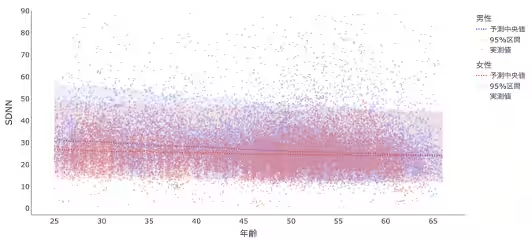
Among younger participants, males showed a higher median SDNN, with males at age 25 having 32 ms, while females had 27 ms. As age progressed, there was a noted decline, particularly among males, with gender differences diminishing around the age of 60.
Activity Standards
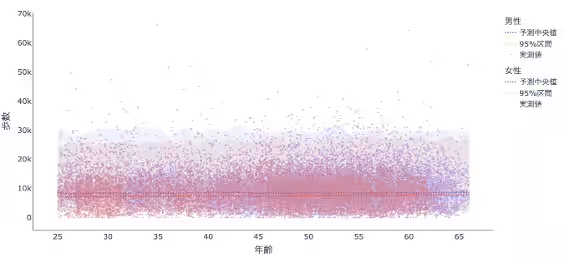
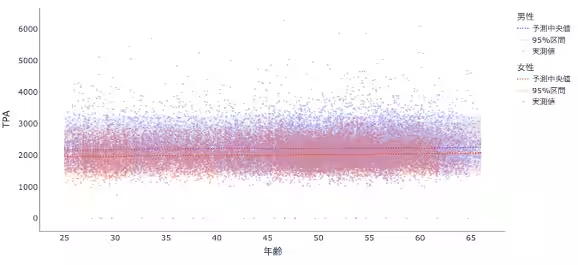
Data indicated that males consistently had higher step counts, with minimal variations due to aging. However, an increasing trend in total physical activity (TPA) was observed, relating to decreased sleep duration and increased activity time.
Sleep Standards
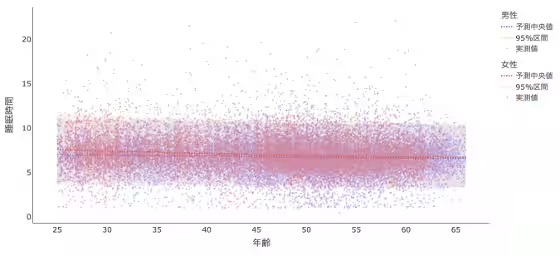
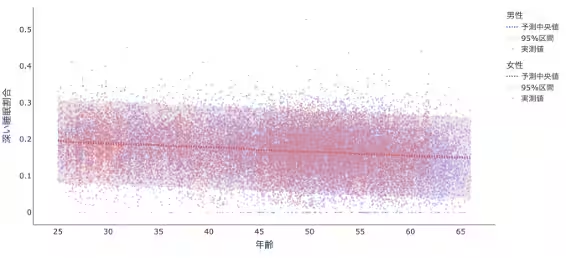
Both genders displayed a reduction in sleep duration as they aged. At 25 years, males averaged 7.1 hours while females averaged 7.7 hours; these figures reduced to 6.6 hours for males and 6.7 hours for females by age 65. Additionally, the portion of deep sleep decreased with age, illustrating shallower sleep patterns.
Correlation with Health Conditions
The research delved into correlations with health check data. Participants with previous health issues or those meeting metabolic syndrome criteria exhibited reduced heart rate variability and increased pulse rates. This deviation from reference values suggests potential health risks.
Summary of Research Results
This study successfully constructed age- and gender-specific reference values for 16 metrics related to activities, sleep, and heart rate variability, utilizing over 500,000 individual days of wearable data from more than 1,900 participants.
Highlighted Findings:
- - Heart rate variability and sleep metrics decline with age.
- - Changes in activity levels due to aging are relatively minor.
- - Gender differences exist in heart rate variability and activity levels.
- - Deviations from established reference values may correlate with health risks.
Social Significance and Future Direction
By leveraging extensive wearable data, this study lays a robust foundation for objectively assessing individual health conditions. It opens avenues for early detection of lifestyle disease risks, personalized health guidance, applications in industrial health settings, and potential advancements in digital biomarker development.
Tech Doctor remains committed to further researching and analyzing wearable data to advance new healthcare solutions rooted in everyday data.
Conference Presentation Details
- - Conference: 99th Annual Meeting of the Japan Society for Occupational Health
- - Presentation Date: May 30, 2026
- - Presentation Format: Oral Presentation
- - Official Site: Event Website
References
1. Paluch AE, et al. Daily steps and all-cause mortality: a meta-analysis of 15 international cohorts. Lancet Public Health. 2022. DOI: 10.1016/S2468-2667(21)00302-9
2. Brittain EL, et al. Association of step counts over time with the risk of chronic disease in the All of Us Research Program. Nature Medicine. 2022. DOI: 10.1038/s41591-022-02012-w
About Tech Doctor
Tech Doctor aims to harness sensing data from daily activities, promoting the concept of the “Digital Biomarker” to enhance health insights based on wearable devices. Collaborating with healthcare, pharmaceutical, and food organizations, Tech Doctor strives to realize AI-driven healthcare solutions.
Topics Health)



【About Using Articles】
You can freely use the title and article content by linking to the page where the article is posted.
※ Images cannot be used.
【About Links】
Links are free to use.