



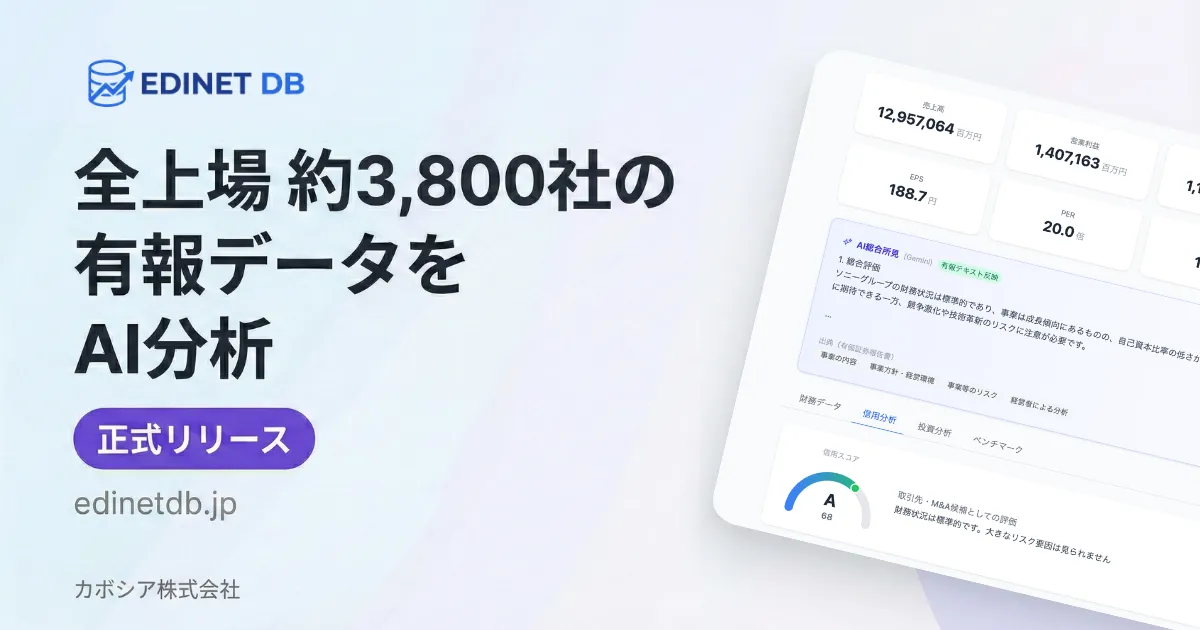
The Launch of EDINET DB: Revolutionizing Financial Data Access for AI Tools
EDINET DB: A New Era for Financial Data Access
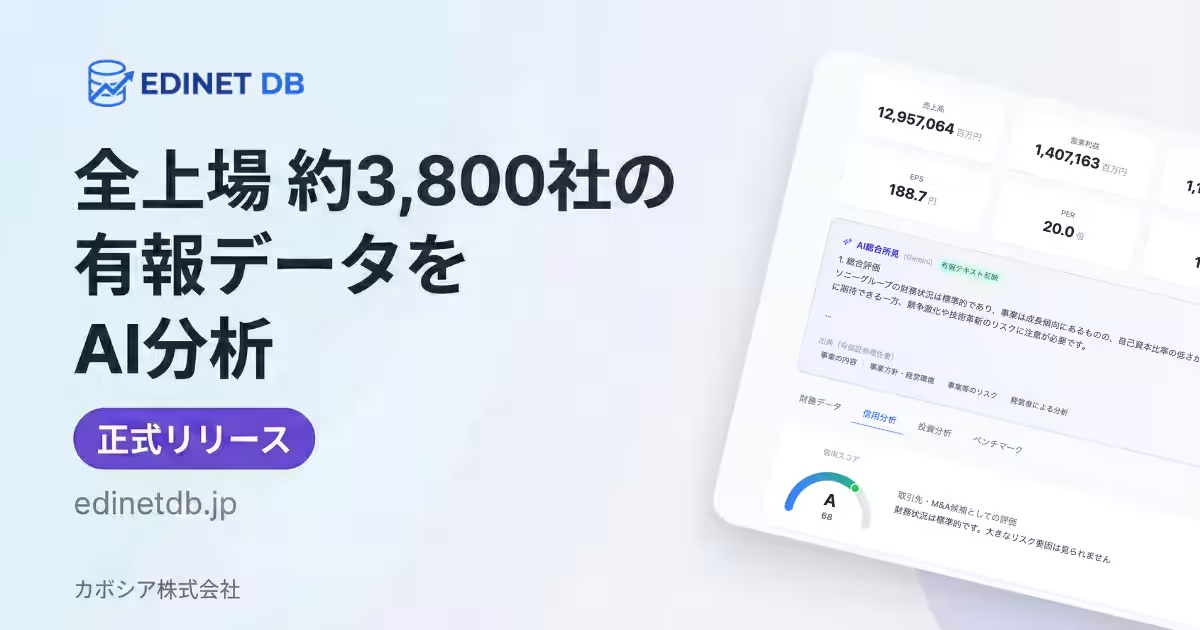
On February 17, EDINET DB entered beta testing, and within just ten days, it has already registered over 1,300 API users, including accountants, private investors, and AI engineers. This marks a significant milestone as Japan's first AI-enabled financial data platform that streamlines access to comprehensive data on domestic listed companies.
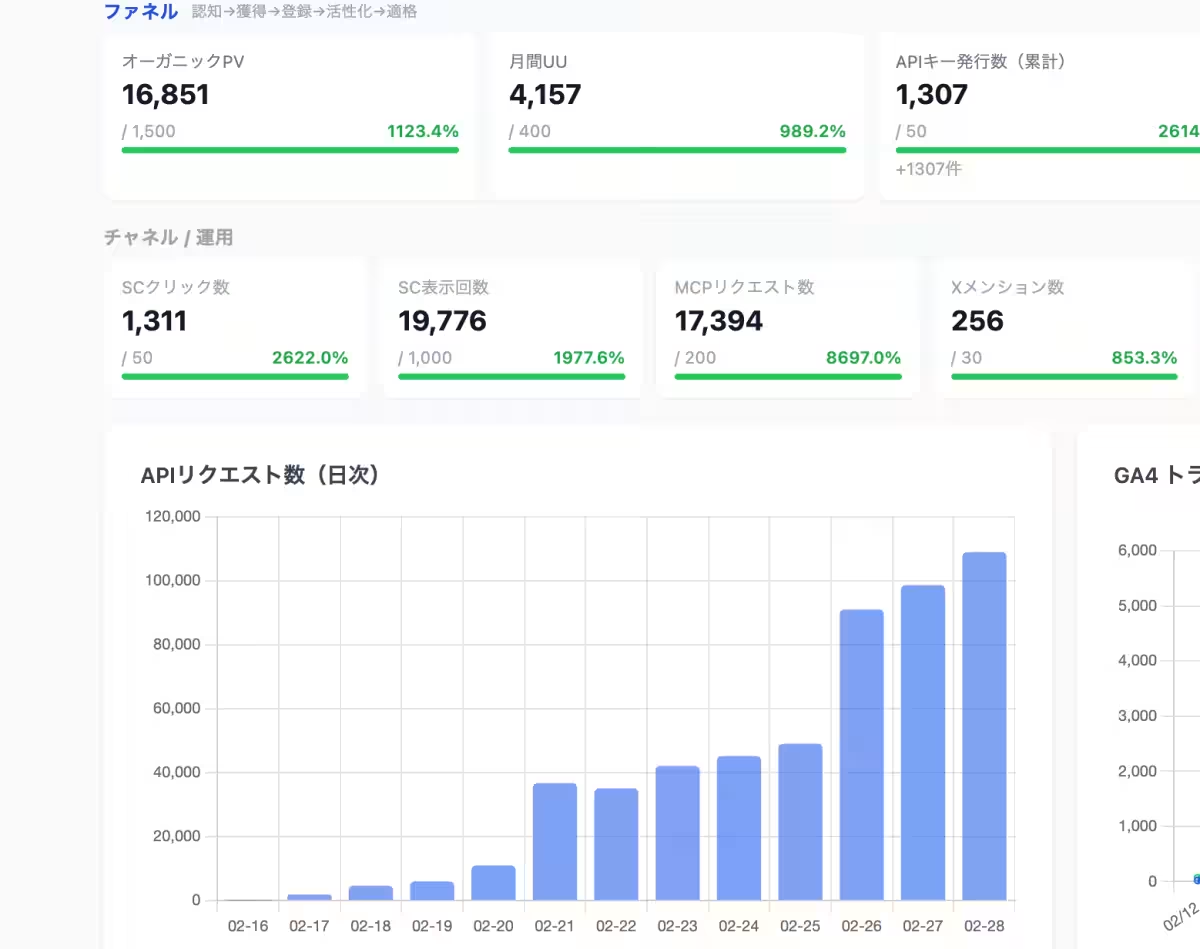
Performance Metrics in the First Ten Days
The initial metrics after EDINET DB's beta release are impressive.
- - API Key Issued: Over 1,300
- - Monthly API Requests: Exceeding 500,000
- - Integration with AI Tools (MCP): 15,000
- - Monthly Unique Users: Approximately 4,000
- - Monthly API Users: 600+
- - Companies Covered: All 3,846 listed domestic corporations
These statistics highlight the platform's rapid adoption, partly fueled by press releases and promotions on X, leading to diverse user registration.
Understanding AI Errors in Financial Data
In conversations about financial figures, such as "What is Toyota's operating profit margin?", AI may not always produce accurate responses. Reasons range from outdated web-sourced data to vague citations or outright inaccuracies, often referred to as "hallucinations". One contributing factor is the lack of structured financial data databases that AI can reference.
The Financial Services Agency provides public access to financial statements of all listed companies in Japan via EDINET in XBRL format. However, analyzing this data systemically is challenging due to differences in terminology and taxonomies across three accounting standards: JP GAAP, IFRS, and US GAAP. Although the term "sales" exists, each company's unique tagging complicates cross-corporate comparisons.
EDINET DB addresses this issue through automated mapping of over 170 XBRL tags across these standards, allowing seamless integration of unique corporate tags. This unifying approach also facilitates real-time, structured data retrieval through API connections, mitigating the risk of hallucination.
Detailed Features of the Official Release
EDINET DB rolled out several pricing plans to accommodate various user needs, including a free tier for basic API use and tiered plans for regular users, developers, and corporations.
Pricing Plans:
- - Free: ¥0, 100 requests/day
- - Pro: ¥4,980, 1,000 requests/day
- - Business: ¥29,800, 10,000 requests/day
- - Enterprise: Custom pricing
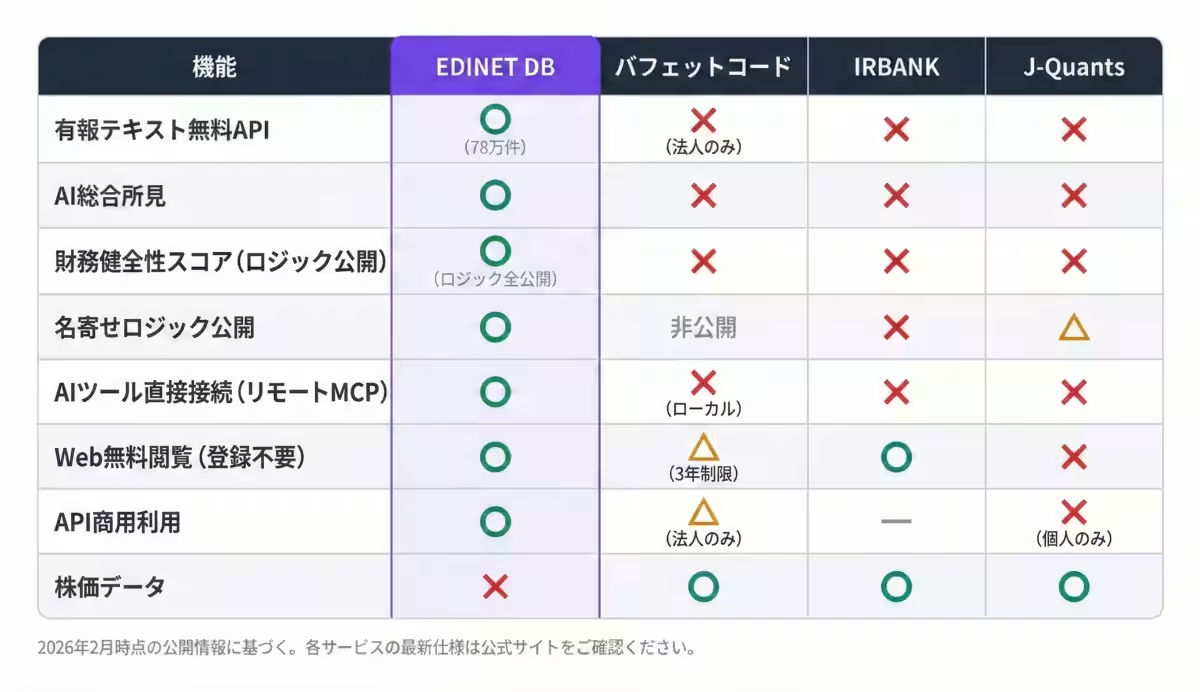
All users can access company data without registration, and full details are available on the website. Notably, public access allows AI tools to utilize structured data without token consumption, a significant advantage in data analysis and navigation revealing insights across 3,846 listed companies.
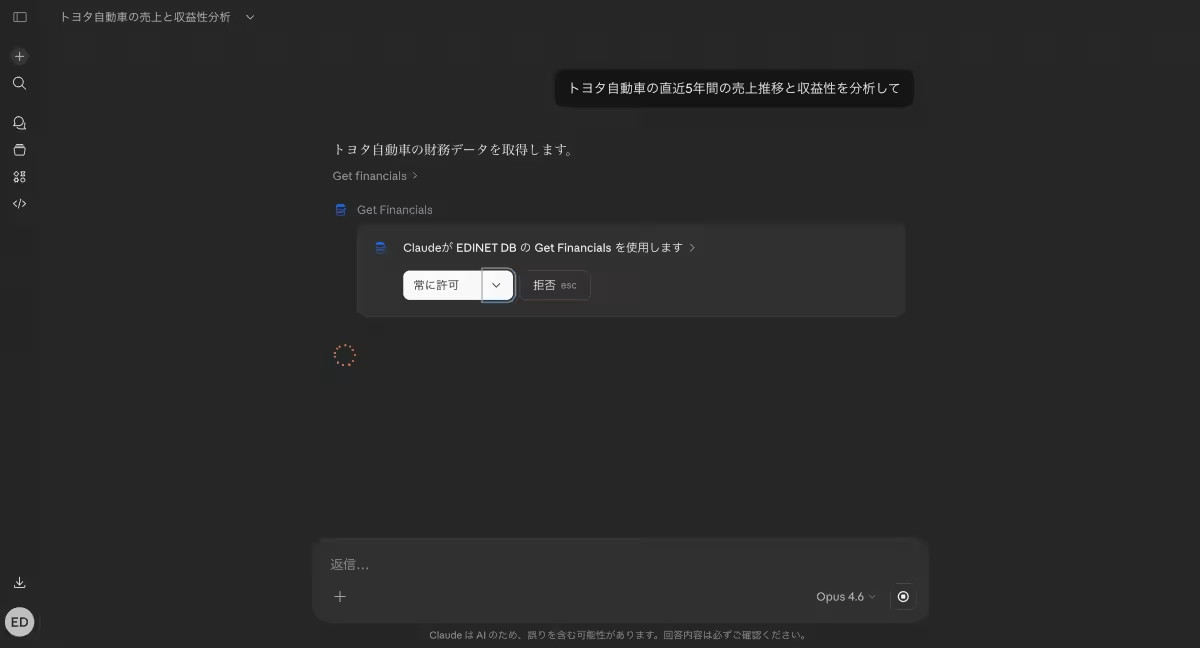
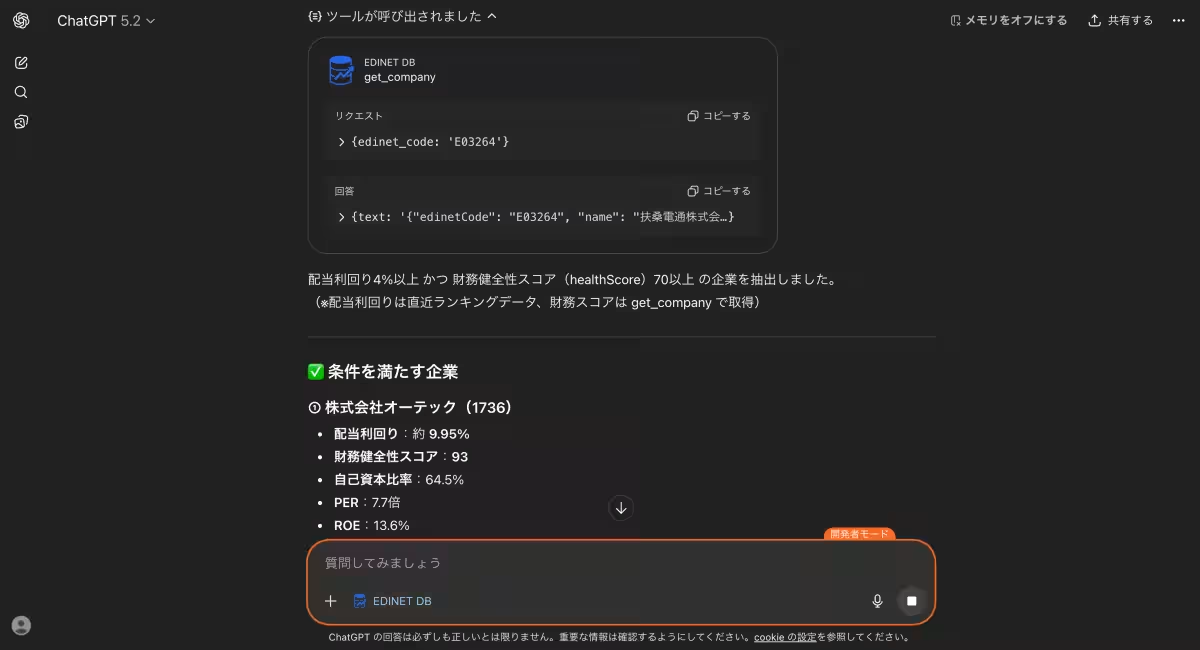
EDINET DB further stands out as the only service providing direct connections from browser-based AI tools like Claude and ChatGPT, bypassing the need for local servers and offering hassle-free data access.
API Commercial Utilization Policy
All EDINET DB plans permit commercial uses, enabling the development and launch of apps, incorporation into business tools, and analysis reporting. However, users are restricted from redistributing the complete data sets or their APIs.
Main Data Offerings:
- - Basic company information (securities code, industry, accounting standards)
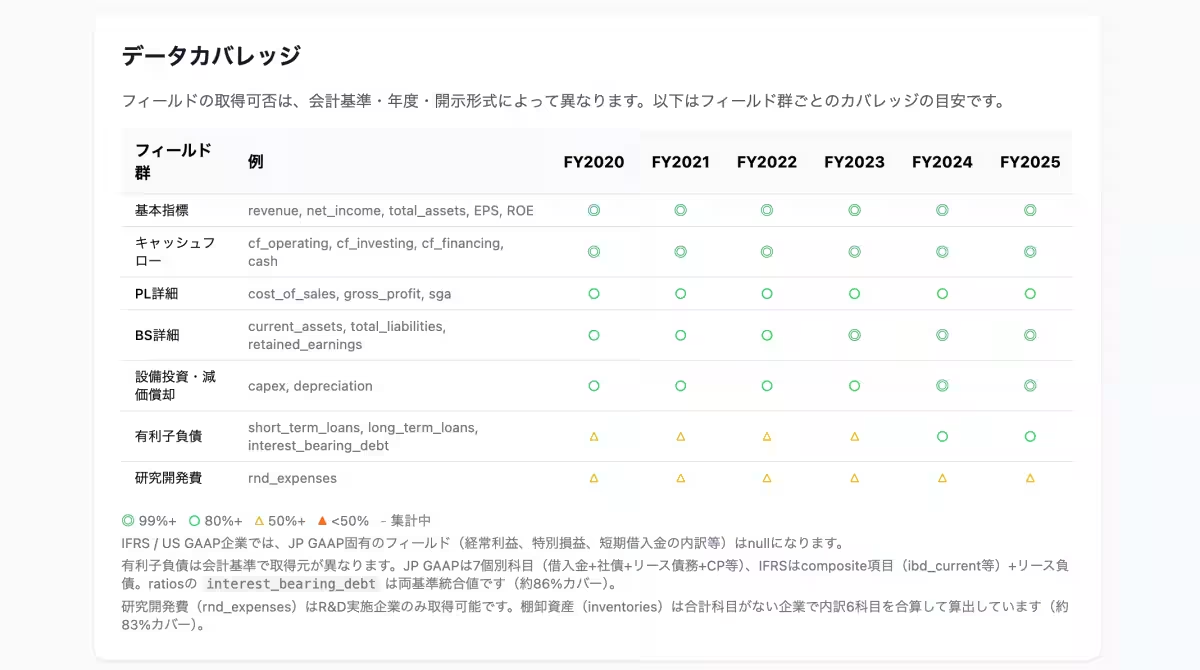
- - Up to six years of historical financial data across 69 metrics
- - Financial health scores
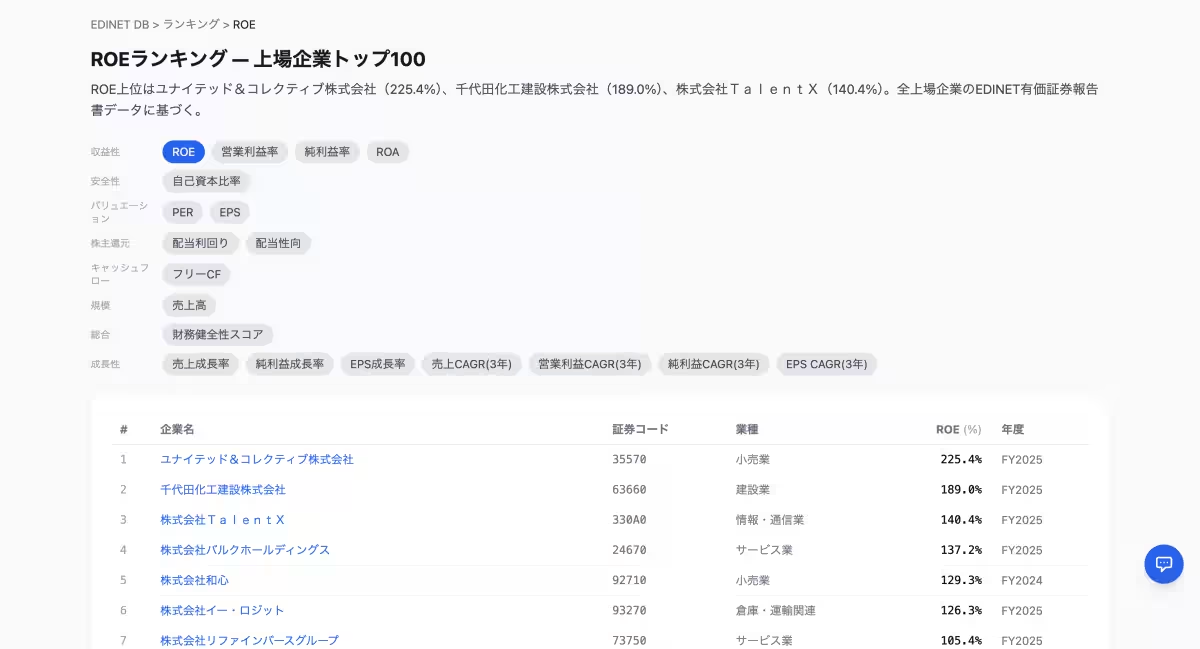
- - Industry rankings on multiple key performance indicators
- - Full-text reports from financial statements, including risk assessments and MD&A
- - AI-generated corporate analysis summaries
Launch Campaign and Feedback Mechanism
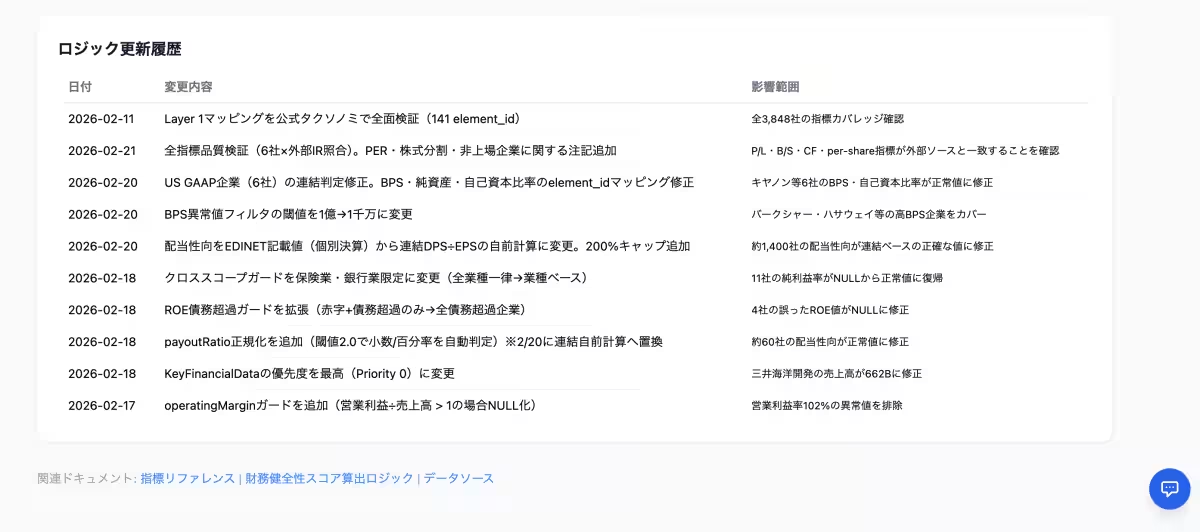
Users registering for API access before March 7 will benefit from discounted rates on Pro and Business plans. Continuous user feedback has prompted rapid iterations, resulting in multiple code updates, enhancements in financial data coverage, and prioritized problem-solving.
Future Developments
As EDINET DB prepares for the upcoming fiscal report season in April and May, ongoing developments include automated financial reporting, adjusted dividend and stock split data, and expanded historical data access. Additionally, the platform aims to promote accessibility for AI analytical processes, ensuring a comprehensive understanding of Japan's financial landscape.
In an era where AI is becoming a predominant data analysis tool, EDINET DB prioritizes seamless access to financial information, exemplifying innovation in the financial data sector. For updates on progress, users are encouraged to follow EDINET DB on X.
Topics Consumer Technology)
【About Using Articles】
You can freely use the title and article content by linking to the page where the article is posted.
※ Images cannot be used.
【About Links】
Links are free to use.