




Understanding the Utilization of Generative AI in Business: Insights from a Survey
Survey Insights on Generative AI Utilization
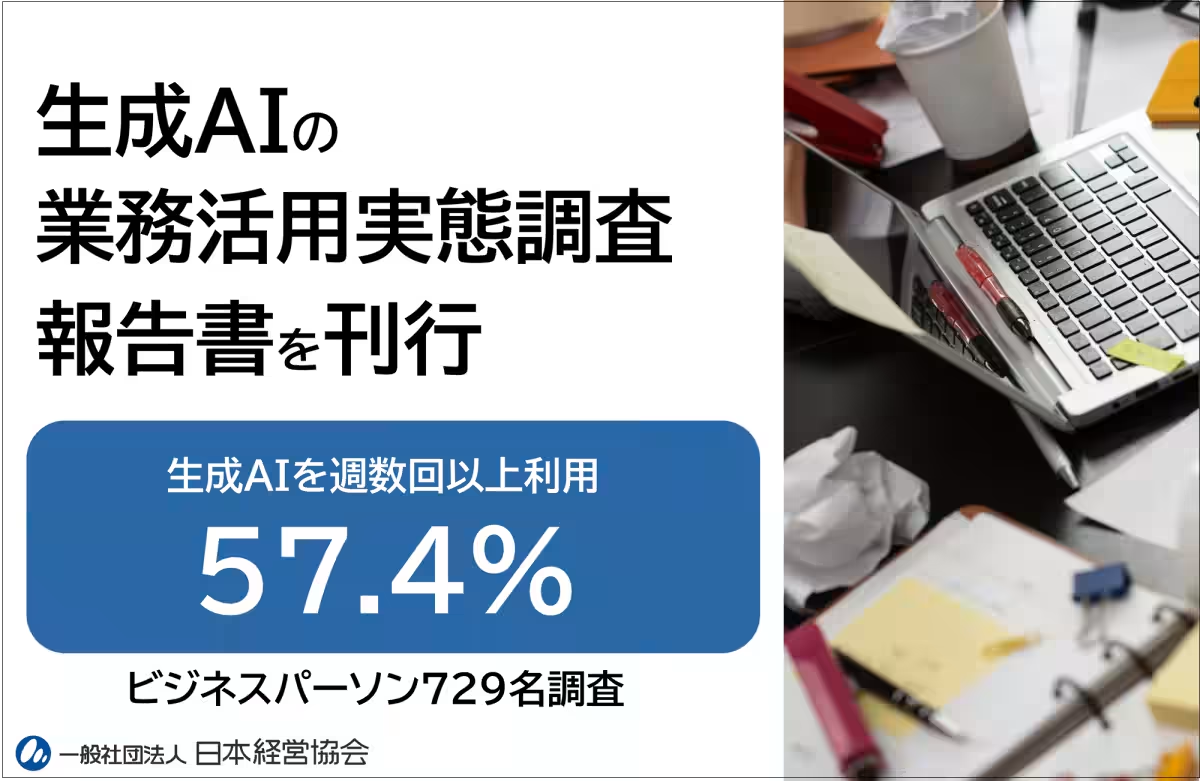
The Japan Management Association, headquartered in Shibuya, Tokyo, has conducted a thorough survey involving 729 business professionals to gauge the current state and understanding of generative AI application within various organizations. This survey, titled "Generative AI Utilization in Business 2025", was conducted between September 10 and September 18, 2025, and the findings are compiled in a detailed report available on their website.
Key Findings from the Survey
1. Discrepancy Between Expectations and Actual Use
One of the most striking observations was that a significant portion of respondents who do not currently use generative AI expressed a strong desire to apply it in data analysis tasks, with 41.8% highlighting this interest. In contrast, the actual application of generative AI has prevalent tasks like text summarization, utilized by 41.7% of users. This indicates a notable gap between the anticipated potential of generative AI and its real-world utilization in daily operations.
2. Variations in Utilization Across Industries
The degree of generative AI usage varies widely depending on the industry, job type, and specific tasks involved. The information and communication sector notably demonstrates a higher application rate of around 30%, while larger organizations tend to show a higher frequency and adoption of these AI tools compared to smaller entities. This suggests that the sector's nature and organizational culture significantly influence how and when these technologies are embraced.
3. High Satisfaction Among Users
Among the respondents who actively use generative AI, an impressive 92.6% reported satisfaction regarding its integration into their work. This high approval rating underscores the effectiveness of these tools in enhancing productivity and navigating daily tasks, confirming their value within modern business environments.
Insights into Non-Usage of Generative AI
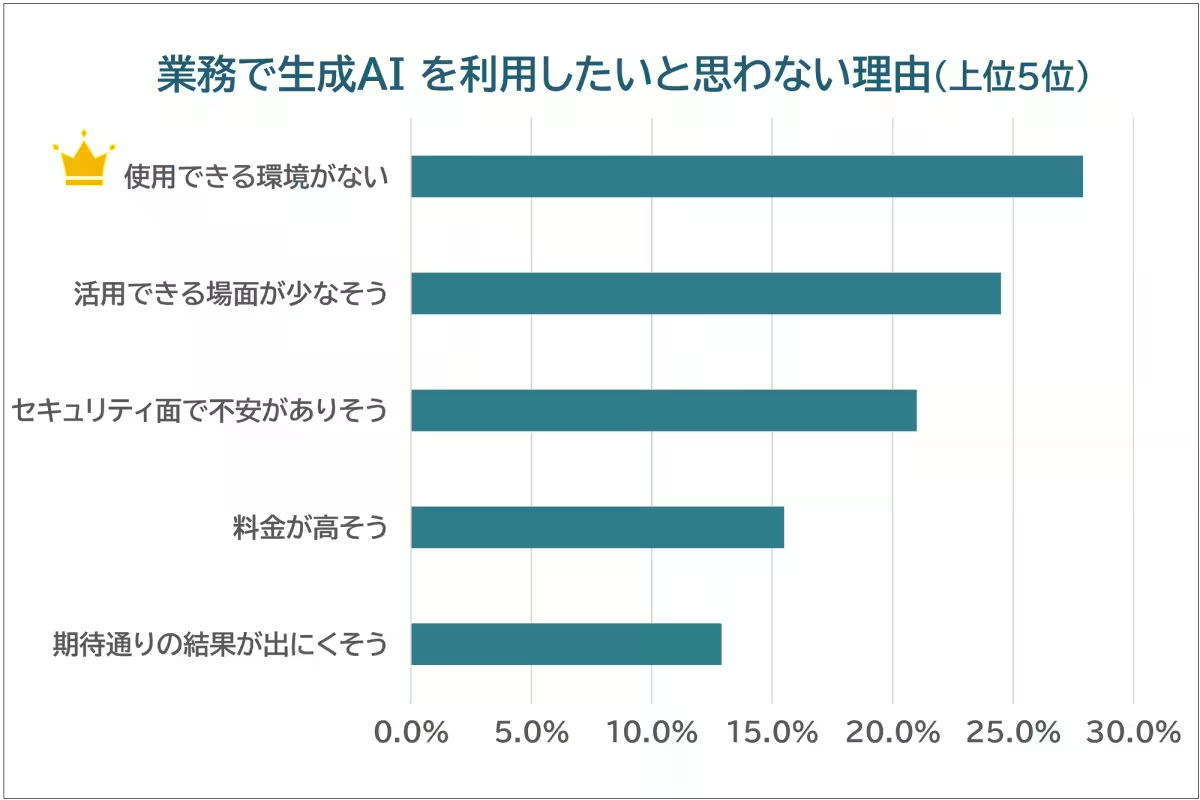
Conversely, when delving into reasons for non-usage, the leading factor cited was the lack of suitable operational environments, accounting for 27.9% of responses. Other common reasons cited included the perception of unnecessary complexity and concerns regarding security. This highlights the importance of creating a conducive environment and clear regulations to facilitate smoother integration into business practices.
Preferences for Different Generative AI Tools
A deep dive into the specific tools reveals that the most frequently used generative AI platform is ChatGPT, highlighted by 72.0% of respondents. Following this are Copilot at 40.3% and Gemini at 28.7%. However, preference for specific tools varies based on organizational factors. For instance, financial services and real estate organizations show a particularly high rate of ChatGPT utilization, exceeding 84%. In contrast, Copilot is favored predominantly within the manufacturing and information sectors.
Organizational Size Influence on AI Tool Selection
Furthermore, a closer examination of how organizational size impacts generative AI tool choice reveals that smaller organizations (with 11 to 100 employees) are more inclined to use ChatGPT and Gemini, while larger organizations (over 1,501 employees) prefer Copilot. This trend possibly indicates a correlation between tool functionality and existing business systems, as Copilot's strong integration with Microsoft Office allows it to deliver cohesive cooperation with already existing workflows.
Conclusion
The Japan Management Association's ongoing evaluation of generative AI's role in business illustrates both the current applications and unmet expectations of this promising technology. The reported findings demonstrate a robust interest in advancing the use of generative AI across various fields and shed light on the necessary adjustments needed to enhance its integration into workplaces. Organizations looking to leverage these technologies must invest in creating conducive environments that promote exploration and experimentation with generative AI, ultimately leading to improved operational efficiency.
For further details, the full report can be accessed on the Japan Management Association's website: Generative AI Utilization Report.


Topics Business Technology)
【About Using Articles】
You can freely use the title and article content by linking to the page where the article is posted.
※ Images cannot be used.
【About Links】
Links are free to use.