



New Insights into Reducing Food Allergy Risk Through Breast Milk Polyamines
New Discoveries in Breast Milk Research
Snow Brand Bean Stalk Co., based in Tokyo's Minato Ward, has been conducting a nationwide breast milk survey in collaboration with Snow Brand Megmilk Co. since 2015. This research focuses on mothers' lifestyles and the components of breast milk to assess their effects on infants' health. The presence of food allergies in infants poses significant health challenges, affecting not only the children but also their families overall well-being. Breast milk contains various components critical for nutrition, immune function, and digestive system development, warranting continued research into its link to allergy development.
Understanding Polyamines
Polyamines, present in all living organisms, including humans, play essential roles in cell growth and immune regulation. They are also found in breast milk and are believed to significantly contribute to developing the infant’s digestive and immune systems. Recent studies have also explored the implications of polyamines in aging control. Three common types of polyamines, namely putrescine, spermidine, and spermine, have caught researchers' attention. The latest findings regarding polyamines were discussed during the 80th Annual Meeting of the Japanese Society of Nutrition and Food Science held from May 15 to 17, 2026.
Research Findings at the Japanese Nutrition Congress
In the previous year's meeting, researchers noted that a higher total polyamine concentration in breast milk correlated with a lower risk of food allergies in children. The latest analysis, however, zeroes in on the specific impacts of key polyamines: putrescine, spermidine, and spermine. Utilizing samples of over 5,000 breast milk specimens collected from roughly 1,200 mothers during the third nationwide breast milk survey, the research examined how these concentrations relate to food allergy occurrences in infants up to three years old. Results indicated that especially high levels of spermidine and spermine could potentially decrease allergy development risk.
Detailed Analysis and Comparisons
Comparative Analysis of Milk Composition
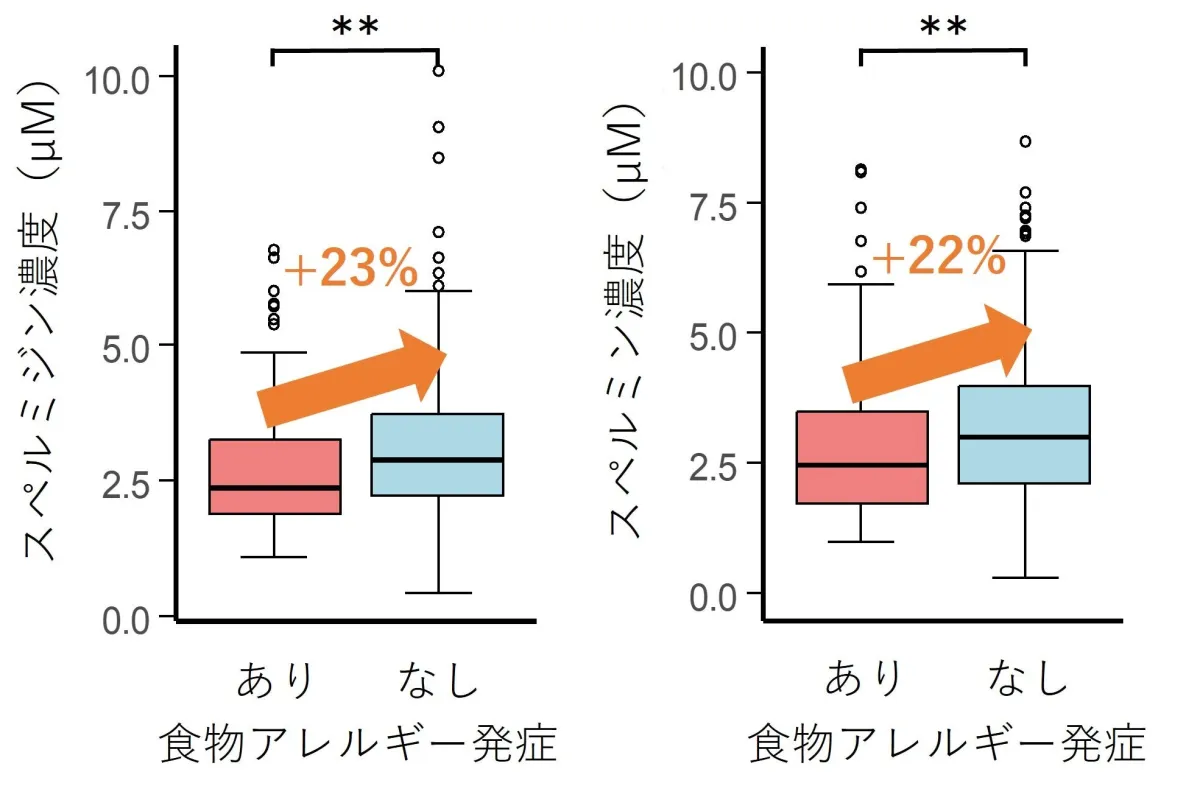
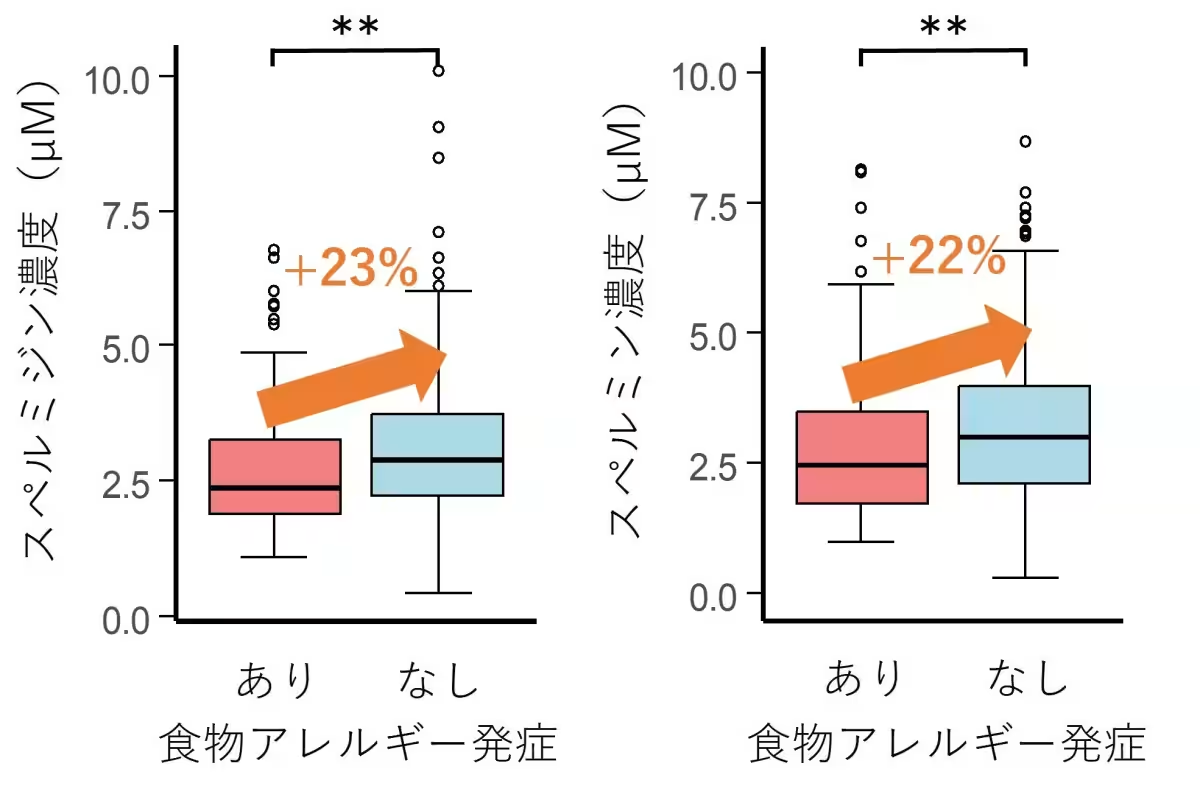
Figure 1 illustrates a distribution comparison of spermidine and spermine levels in breast milk from infants who developed food allergies by age three and those who did not. Notably, the concentrations in the non-allergic group showed significant increases: spermidine was higher by 23%, and spermine was 22% higher than in the allergic group. These findings reinforce the hypothesis that certain polyamines in breast milk play a protective role against the onset of food allergies.
Respondents and Data Collection Method
The study involved comprehensive data collection on children's allergy histories via parental questionnaires, determining allergic conditions based on medical assessments. This allowed researchers to categorize cases into ‘allergy present’ or ‘none present.’
Linking Polyamines to Allergy Outcomes
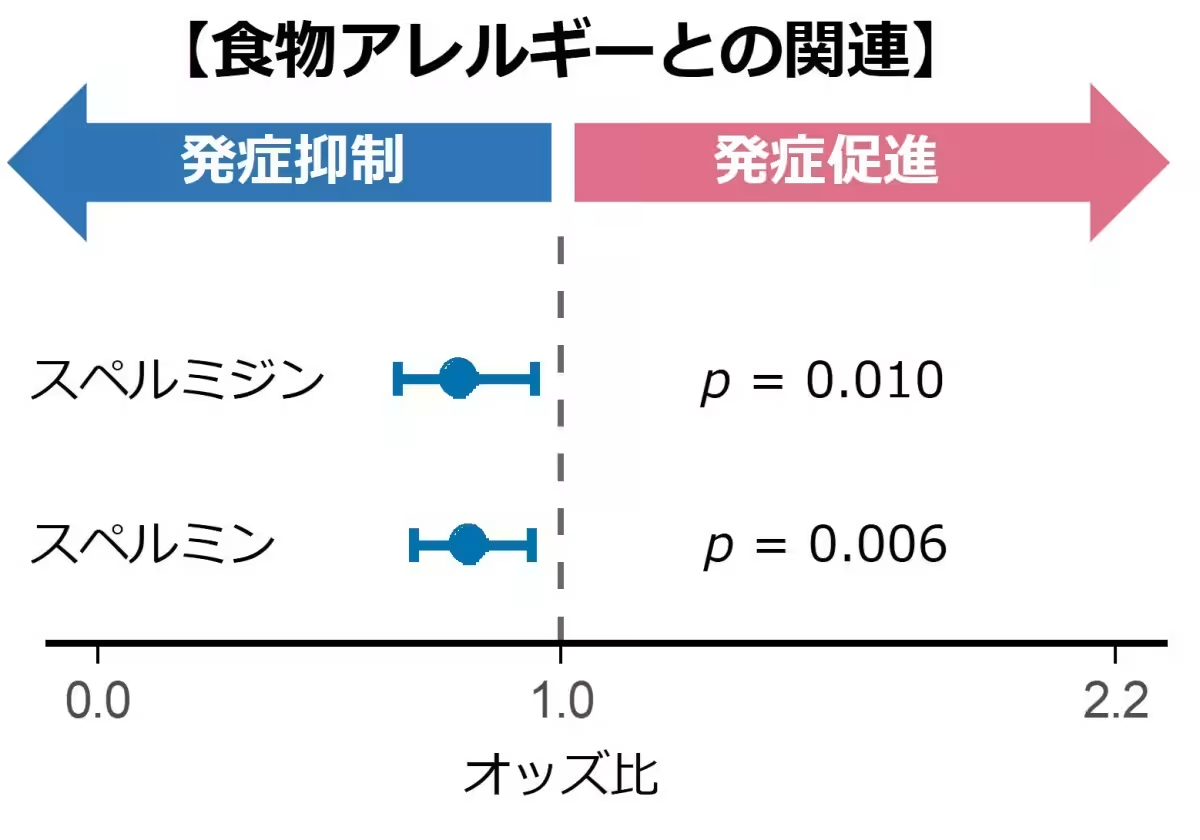
Figure 2 evaluates the relationship between spermidine and spermine concentrations in breast milk and their association with food allergy development through multivariate logistic regression analysis. The data revealed that infants who consumed breast milk high in these polyamines exhibited significantly lower odds ratios for food allergies by age three, underscoring the potentially protective role of these components.
Statistical Methodology
The odds ratio serves as an indicator of the likelihood of an event occurring. Ratios above one indicate an increased likelihood, while those below one suggest reduced probability. This analysis adjusted for maternal variables such as age, educational level, smoking habits, parental allergy histories, income, child sex, premature birth, low birth weight, and birth order to ensure statistical accuracy.
Future Research Directions
Moving forward, Snow Brand Bean Stalk Co. is committed to thoroughly analyzing samples from the third nationwide breast milk survey. The aim is to further investigate the connections between breast milk components and infant health and development. These findings will not only contribute to scientific knowledge but also guide the development of infant formula that supports healthy growth and assists families in their parenting journey.
Research Presentation Details
- - Title: Association between Various Polyamine Concentrations in Breast Milk and Food Allergy Development in Infants.
- - Presenters: Keishi Nojiri, Takehiko Yasue, Satoshi Higurashi, Product Development Team, Snow Brand Bean Stalk Co.
- - Date: May 15-17, 2026.
- - Location: Sunport Takamatsu, Takamatsu City, Kagawa Prefecture.
Related Releases
- - Third Nationwide Breast Milk Survey: Investigating Individual Variations in Breast Milk Components - A Large Scale Study Involving 1,071 Japanese Mother-Infant Pairs.
- - The First Domestic Breast Milk Research by Snow Brand Megmilk and Snow Brand Bean Stalk: Detailed Analysis of Changes in Sugar Chain Concentration in Japanese Breast Milk.
For detailed information on milk research and health implications for infants, visit the ‘Breast Milk Laboratory’ website, established by Snow Brand Bean Stalk, which has been dedicated to maternal and infant health for over 70 years.
Topics Health)


【About Using Articles】
You can freely use the title and article content by linking to the page where the article is posted.
※ Images cannot be used.
【About Links】
Links are free to use.