



Huawei SPN Partners with Yunnan Power Grid for Next-Generation Network Development
Huawei SPN Partners with Yunnan Power Grid
In a significant move to advance energy transmission, Huawei has joined forces with Yunnan Power Grid Co., Ltd., a major energy hub in southwest China renowned for its clean energy initiatives. This collaboration aims to develop a next-generation high-capacity carrier network essential for the evolving demands of the energy sector, particularly as it transitions to cleaner energy sources.
Challenges in Energy Transition
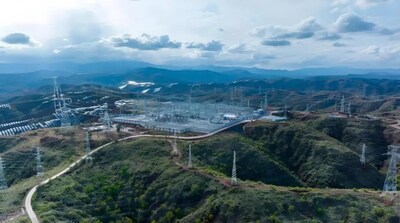
Yunnan Power Grid faces considerable challenges due to its complex topography and lengthy transmission lines. The region's unique geographical traits complicate efforts to implement new technologies effectively. An urgent need for digital transformation arose, driven by surging data generation and increasingly intricate service scenarios that demand robust communication infrastructure.
To meet these challenges, Yunnan Power Grid has prioritized the development of a next-generation carrier network, incorporating Huawei's Service Provider Network (SPN) into both the 14th and 15th Five-Year Plans. The ambitious plan includes a phased rollout across 16 cities, ensuring a strong groundwork for future communication infrastructures over the next two decades.
Enhanced Capabilities Through SPN
Following a successful pilot program in 2022, SPN has transitioned from a test phase to a standard architecture utilized throughout Yunnan Province. The deployment of SPN in cities such as Zhaotong and Pu'er has begun to unlock the full potential of this next-gen carrier network, effectively addressing bandwidth constraints and improving operational efficiencies.
Breaking Through Bandwidth Bottlenecks
One of the standout features of the new SPN carrier network is its ability to significantly enhance bandwidth capacities. With capabilities soaring beyond 155 Mbit/s to an impressive 10 Gbit/s, the network eliminates previous bottlenecks. SPN devices boost bandwidth at access layers—like substations, power plants, and customer service centers—to 1 Gbit/s, adhering to standards set by China Southern Power Grid. The architecture's collection and core layers can further scale up to a maximum of 50 Gbit/s or even 100 Gbit/s, depending on the size of the facility and service requirements. This advancement allows for high-precision fixed connections at 10 Mbit/s, crucial for high-bandwidth services like video monitoring while guaranteeing a seamless transition process.
Monitoring and Maintenance Efficiency
SPN also revolutionizes monitoring and maintenance protocols through Huawei’s solution. It facilitates real-time monitoring of Service Level Agreements (SLA) concerning latency and packet loss, enabling rapid fault detection that minimizes maintenance costs associated with SDH equipment failures. In the Qujing Electric Distribution Office, post-deployment, the duration of a single inspection drastically dropped from 30 minutes to just three minutes, while comprehensive maintenance logistics reduced an average duration from 7 hours down to 21 minutes. This efficiency allows failure predictions to occur up to 15 days in advance, enhancing the reliability of services.
Intelligent Service Transport Development
The intelligence level of service transport has seen significant upgrades, with Huawei’s SPN providing reliable transmission support for a variety of electrical services, from latency-sensitive remote protection operations to high-volume video traffic. With features of FlexE's hard and soft slicing, the architecture ensures robust isolation between services while facilitating bandwidth reuse. Applications like IPv4/IPv6 dual-stack offer flexible routing services for transmission line monitoring and integration of resources and grid-load management for easy IoT access.
Long-Term Investment Protection
Moreover, the SPN assures long-term investment protection. The transition range from 25 Gbit/s to 400 Gbit/s can be achieved without the continual need for extensive infrastructure rebuilding, supported through cost-effective upgrades, safeguarding the investment made by Yunnan Power Grid.
For a deeper dive into the specifics of these solutions, visit Huawei’s official case studies.
Topics Energy)
【About Using Articles】
You can freely use the title and article content by linking to the page where the article is posted.
※ Images cannot be used.
【About Links】
Links are free to use.