



How Companies Are Implementing AI: Insights from TRUSQUETTA's Survey on AI Utilization
Exploring AI Utilization in Businesses: Insights from TRUSQUETTA
In a rapidly evolving technological landscape, artificial intelligence (AI) has emerged as a pivotal tool for enhancing business operations. In this context, TRUSQUETTA, a company based in Shibuya, Tokyo, has conducted a comprehensive survey titled "Survey on AI Utilization in Business," drawing insights from 100 individuals aged 20 to 60 across Japan. This article delves into the findings of the survey to shed light on the current state of AI implementation in workplaces.
Current AI Utilization in Business
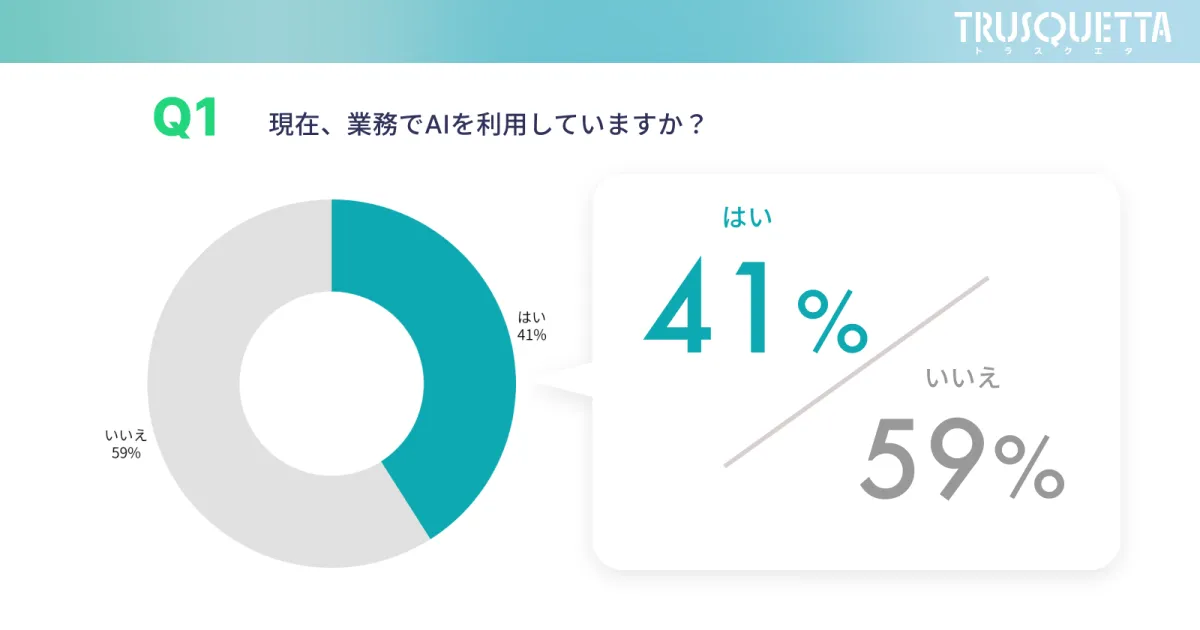
The survey indicates that only 41% of respondents currently utilize AI in their work environments, while a significant 59% have yet to adopt AI technologies. Despite the increasing availability of AI tools—including generative AI—only a minority of companies have fully integrated these technologies into their daily operations. This discrepancy suggests that although there is considerable interest in AI, widespread adoption remains a challenge.
Future AI Adoption Plans
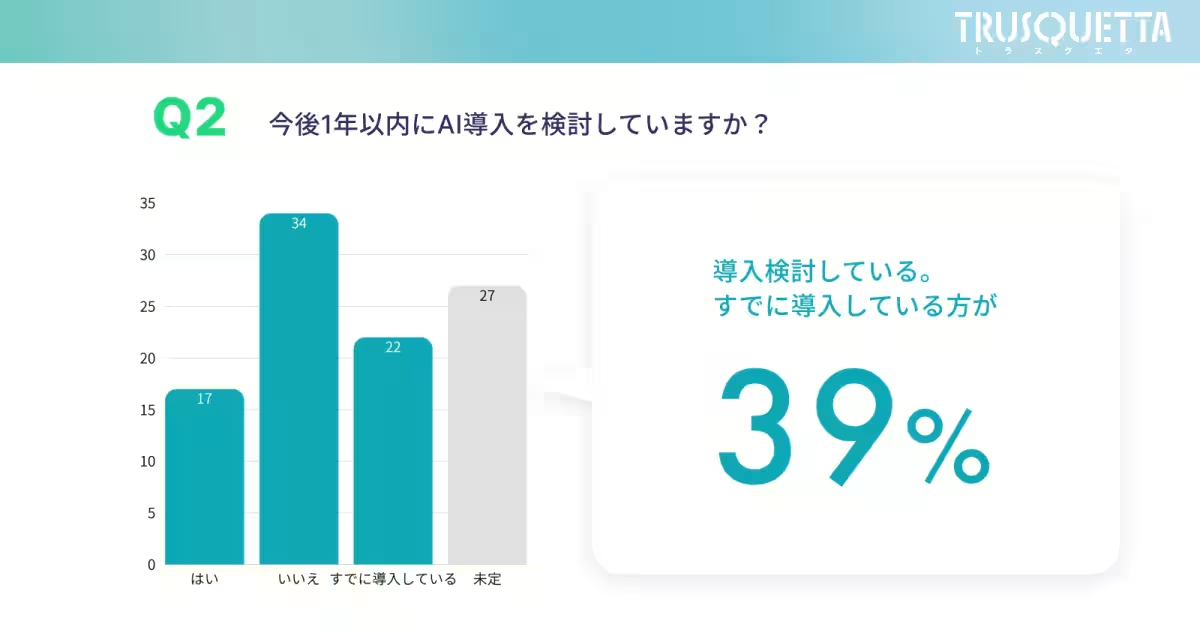
When queried about their plans for AI implementation within the next year, 22% of respondents reported having already adopted AI, while 17% are contemplating its integration. However, a notable 27% remain undecided, and 34% stated they have no plans for adoption at this time. These figures reveal a cautionary approach among businesses regarding AI integration, influenced by various factors, including cost-effectiveness, operational methodologies, and the quality of AI-generated outputs.
Areas of AI Utilization
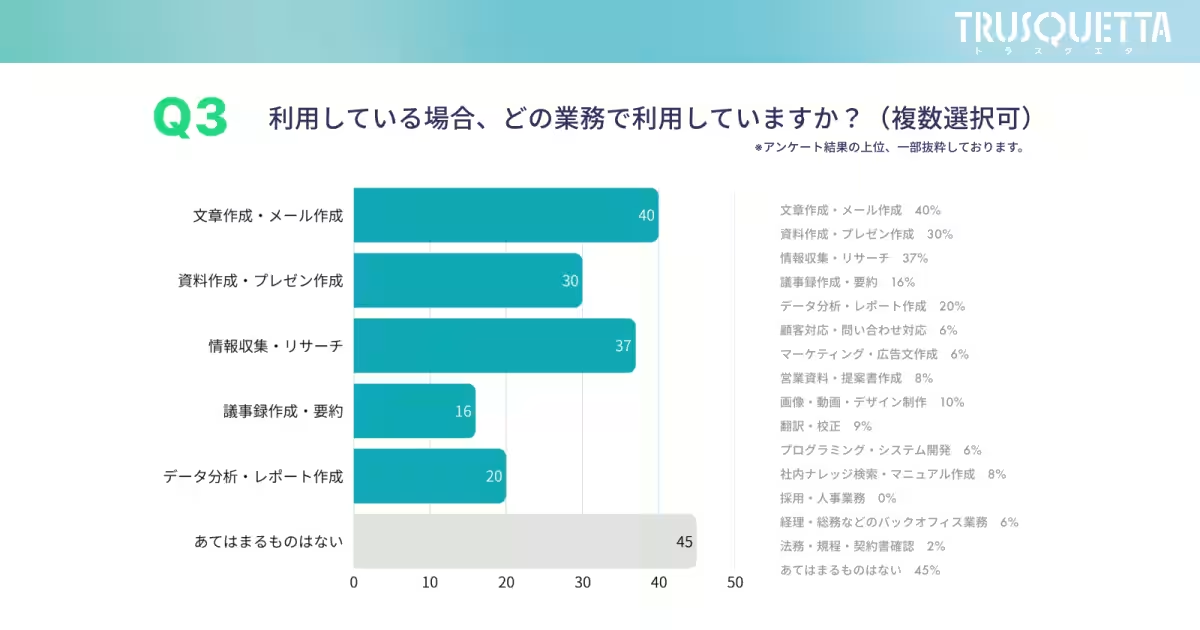
Among those who are currently utilizing AI, the most common applications reported include:
- - Writing and Email Composition: 40%
- - Information Gathering and Research: 37%
- - Document and Presentation Creation: 30%
- - Data Analysis and Report Generation: 20%
- - Minutes and Summary Generation: 16%
This data illustrates that AI is predominantly employed in tasks that ease the burden of routine work, such as content creation and research. However, challenges remain in areas requiring specialized decision-making and compliance with industry standards, suggesting a need for further exploration of AI's potential in diverse operational contexts.
Expectations for AI-driven Business Improvements
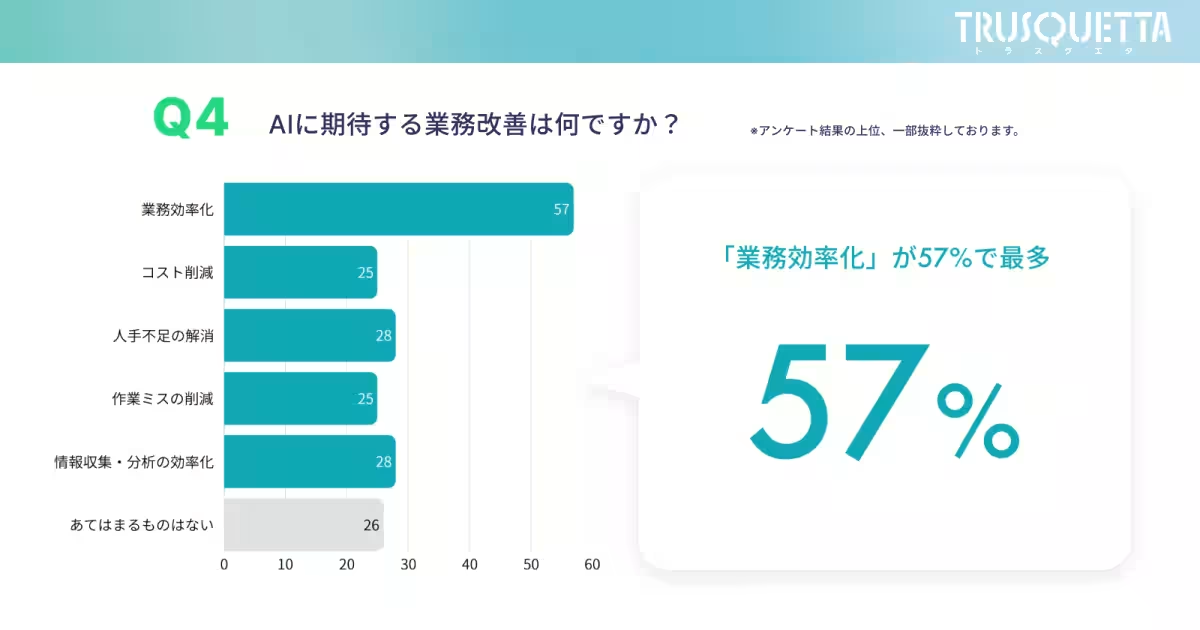
Survey participants expressed strong hopes for AI to enhance business efficiency, with 57% citing "increased operational efficiency" as their primary expectation. Other anticipated benefits included:
- - Resolution of Labor Shortages: 28%
- - Efficiency in Information Gathering and Analysis: 28%
- - Cost Reduction: 25%
- - Minimization of Operational Errors: 25%
These insights reveal that businesses view AI as not merely a means of reducing workload but also as a tool that can uphold and improve quality in operations, particularly concerning time-sensitive tasks. There is a growing expectation that AI can play a vital role in stabilizing quality and minimizing discrepancies in judgment that may arise in human-driven tasks.
Balancing Expectations and Concerns
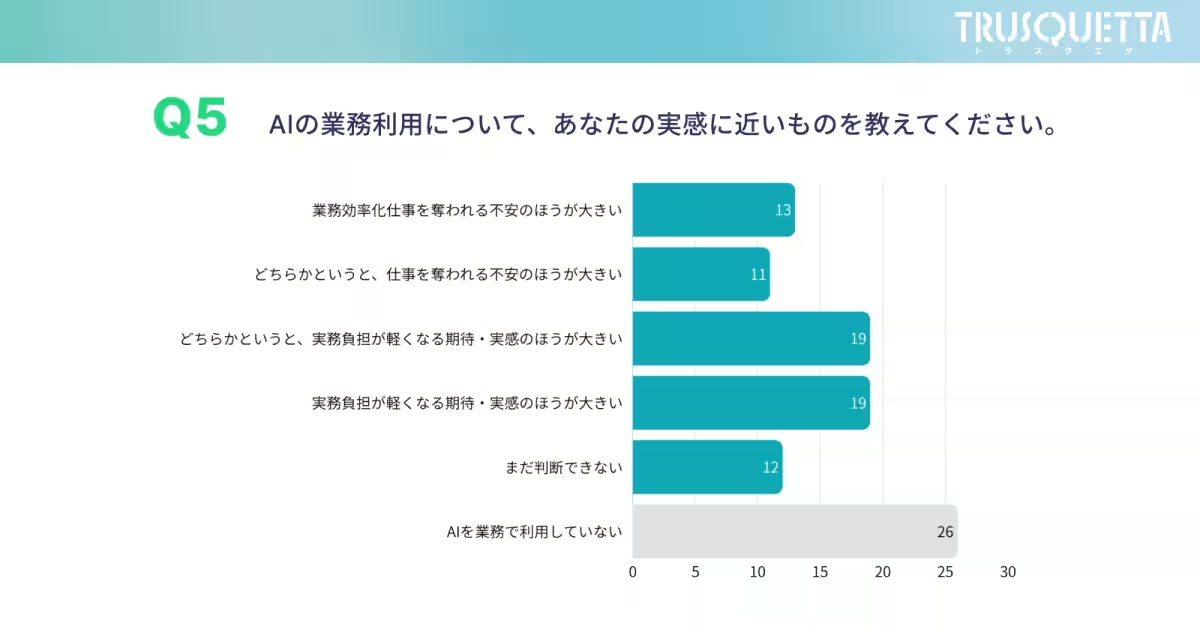
While many respondents harbor positive expectations about the potential impacts of AI on workload, a significant portion still harbors concerns. Approximately 19% believe that AI can relieve their workload, while another 19% express stronger expectations regarding this capacity. However, 26% of participants indicated that they do not currently use AI in their business processes, highlighting a lingering apprehension about the practical integration of AI systems into everyday tasks.
Concerns around the accuracy of AI outputs, alignment with business rules, and the traceability of decisions remain prevalent. In sectors where precision is crucial—such as advertising and quality assurance—the risks associated with relying on generalized AI tools can deter companies from full adoption. Thus, organizations are still in the phase of assessing how to effectively incorporate AI into their workflows while ensuring compliance and reliability.
Moving Towards Practical AI Integration
TRUSQUETTA’s findings underscore that while interest in AI continues to grow, the transition from experimental use to dependable integration is still underway. For organizations to realize the benefits of AI fully, they must focus on creating frameworks that allow for tailored AI solutions, reflecting specific business rules and industry standards. This approach will enable companies to navigate the complexities of implementation more confidently.
The Role of TRUSQUETTA in AI Utilization
TRUSQUETTA offers AI-powered SaaS tools that utilize teaching data, ensuring that business rules and verification standards are effectively integrated into AI processes. By addressing issues such as hallucination risks, TRUSQUETTA aims to provide support for confirmation and quality assurance tasks within businesses, striving to alleviate concerns regarding AI application.
In conclusion, this survey highlights a pivotal moment for businesses grappling with AI integration. With a keen focus on creating robust operational foundations for AI use, organizations can move beyond mere interest to confident implementation, unlocking the true potential of AI in transforming business practices.
Topics Business Technology)

【About Using Articles】
You can freely use the title and article content by linking to the page where the article is posted.
※ Images cannot be used.
【About Links】
Links are free to use.