



Japan Airlines Applies for International Cargo Fuel Surcharge Starting November 2025
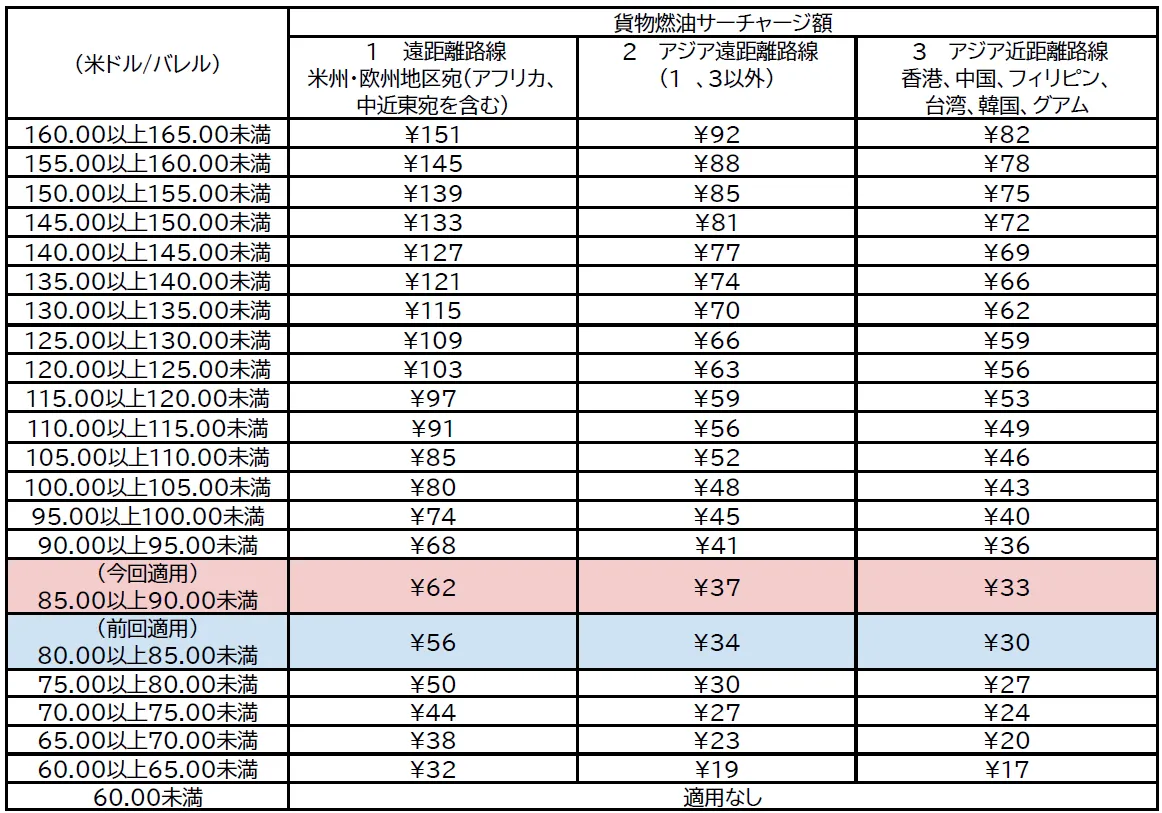
Japan Airlines (JAL) has formally submitted a request to the Ministry of Land, Infrastructure, Transport and Tourism regarding a new international cargo fuel surcharge. This surcharge is set to take effect on November 1, 2025. The company determined that the average price of jet fuel for September 2025 was $86.94 per barrel. Based on this, they have established the fuel indicator price range to be between 85.00 to 90.00 dollars. Consequently, the proposed surcharge for cargo will vary depending on the route:
2. 37 yen for long-distance routes within Asia.
3. 33 yen for shorter routes in Asia.
JAL has committed to revising the international cargo fuel surcharge on a monthly basis, totaling 12 adjustments a year. This will be in accordance with the average price of jet fuel traded in Singapore, specifically focusing on the figures from two months prior. The implementation of this new pricing structure began in April 2024 and follows a defined table that determines the surcharge amounts accordingly.
The global market for air cargo is highly sensitive to fluctuations in fuel prices, and airlines must continuously adapt to these changes to remain competitive. The adjustments announced by JAL aim to not only maintain operational viability but also cater to the rising costs of fuel, which have been unpredictable over the past few years due to various global factors. As we move towards effective dates in late 2025, cargo clients will have to plan their logistics accordingly, factoring in these additional costs.
With Japan being a pivotal location in international cargo transport, the response to these surcharge updates will significantly impact businesses relying on air freight. Companies involved in importing and exporting goods will need to reassess their logistics strategies, pricing models, and budgets in light of the new surcharge structure.
All things considered, JAL's approach toward adjusting their cargo fuel surcharge reflects a broader industry trend where airlines are incrementally adjusting based on fluctuating fuel prices to ensure sustainability and customer transparency. As the deadlines for implementation draw closer, stakeholders are advised to stay informed about these changes and their implications on the air freight landscape. Understanding these market trends will be essential for companies that depend on timely and cost-effective international shipping solutions.
- -
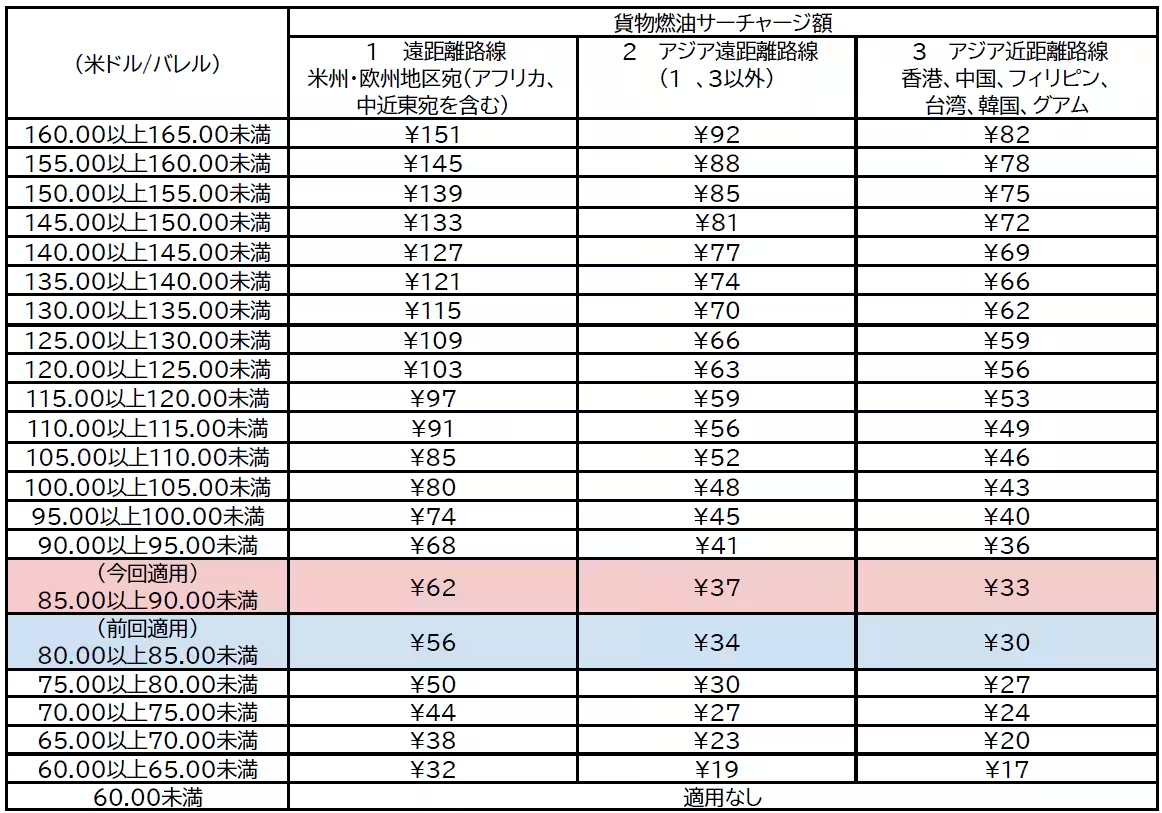
2. 37 yen for long-distance routes within Asia.
3. 33 yen for shorter routes in Asia.
JAL has committed to revising the international cargo fuel surcharge on a monthly basis, totaling 12 adjustments a year. This will be in accordance with the average price of jet fuel traded in Singapore, specifically focusing on the figures from two months prior. The implementation of this new pricing structure began in April 2024 and follows a defined table that determines the surcharge amounts accordingly.
The global market for air cargo is highly sensitive to fluctuations in fuel prices, and airlines must continuously adapt to these changes to remain competitive. The adjustments announced by JAL aim to not only maintain operational viability but also cater to the rising costs of fuel, which have been unpredictable over the past few years due to various global factors. As we move towards effective dates in late 2025, cargo clients will have to plan their logistics accordingly, factoring in these additional costs.
With Japan being a pivotal location in international cargo transport, the response to these surcharge updates will significantly impact businesses relying on air freight. Companies involved in importing and exporting goods will need to reassess their logistics strategies, pricing models, and budgets in light of the new surcharge structure.
All things considered, JAL's approach toward adjusting their cargo fuel surcharge reflects a broader industry trend where airlines are incrementally adjusting based on fluctuating fuel prices to ensure sustainability and customer transparency. As the deadlines for implementation draw closer, stakeholders are advised to stay informed about these changes and their implications on the air freight landscape. Understanding these market trends will be essential for companies that depend on timely and cost-effective international shipping solutions.
Topics Consumer Products & Retail)
【About Using Articles】
You can freely use the title and article content by linking to the page where the article is posted.
※ Images cannot be used.
【About Links】
Links are free to use.