



Diving into the Unique Ecology of Antarctic Tardigrades: Discoveries from Langhovde
The Unique Ecology of Antarctic Tardigrades
In the extreme conditions of Antarctica, a rare species of tardigrade, Milnesium rastrum, has been discovered in large numbers in the Langhovde area, close to Showa Station. This significant finding, involving an analysis of 33 specimens, highlights remarkable sexual dimorphism and ecological roles within the unique Antarctic ecosystem.
Key Discoveries
The recent research led by Kenta Sugiura, a lecturer at Tokyo Metropolitan University, alongside Natsume Takahira and Tomotake Wada, revealed notable morphological differences between male and female tardigrades. For the first time, physical dimensions and characteristics inherent in the mating behaviors of this species have been documented comprehensively.
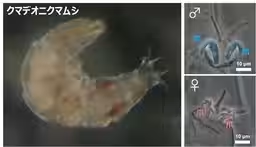
The male tardigrades exhibit developed, hook-like claws likely associated with mating, while females tend to grow larger, showing an increasing number of claw protrusions correlated with size.
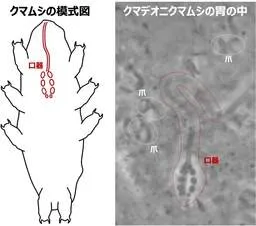
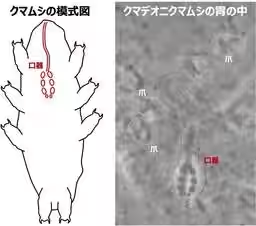
Furthermore, the study uncovered that these tardigrades exhibit predatory behavior in their natural habitat, feasting on other tardigrades, specifically the species Diphascon langhovdense.
Background of the Research
Tardigrades, also known as water bears, have been recognized for their astonishing resilience to extreme environments, including rigorous Antarctic conditions. Despite this, the specific ecological roles and dietary habits of the highly regarded Milnesium rastrum had remained shrouded in mystery until now.
The decline in known specimen counts typically hindered research into their ecology. However, the current study has propelled forward our understanding significantly, marking a pivotal moment in the exploration of these remarkable microscopic creatures.
Detailed Insights on Gender Differences
During the research expedition, 33 specimens were collected: 17 males, 14 adult females, and 2 juveniles. An analysis concluded a roughly equal male-to-female ratio. Males were found to be substantially smaller than females, reaching a maximum size of around 549 μm compared to females at up to 742 μm. Notably, male specimens showcased slim and proportioned lower bodies, coupled with characteristic hook-like claws developed on their first appendage.
In contrast, females showed a trend increasing claw projection numbers associated with their size. Moreover, while male claws consistently had two projections, females displayed an impressive range up to seven in larger individuals. These observations indicate that the mechanisms of morphological changes during growth differ significantly between sexes.
Predatory Behavior Revealed
The research further delved into the diet of Milnesium rastrum, revealing the contents within the specimens' digestive systems. Analysis revealed the presence of parts characteristic of other tardigrades, effectively identifying their food source as the locally found Diphascon langhovdense. This discovery illustrates a previously unknown predatory dynamic between tardigrades within the Antarctic micro-ecosystem, affirming their role as predators in a challenging environment.
Conclusion and Future Directions
The findings from this study contribute substantially to the scant knowledge surrounding Antarctic tardigrades, particularly Milnesium rastrum, elucidating the sexual dimorphism, dietary patterns, and ecological interactions of this unique organism. Given the limitations in prior specimen availability, the contrasts drawn in gender morphology and feeding behaviors set the stage for future studies.
Looking ahead, researchers aim to compare specimens from different regions to broaden the understanding of Milnesium rastrum's distribution, dietary habits, and reproductive behaviors. Additionally, exploring the role of the distinctive claws in mating strategies will be essential for a comprehensive grasp of these extraordinary tardigrades' biology.
Significance of the Research
This research not only sheds light on the thus-far enigmatic tardigrade but also underscores a complex food web within the Antarctic ecosystem, paving the way for future ecological studies regarding biodiversity and inter-species relationships in extreme environments.
References
- - Suzuki, A.C.; Sugiura, K.; Tsujimoto, M.; Nakai, R.; McInnes, S.J.; Kagoshima, H.; Imura, S. (2023). "A New Species of Bisexual Milnesium (Eutardigrada: Apochela) Having Aberrant Claws from Innhovde, Dronning Maud Land, East Antarctica," Zoological Science 40(3), 246-261.
For further reading, refer to the publication in the journal Zoological Letters: Sexual dimorphism, allometric morphological changes, and wild diet of the endemic Antarctic tardigrade Milnesium rastrum.

Topics Other)








【About Using Articles】
You can freely use the title and article content by linking to the page where the article is posted.
※ Images cannot be used.
【About Links】
Links are free to use.