




Plastic Pollution Investigation in Ogasawara's Green Sea Turtles Reveals Startling Findings
Unveiling the Impact of Plastic Pollution on Green Sea Turtles in Ogasawara
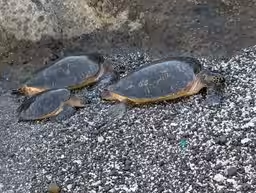
In a groundbreaking study conducted by researchers from Rissho University, the National Institute of Advanced Industrial Science and Technology, and Kyushu University, alarming data regarding plastic pollution affecting green sea turtles in the Ogasawara Islands has emerged. This research, published on January 2, 2026, in the journal PeerJ Life and Environment, utilized three key methodologies: microscopic observations of digestive tracts, genetic analysis, and stable isotopes of carbon and nitrogen, to examine the extent of plastic contamination.
Key Findings from the Research
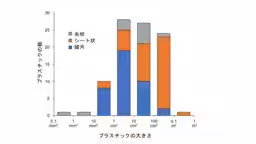
1. Prevalence of Plastic in Digestive Tracts: Out of ten observed green sea turtles, seven contained plastic debris within their digestive systems. The average number of plastic pieces found was 9.2, with a range from 0 to 31. Most concerning, macroplastics, defined as pieces larger than 10 cm², accounted for 56.5% of the plastic identified.
2. Origin of Plastics: The study posits that the plastics ingested by these turtles originate from a broader area than their migration routes, indicating a case of transboundary pollution. The turtles likely mistake floating plastics mixed with their primary food sources, such as algae and jellyfish, as edible.
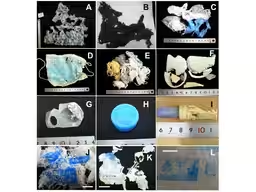
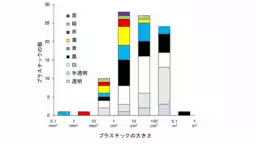
3. Types of Plastic Found: The plastic items discovered in the turtles' stomachs comprised various forms, including air cushions, sheets, and even personal items like jellyfish and masks. Analysis also revealed a variety of languages on the plastic pieces, indicating their diverse origins.
Context of Plastic Pollution
The study underlines a significant environmental concern. As of 2020, global plastic waste output was estimated at 52.1 million tons annually, with 43% reaching aquatic environments via land. This plastic poses serious risks to marine wildlife, from fish to whales and beyond. Green sea turtles, prevalent along Japan's coast from the Pacific mainland to the Ogasawara Islands, are particularly vulnerable as they traverse vast oceanic regions rife with varying forms of plastic pollution.
Methodology Reflecting a New Understanding of Marine Ecology
To draw comprehensive conclusions, researchers integrated microscopic observations, DNA analysis of ingested organic matter, and stable isotope ratio measurements of carbon and nitrogen. This multifaceted approach allowed for an in-depth understanding of how and why these turtles are consuming plastic, identifying their feeding habits as a likely vector for pollution.
1. Plastic Weights and Sizes: The study did reveal that the total weight of ingested plastic was notably low relative to body weight, averaging at 0.014% of an individual turtle's weight. However, the persistent ingestion of plastics, particularly larger pieces, raises long-term health concerns.
2. Dietary Behaviors: The primary food sources identified were certain types of large seaweeds, further amplifying concerns that the turtles inadvertently consume plastics mixed within their food sources. The study also indicated that, during migration periods, environmental factors may limit their primary food availability, prompting a shift in their diet to potentially harmful gelatinous plankton, which they might confuse with safe food sources.
3. Implications of Findings: The distinction in types of algae consumed by male and female turtles suggests differing dietary histories that may affect their mating behaviors, adding another layer of complexity to the conservation of the species.
Future Directions
The potential impacts of plastic on the health of green sea turtles could be severe, encompassing digestive tract damage, reduced food intake, and the effects of toxic compounds contained in the plastics like PCB and PAH. The findings call for urgent research to elucidate these health risks and emphasize the necessity of international collaboration to mitigate plastic pollution on a global scale.
This study’s results reveal that plastic contamination is not just an isolated issue but a global challenge that needs immediate addressing through concerted conservation efforts and regulatory measures aimed at reducing plastic production and waste.
Figures and further details of the findings are documented in the PeerJ Life and Environment article.
References
- - Cottom et al., 2024, Nature 633(8028):101-117
- - DOI: 10.7717/peerj.20425



Topics Environment)
【About Using Articles】
You can freely use the title and article content by linking to the page where the article is posted.
※ Images cannot be used.
【About Links】
Links are free to use.