



The Future of Critical Communication in Brazil's Energy Sector through Special Wireless Networks
The Future of Critical Communication in Brazil's Energy Sector Through Special Wireless Networks
The energy sector in Brazil is currently experiencing a significant digital transformation fueled by two primary drivers: the digitization of infrastructure and the mass integration of renewable energy sources. This shift represents not just an environmental objective but a necessity for energy security and structural optimization, with the power communication network positioned at the center of this evolution. This network is critical, transmitting key data, issuing commands within milliseconds, and ensuring the stability of the new electric systems, thereby forming a genuine 'nervous system' for the sector. The quality of this connectivity infrastructure will ultimately dictate the success or failure of future operations within the energy grid.
Challenges at the Last Mile
Challenges intensify at the 'last mile' of the distribution network, which links the energy grid to end users. This crucial segment faces urgent demands for reliable connectivity while dealing with geographically dispersed nodes, challenging operational and maintenance conditions, and the increasing need to accommodate more IoT devices and automation systems. Traditional technologies currently fall short of meeting the latency, security, and scalability requirements imposed by this new operational scenario.
The solution to this historical bottleneck lies in special wireless networks, such as private LTE and 5G. These solutions combine critical security, operational reliability, installation flexibility, and strategic cost-effectiveness. By effectively addressing the communication needs of distribution networks, they enable scenarios involving tele-protection, smart metering, on-site control, and predictive monitoring.
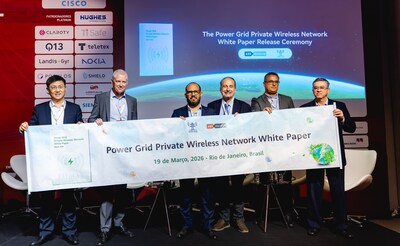
To delve deeper into this topic and to present a technical and regulatory roadmap of this quiet revolution, Huawei and the 450 MHz Alliance released a white paper titled 'Private Wireless Networks for Electric Grids' during the UTCAL 2026 summit held on March 17 in Rio de Janeiro. This document meticulously outlines how private wireless networks overcome the limitations of older technologies while providing resilience and smart solutions necessary for the future energy landscape in Brazil.
For those interested in the details, the white paper can be accessed here. Additionally, more information regarding the subject can be found here.
In conclusion, the shift to green energy is not merely about achieving environmental goals; it is crucial for ensuring the operational reliability and security of energy systems. With the right technological frameworks in place, Brazil can move toward a resilient, smarter energy future that leverages the substantial advancements in communication technology. As the world steers toward more sustainable practices, the integrity of the communication network will emerge as a keystone for the overall functionality and dependability of the energizing infrastructure.
Topics Energy)
【About Using Articles】
You can freely use the title and article content by linking to the page where the article is posted.
※ Images cannot be used.
【About Links】
Links are free to use.