



JR East Partners with Nakatsugawa City for Sustainable Urban Development through Relationship Population
On January 29, 2023, an important agreement was signed between JR East and Nakatsugawa City, located in Gifu Prefecture. This collaboration marks a significant step forward in the city’s urban development strategy, aimed at creating what is known as a "relationship population." This is a pioneering initiative, as it is the first time Nakatsugawa City has forged an agreement with a corporation for this specific purpose and the first instance for JR East to enter into such an agreement with a municipality.
Background and Goals: The agreement comes at a pivotal moment for Nakatsugawa, especially with the projected installation of the Linear Central Shinkansen station (tentative name), which promises to drastically improve access to metropolitan areas. To capitalize on this opportunity, the city aims to develop a sustainable downtown area, addressing not only the physical infrastructure but also the necessity of securing stakeholders committed to urban development. JR East has been devoted to creating relationship populations through its "conomichi" project, which focuses on fostering these connections. This agreement is viewed as an acceleration of their collaborative efforts.
The fundamental goal of this partnership is not merely to draw people in and create a population but to engage that population in the city’s own development processes. The collaboration emphasizes leveraging the skills and enthusiasm of individuals from outside the region as a means to support local businesses and help cultivate talent within the community.
Comments from the Leaders:
Mayor Hitoshi Oguri of Nakatsugawa City remarked that the downtown area, once a thriving post town along the Nakasendo route, still retains its historical ambiance. He expressed that this agreement represents a significant stride in co-creating new values for Nakatsugawa’s future. The goal is to foster an attractive downtown area that compels many people to visit repeatedly.
Aihiko Nakamura, Vice President of JR East, also highlighted the importance of utilizing the networks cultivated through the ‘‘conomichi’’ project. He emphasized that the true dynamism of sustainable urban development arises from deep, ongoing engagements among diverse populations.
Key Areas of Cooperation: The agreement includes several focal areas, each designed to promote ongoing collaboration:
1. Creating Relationship Populations and Promoting Dual Residence: The partnership will offer opportunities for individuals living outside the city, who are considered potential relationship population candidates, to engage in local development activities through various programs. The aim is to introduce a variety of lifestyles that encourage ongoing connections to Nakatsugawa.
2. Partnering in Talent Development and Supporting Businesses: The initiative focuses on developing individuals who become part of the relationship population and providing opportunities for Nakatsugawa's businesses to integrate external insights and expertise to revitalize the downtown area.
3. Promoting Industry-Academia-Government Partnerships: By connecting the networks established through the ‘‘conomichi’’ project with local urban development efforts, the collaboration aims to enhance synergy among academia, government, and industry.
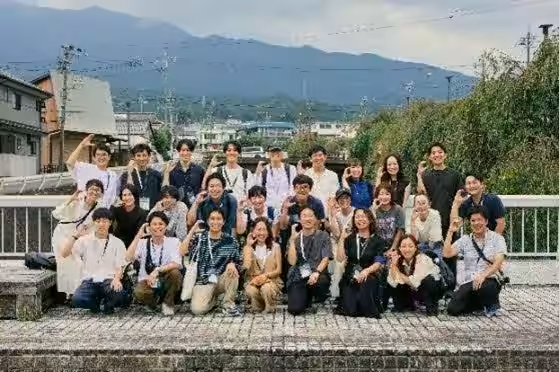
Collaboration Examples: One practical application of their efforts includes the implementation of the Local Research Lab in Nakatsugawa. This initiative allows individuals to reexamine the city’s historical and cultural resources as a means of future community design, integrating multiple perspectives into the urban planning process. Approximately 40 participants have engaged with the lab, leading to creative collaborations and event developments, further catalyzing a dynamic interaction between local and external stakeholders.
Context of Conomichi Initiatives: The concept of relationship populations has gained traction in Japan, especially under the “Regional Revitalization 2.0 Basic Plan” established by the government. It emphasizes the necessity of fostering connections between urban and rural populations. Aiming for 10 million real participants and 100 million total interactions within ten years, the government estimates about 22.63 million individuals currently express interest in regional contributions. By addressing both the challenges posed by population decline and the growing enthusiasm for local engagement, the conomichi project endeavors to create tangible actions that connect these two dynamics.
As Nakatsugawa City moves forward with this innovative partnership with JR East, the two entities hope to construct a dynamic, sustainable urban model that thrives on the involvement of both local and external populations.
Background and Goals: The agreement comes at a pivotal moment for Nakatsugawa, especially with the projected installation of the Linear Central Shinkansen station (tentative name), which promises to drastically improve access to metropolitan areas. To capitalize on this opportunity, the city aims to develop a sustainable downtown area, addressing not only the physical infrastructure but also the necessity of securing stakeholders committed to urban development. JR East has been devoted to creating relationship populations through its "conomichi" project, which focuses on fostering these connections. This agreement is viewed as an acceleration of their collaborative efforts.
The fundamental goal of this partnership is not merely to draw people in and create a population but to engage that population in the city’s own development processes. The collaboration emphasizes leveraging the skills and enthusiasm of individuals from outside the region as a means to support local businesses and help cultivate talent within the community.
Comments from the Leaders:
Mayor Hitoshi Oguri of Nakatsugawa City remarked that the downtown area, once a thriving post town along the Nakasendo route, still retains its historical ambiance. He expressed that this agreement represents a significant stride in co-creating new values for Nakatsugawa’s future. The goal is to foster an attractive downtown area that compels many people to visit repeatedly.
Aihiko Nakamura, Vice President of JR East, also highlighted the importance of utilizing the networks cultivated through the ‘‘conomichi’’ project. He emphasized that the true dynamism of sustainable urban development arises from deep, ongoing engagements among diverse populations.
Key Areas of Cooperation: The agreement includes several focal areas, each designed to promote ongoing collaboration:
1. Creating Relationship Populations and Promoting Dual Residence: The partnership will offer opportunities for individuals living outside the city, who are considered potential relationship population candidates, to engage in local development activities through various programs. The aim is to introduce a variety of lifestyles that encourage ongoing connections to Nakatsugawa.
2. Partnering in Talent Development and Supporting Businesses: The initiative focuses on developing individuals who become part of the relationship population and providing opportunities for Nakatsugawa's businesses to integrate external insights and expertise to revitalize the downtown area.
3. Promoting Industry-Academia-Government Partnerships: By connecting the networks established through the ‘‘conomichi’’ project with local urban development efforts, the collaboration aims to enhance synergy among academia, government, and industry.
Collaboration Examples: One practical application of their efforts includes the implementation of the Local Research Lab in Nakatsugawa. This initiative allows individuals to reexamine the city’s historical and cultural resources as a means of future community design, integrating multiple perspectives into the urban planning process. Approximately 40 participants have engaged with the lab, leading to creative collaborations and event developments, further catalyzing a dynamic interaction between local and external stakeholders.
Context of Conomichi Initiatives: The concept of relationship populations has gained traction in Japan, especially under the “Regional Revitalization 2.0 Basic Plan” established by the government. It emphasizes the necessity of fostering connections between urban and rural populations. Aiming for 10 million real participants and 100 million total interactions within ten years, the government estimates about 22.63 million individuals currently express interest in regional contributions. By addressing both the challenges posed by population decline and the growing enthusiasm for local engagement, the conomichi project endeavors to create tangible actions that connect these two dynamics.
As Nakatsugawa City moves forward with this innovative partnership with JR East, the two entities hope to construct a dynamic, sustainable urban model that thrives on the involvement of both local and external populations.
Topics Other)
【About Using Articles】
You can freely use the title and article content by linking to the page where the article is posted.
※ Images cannot be used.
【About Links】
Links are free to use.