



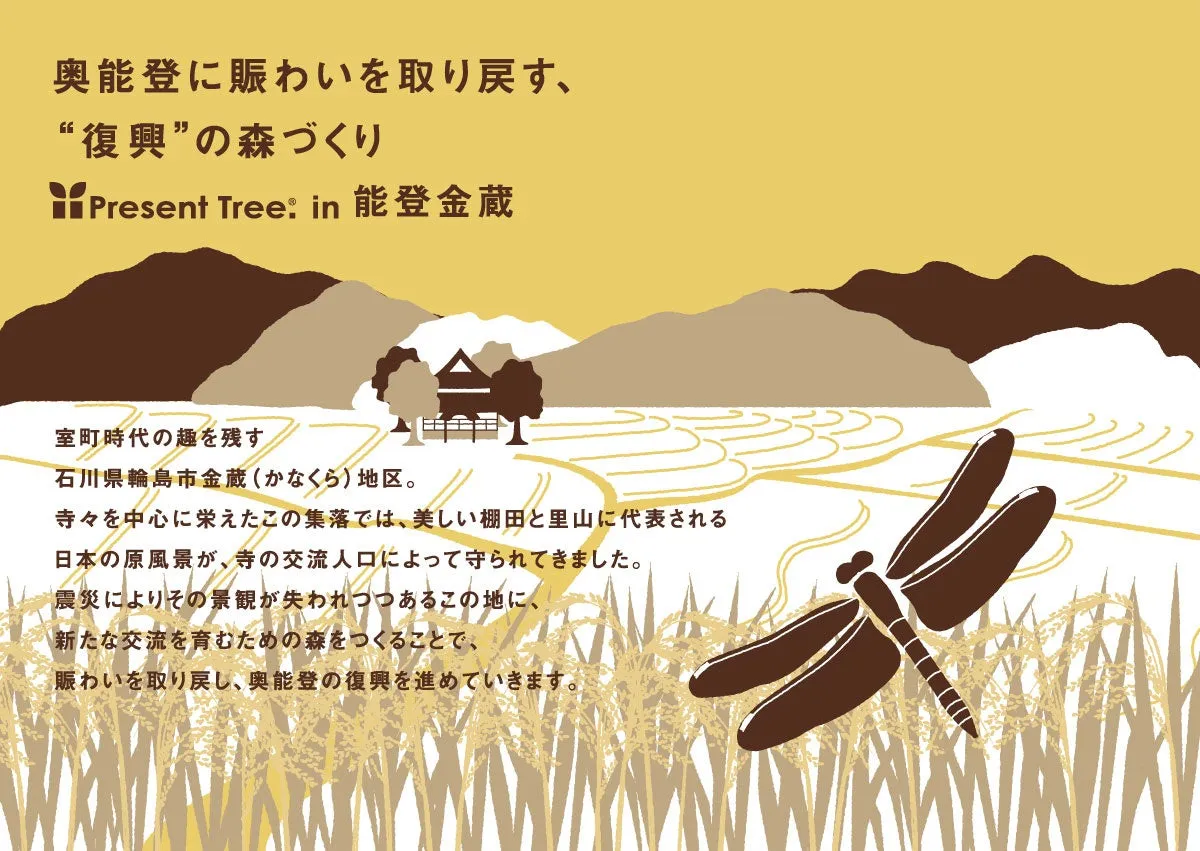
Revitalizing Oku-Noto: Present Tree Launches in Kanakura Area of Wajima City
Revitalizing Oku-Noto through the Present Tree Initiative
The Present Tree initiative, spearheaded by the certified NPO Environment Relations Institute, has officially begun its fostering program today, targeting the Kanakura area in Wajima City, Ishikawa Prefecture. This initiative is a part of a broader aim to rejuvenate the region after challenges faced due to depopulation and natural disasters. For the next decade, the Institute will work collaboratively with several local organizations to maintenance and restore the surrounding forests, ultimately improving the local environment and economy.
The Present Tree program has been operational since January 2005, promoting a concept where individuals can plant commemorative trees for significant life events. This not only offers a chance for personal connection but also nurtures forest restoration and drives regional development. In the past, tree planting efforts have been implemented in 59 locations across Japan, often in areas that have faced ecological challenges such as abandonment, typhoons, or wildfires. One striking feature of the program is the connection it fosters between urban dwellers, who often serve as tree sponsors, and rural communities where these trees are planted.
The Kanakura Area: A Historical Gem
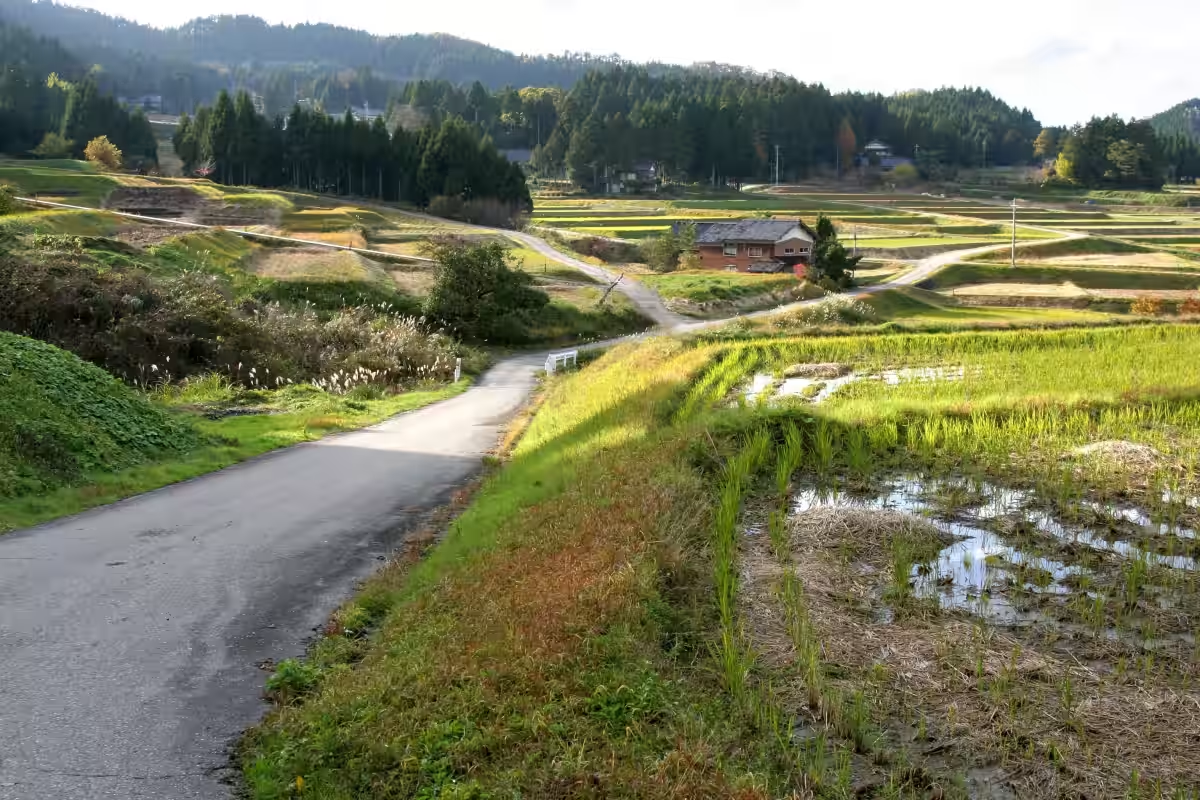
Located in the northern part of Wajima City, the Kanakura region is renowned for its stunning terraced rice paddies and rich biodiversity, assets that encapsulate Japan's cultural heritage. Selected as one of Japan's top 100 scenic rural areas, it also holds the significant status of being the first site in Japan designated as a Globally Important Agricultural Heritage System. This small basin is surrounded by mountains and offers a glimpse into the authentic scenery of rural Japan.
Historically, the Kanakura area thrived around the Kanakura Temple, established in the mid-7th century. It has endured numerous adversities, including being burned down by the Hatakeyama clan during the Muromachi period. Undeterred, the local community rallied to reconstruct their temple network and bolster ties with the outside world, facilitating interaction and cultural exchange over centuries. In response to declining population rates and economic challenges, recent efforts have concentrated on rediscovering and promoting local history, ultimately aiming to attract visitors and enhance the community through various local initiatives.
One such event that traditionally draws attention is the Kanakura Mantou Festival, characterized by thousands of luminaries illuminating the temple grounds and fields. However, due to the effects of aging populations and the Noto Peninsula earthquake in January 2024, the festival was suspended for several years, further highlighting the region’s struggles with depopulation.
The Path Forward: A Revitalization Forest
Through

Topics Environment)
【About Using Articles】
You can freely use the title and article content by linking to the page where the article is posted.
※ Images cannot be used.
【About Links】
Links are free to use.