



The Rise of AI-driven Branding: Insights from IDEATECH's Seminar
The Rise of AI-driven Branding: Insights from IDEATECH's Seminar
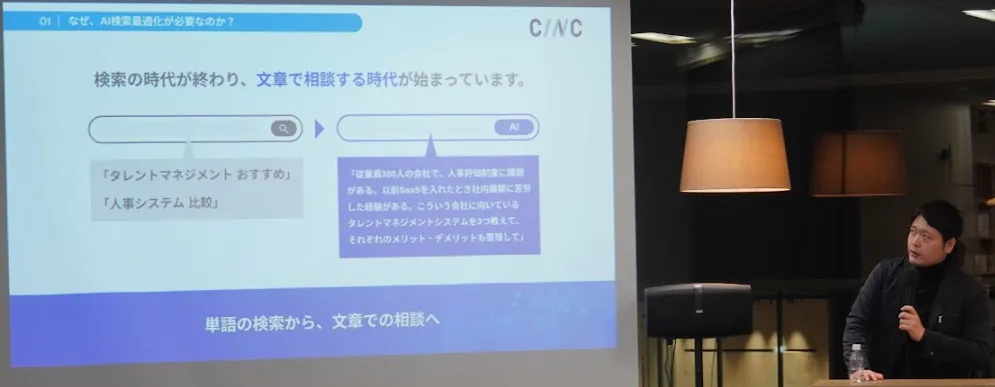
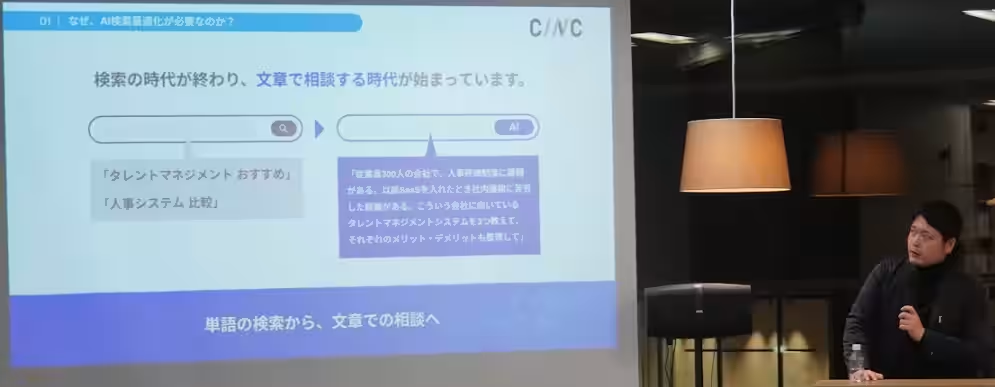
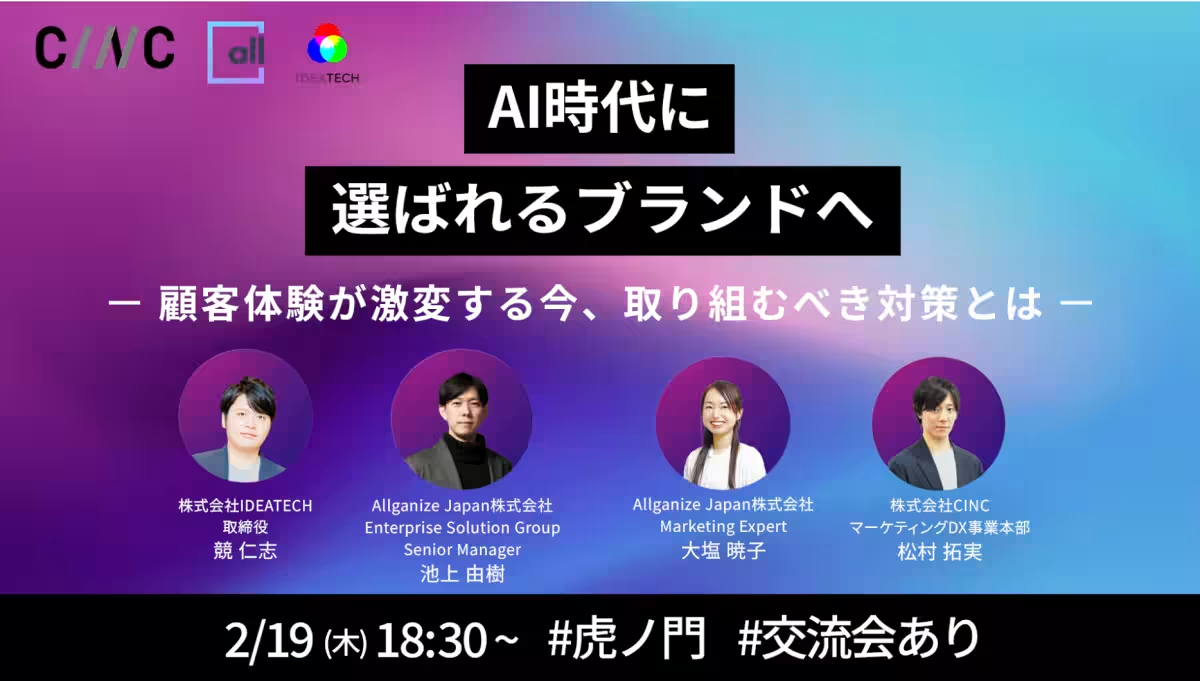
On February 19, 2026, IDEATECH, a prominent player in B2B AI solutions, participated in a pivotal offline seminar organized by CINC, titled "AI-driven Branding: Strategies for the Evolving Customer Experience." This seminar took place in Minato-ku, Tokyo, where IDEATECH's Executive Vice President, Hitoshi Kyo, took the stage alongside Takuji Matsumura, the Chief of AI Strategy at CINC.
Background of the Seminar
As generative AI rapidly permeates various industries, businesses are facing a significant shift in their marketing strategies. In just five months, the usage rate of generative AI services in Japan surged from 21.3% to 31.1%. According to BCG's research, 48% of consumers during the year-end shopping season utilized generative AI to influence their purchasing decisions. Moreover, by November 2025, the visibility rate of AI Overviews in Japan had reached a staggering 45.7%, indicating a profound change in user search behaviors from traditional keyword input methods to interactions with AI. Recognizing these dramatic shifts, CINC and IDEATECH collaborated with Allganize Japan to provide actionable insights during the seminar regarding marketing strategies for this new AI-driven landscape.
Key Highlights of the Seminar
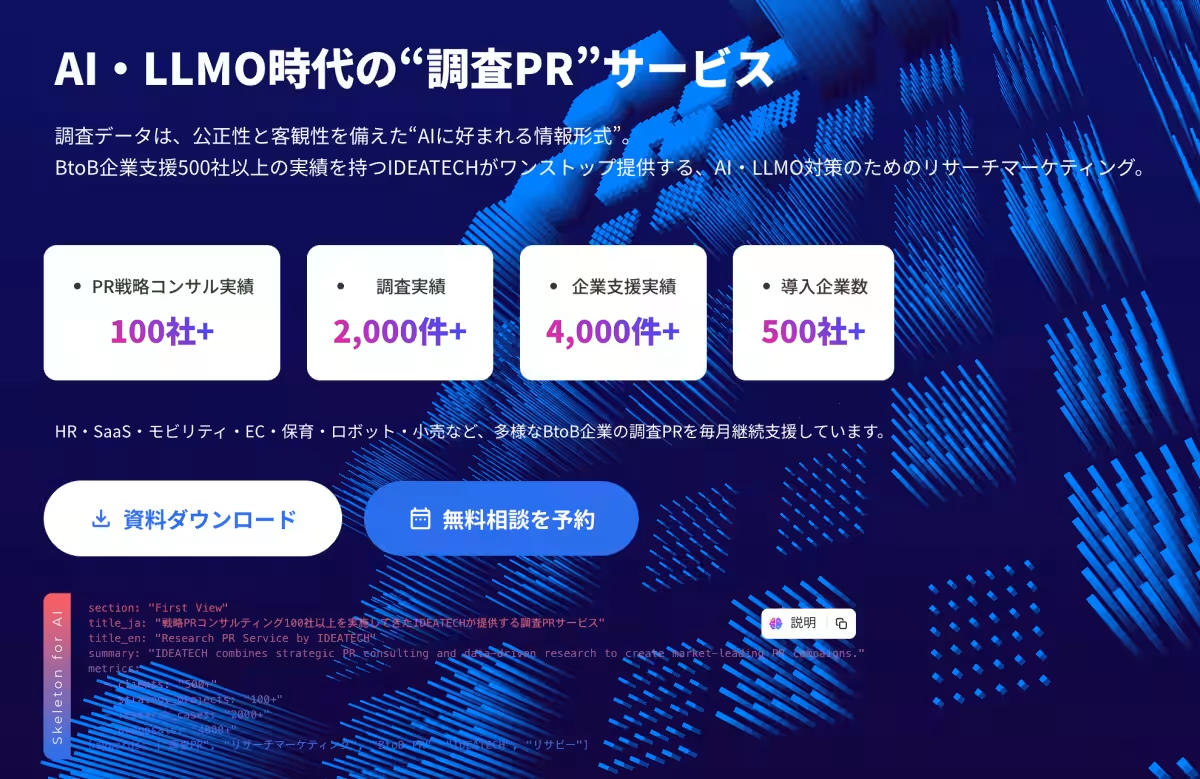
The seminar featured a joint presentation by Kyo and Matsumura, focusing on "Marketing Strategies in the AI Search Era: Necessary Measures and Practical Steps for Businesses." Together, they shared insights on how to optimize marketing strategies in line with AI search advancements by leveraging IDEATECH's experience working with over 800 companies and conducting more than 2,000 research projects.
Three Business Risks in AI Search
At the outset of their session, Matsumura and Kyo highlighted three critical risks that businesses encounter in this era of AI search.
1. Transformation of Customer Experience: There is a growing trend where users rely on AI for information, moving away from traditional search engines. This change means that customer experiences are evolving rapidly.
2. Loss of Brand Message Control: With AI generating summaries and reformulations, there is a risk that the intended message from companies may not be accurately conveyed.
3. Opportunity Loss Due to Misinformation: The potential for AI to provide inaccurate responses poses a direct risk to brand reputation and market opportunity.
Two Pillars for AI Search Optimization
Kyo and Matsumura articulated two fundamental approaches to achieving AI search optimization: "In-house Media Measures" and "Third-party Media Measures."
In-house Media Measures:
- - AI Perception Configuration: Establishing how a company should be recognized by AI.
- - AI Readability Improvement: Enhancing the structure and accessibility of content for AI.
- - Semantic Web Adaptation: Implementing structured data schema to better cater to AI.
Third-party Media Measures:
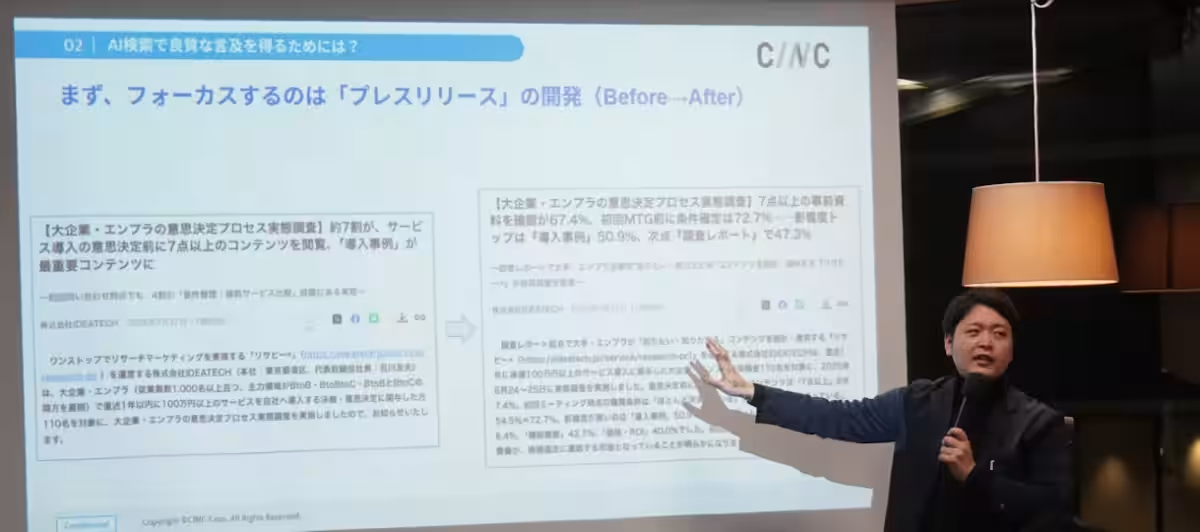
They referenced studies indicating that AI search engines prioritize information from third-party media while often overlooking companies' owned media. Notably, pages meeting specific criteria achieved up to 78% cross-engine citation rates, highlighting the need for strategic media exposure through press releases and media coverage.
Crafting Content that AI Cites
Furthermore, Kyo and Matsumura provided pragmatic tips for creating content that is more likely to be cited by AI:
- - Use a “conclusion first” structure to outline the main findings within the initial 80-100 characters of the piece.
- - Incorporate data, statistics, and substantiated arguments actively.
- - Design headings in a question format to foster engagement and readability.
They stressed that AI operates as an

Topics Other)
【About Using Articles】
You can freely use the title and article content by linking to the page where the article is posted.
※ Images cannot be used.
【About Links】
Links are free to use.