



Data Integrity Challenges Revealed by the DATA119 Media Test Findings
Uncovering Data Integrity Issues with the DATA119 Media Test
In the digital age, where data storage devices such as USB drives, SD cards, and external hard drives are relied upon for securing important data, a recent study by AI Data Corporation has revealed alarming discrepancies in data integrity. Utilizing the free tool, DATA119 Media Test, the company has revealed that a surprising 55% of tested devices were deemed abnormal, raising concerns about the reliability of commonly used storage media.
Overview of the Findings
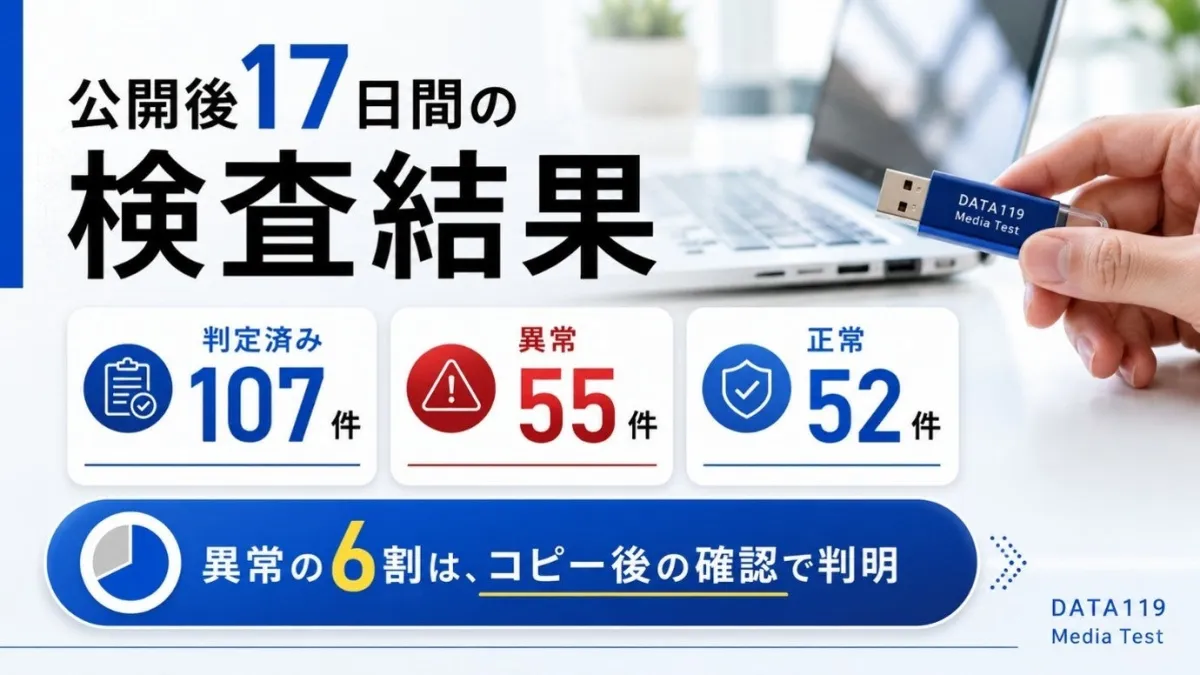
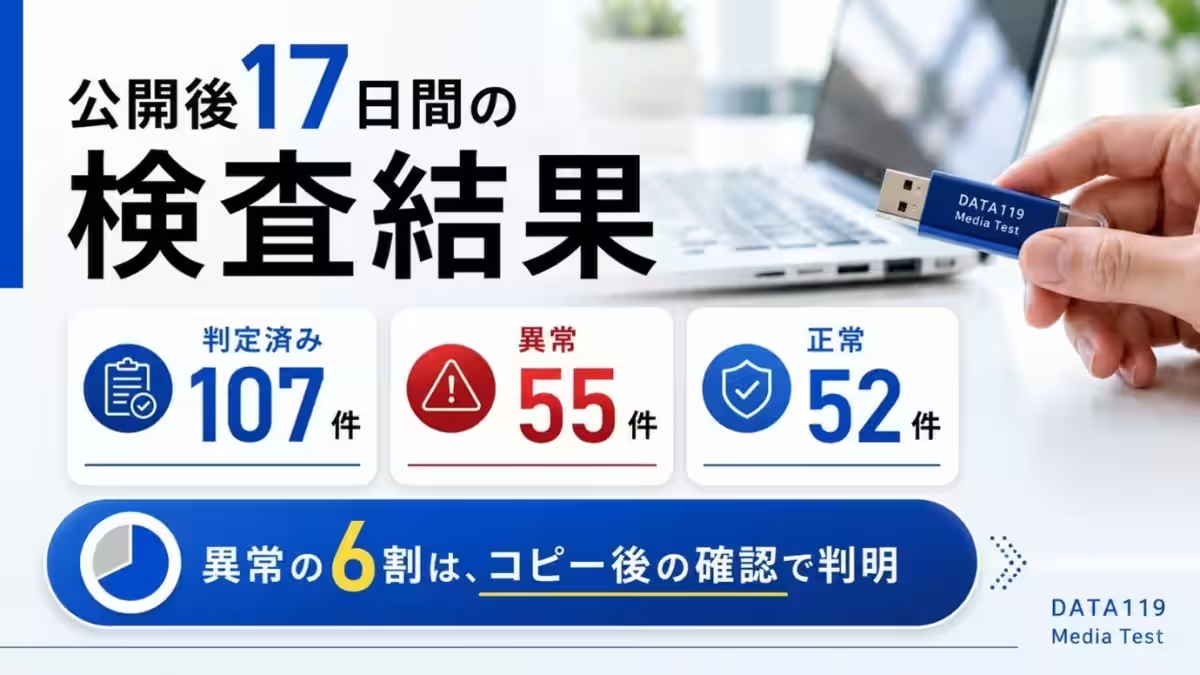
The data collection took place from July 15 to July 31, 2026, involving 113 cases submitted by users voluntarily. Out of these, 107 cases were eligible for analysis, revealing that 55 of them were categorized as abnormal. This means that over half of the assessed devices potentially failed at some point during the data writing or reading processes.
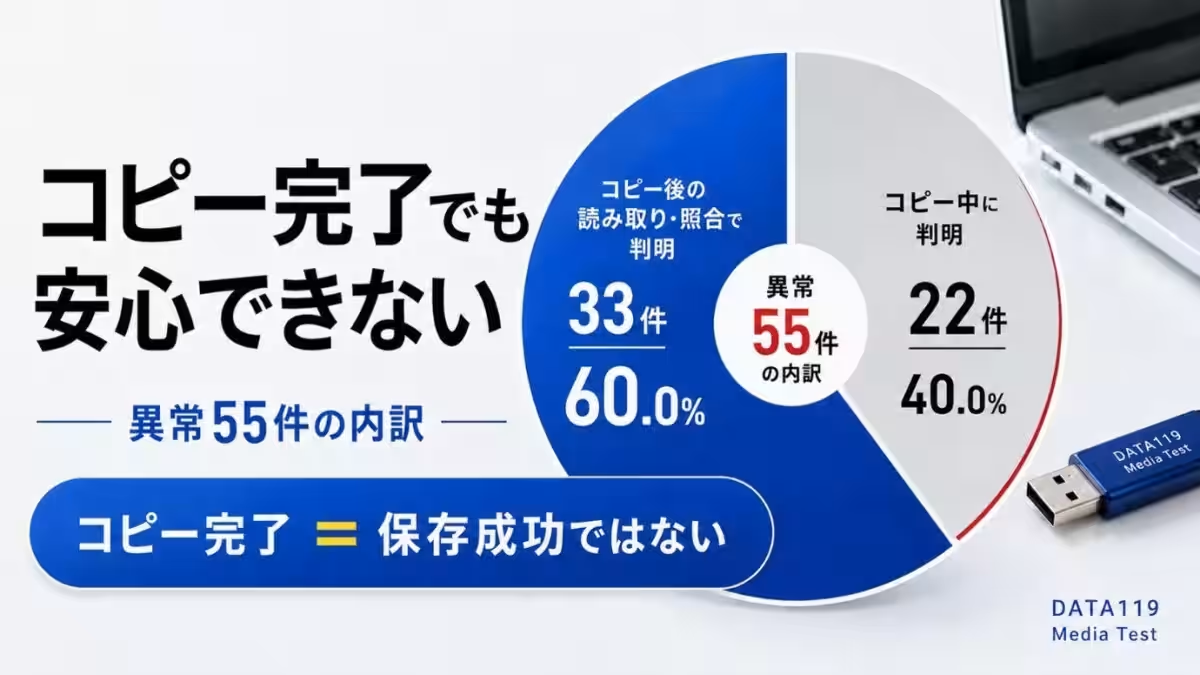
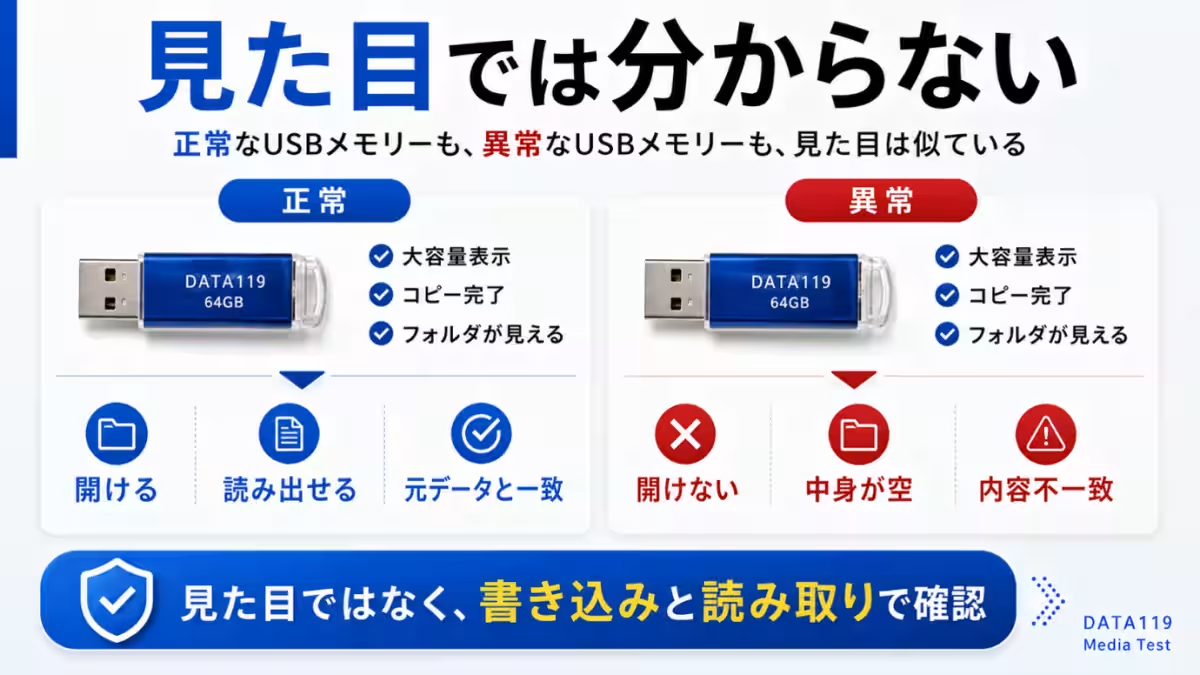
The most striking statistic is that 60% of the abnormal cases (or 33 cases) indicated that the abnormality was detected only after the writing process was completed and the data verified. Users naturally tend to trust that their data has been successfully stored if the file transfer completes without error messages. However, this assumption can be misleading.
Importance of Verification Post-Copy
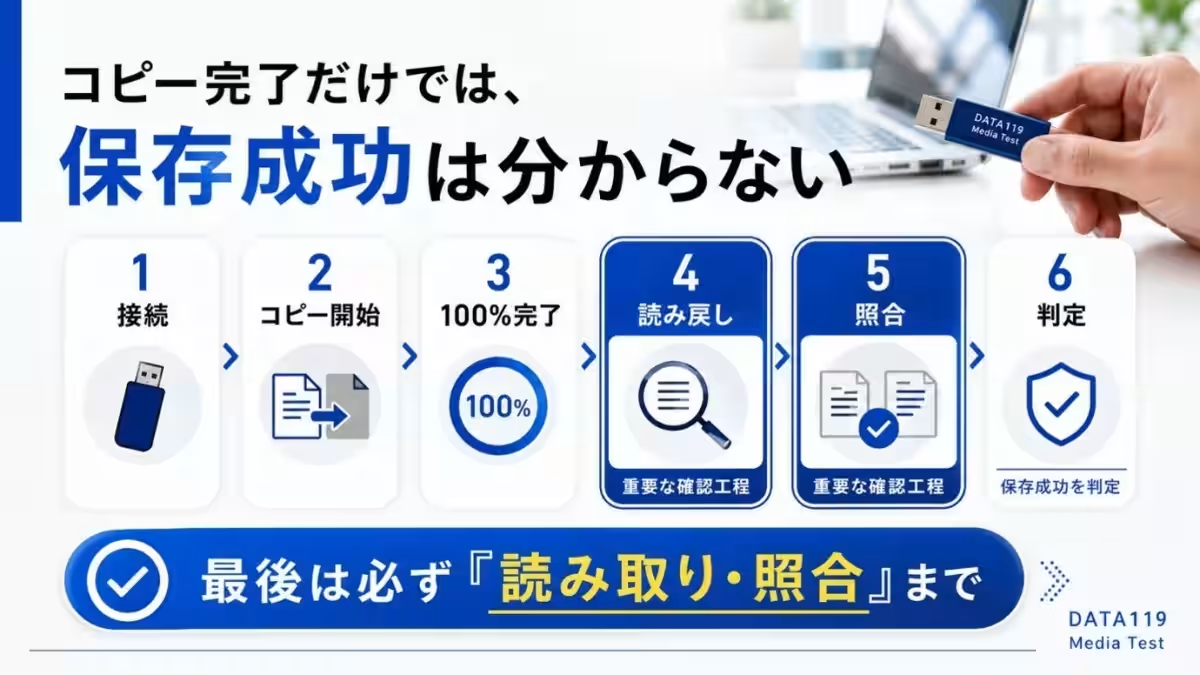
Even after a file copy appears completed—indicated by a 100% progress display—users must double-check to ensure that the data is indeed readable. The study showed various sensitivities in data integrity, such as discrepancies between written and retrieved data, and complete failures in accessing files after writing.
Statistical Insights
Here's a brief summary of the statistical analysis:
- - Abnormal Cases: Out of 107 tested cases, 55 showed abnormalities, corresponding to 51.4% of the total.
- - Normal Cases: The remaining 52 cases represented a close 48.6%.
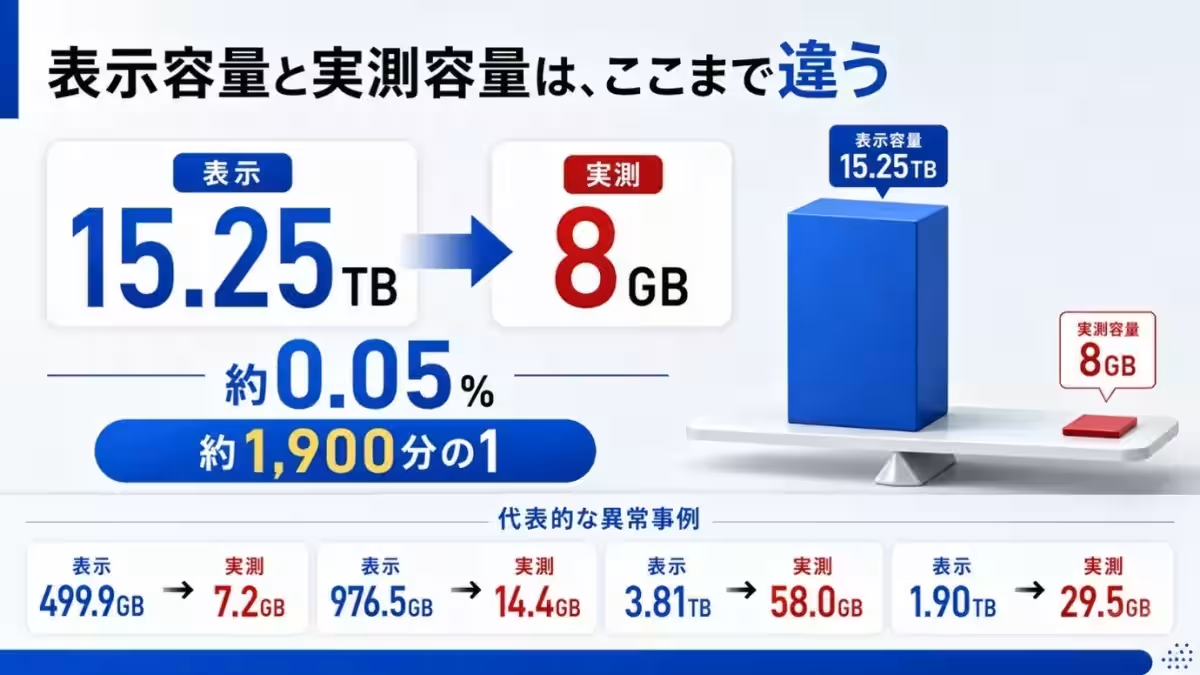
- - Importantly, among the abnormal cases with data measured, the median usable capacity was only about 10% of the advertised capacity.
Further, among abnormal cases, it was found that the median usable capacity, especially from devices displaying over 1TB of storage, was a startling 2.7%. Some devices even reported a 99.95% discrepancy between advertised and actual storage capabilities.
The Data Loss Risk
User comments further illuminate the risks associated with these abnormalities. Various reports highlighted concerning trends:
- - Some users reported complete data corruption after a few gigabytes were copied.
- - In other cases, folders were visible but lacked any files inside.
- - A third category of comments indicated operational failures, where copying simply halted due to errors.
Such instances serve as a stark reminder that relying solely on visual indicators like progress bars does not guarantee data safety.
Recommendations for Users
The findings stress the importance of not only writing data but also verifying that it can be accurately read back. AI Data Corporation advises users to take the following precautions:
1. Always verify the success of the data restoration. After writing to any storage device, check whether the data can be read without issues.
2. Avoid sole reliance on a single device. Maintain backups across multiple media types to safeguard against complete data loss.
3. Do not delete original data immediately. Ensure the new storage is reliable before removing any copies from the original location.
4. Seek professional support. If issues arise that compromise data integrity, consult reputable recovery services instead of applying additional writes that might exacerbate the situation.
Conclusion
As digital storage devices become integral parts of our daily life, validating their reliability is paramount. The alarming statistics revealed by the DATA119 Media Test underscore the need for users to be proactive in their data management practices. Only by combining proper verification theories with heightened awareness can we hope to preserve the long-term integrity of our critical data.
Topics Consumer Technology)
【About Using Articles】
You can freely use the title and article content by linking to the page where the article is posted.
※ Images cannot be used.
【About Links】
Links are free to use.