


The Impact of the Training Employment System on Foreign Workforce Recruitment in Japan
Understanding the Training Employment System
In a recent study conducted by G.A. Group Co., Ltd., it was revealed that more than 50% of Japanese business owners who understand the new Training Employment System believe its implementation will positively impact their companies. With Japan facing a labor shortage, this system significantly alters the framework for hiring and retaining foreign workers.
Background of the Training Employment System
The inception of the Training Employment System offers a pivotal change that could alleviate the hiring difficulties currently plaguing Japanese businesses. By assessing how this system might influence executive expectations regarding foreign workforce recruitment and linking it to concrete hiring strategies, insights can be gained that are critical for future labor force sustainability.
Survey Summary
The survey, titled "Expectations for Foreign Workforce Hiring in the Era of Recruitment Challenges," included the following key findings:
- - Approximately half of the business owners surveyed were unaware of the Training Employment System.
- - Out of those familiar with the system, about 75% understood its specific provisions.
- - More than half of business owners who understood the details believe that the system's introduction will have a positive impact on their business.
- - The specific aspects that business owners are particularly optimistic about include effective skills acquisition through work and improved Japanese language capabilities, as well as the long-term retention of talent.
- - More than one in three companies have hired foreign workers.
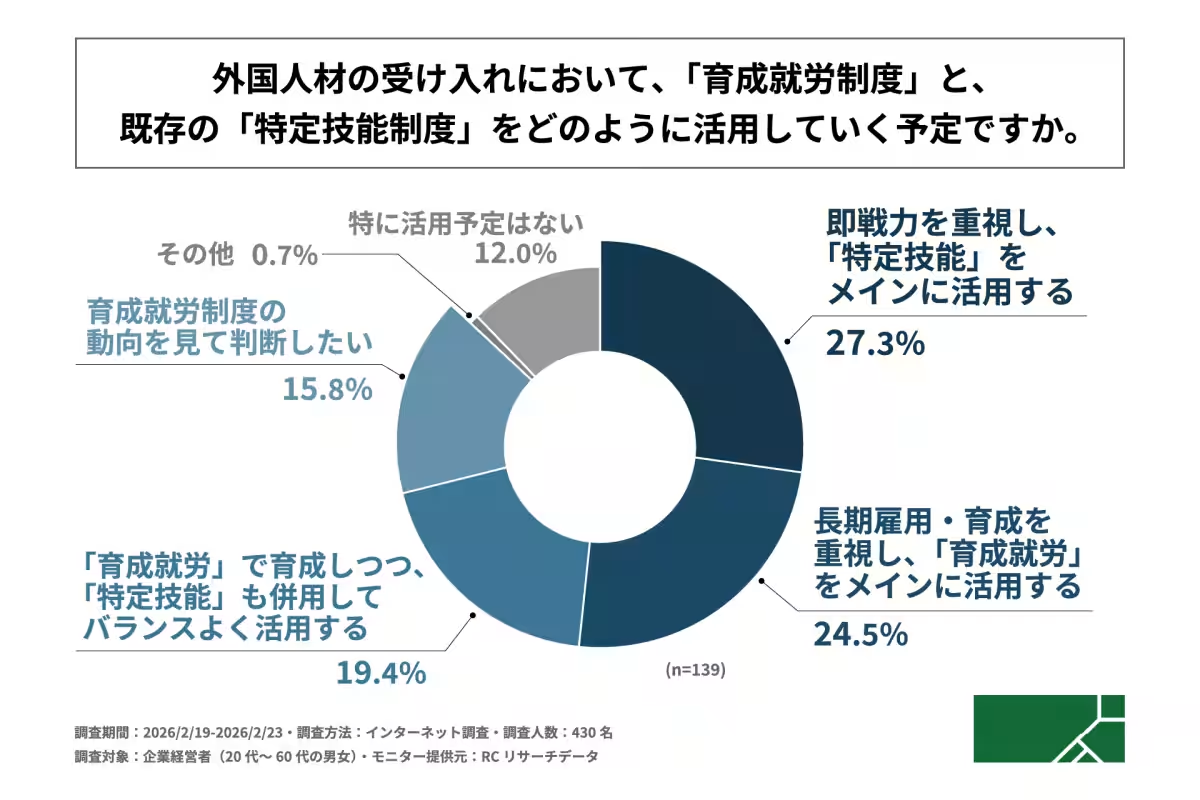
- - Among companies hiring foreign workers, over 25% plan to focus on immediate capabilities, primarily utilizing the Specific Skills System.
Survey Details
- - Survey Period: February 19-23, 2026
- - Method: Online Survey
- - Participants: 430 Business Owners (aged 20s to 60s)
- - Data Provider: RC Research Data
Awareness of the Training Employment System
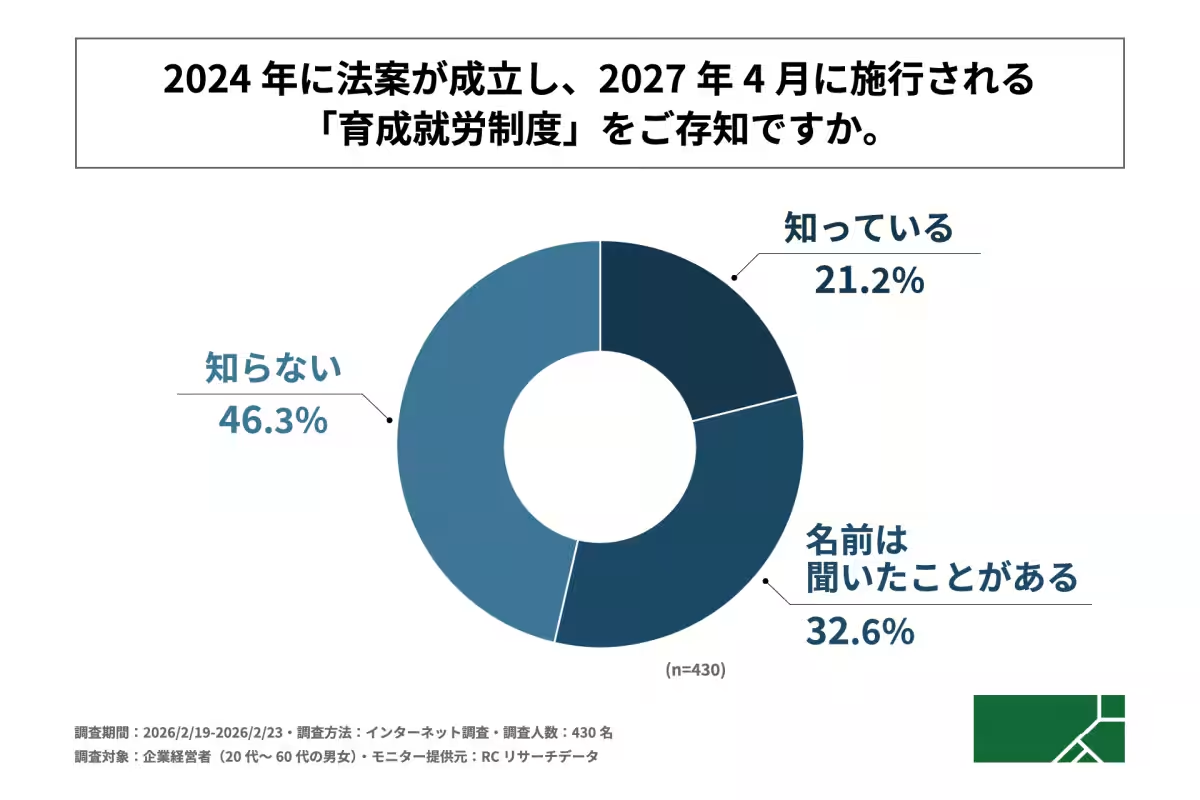
When questioned about their awareness of the Training Employment System, which is set to come into effect in April 2027, 46.3% responded that they were unaware of it. Meanwhile, 32.6% acknowledged they had heard the name, and only 21.2% were fully knowledgeable about it. This highlights that a large segment of business leaders remains uninformed about this critical initiative.
Understanding of the System
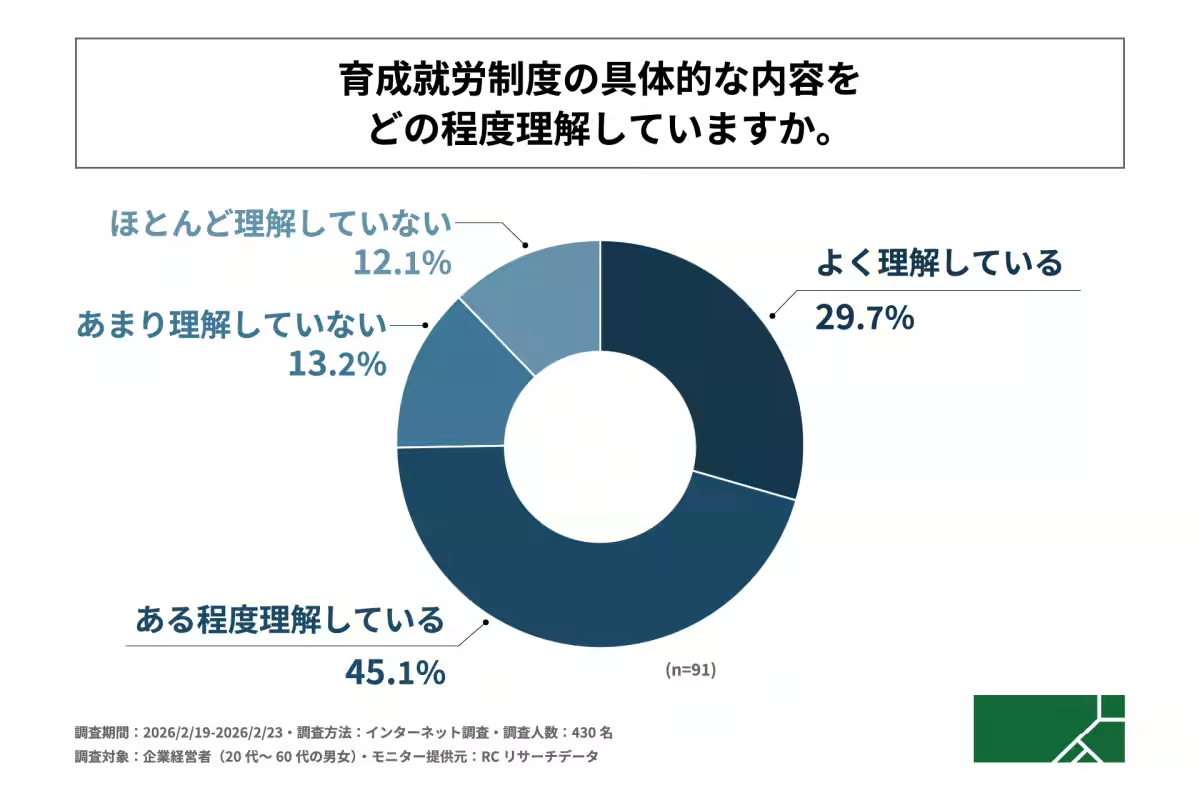
Among those aware of the system, responses regarding their understanding were revealing: 45.1% felt they had a moderate grasp of the content, while 29.7% stated they understood it well. Collectively, this means around 75% of those familiar with the system possess some level of understanding surrounding its provisions.
Expectations for Business Impact
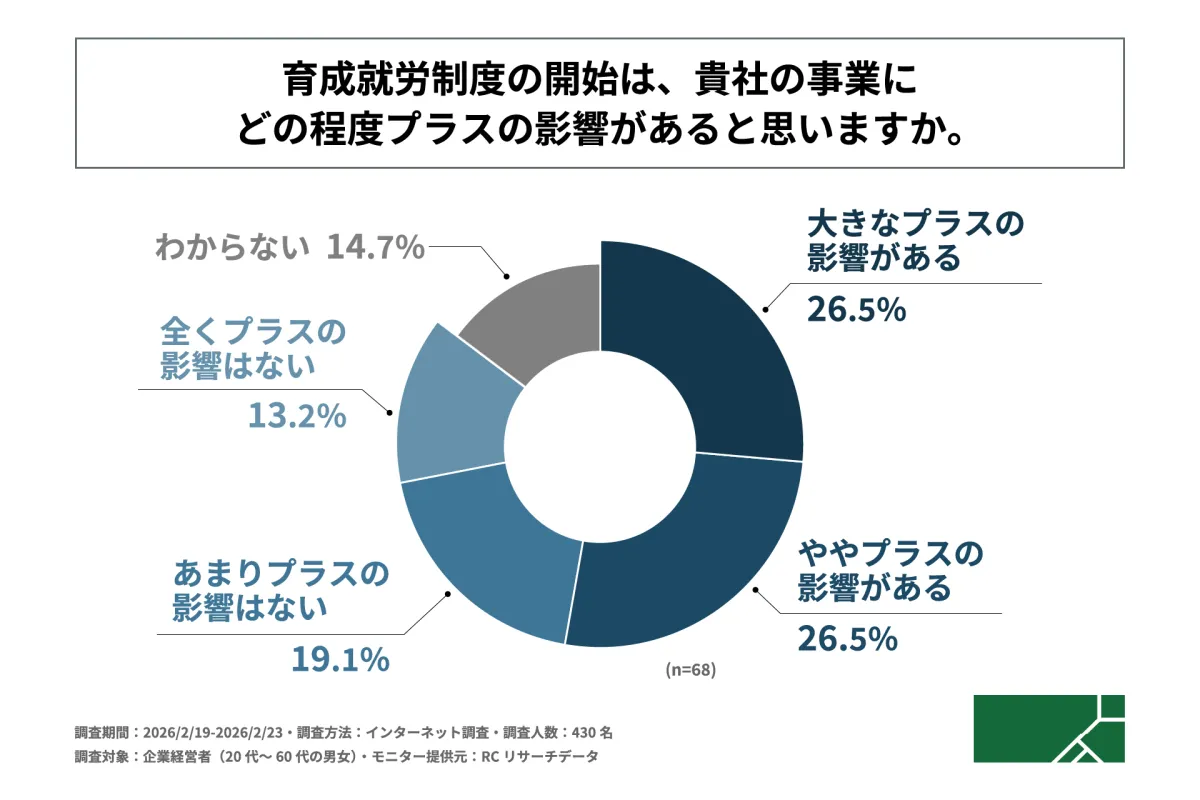
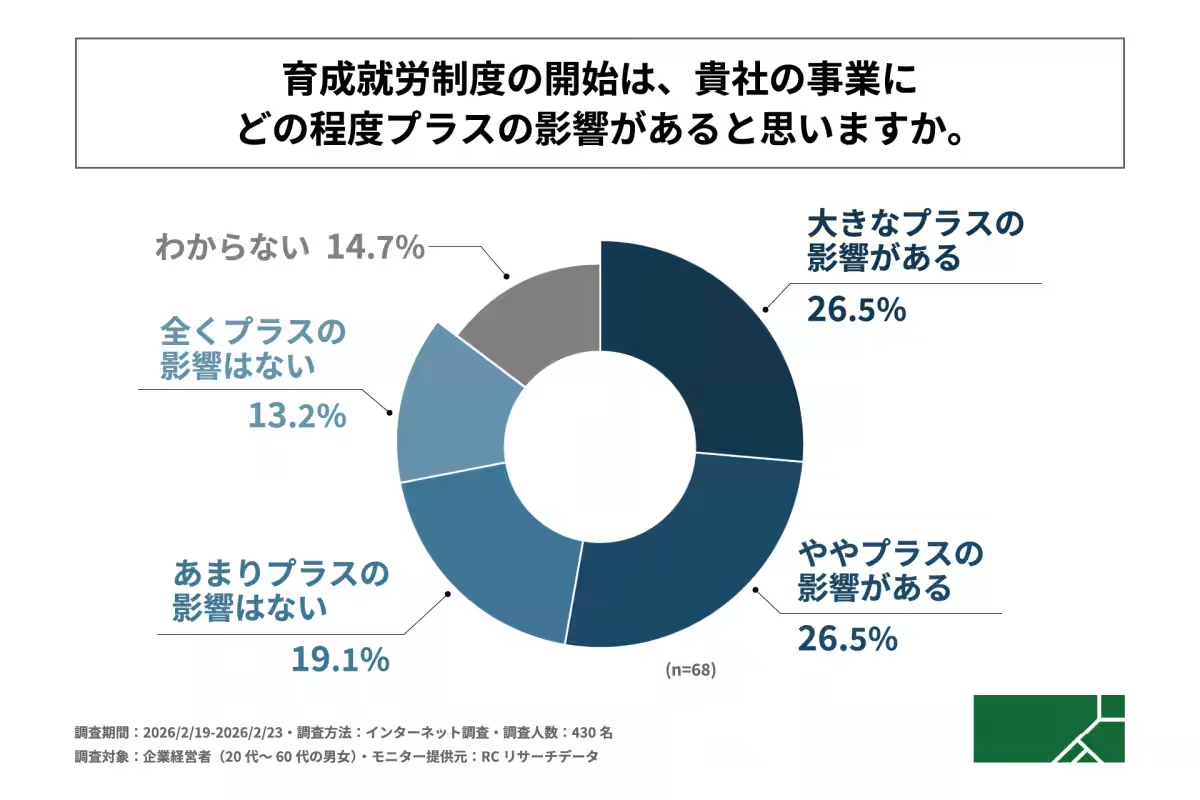
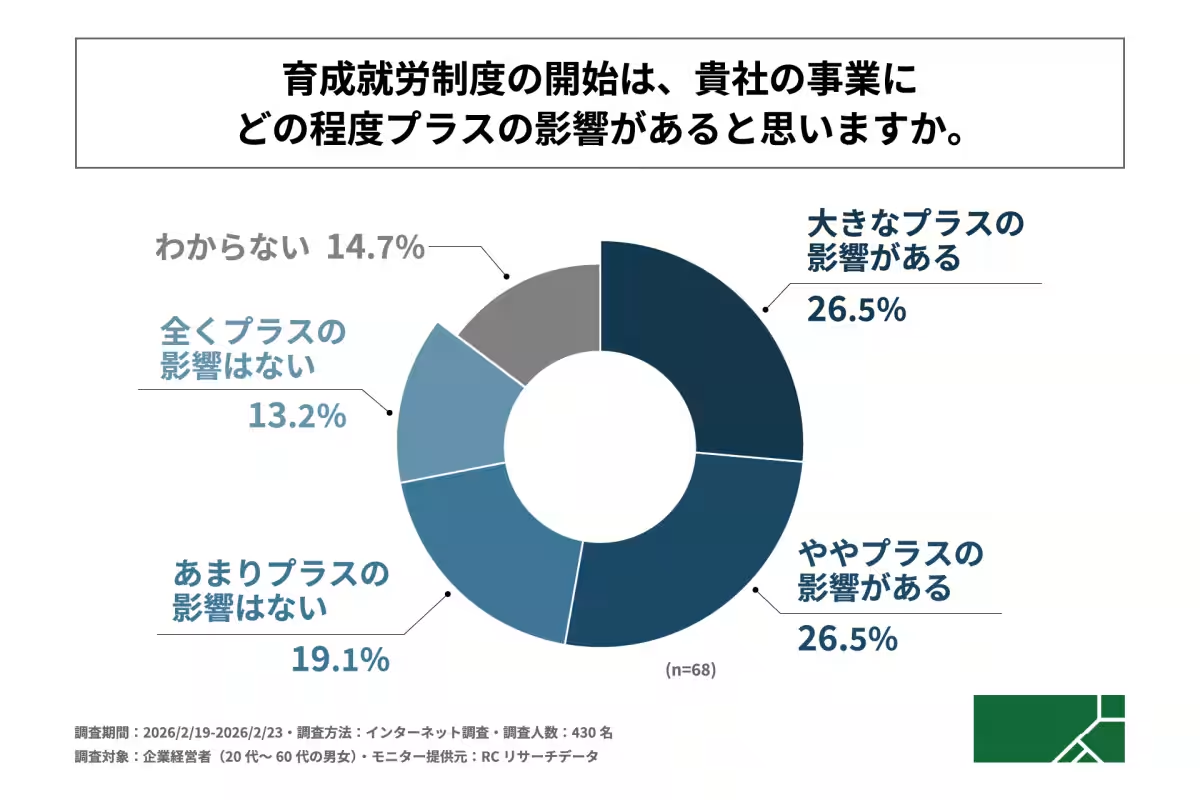
Surveyed executives who understood the specifics of the new system were queried about its anticipated impact on their companies. Approximately 53% believed it would either greatly or somewhat positively influence their operations. This insight underscores the potential optimism business leaders have regarding the successful integration of foreign talent through this program.
Optimism About Skill Development
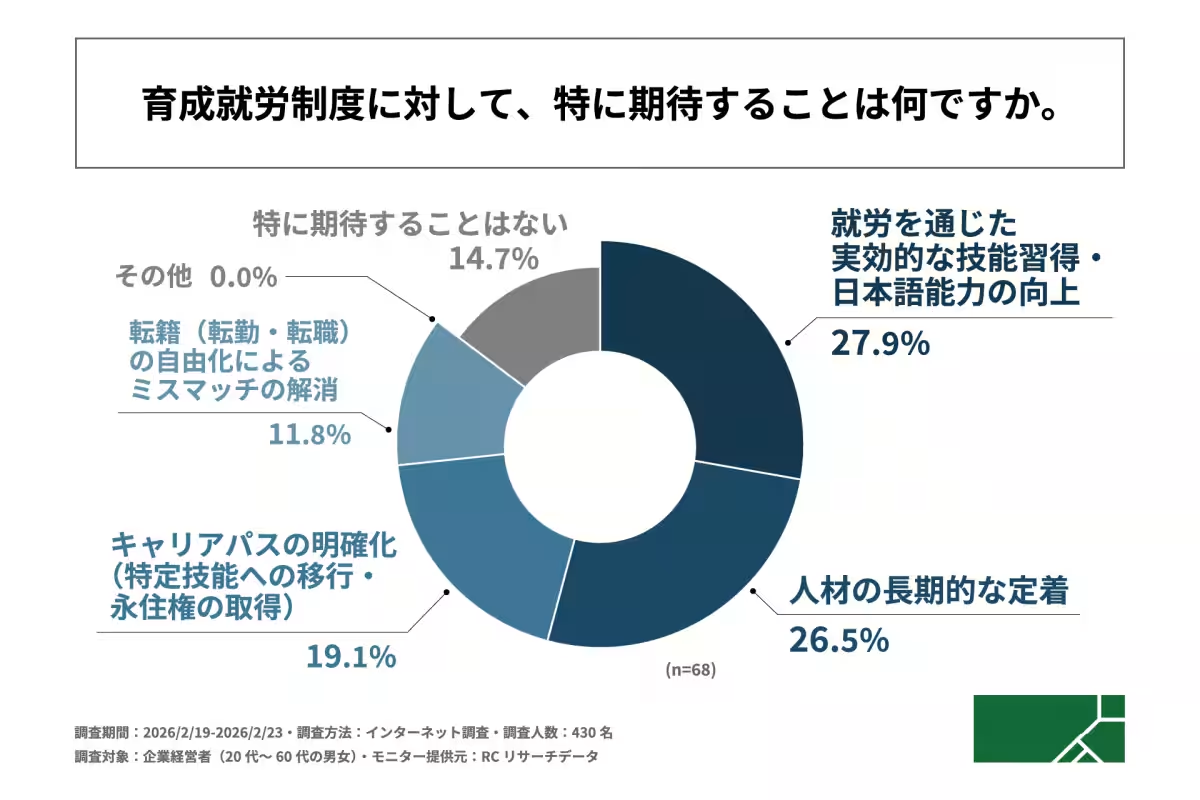
When asked what specifically they hoped to achieve through the Training Employment System, the responses were telling. The top expectations included: 27.9% referenced effective skills acquisition and Japanese language improvement through work, while 26.5% emphasized the importance of long-term talent retention.
Current State of Foreign Hiring
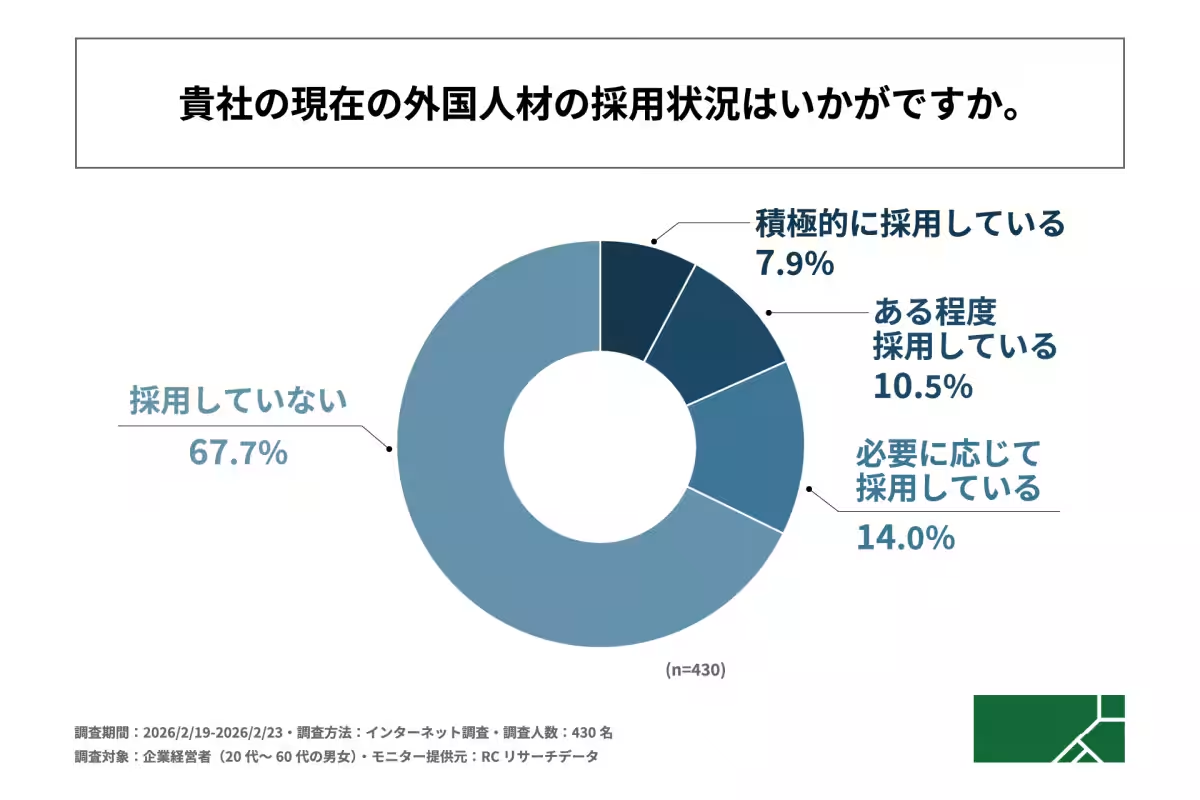
Despite the significant number of companies unaware of the Training Employment System, over one-third are actively hiring foreign workers to varying degrees. While the majority, 67.7%, reported not hiring at all, 32.4% indicated they hire foreign talent as needed or actively seek to recruit them.
Emphasis on Immediate Capability
Among companies hiring foreign talent, over 25% plan to primarily use the Specific Skills System, focusing on immediate capabilities for recruitment, while the remaining percentages displayed various levels of interest in balancing both the Training Employment System and the Specific Skills System.
Conclusion
This survey highlights a gap in awareness among business owners about the Training Employment System, contrasted with their substantial understanding of its specific details. Business leaders anticipate that the implementation of this system could positively impact their operations, file specifically assessing skills acquisition and long-term retention as key priorities. Furthermore, it revealed that over one-third of companies are engaging foreign talents, pushing towards a greater reliance on the Specific Skills System for integrating these employees effectively into the Japanese workforce.
This aligns with G.A. Group's commitment to providing comprehensive foreign workforce recruitment services that ensure mutual growth for businesses and their foreign employees. By offering a full support system, including visa application assistance, lifestyle support upon arrival, and ongoing follow-up measures, G.A. Group aims to facilitate sustained employment, thereby easing the corporate burden and enhancing the long-term retention of foreign talent in Japan.

Topics Business Technology)

【About Using Articles】
You can freely use the title and article content by linking to the page where the article is posted.
※ Images cannot be used.
【About Links】
Links are free to use.