



Explore New Decision Design Strategies for the AI Era in Your Work
Unveiling Free Resource: Decision Design in the AI Era
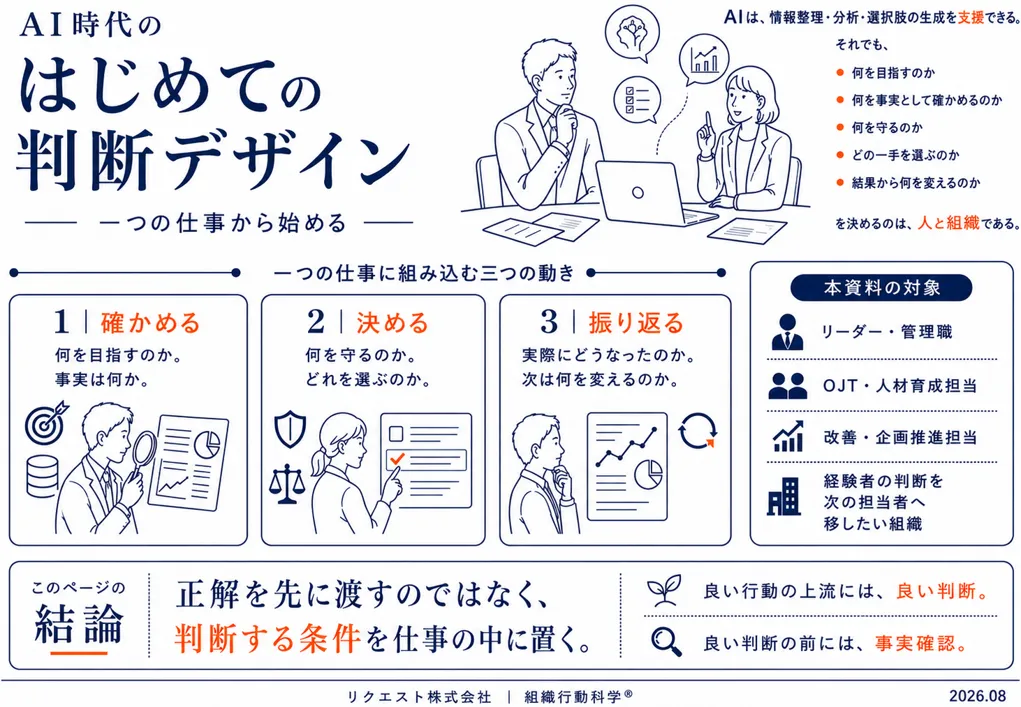
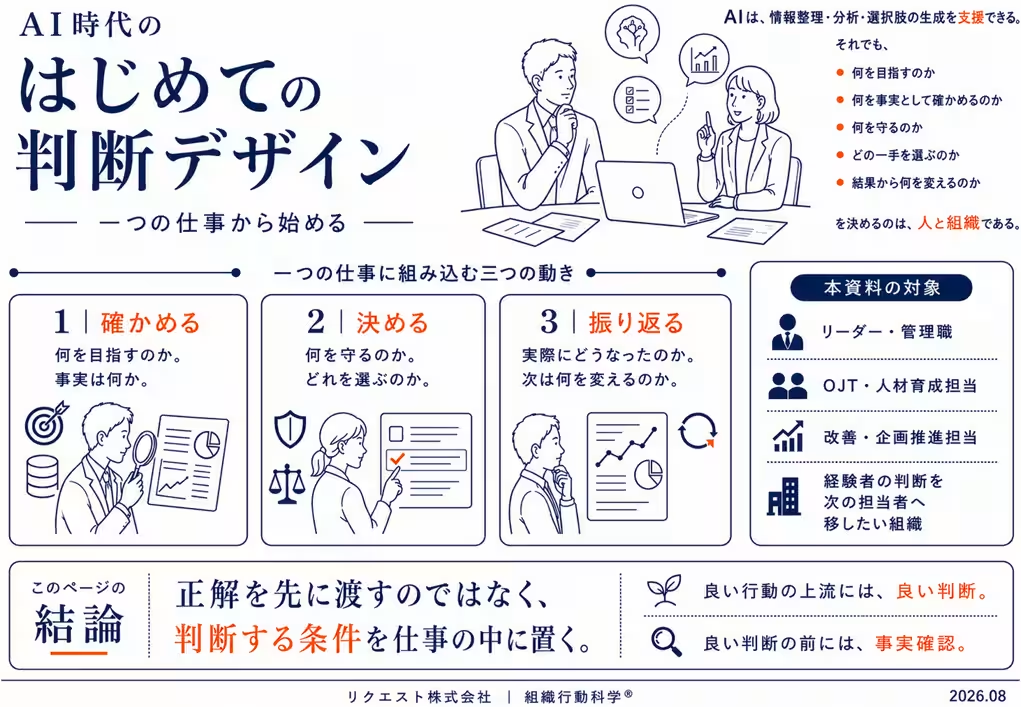
In an effort to support individuals and organizations in navigating the complexities of work in the age of AI, Request Corporation has released a free resource titled "AI Era: Introduction to Decision Design". This document is crafted specifically for newcomers who wish to accumulate decision-making experience while leveraging AI tools effectively.
Why Decision Design Matters
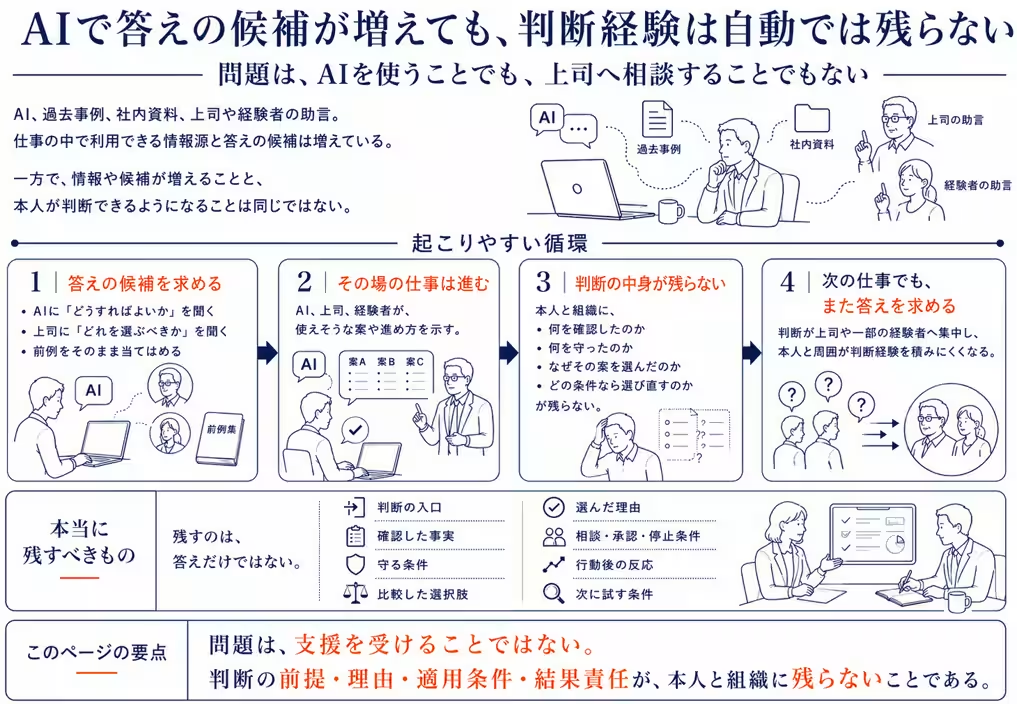
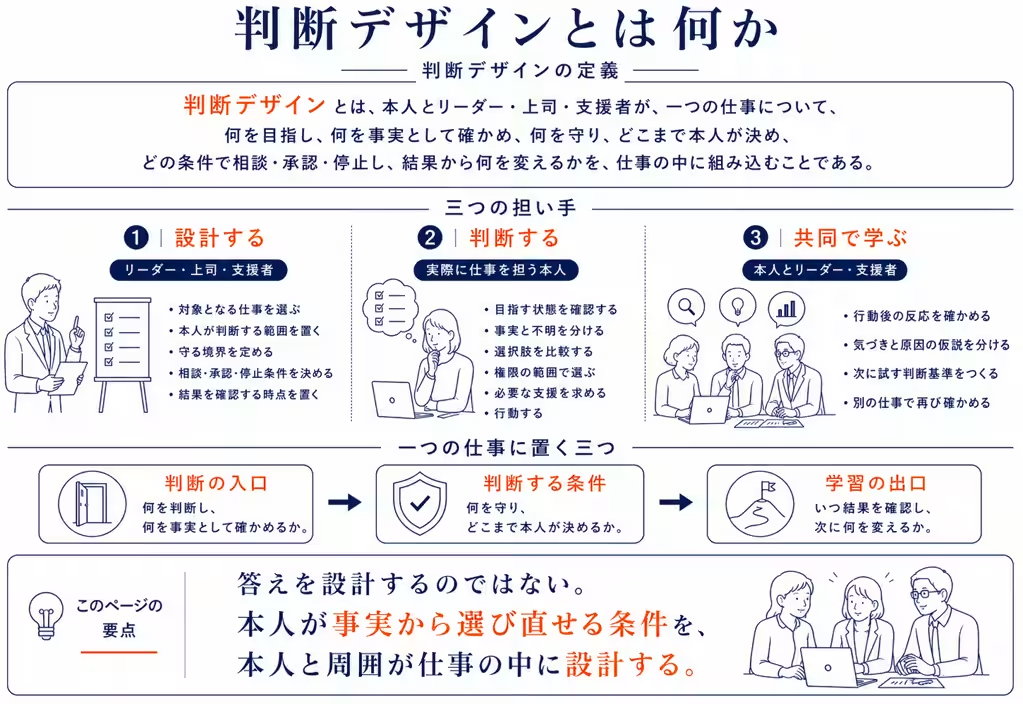
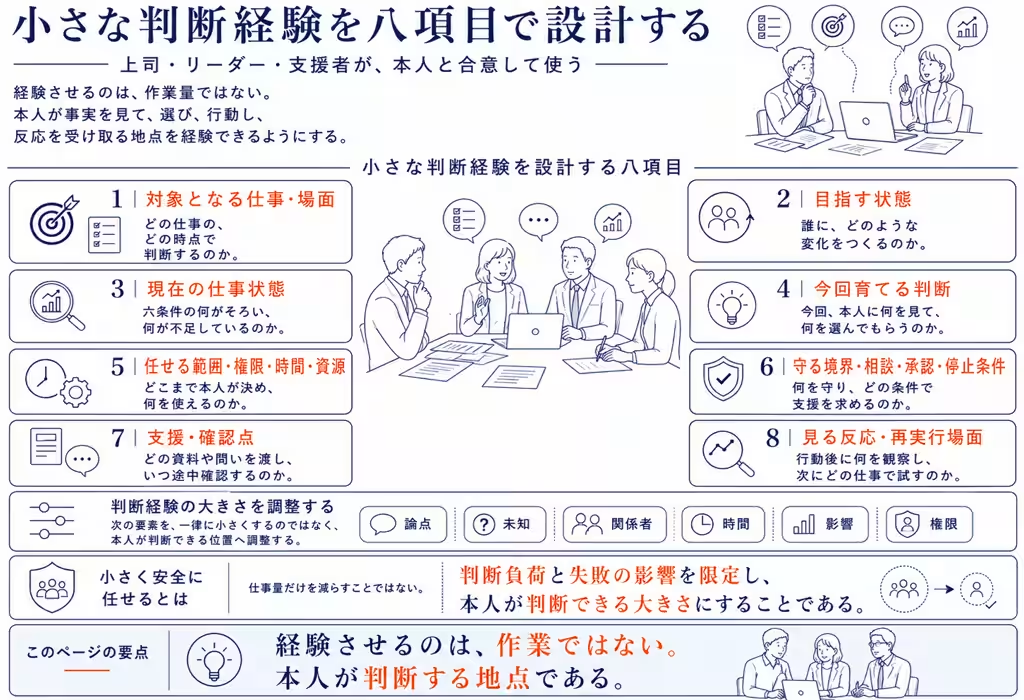
AI can greatly assist in organizing information, analyzing data, and generating options. However, it’s essential to recognize that making progress in tasks does not necessarily equate to accumulating decision-making experience. This resource emphasizes that relying solely on AI or the guidance of superiors may result in individuals lacking the clarity about:
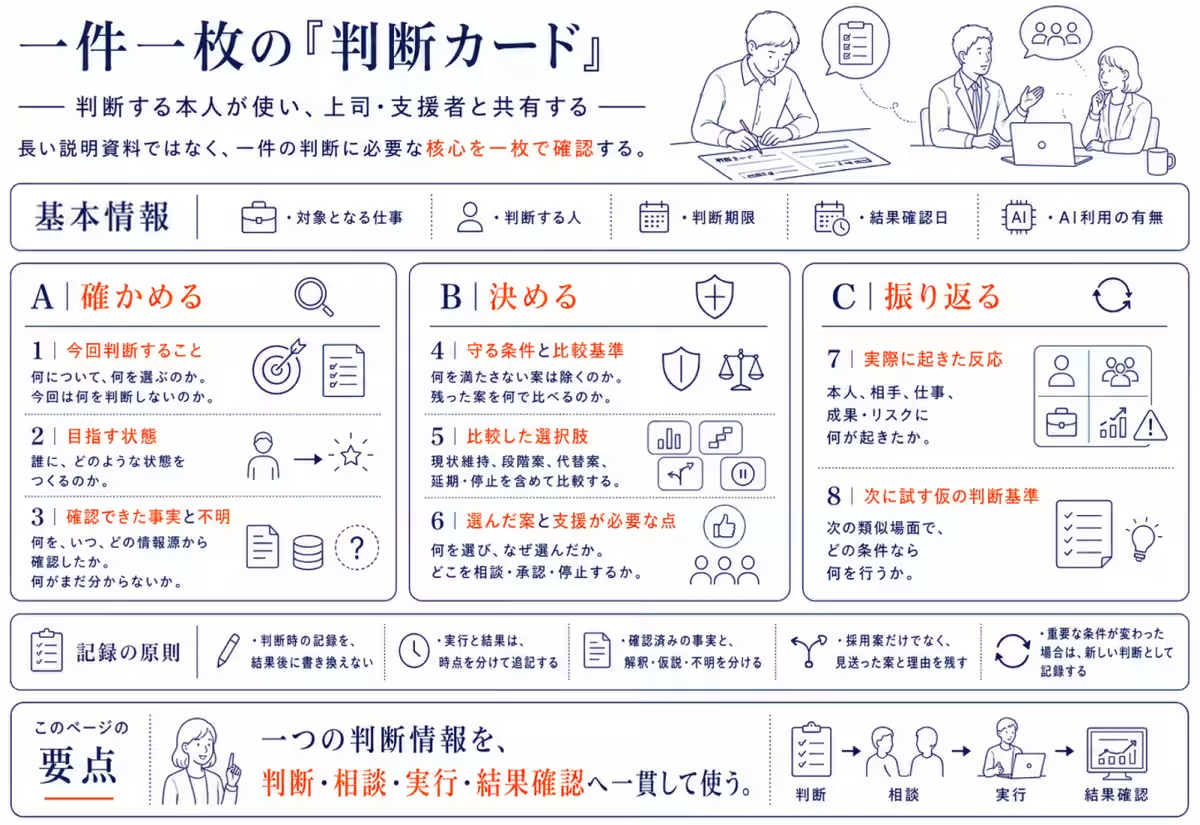
- - What facts need verification?
- - What principles should be upheld?
- - How to compare various choices?
- - What level of autonomy should be taken in decisions?
- - When to seek advice or stop actions?
- - What can be learned from results?
The free material encompasses 17 pages designed to help individuals learn to design their judgments in the workplace effectively.
Context of the Release
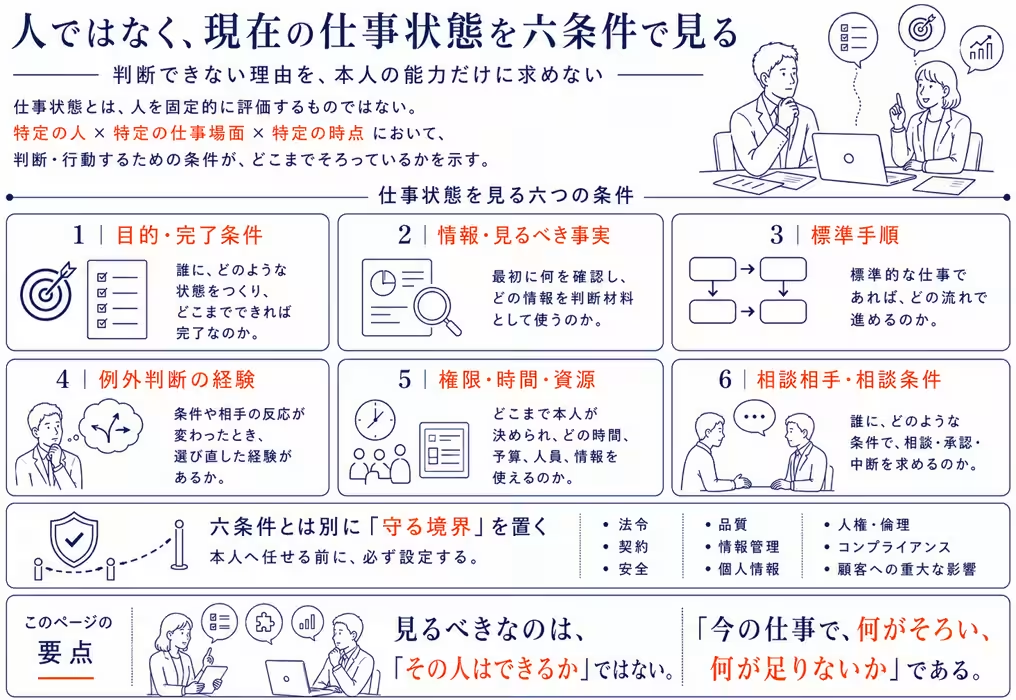
Despite receiving support from AI or superiors, not all decision-making content is retained. Increased sources of valuable information lead to a long-term dependency on others for answers. By explicitly detailing the conditions under which judgment is accommodated, this resource brings much-needed clarity to how decisions are made and retained within organizations.
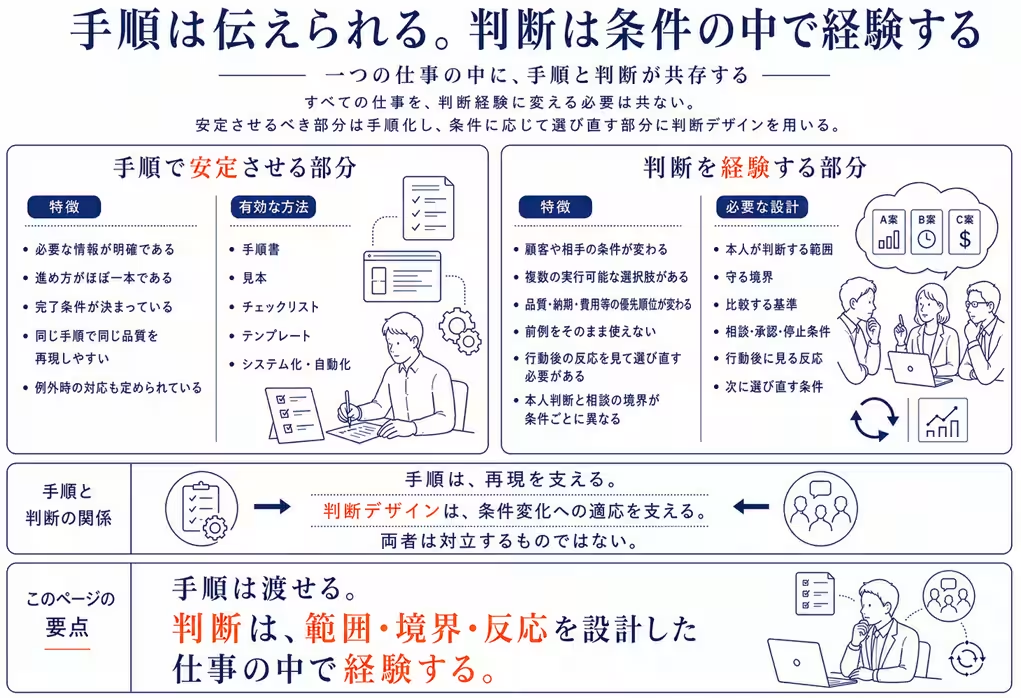
This publication distinguishes between procedural tasks and those requiring judgment—enabling flexibility in determining when to apply a systematic approach versus when to engage in decision-making.
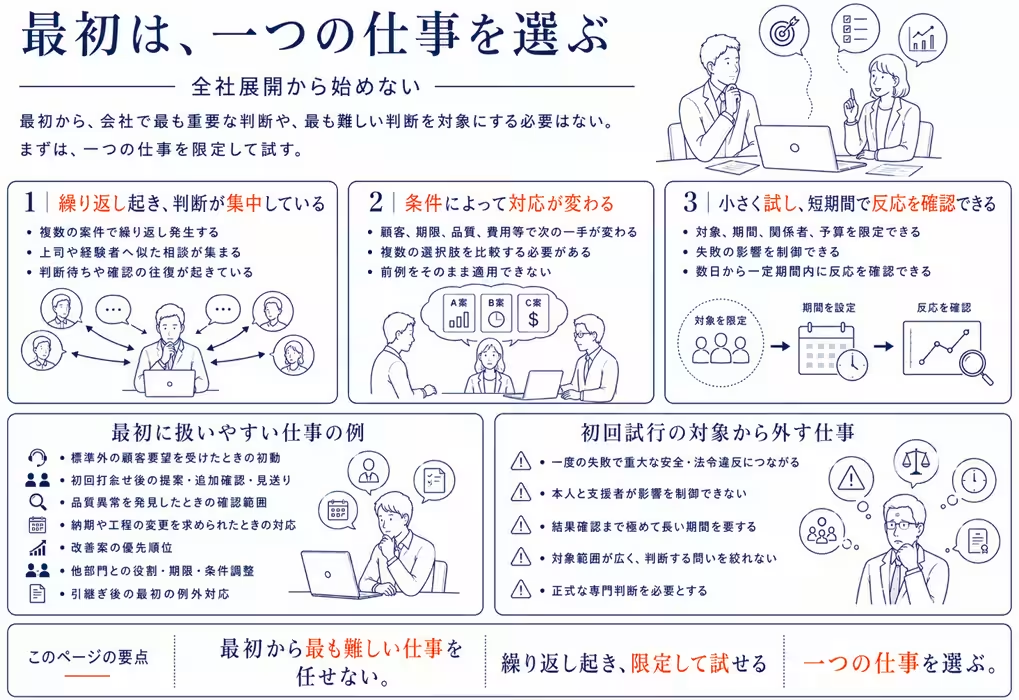
Starting Small
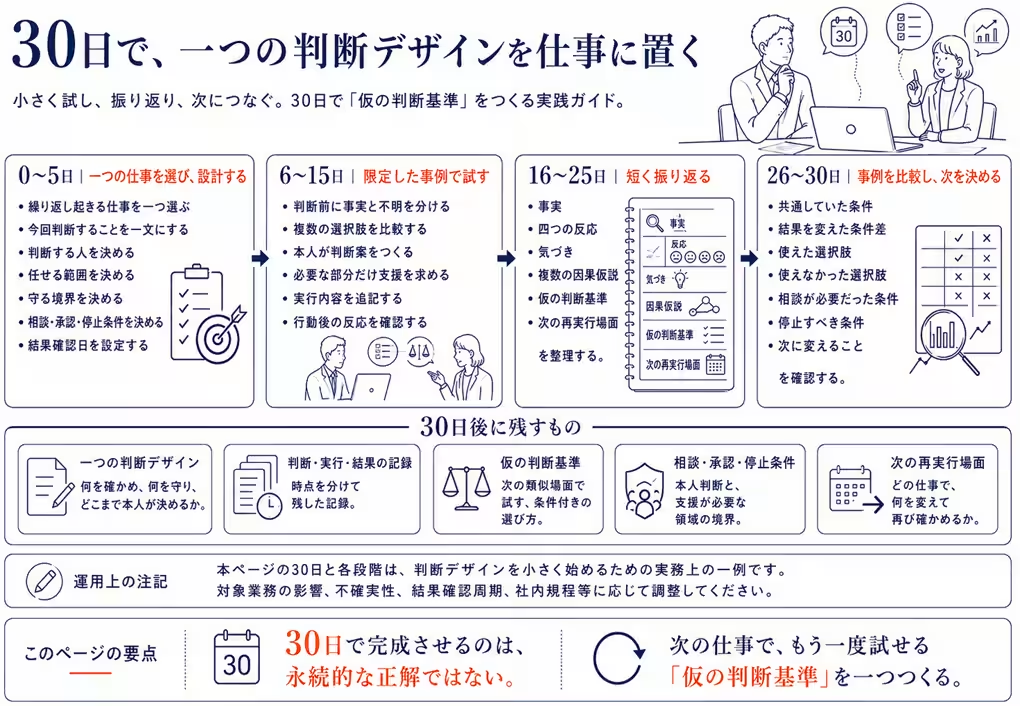
Instead of an organization-wide overhaul, focusing on a single task allows for manageable risk and clearer results, which progressively build a foundation for decision-making structures. The emphasis here is on starting small; a trial at the task level allows for hands-on experience and practical learning that connect directly to the realization of larger objectives.
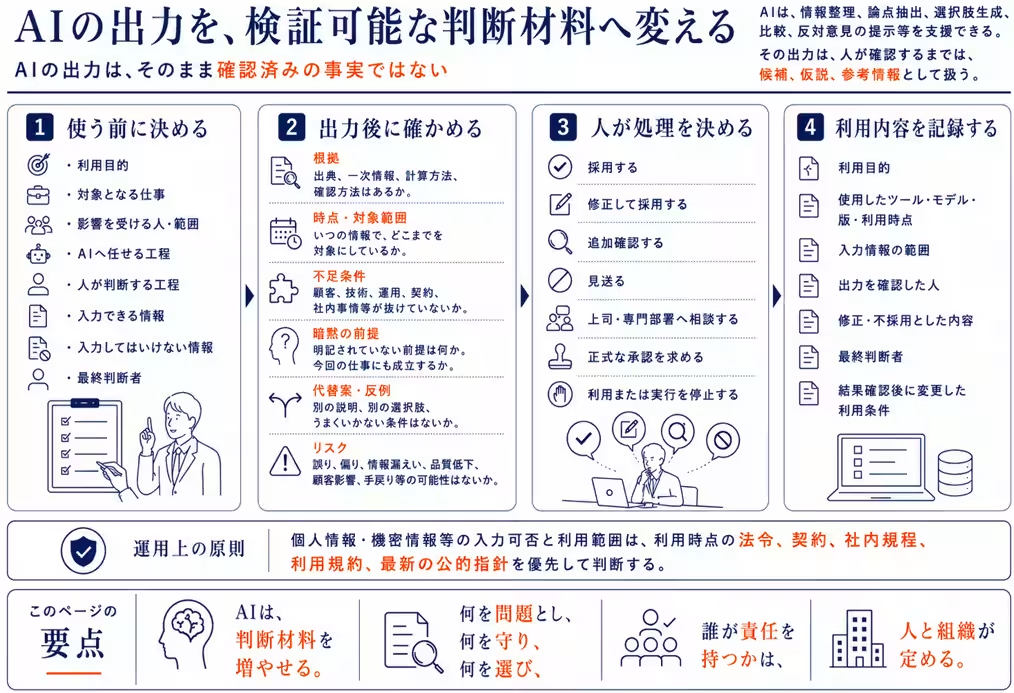
Structuring AI Outputs into Actionable Judgments
AI outputs aren’t verified facts until individuals confirm them. This document advocates approaching AI utilization by establishing pre-conditions and post-verification processes, enabling users to document the judgments that arise from AI outputs.
The philosophy underpinning this resource stresses separating the emotional aspects of decisions from the factual basis and ensuring a holistic review process that accurately reflects the state of knowledge at the time of decision-making.
Evaluating Decisions Beyond Outcomes
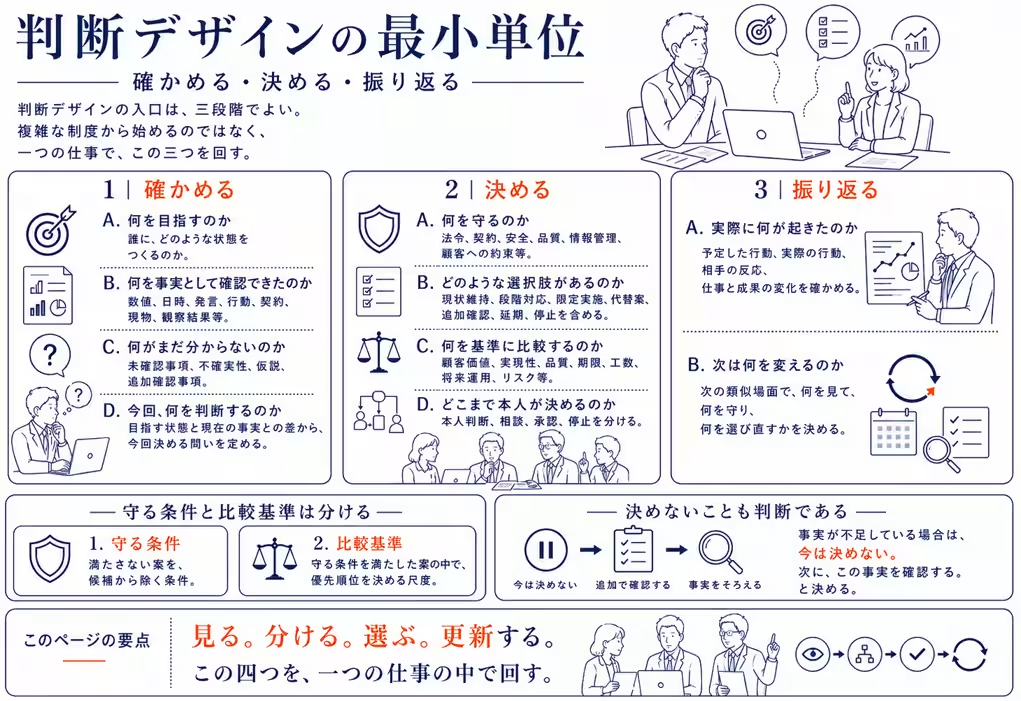
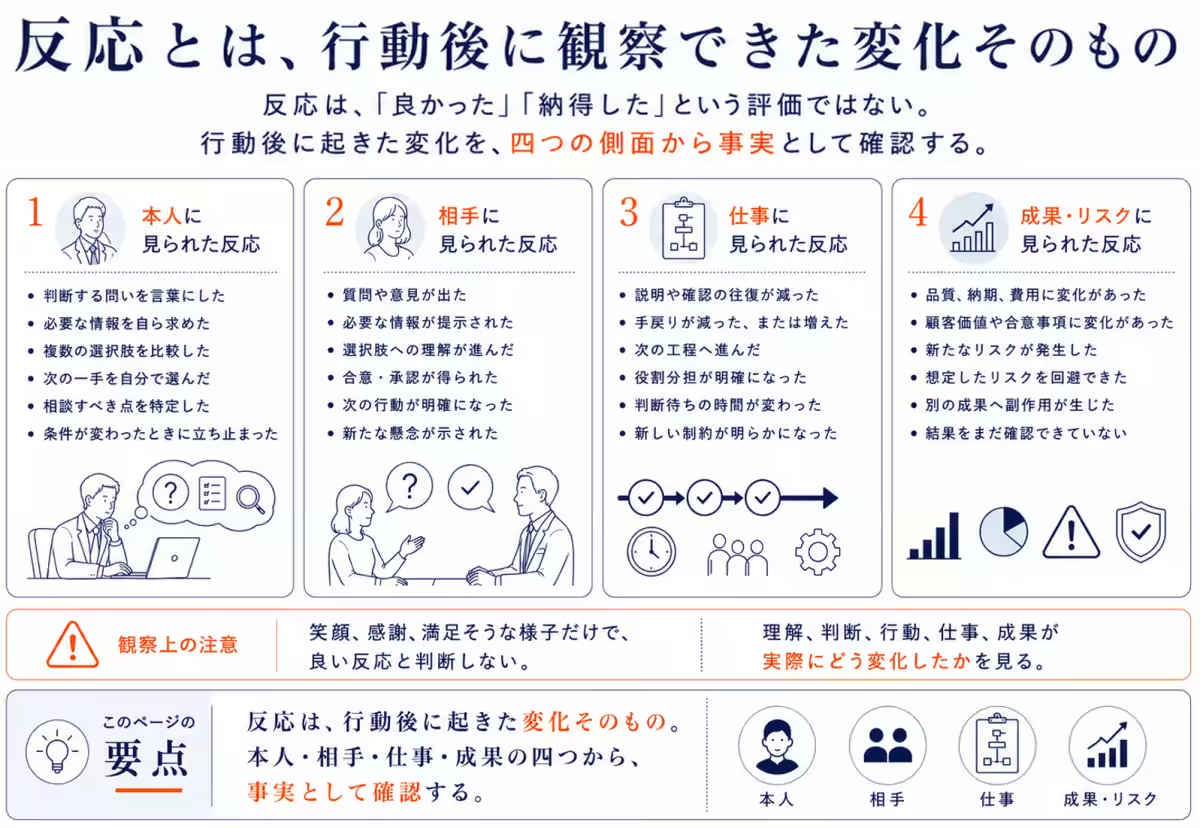
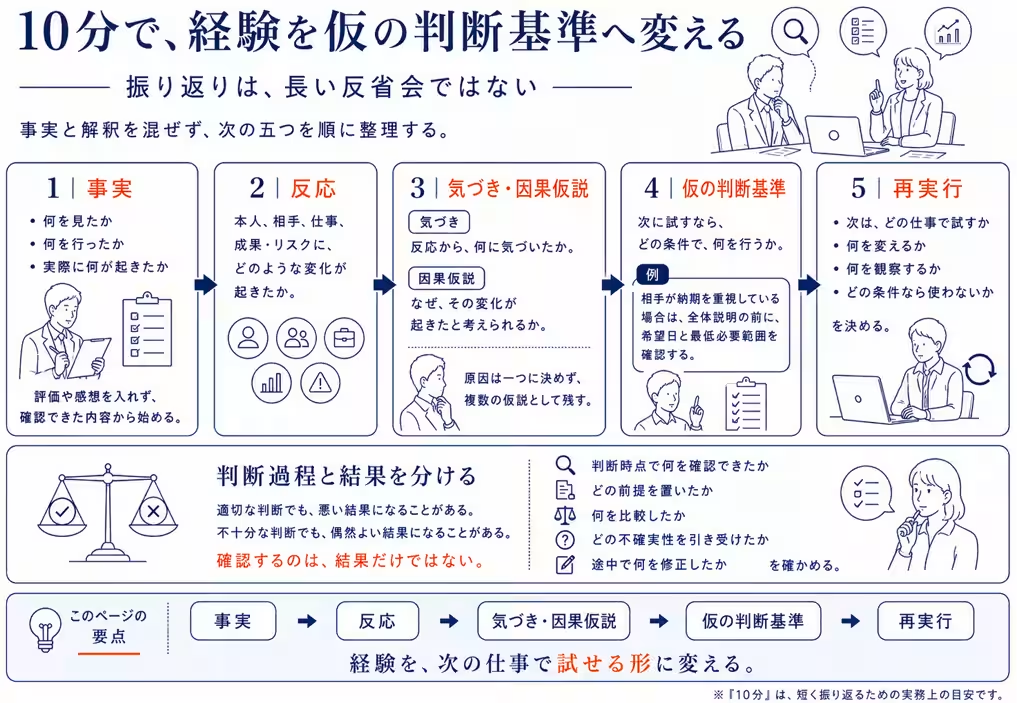
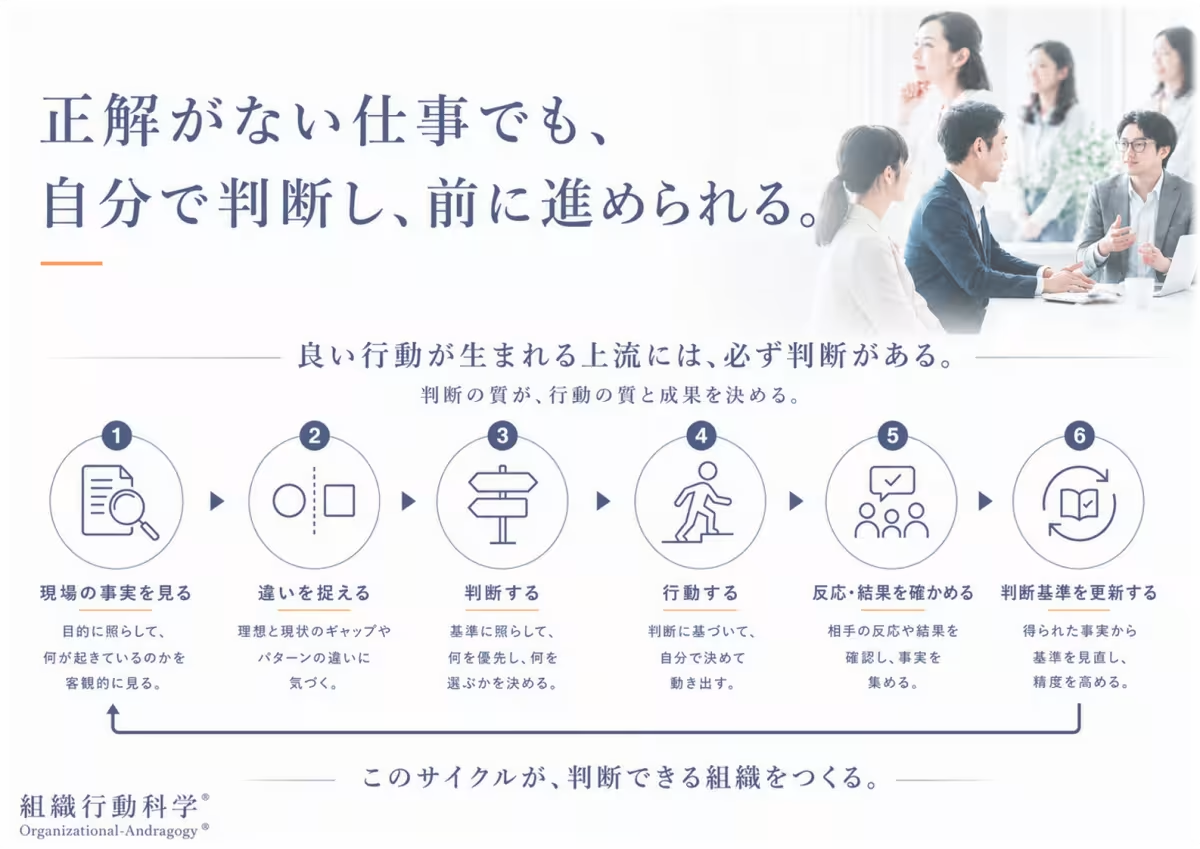
It’s not enough to gauge decisions solely based on results; contextual factors significantly influence outcomes. By maintaining a timeline that distinguishes between the context of the decision, execution, and subsequent results, this approach fosters improved understanding and better decision-making in the future.
Reflections on Experience
The goal of reflecting isn’t merely to retrospecively evaluate actions; rather, it’s to affirm changes post-action and derive valuable insights to refine future decisions. This process cultivates ongoing learning and prepares individuals to take informed risks with confidence.
A Temporary Framework for Lasting Change
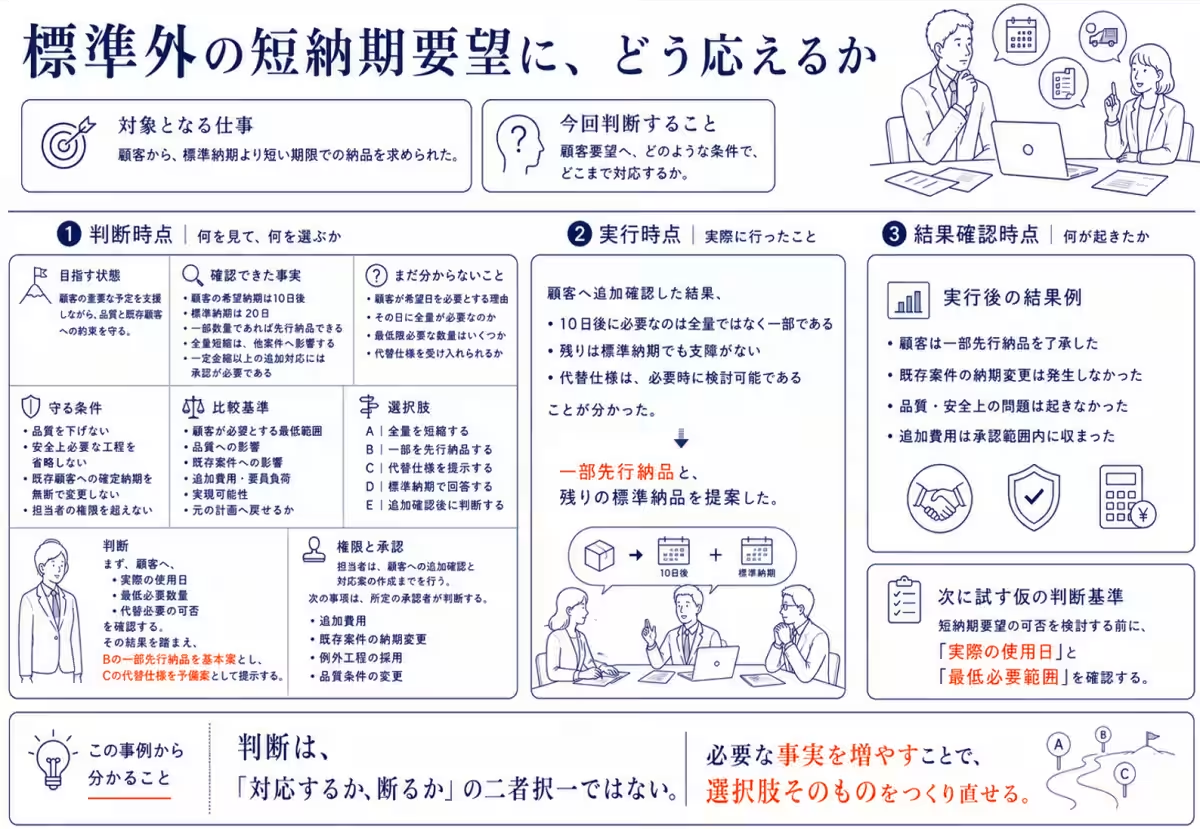
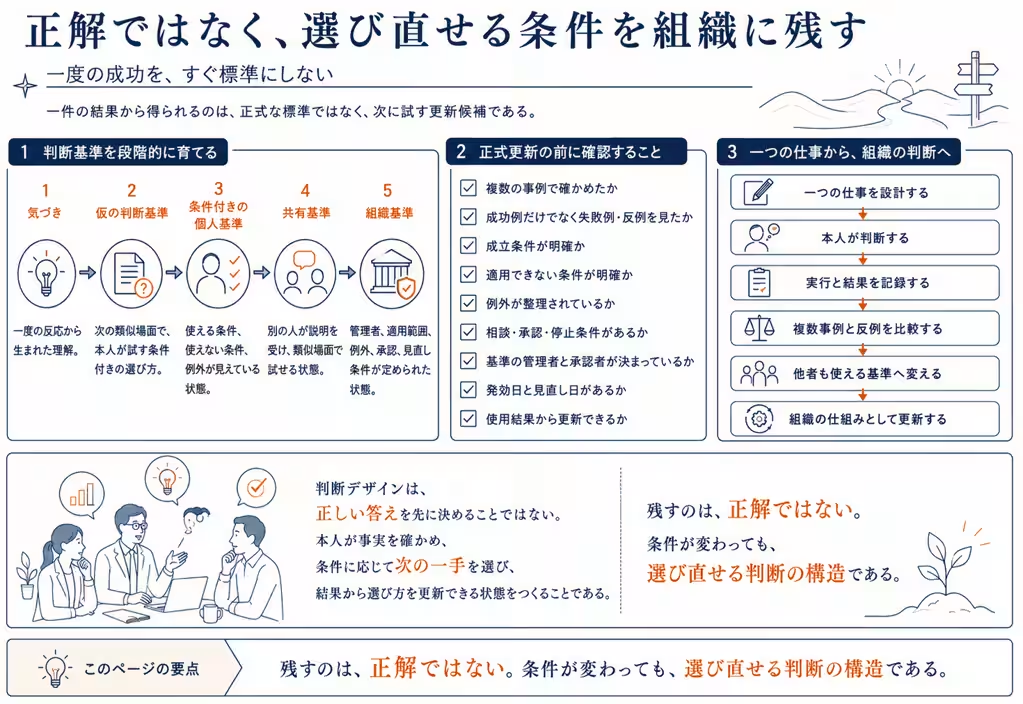
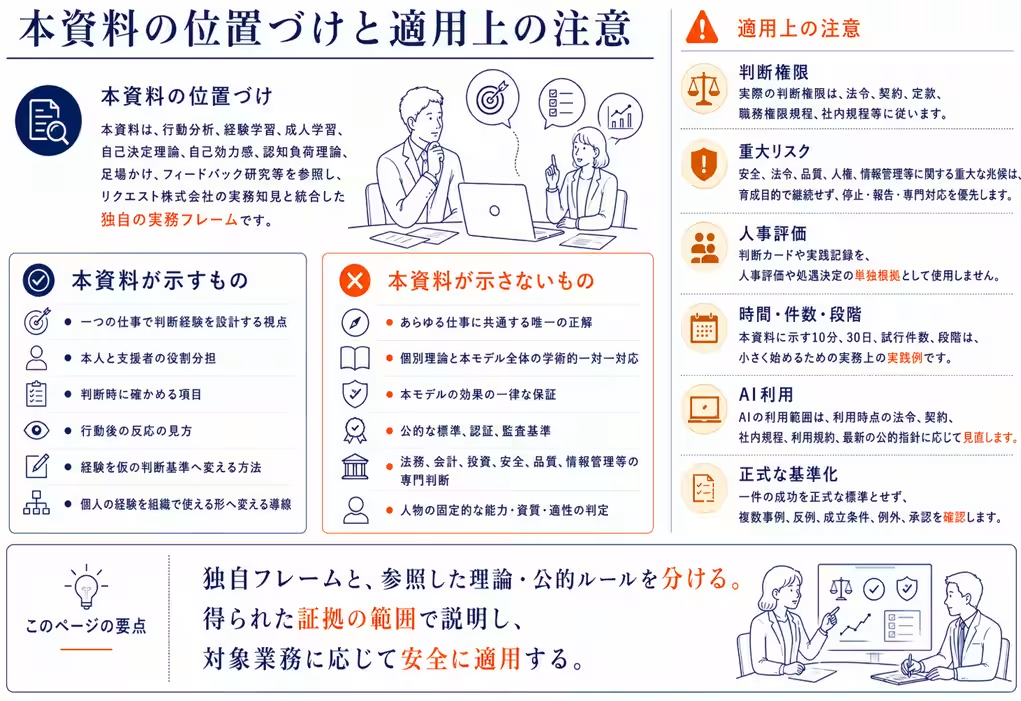
The 30-day timeframe mentioned in this resource should not be misconstrued as establishing a permanent standard. Instead, it aims to create provisional guidelines from which continuous learning and adaptation can stem. Multiple case studies, including failures and contrary examples, must inform any decisions regarding the broader application of these insights within organizations.
Overview of the Document
Document Title: AI Era: Introduction to Decision Design
Subtitle: Starting from One Task
Content: 17 pages in A4 landscape format
Cost: Free
Registration: No sign-up required
Who Should Utilize This Resource?
This material is intended for:
- - Leaders and Managers
- - OJT and Training Officers
- - Improvement and Project Promotion Staff
- - Organizations looking to transfer decision-making responsibilities from experienced personnel to new staff
- - Entities aiming to clarify individuals' ranges of judgment and responsibilities while utilizing AI
In Conclusion:
The complexities of today’s workplace necessitate clearer definitions of decision-making responsibilities. Utilizing the concept of decision design, individuals can be empowered to verify facts and make informed choices, thereby enhancing both personal and organizational outcomes.
For further insights and to access the free resource, download here.
About Request Corporation
Request Corporation is rooted in the study of Organizational Behavior, aiming to understand why thought processes and actions occur within organizational environments. With validated data covering various organizations and 338,000 individuals, the firm focuses on educational and developmental strategies.


Topics Business Technology)
【About Using Articles】
You can freely use the title and article content by linking to the page where the article is posted.
※ Images cannot be used.
【About Links】
Links are free to use.