



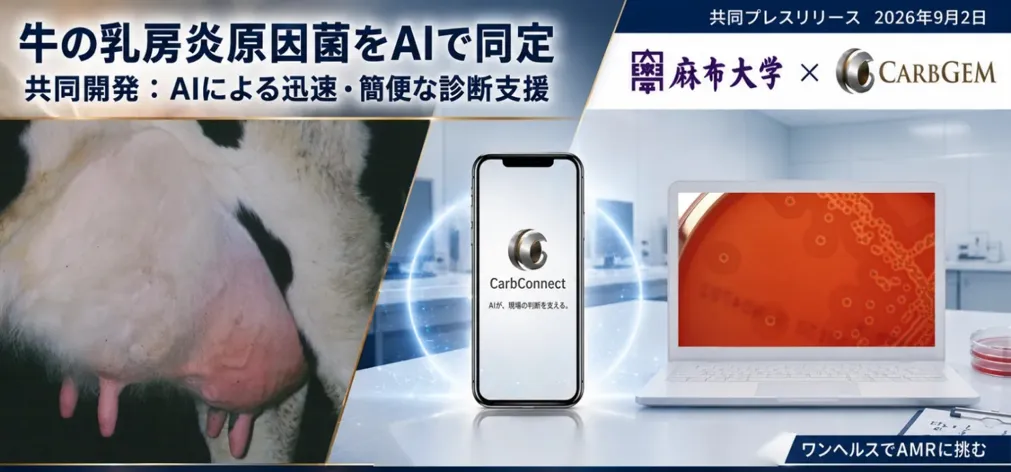
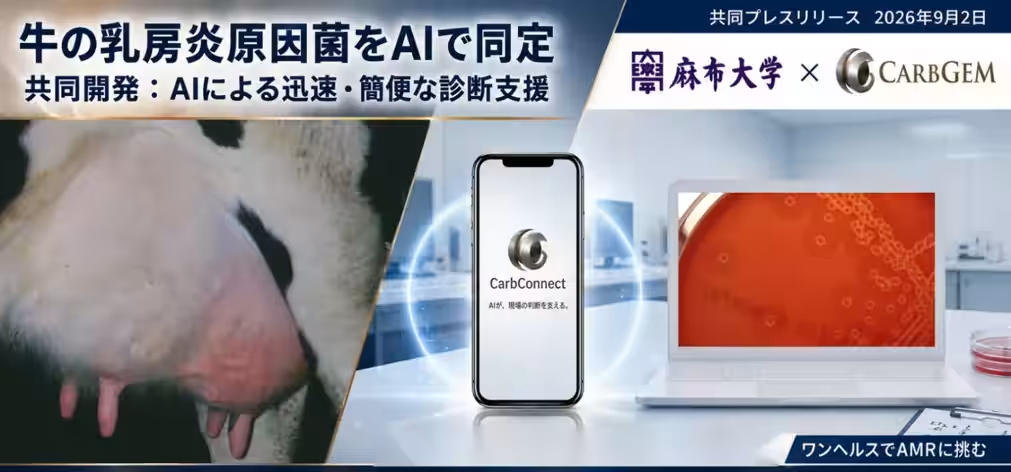
Collaboration for AMR Solutions: Azabu University and CarbGeM's AI Innovations in Cattle Health
Tackling AMR: The Collaboration Between Azabu University and CarbGeM
Introduction
In a groundbreaking partnership, Azabu University's School of Veterinary Medicine and CarbGeM Inc. are set to revolutionize the diagnosis of mastitis in dairy cattle. With increasing concerns over antimicrobial resistance (AMR), this collaboration aims to leverage artificial intelligence (AI) technology to identify bacteria causing mastitis effectively. This initiative is funded by a grant from the Japan Racing Association (JRA) as part of its livestock promotion efforts for the years 2026 to 2028. Professor Kawai Kazuhiro from Azabu University will lead the project, which promises to enhance diagnostic accuracy in veterinary medicine.
Background on the Project
Mastitis poses a significant threat to the dairy industry, leading to considerable economic losses. The primary treatment method involves the use of antibiotics, which can contribute to the growing issue of AMR if not managed properly. Hence, it is crucial to accurately identify the causative bacteria and determine their susceptibility to treatment. Traditional methods rely heavily on visual assessments by trained professionals, which not only require expertise but can also be time-consuming and costly.
By integrating AI with Azabu University's long-standing expertise in bacteriological identification, this joint venture aims to create a user-friendly system that allows for quick and accurate identification, regardless of the user's experience level. The AI system will analyze images of bacterial colonies, helping veterinarians choose the right antibiotics while ensuring a responsible approach to treatment.
Components of the Joint Project
The project is officially titled the “2026 Mastitis Correct Diagnosis and Antibiotic Responsible Usage Implementation Project.” The objectives include:
1. AI System Development: Utilizing CarbGeM's AI platform 'CarbConnect®', the project will create a system where bacterial colonies can be photographed using smartphones. The images will then be analyzed by AI for bacterial classification.
2. Data Collection and Evaluation: Azabu University will gather images of bacterial colonies and assess their characteristics. These images will form the basis for the AI's learning dataset.
3. Training and Workshops: To ensure effective implementation, workshops will be conducted for veterinary professionals to familiarize them with the new diagnostic tools and methodologies.
The Importance of One Health Approach
Resistance to antibiotics not only poses a threat to livestock but also has far-reaching implications for public health. According to reports from the G7 and OECD, it is predicted that if no action is taken, AMR could account for 10 million deaths annually by 2050. Given these alarming statistics, the One Health approach—which emphasizes the interconnectedness of human, animal, and environmental health—has become essential for addressing AMR.
The agriculture industry must prioritize the production of safe milk. Therefore, this project signifies an important step toward sustainable practices in dairy farming, ensuring not only the health of cattle but also the safety and wellbeing of consumers.
Future Implications
As both organizations work together, they aim to not only improve the diagnosis and treatment of mastitis but also to contribute to the wider adoption of responsible antibiotic usage practices. With aspirations to expand the scope of usage, the tools developed will eventually assist not just veterinarians but also animal nurses and laboratory technicians involved in the health of livestock. Strengthening testing capabilities within veterinary clinics and private laboratories is expected to have a positive economic impact on producers and stabilize the cattle farming community.
Comments from Leaders
Professor Kawai from Azabu University emphasized the urgency of developing effective diagnostic methods for mastitis to mitigate its impact on dairy farming. He believes that incorporating AI will democratize the diagnostic process, allowing quicker and more precise identifications of pathogens. Meanwhile, Nakajima Masakazu from CarbGeM highlighted the significance of collaboration between academia and industry in advancing veterinary healthcare, particularly in combating AMR.
Conclusion
This innovative partnership between Azabu University and CarbGeM represents a significant leap forward in veterinary medicine and our efforts to fight against AMR. By merging veterinary expertise with cutting-edge AI technology, they are setting a precedent that could lead to revolutionary changes in how livestock diseases are diagnosed and treated in the future.


Topics Health)







【About Using Articles】
You can freely use the title and article content by linking to the page where the article is posted.
※ Images cannot be used.
【About Links】
Links are free to use.