



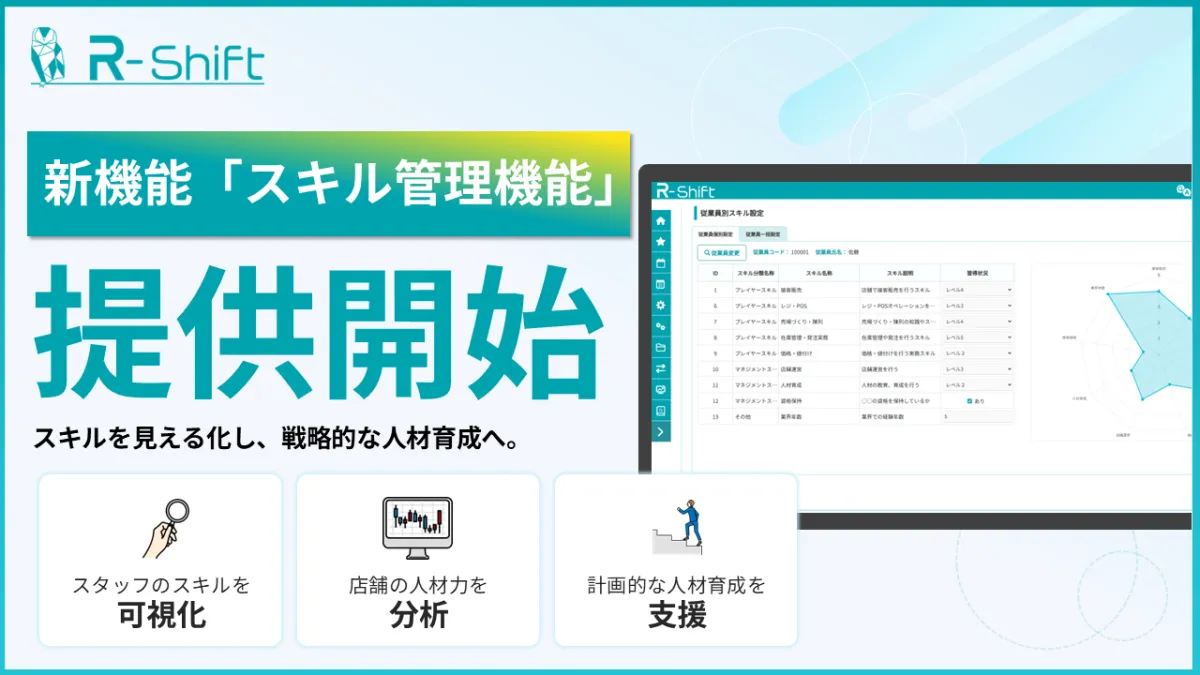
New Features in R-Shift: Skill Management for Enhanced Staff Scheduling
R-Shift Introduces New Skill Management Feature
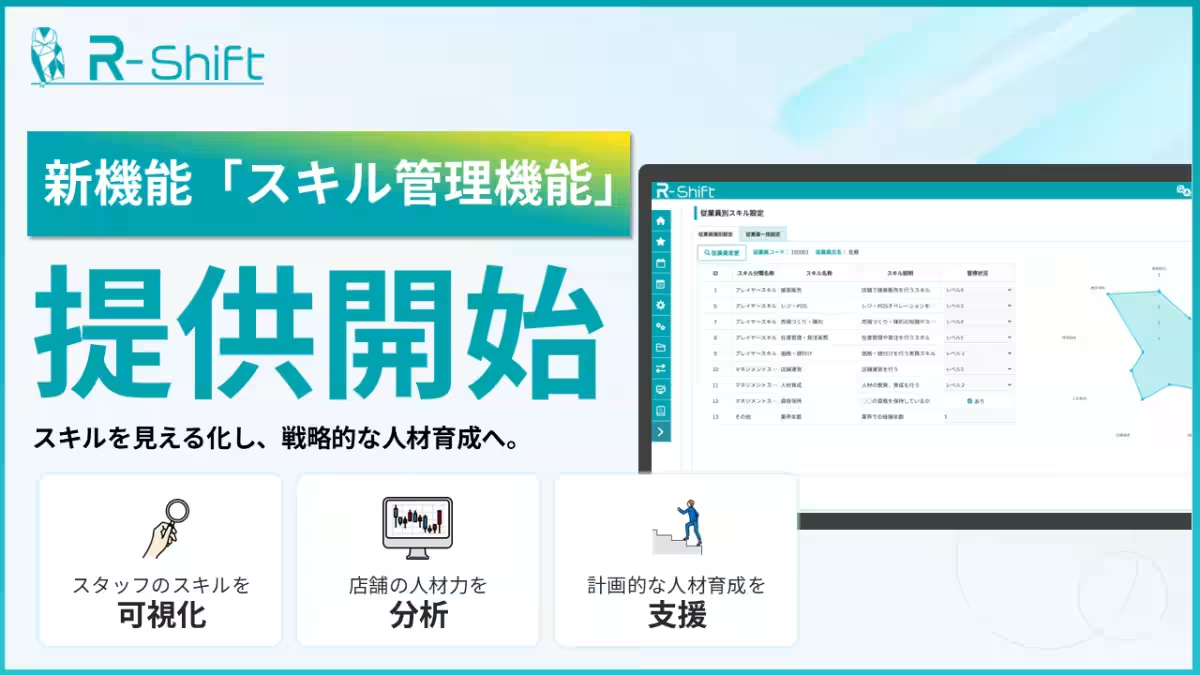
O.M. Network Inc., based in Niigata City, Japan, has officially launched a new feature in its shift management system, R-Shift. This feature, dubbed the "Skill Function," enables businesses to visualize and manage the skills possessed by each staff member. With this development, managers can easily assess the skill levels of their employees and the number of qualified staff for specific shifts, ultimately aiding in workforce planning and training strategic initiatives.
Background of the Development
R-Shift has long offered a task assignment function that allows managers to prioritize staff for specific duties during the automatic shift creation process. For instance, if several employees are capable of handling cash register duties, a manager can prioritize certain staff members for these roles based on availability: those preferred for regular assignments can be marked as "◎," while those to be assigned only during shortages can be tagged as "△."
However, this system only considers assigned priorities, not the actual skill levels of employees. For example, a store manager might have strong cash register skills but choose to prioritize administrative tasks, resulting in a lower priority assignment for register duties, even though their capabilities are high.
This separation between a worker's abilities and their scheduling priority led to the development of the Skill Function. It provides a clear framework for managing employee competencies across various tasks and levels of proficiency, reflecting a more comprehensive view of staff capabilities.
Understanding the Skill Function
The Skill Function consolidates an employee's operational capacity and skill proficiency into manageable categories that can be tailored to each store's needs. This management tool allows businesses to visualize which areas each staff member excels in and identify where training opportunities exist.
Key functionalities of the Skill Function include:
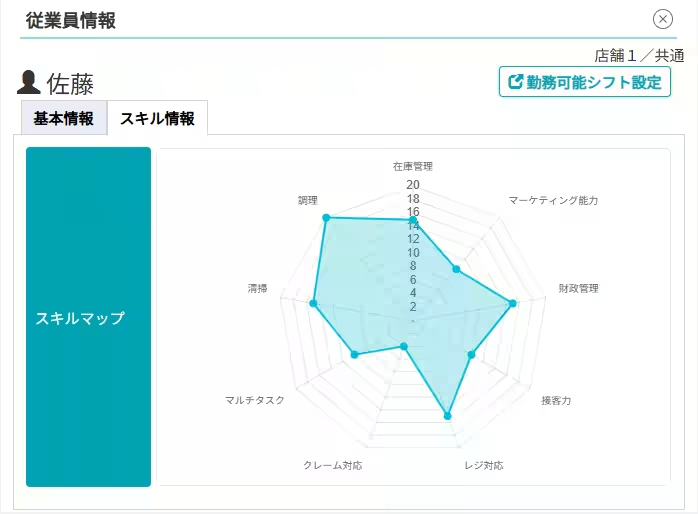
1. Visualizing Employee Skills: Companies can instantly see each team member's strengths and areas that require development, which can then inform one-on-one coaching sessions or targeted training.
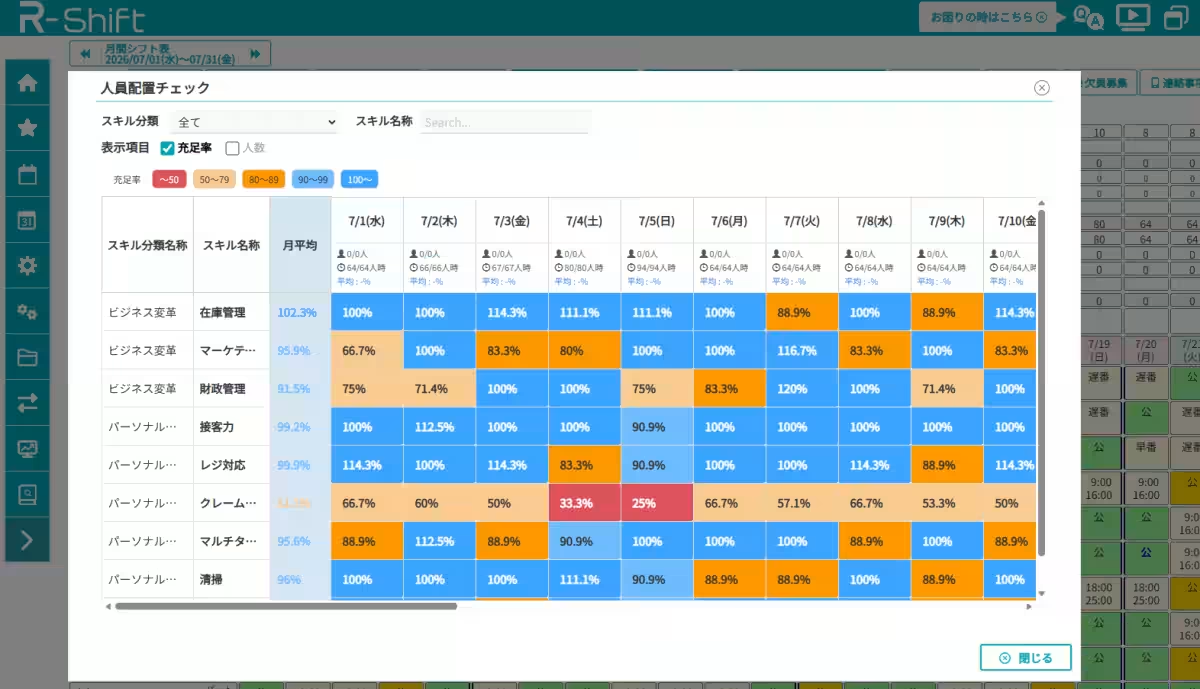
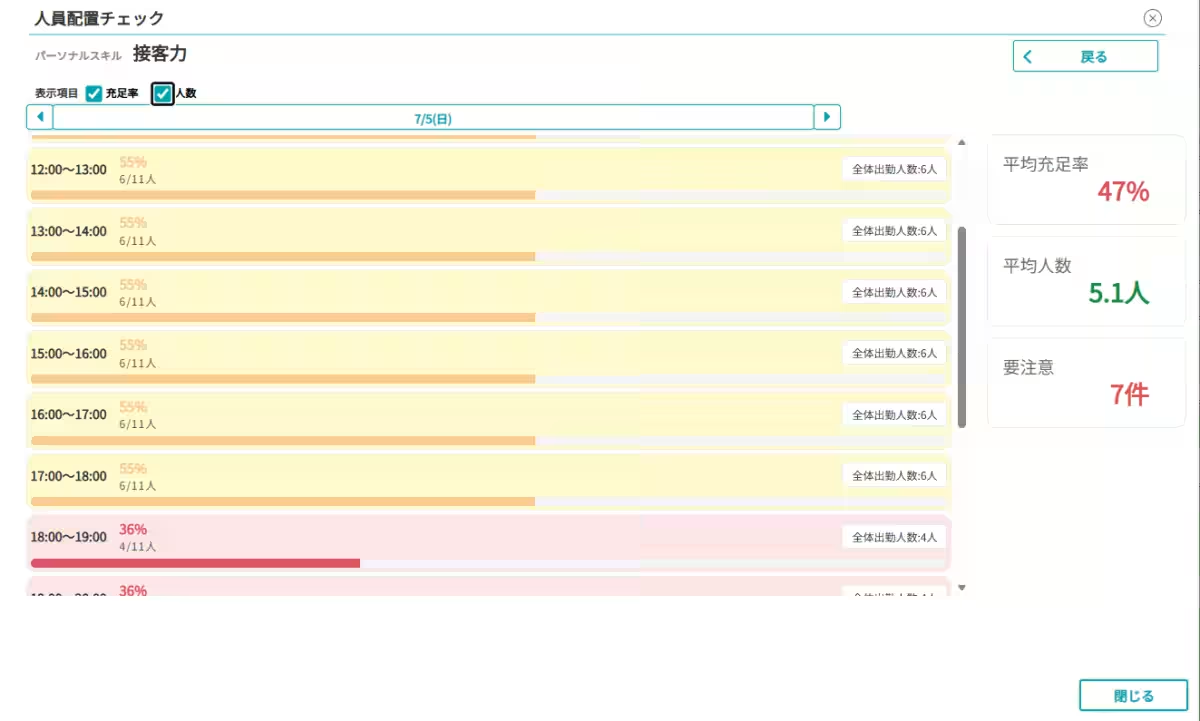
2. Daily Skill Staff Counts: Managers can easily view how many staff members possess specific skills on any given day, ensuring that each shift is adequately staffed with the necessary expertise, whether for handling customer service issues or overseeing end-of-day procedures.
3. Supporting Future Training Programs: Insight into employee skill distributions allows for informed decisions about which areas require additional staffing and where training investments should be focused to mitigate reliance on a few individuals for critical tasks.
Real-World Application Scenarios
1. Pre-Shift Management: Before finalizing schedules, managers can review shifts to ensure that team members with essential skills are present at crucial times, addressing potential gaps in coverage.
2. Strategizing Training Plans: Human resources and operational teams can analyze skill distributions to design effective training programs and identify potential future leaders within the organization.
Future Developments
The Skill Function is still in its early stages, and O.M. Network Inc. is eager to refine it based on user feedback from the field. They aim to enhance the system to meet the genuine needs of businesses as they continue to utilize R-Shift to streamline their operations.
About O.M. Network Inc.
O.M. Network Inc. specializes in developing operational systems and provides the R-Shift scheduling platform, revolutionizing how companies manage their workforce.
Location: Niigata City, Niigata Prefecture, Japan
Website: OM Network
Conclusion
With the new Skill Function, R-Shift not only optimizes scheduling but also empowers businesses to nurture their talent more purposefully. This advancement represents a significant step towards intelligent workforce management.


Topics Business Technology)

【About Using Articles】
You can freely use the title and article content by linking to the page where the article is posted.
※ Images cannot be used.
【About Links】
Links are free to use.