



CATL Collaborates with Industry Leaders at Ellen MacArthur Foundation Forum for Circular Economy at IAA 2025
CATL Collaborates with Global Industry Leaders at the Ellen MacArthur Foundation Forum for Circular Economy
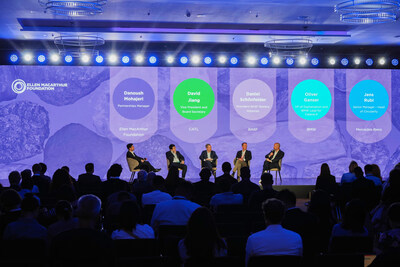
On September 11, 2025, CATL took a significant step in promoting sustainability by collaborating with the Ellen MacArthur Foundation (EMF) during the International Motor Show (IAA 2025) in Munich, Germany. This high-profile forum gathered notable executives from various organizations including BASF, BMW, and Mercedes-Benz, together with more than 100 representatives across different sectors. The central theme revolved around advancing the circular economy throughout the entire battery value chain and enhancing political and financial collaboration to scale these efforts.
Highlights of the Forum
The forum underscored the concept of circular economy as crucial for the automotive industry, reflecting a growing awareness that sustainable mobility relies on reusing and recycling batteries. CATL contributed insights from its Global Energy Circularity Commitment Initiative (GECC) and shared its practical experiences from initiatives around the world. This initiative aims to minimize dependency on virgin materials and promote recycling, reinstating the significance of creating a closed-loop system in battery production.
Early Integration of Circular Economy Principles
The first panel discussion highlighted strategies for embedding circular economy principles right at the battery design stage. Importance was placed on digital traceability, material transparency, and industrial collaboration as essential elements for a truly circular battery ecosystem. Jiang Li, Vice President and Board Secretary of CATL, emphasized the need for clear standards and a coordinated policy and financial framework to actualize a large-scale circular economy. The industry must collaborate to develop a robust ecosystem that leverages batteries sustainably for future generations.
Among the discussions, Daniel Schönfelder, President of Battery Materials at BASF, pointed out the indispensable role sustainable cathode materials play, while Jens Rubi from Mercedes-Benz discussed integrating circular economy practices into OEM strategies. Furthermore, BMW's Oliver Ganser explored utilizing the Catena-X platform for enhanced transparency and traceability along the supply chain, underscoring the necessity of a coordinated approach among manufacturers, suppliers, and technology partners.
Political and Financial Frameworks for Scaling
The second discussion pivoted towards the essential levers required to scale circular practices within the global battery ecosystem, emphasizing policy frameworks, financing mechanisms, and standardized approaches. Participants debated the alignment of regulations, investor trust, and tools like battery passports to foster transparent and comparable metrics across nations, which are vital for the practical implementation of circular economy practices. Emma Nerenheim, Managing Director of the European Battery Alliance, called for an urgent need for coordinated actions. She insisted on a unified approach to bring together various stakeholders, highlighting the inherent complexity in resolving these challenges in recycling for all partners.
Inga Petersen from the Global Battery Alliance reiterated the need for a harmonized global strategy for the circular economy, warning against potential fragmentation that could lead to discrepancies in regulatory compliance. A collaborative minimum standard for batteries was proposed to ensure they meet sustainability criteria and facilitate access to capital.
Conclusion and FutureSteps
The forum concluded by marking a new chapter in strategic partnerships as part of the Critical Minerals Program launched by the Ellen MacArthur Foundation in June. CATL unveiled its ambitious goal of decoupling new battery production from raw materials by 50% within 20 years, pledging to continue their collaboration with EMF and industry partners on pilot projects designed to enhance the entire value chain. This commitment to sustainable circular battery solutions reflects CATL's dedication to fostering an equitable and environmentally friendly industry ecosystem.

Together, the insights and collaborative efforts showcased at the forum promise a progressive pathway towards sustainable mobility, reinforcing the vital role of circular economy in achieving a sustainable and resilient battery industry.
Topics Consumer Technology)
【About Using Articles】
You can freely use the title and article content by linking to the page where the article is posted.
※ Images cannot be used.
【About Links】
Links are free to use.