



The Current State of Generative AI Adoption in Companies for 2026
The Current State of Generative AI Adoption in Companies for 2026
Introduction
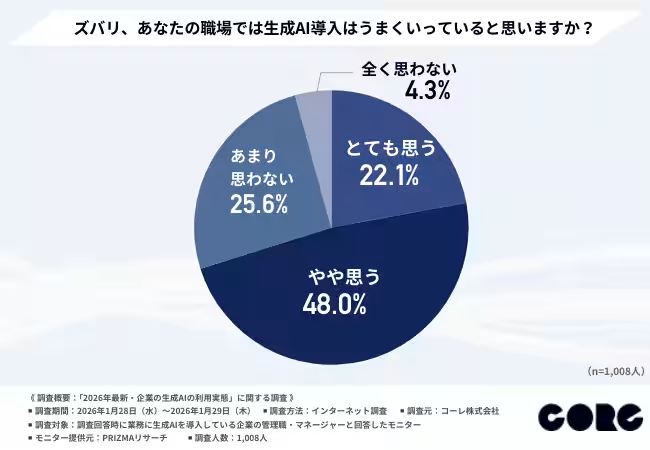
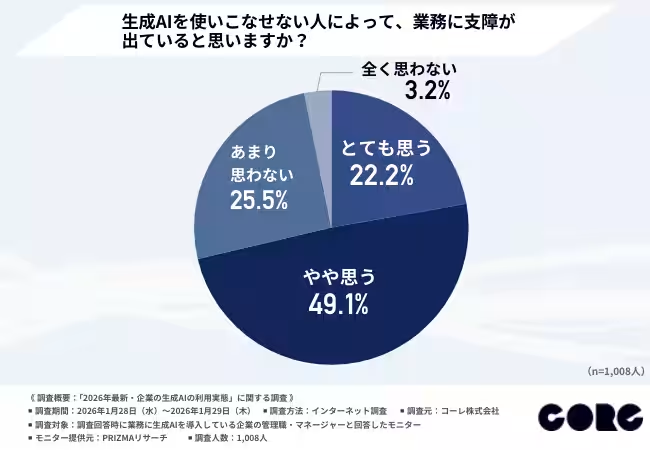
As businesses continue to integrate generative AI into their operations, significant disparities in utilization have emerged among different levels of employees. A recent survey conducted by CORe Inc. among management professionals reveals troubling facts: over 70% of respondents feel impeded by colleagues who struggle with these new tools. This article delves into the findings of the survey and its implications for organizations moving forward.
The Growing Trend of Generative AI
In recent years, generative AI has rapidly permeated various industries, offering solutions designed to streamline operations and boost productivity. The surge in adoption reflects the technology's growing importance in day-to-day business activities. However, the disparity between those who effectively leverage the technology and those who do not presents a significant challenge that cannot be ignored.
The Survey Overview
CORe Inc. conducted a survey involving 1,008 management officials to understand better how generative AI is being utilized in corporate settings in 2026. This analysis sheds light on the gaps in skills and perceptions surrounding generative AI, particularly among managerial positions. The results demonstrate that while generative AI is on the rise, many organizations face hurdles in ensuring its successful integration.
Key Findings from the Survey:
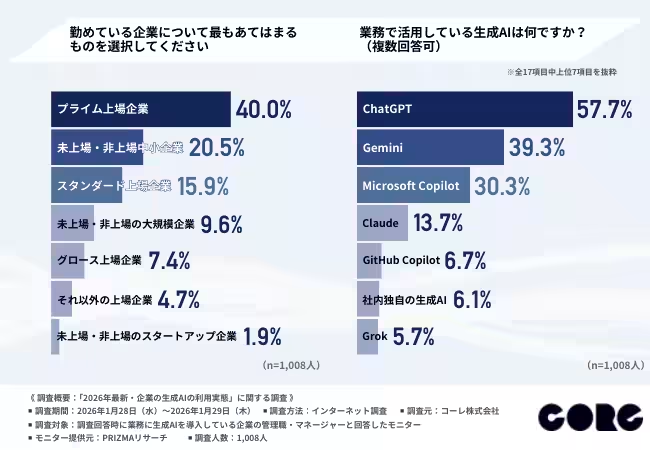
- - Primary Tools Used: 57.7% of respondents reported using ChatGPT, followed by Gemini at 39.3% and Microsoft Copilot at 30.3%.
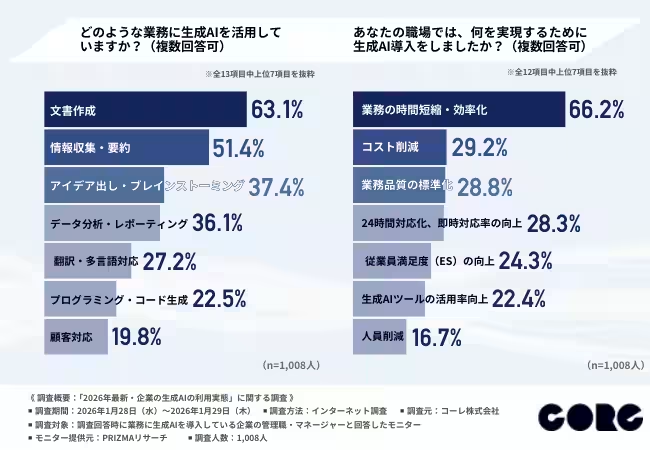
- - Most Common Application: Document creation, including proposals and summaries, was the leading area of utilization at 63.1%, indicating a preference for low-risk, high-impact applications of generative AI.
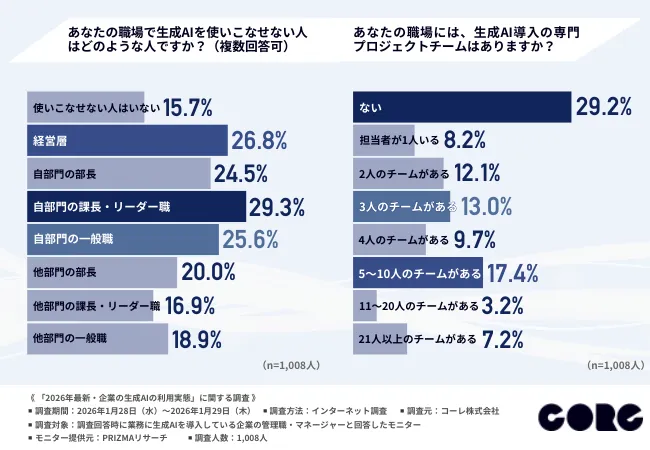
- - Skill Gap in Management: 29.3% of those unable to harness generative AI effectively are in managerial roles, such as department heads or team leaders. This suggests an urgent need for upskilling at the management level.
- - Team Composition for AI Implementation: About 70% of respondents indicated that their organizations have established teams dedicated to generative AI, although the scale of these teams varies.
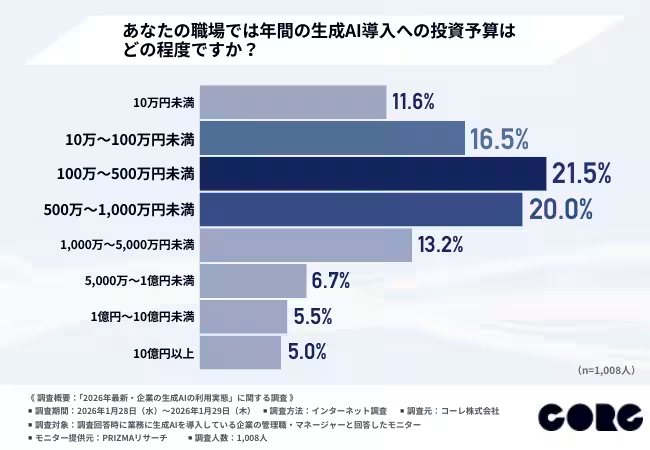
- - Investment Trends: Most companies (21.5%) reported an annual investment budget for AI between ¥1,000,000 and ¥5,000,000, reflecting a cautious yet strategic approach to AI implementation.
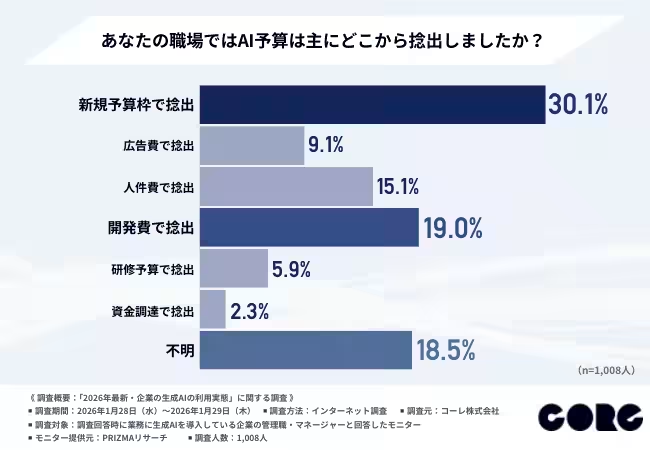
- - Budget Allocation for AI: Approximately 30.1% indicated they sourced their AI budgets from new allocations rather than reallocating existing funds, underlining the emphasis on dedicated AI investment.
Challenges in AI Integration
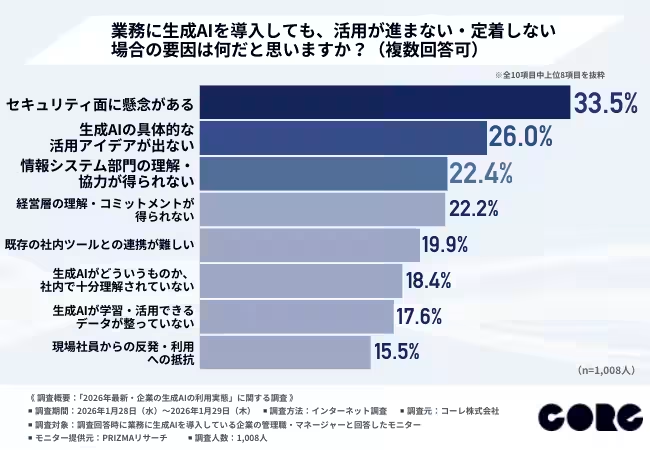
Despite the enthusiasm for generative AI, companies face several obstacles:
1. Security Concerns: 33.5% of respondents highlight worries about security and data privacy as significant barriers to implementation.
2. Lack of Concrete Ideas: 26.0% expressed difficulty in generating practical applications for AI, which limits their ability to use the technology effectively.
3. Misalignment Between Departments: A lack of cooperation from information technology departments creates friction between operational teams and management, hindering successful integration efforts.
Looking Ahead: Investment in AI
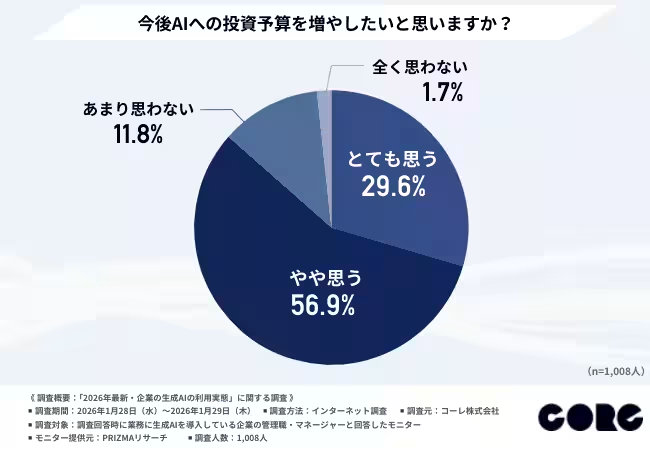
The future appears promising with nearly 90% of respondents indicating a desire to increase their AI investment budgets. However, most companies lean toward incremental increases rather than sweeping changes, showcasing a calculated approach to expanding AI capabilities.
As companies navigate the complexities surrounding generative AI, it is vital that leadership works to cultivate skills across all levels of the organization. Fostering an environment of learning and adaptation may be the key to overcoming existing barriers.
Conclusion
The results of CORe Inc.'s survey highlight a crucial pivot point for many enterprises: moving from merely adopting generative AI tools to mastering and integrating them effectively into workflows. As the technology evolves, so too must the organizations that implement it. Companies that can bridge the current skill and understanding gap will not only enhance efficiency but will position themselves as leaders in an increasingly digital landscape.
For more detailed insights and statistical data from this survey, accessed through official channels, visit CORe Inc.’s website.




Topics Business Technology)
【About Using Articles】
You can freely use the title and article content by linking to the page where the article is posted.
※ Images cannot be used.
【About Links】
Links are free to use.