



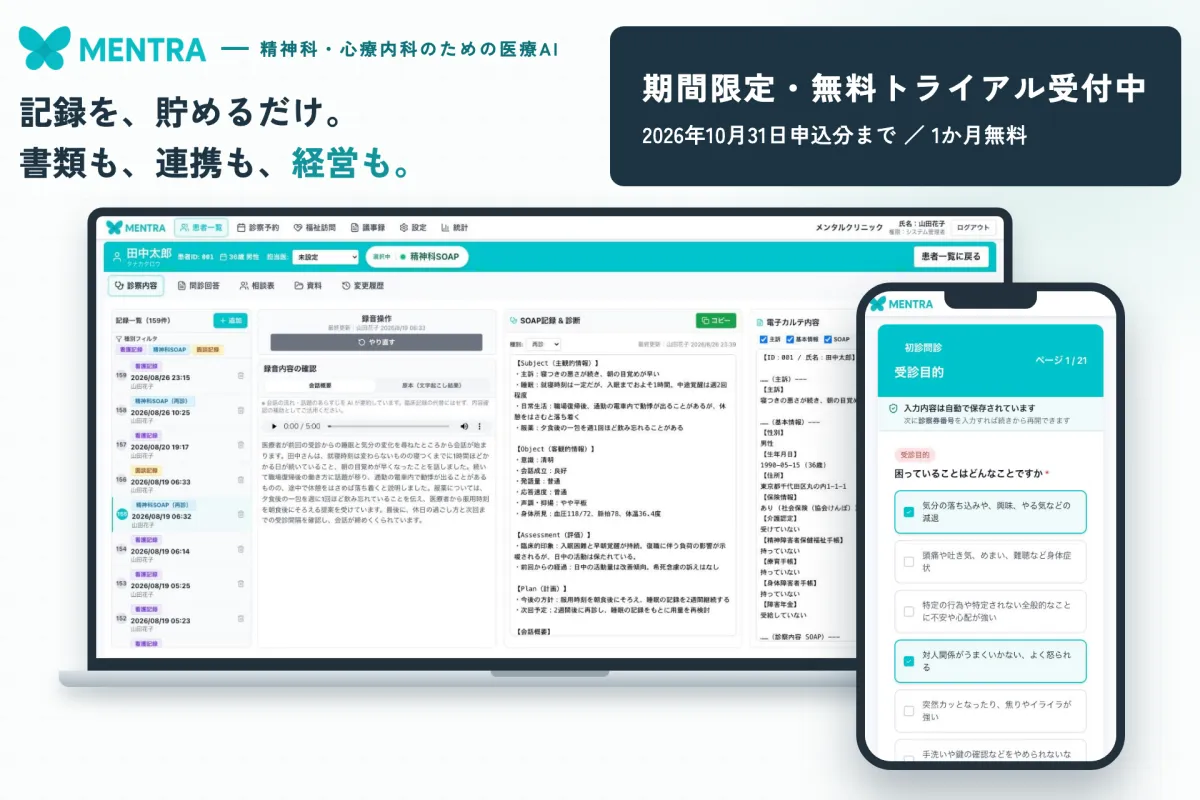
MENTRA Launches Free Trial for AI Medical Service Tailored for Mental Health Hospitals
Moving Beyond Administrative Burdens in Mental Health Care with MENTRA
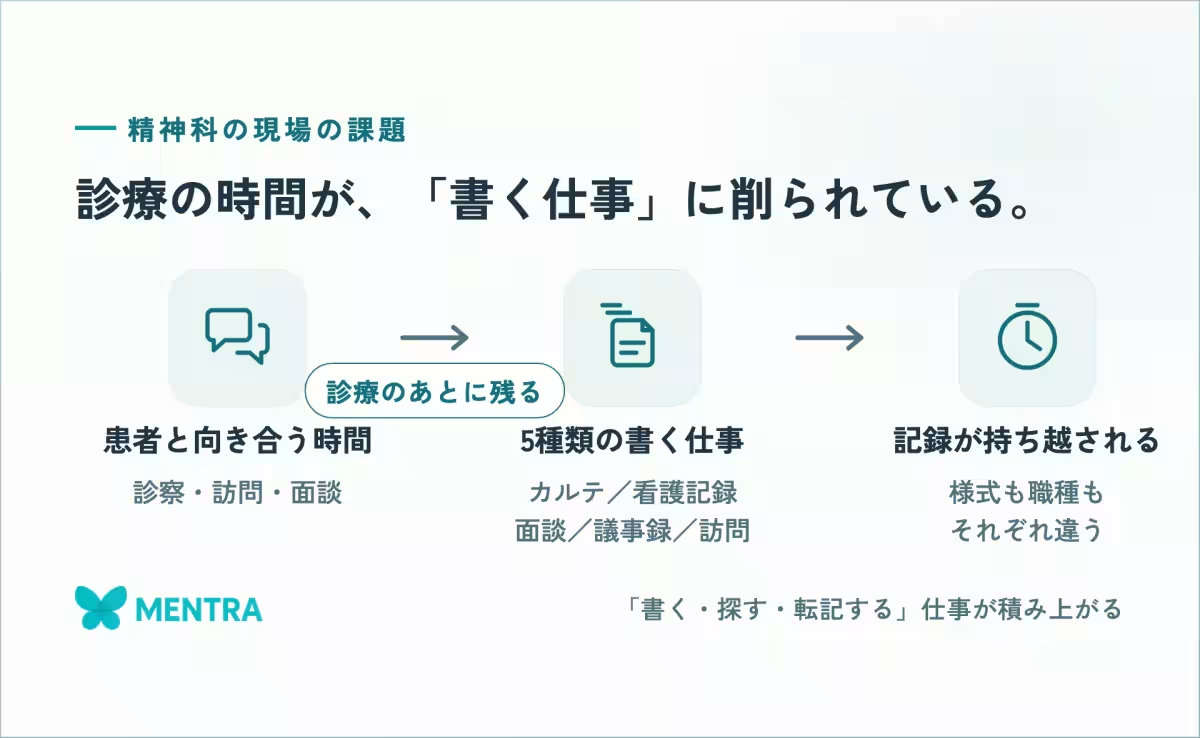
Mental health professionals often find their time with patients cut short due to extensive documentation requirements. In psychiatric and psychosomatic practices, staff must manage a variety of records, including medical charts, nursing logs, counseling notes, meeting minutes, and home visit documentation. Each type of record varies in form, requirements, and terminology used by different professionals. Consequently, much of this documentation work is postponed until after consultations, consuming valuable time that could otherwise be spent with patients.
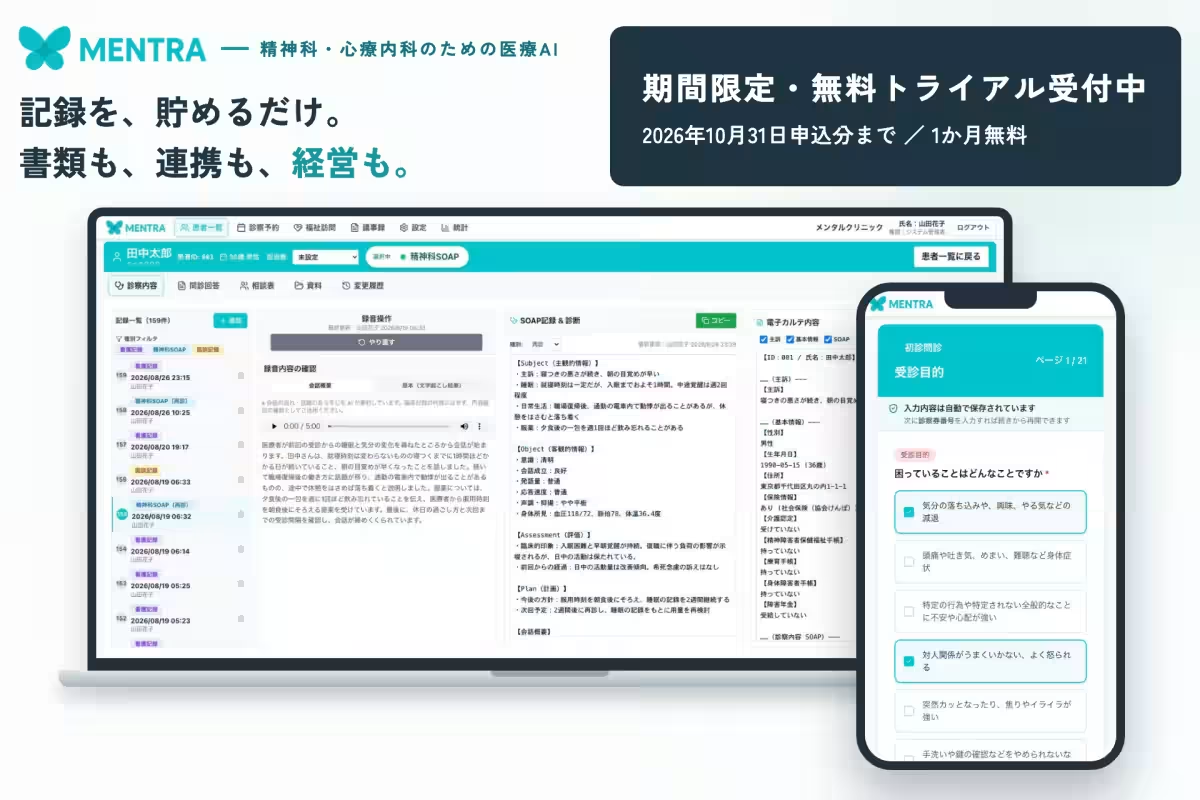
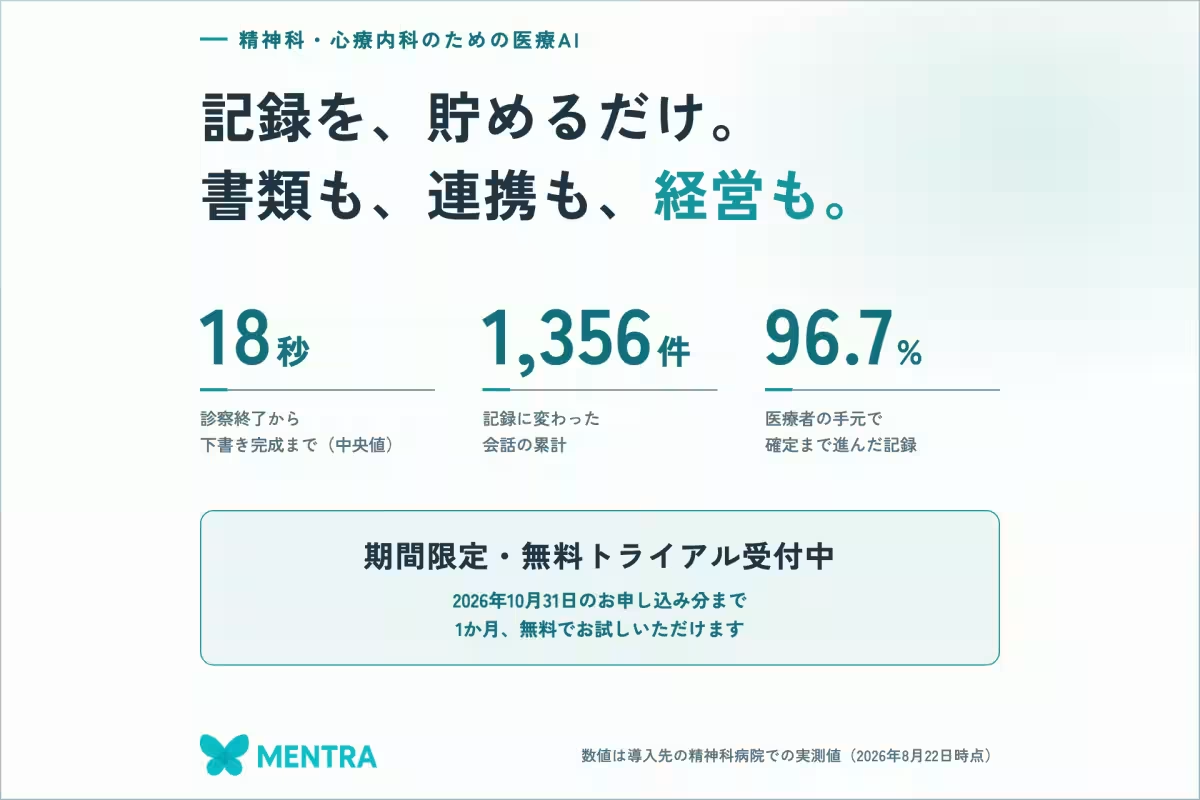
To address this challenge, MENTRA, based in Roppongi, Tokyo, has introduced an AI medical service specifically designed for psychiatric and psychosomatic practices. Launched with a limited-time offer, MENTRA provides healthcare facilities with a one-month free trial of its groundbreaking AI capabilities until October 31, 2026. The service transforms conversations during patient visits into preliminary documentation, enabling clinicians to focus on what matters most: patient care.
The Solution: MENTRA’s Specialized AI
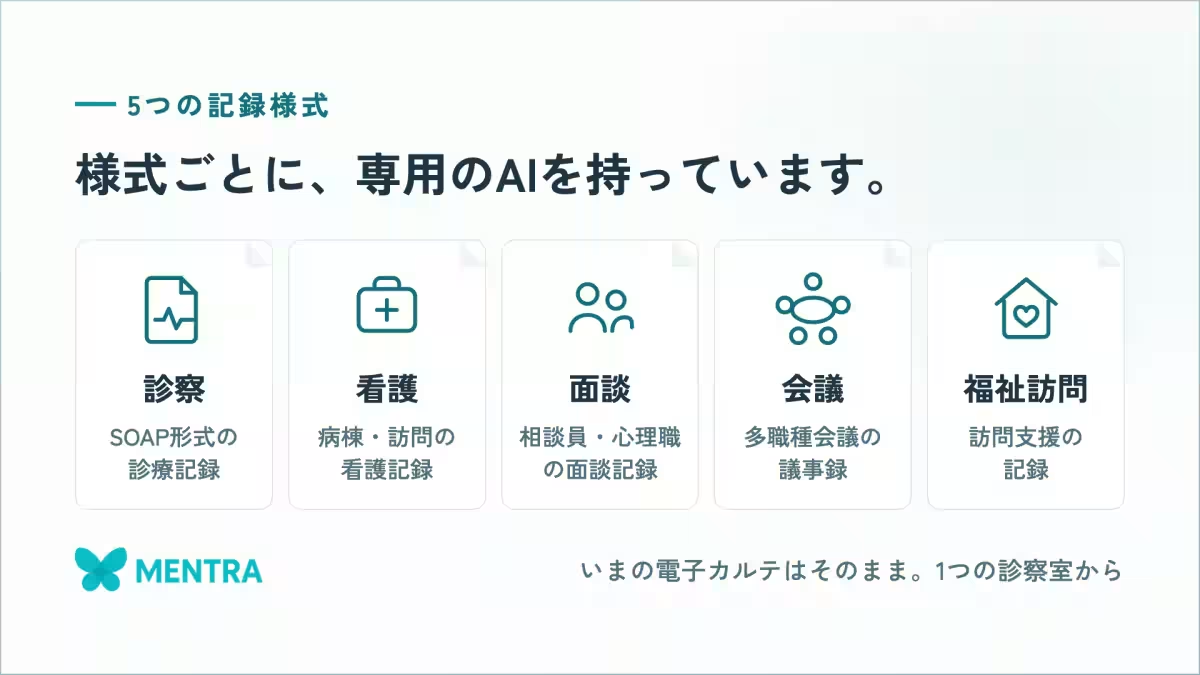
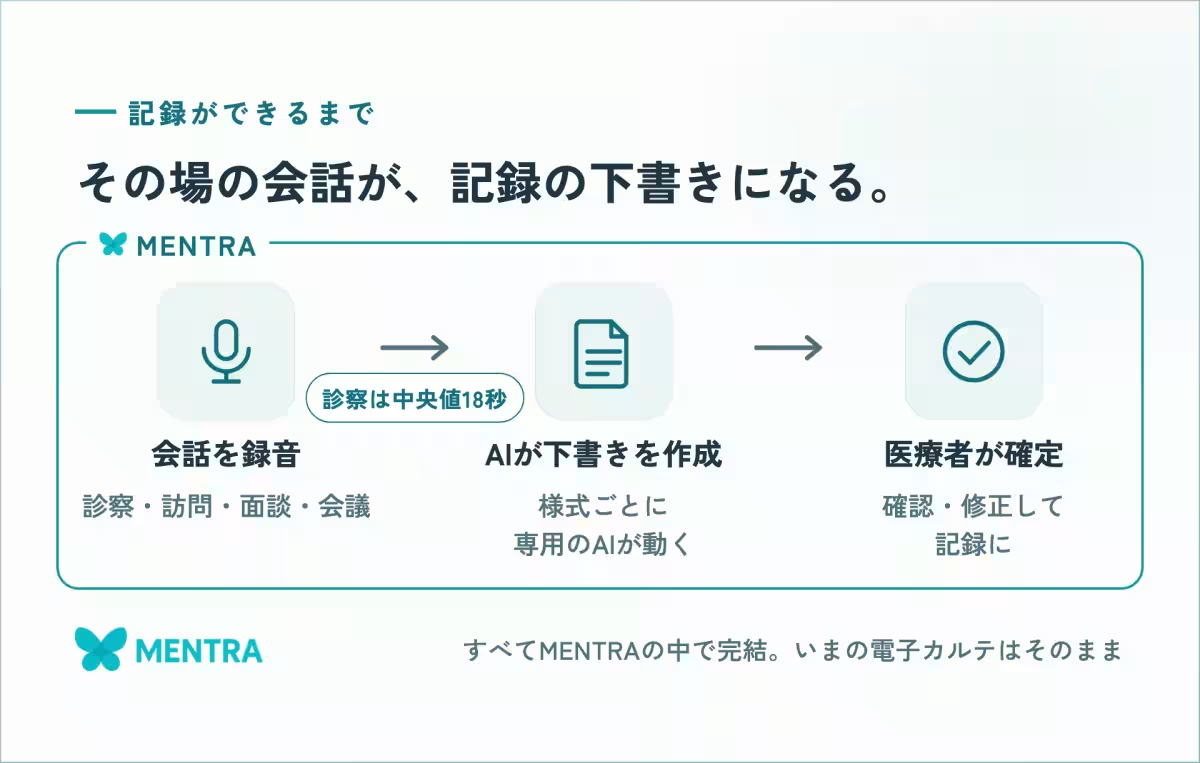
MENTRA’s AI-driven service alleviates the burden of written documentation by automatically generating drafts based on real-time conversations. Utilizing five specialized AI modules tailored for different documentation types—assessments, nursing records, counseling, meeting minutes, and welfare visits—the system captures discussions with a simple audio recording. The AI then processes the spoken words into drafts compliant with specific formats.
The distinct AI systems for each documentation type are crucial due to their varying requirements regarding vocabulary and structure. For example, assessment records follow SOAP formats, while nursing notes adhere to specific standards for inpatient and home care documentation. This specialization allows healthcare professionals to shift their focus from creating content from scratch to confirming and refining existing notes. The process is incredibly straightforward: just record, verify, and finalize.
Transforming Record-Keeping Practices
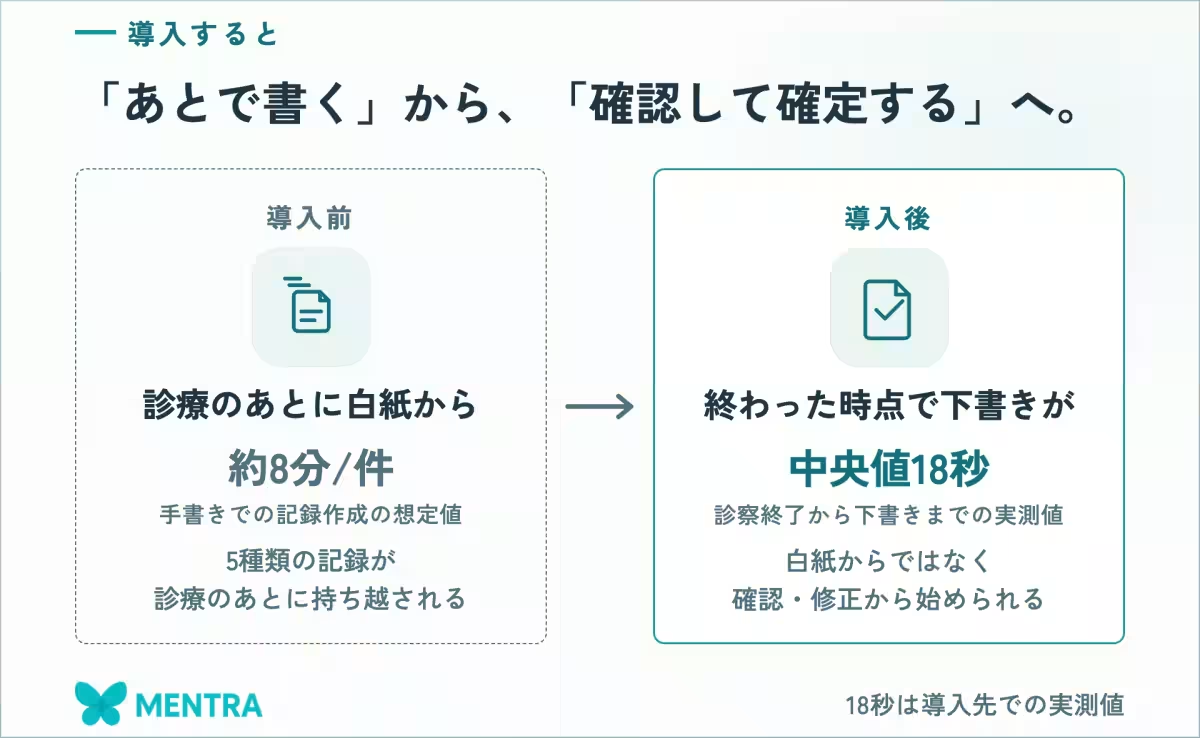
Prior to MENTRA’s implementation, record-keeping was a post-consultation task that could extend the overall appointment time significantly. It is estimated that documenting a single case manually takes about eight minutes. However, with MENTRA, the turnaround for generating draft records is remarkably efficient, averaging around 18 seconds after a consultation concludes. This means clinicians can immediately transition from documentation to patient engagement.
In practical terms, a study conducted in a psychiatric hospital over six months has shown impressive results. Approximately 1,356 conversations took place, generating a total of 190.1 hours of recorded dialogue, of which 96.7% underwent clinician validation and was officially adopted as accurate documentation. The efficiency improvements have effectively reduced the time spent on documentation by around 135 hours for assessment records alone. Likewise, nursing conversations that used to take about 22.8 minutes to document can now be shortened to a mere 1 minute.
This newfound efficiency hastens workflows significantly; for instance, over 70% of the drafts developed by the AI are used as is, while more than 90% of finalized records are completed within three minutes. Such results underscore the potential of MENTRA to enhance clinical productivity while improving the quality of patient interactions.
The Free Trial Opportunity
Recognizing the transformative impact of its technology, MENTRA invites healthcare providers, particularly psychiatric hospitals and mental health clinics, to experience its capabilities through a complimentary trial. Participants can leverage functionalities such as AI-driven record documentation, pre-visit assessments via AI questionnaires, appointment scheduling, and operational analytics.
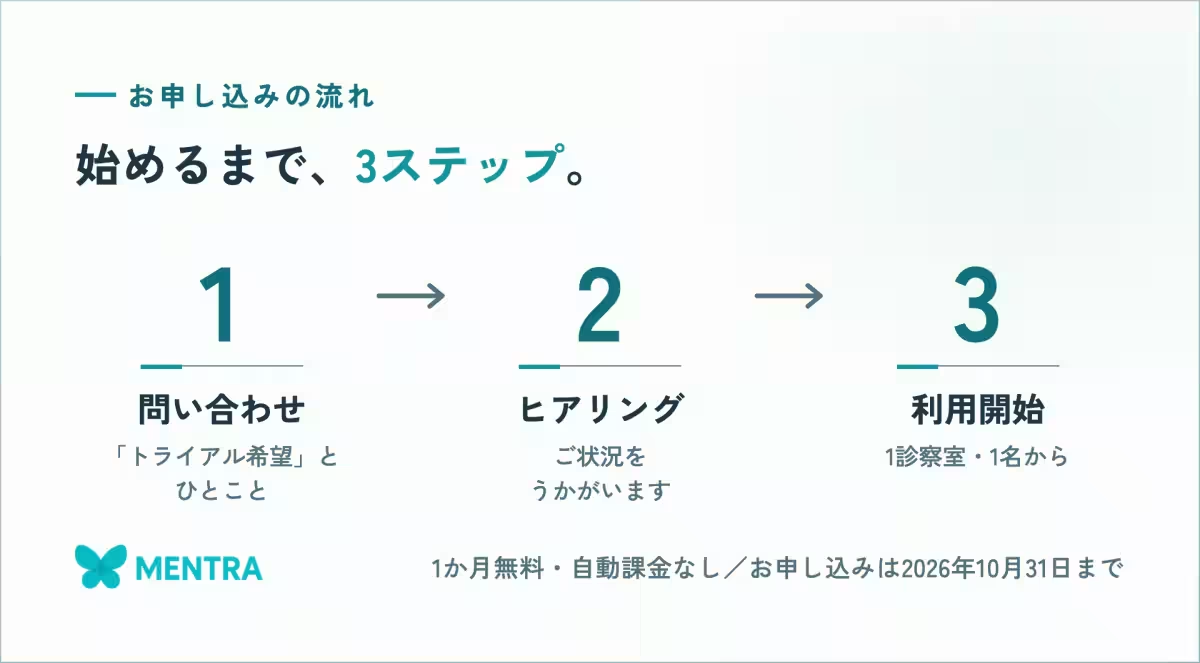
The free trial is available for one month, with no automatic transition to a paid contract following the trial period. Interested facilities must apply by October 31, 2026, ensuring that they can integrate the MENTRA system seamlessly into their existing Electronic Health Records (EHR) without any need for special equipment. The process can begin with just a single consultation room and one staff member.
To apply, interested parties need to reach out via email or an online contact form, mentioning their interest in the trial.
Conclusion
MENTRA stands ready to assist in alleviating the documentation burdens faced by mental health professionals, fostering a more patient-centered approach to care. By designing a system that allows clinicians to maintain focus on their patients, MENTRA is paving the way for more efficient, humane, and effective mental healthcare.
Topics Health)
【About Using Articles】
You can freely use the title and article content by linking to the page where the article is posted.
※ Images cannot be used.
【About Links】
Links are free to use.