




Analysis Report Meeting: Collaborative Project Between Seinan Gakuin University and Asmarq
Insights from the Data Analysis Report Meeting
On July 16, 2026, a comprehensive data analysis report meeting was held at Seinan Gakuin University, showcasing the findings of a collaborative project involving third-year psychology students from the university's Tahara seminar and株式会社アスマーク (Asmarq Co., Ltd.). The project aimed to provide students with practical exposure to data analysis through actual corporate survey data, fostering a unique Project-Based Learning (PBL) environment.
Overview of the Collaborative Project
In an innovative educational effort, Asmarq provided real corporate survey data to the students, allowing them to delve into organizational and human resource issues through various analyses. The primary objective was to enhance students' analytical skills while exploring significant workplace factors contributing to job satisfaction and career success. By focusing on specific elements such as workplace environment and job orientation, students statistically analyzed their effects on job satisfaction, income levels, and job turnover rates.
Key Findings Presented
During the report meeting, students from three distinct groups presented their analyses on critical topics:
1. Factors Increasing Job Satisfaction and Attachment (Winter-Born Group)
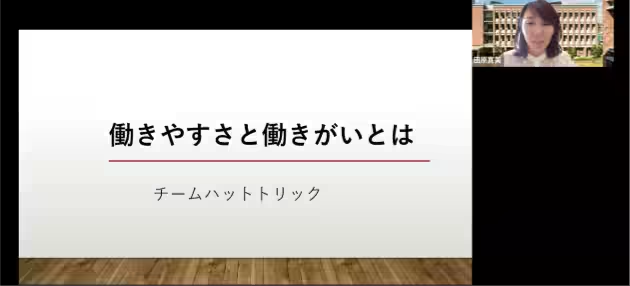
2. Workplace Culture Enhancing Work Engagement (Hat-Trick Group)
3. Factors Influencing Career Outcomes (Nan-deyane Group)
Nan-deyane Group Analysis
This team investigated how individual job orientation influenced career outcomes such as income and job turnover frequency. They hypothesized that a proactive attitude towards work would correlate with higher earnings, while a passive demeanor could lead to stagnated income levels and increased job changes. Their analysis utilized factorial analysis to classify job orientation tendencies into „motivated“ and „passive“ categories, while conducting hierarchical regression analysis to evaluate these factors' effects on income and job changes.
The results confirmed a direct correlation: individuals showcasing a proactive work orientation tended to have higher incomes and fewer job changes, whereas those exhibiting passive engagement faced stagnation. The group's conclusion emphasized the necessity for organizations to identify and support less engaged employees proactively to mitigate undesirable turnover.
Hat-Trick Group Analysis
Focused on work engagement, this group explored how workplace culture and management practices could foster employee enthusiasm and proactive work behavior. They began by hypothesizing that positive management practices and healthy interpersonal relationships within the workplace would significantly elevate employee engagement levels. The findings reinforced the importance of good management and teamwork dynamics in boosting employee morale and productivity, while highlighting the detrimental effects of negative interpersonal interactions, including harassment, on work culture.
Winter-Born Group Analysis
This team examined the contributors to job satisfaction and attachment to their organizations, emphasizing how workplace environments and human resource systems impact these factors. Their hypothesis suggested that enriching work conditions, robust welfare measures, and supportive HR practices would correlate positively with employee satisfaction and loyalty. Their findings revealed individual factors like perceived self-efficacy and the ability to envision a future within the organization played more substantial roles than simply the adequacy of office conditions or HR offerings.
Educational Impact
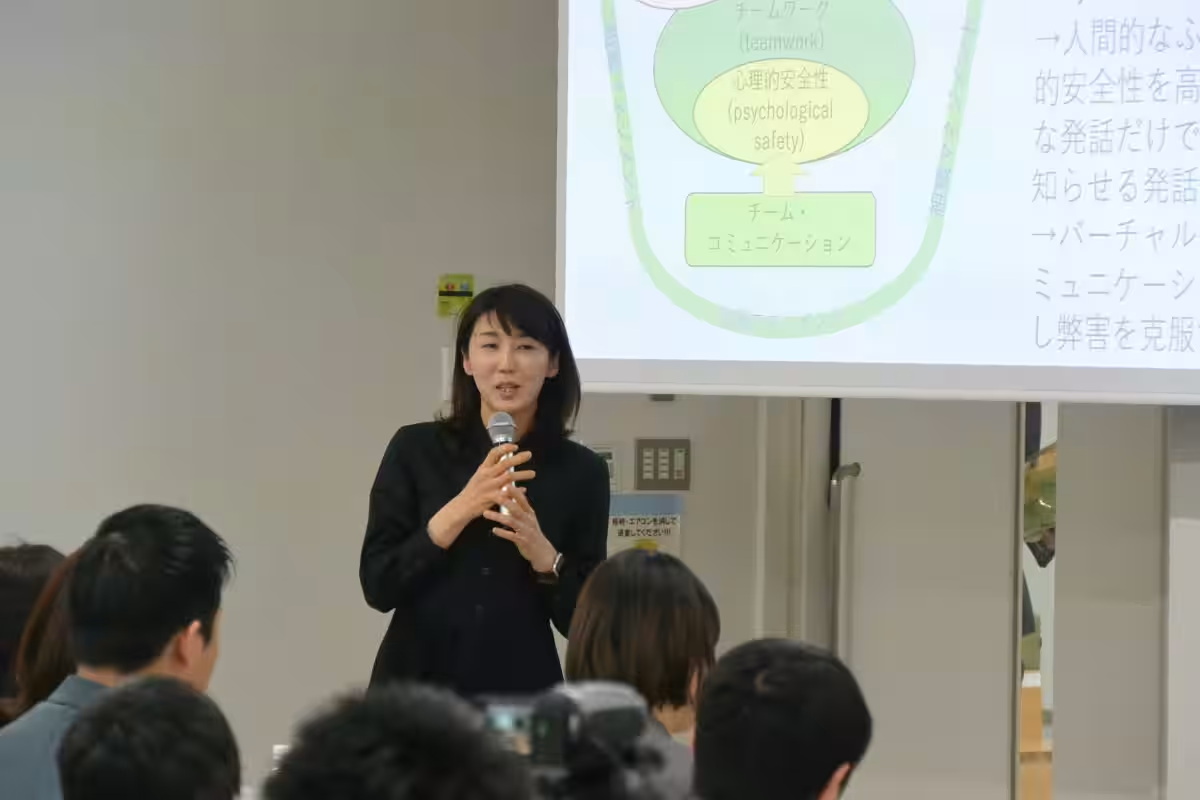
Professor Naomi Tahara of Seinan Gakuin University expressed satisfaction with the students' ability to construct hypotheses, analyze real-world data, and interpret results, indicating a transformative learning experience. The practical nature of the project allowed students to bridge their academic knowledge with real-world implications, offering invaluable insights into organizational behavior and employee dynamics.
Student Reflections
Students also shared their feedback on the experience. They emphasized the importance of developing hypotheses and utilizing visual techniques for clearer presentation of their findings. Many noted the challenges faced in interpreting analysis results but acknowledged that grappling with real data enriched their learning experience significantly.
Future Collaborations
Asmarq is committed to ongoing partnerships like this one, promoting objective data-driven human resource management and fostering further academic collaboration. With practical exposure to real data, students can deepen their understanding while contributing innovative insights to the organizations involved.
In conclusion, the collaboration between Seinan Gakuin University and Asmarq has proven to be a groundbreaking step not only in enhancing students' analytical skills but also in fostering a more data-informed approach within organizational settings.


Topics Other)
【About Using Articles】
You can freely use the title and article content by linking to the page where the article is posted.
※ Images cannot be used.
【About Links】
Links are free to use.