



Hitachi and SPACECOOL Launch Test for Passive Cooling Technology in Infrastructure
Introduction
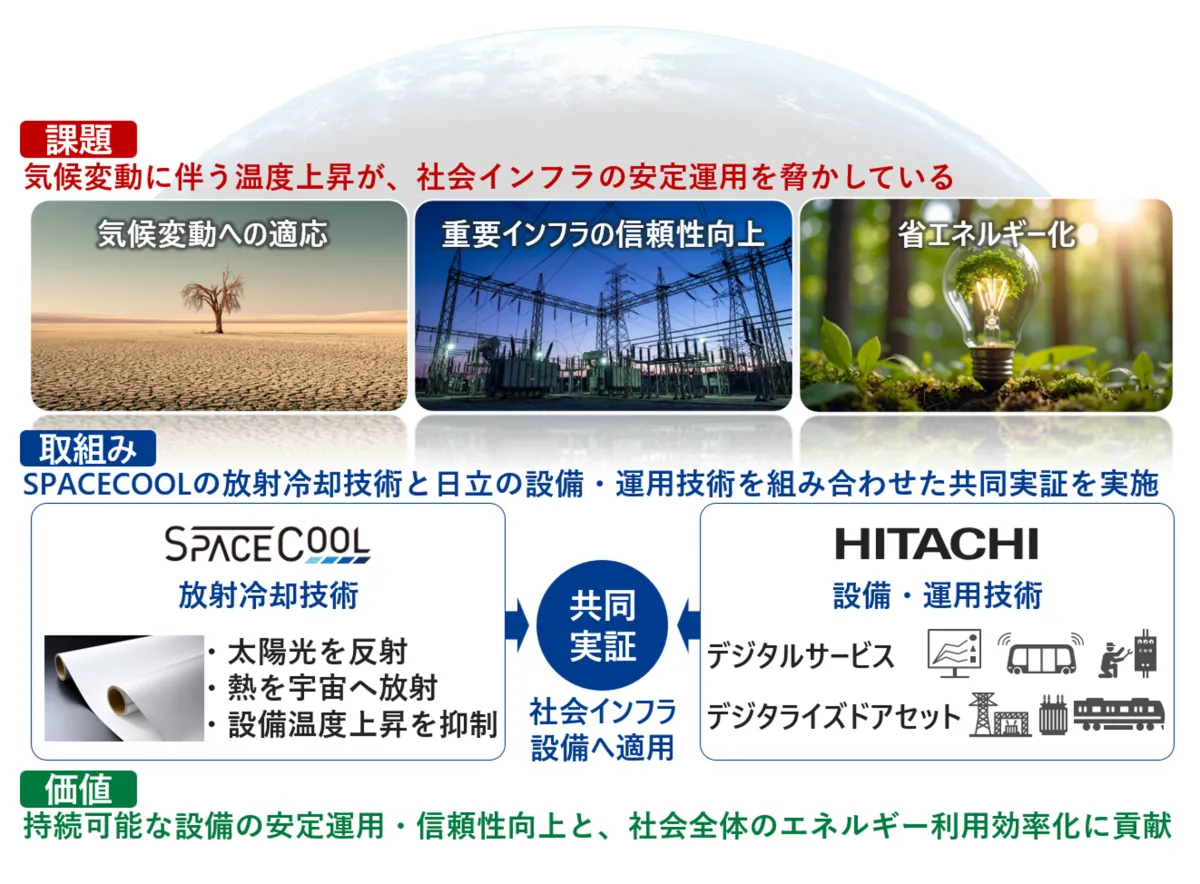
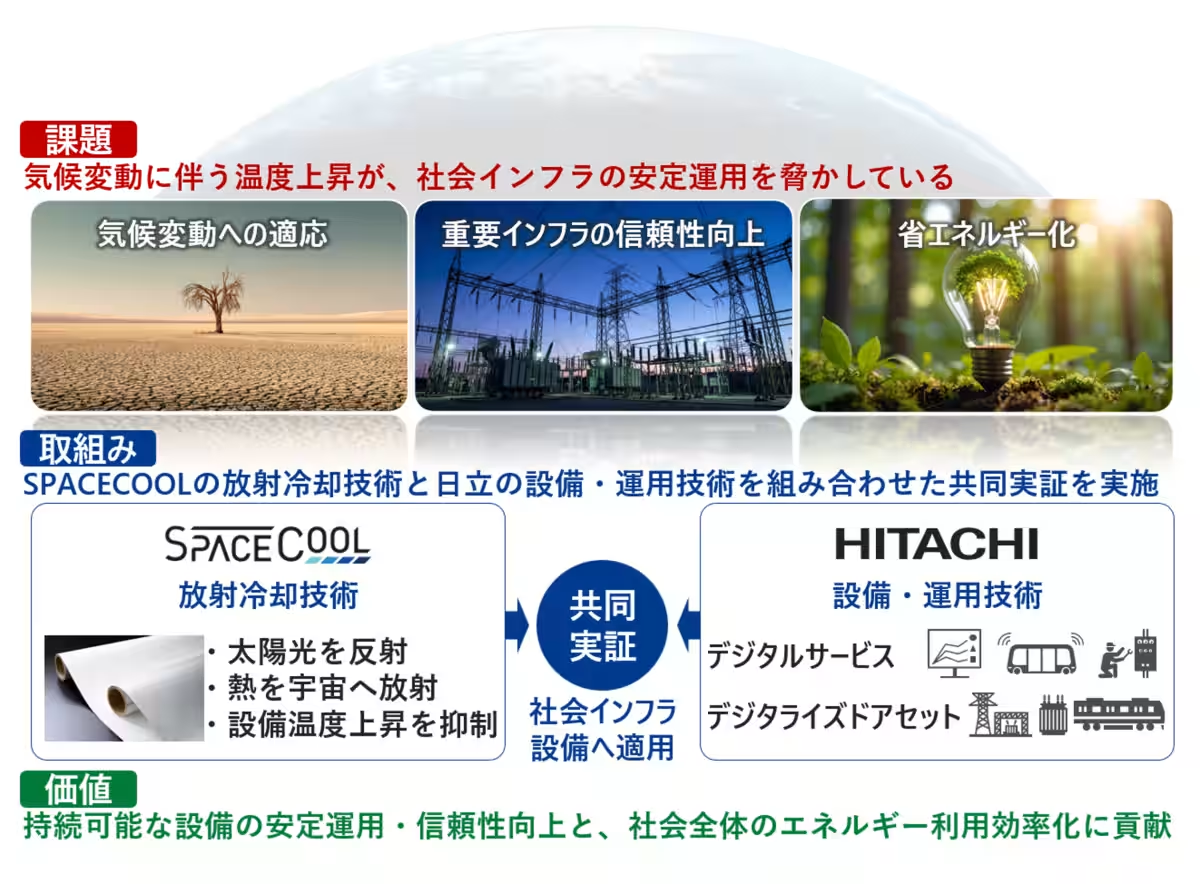
In the face of rising global temperatures associated with climate change, Hitachi Ltd. and SPACECOOL Co., Ltd. are collaborating to demonstrate a groundbreaking passive cooling technology that requires no additional energy for stable operational management of social infrastructure systems, such as power facilities and data centers. This pilot project combines the operational expertise of Hitachi in social infrastructure and the innovative radiative cooling materials technology developed by SPACECOOL, targeting effective climate adaptation.
Project Background
Recent years have witnessed an overwhelming increase in global temperatures, leading facilities such as power plants, data centers, and renewable energy setups to suffer from performance declines and increased maintenance needs, chiefly due to overheating. The demand for innovative thermal management solutions has surged, particularly for outdoor equipment directly exposed to sunlight and in environments where additional cooling installations are impractical. Conventional cooling methods, typically energy-intensive, have been found wanting in addressing these challenges, paving the way for new technologies that enhance overall energy efficiency.
Recognizing this urgent need, Hitachi and SPACECOOL are embarking on practical demonstrations aimed at developing novel heat mitigation strategies for important infrastructure. This initiative aims to create tailored implementation and operational models grounded in empirical data relevant to varying environmental conditions.
Methodology
1. Testing of Radiative Cooling Technology
As part of the demonstration, Hitachi will progressively apply the radiative cooling technology to social infrastructure assets it designs, manufactures, and operates. The focus will be on various facilities, including power plants, data centers, and outdoor installations subjected to direct sunlight. Through real-world testing, the project will assess temperature moderation capabilities while also enhancing operational reliability and overall performance based on specific equipment characteristics. This systematic evaluation will clarify the optimal application conditions for this technology.
2. Development of Application and Operational Models
Data gathered from the trials will guide the development of practical application and operational models for deploying radiative cooling technology across social infrastructure. This will involve careful considerations regarding the individual characteristics and operational conditions of the equipment, alongside the regional climate variations that affect installation environments. The project aims to establish comprehensive deployment frameworks, ensuring broad applicability in the social infrastructure sector.
Future Prospects
Hitachi and SPACECOOL are committed to leveraging insights and data collected from this demonstration to broaden the application of radiative cooling technology across a diverse spectrum of social infrastructure including power generation, data management, and renewable resource facilities. Moreover, Hitachi is advancing its integrated approach called "Energy NEXUS" that merges power, heat, CO2 emissions, and data to support decision-making and optimize resource utilization across societal systems. This collaborative pilot project stands as an initial step toward meaningful advancements.
Moving ahead, findings and operational expertise will be digitized and integrated into Hitachi’s Lumada 3.0 framework, further driving efficiencies in energy use and system reliability for critical infrastructure. Excitingly, Hitachi plans to expand this research and demonstration into the innovative social infrastructure research hub named "Harmony Hill," which is expected to be established by 2030, focusing on new energy solutions, including passive cooling technologies.
Understanding Radiative Cooling Technology
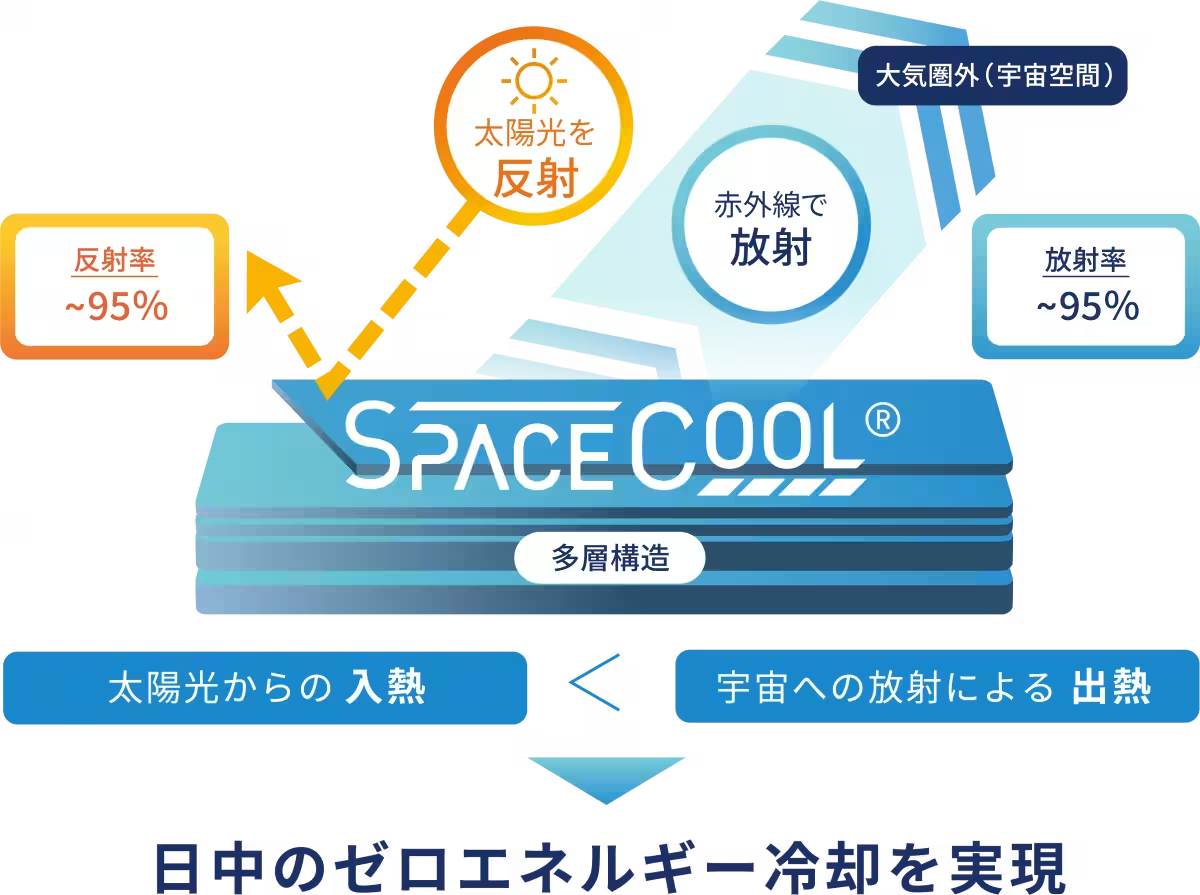
SPACECOOL's innovative technology leverages natural phenomena whereby materials can reflect sunlight while emitting infrared radiation into space—effectively achieving surface temperatures below the ambient air temperature without requiring additional energy inputs. This not only lowers air conditioning demands but also extends the lifespan of infrastructure while significantly reducing energy costs.
Conclusion
This collaboration reflects a pioneering effort in addressing climate resilience through technological innovation, setting a precedent for sustainable infrastructure developments. With projected outcomes aimed at reducing carbon footprints and enhancing operational efficiencies, Hitachi and SPACECOOL are poised to play a vital role in shaping the future of energy solutions in social infrastructure.
Topics Energy)
【About Using Articles】
You can freely use the title and article content by linking to the page where the article is posted.
※ Images cannot be used.
【About Links】
Links are free to use.