



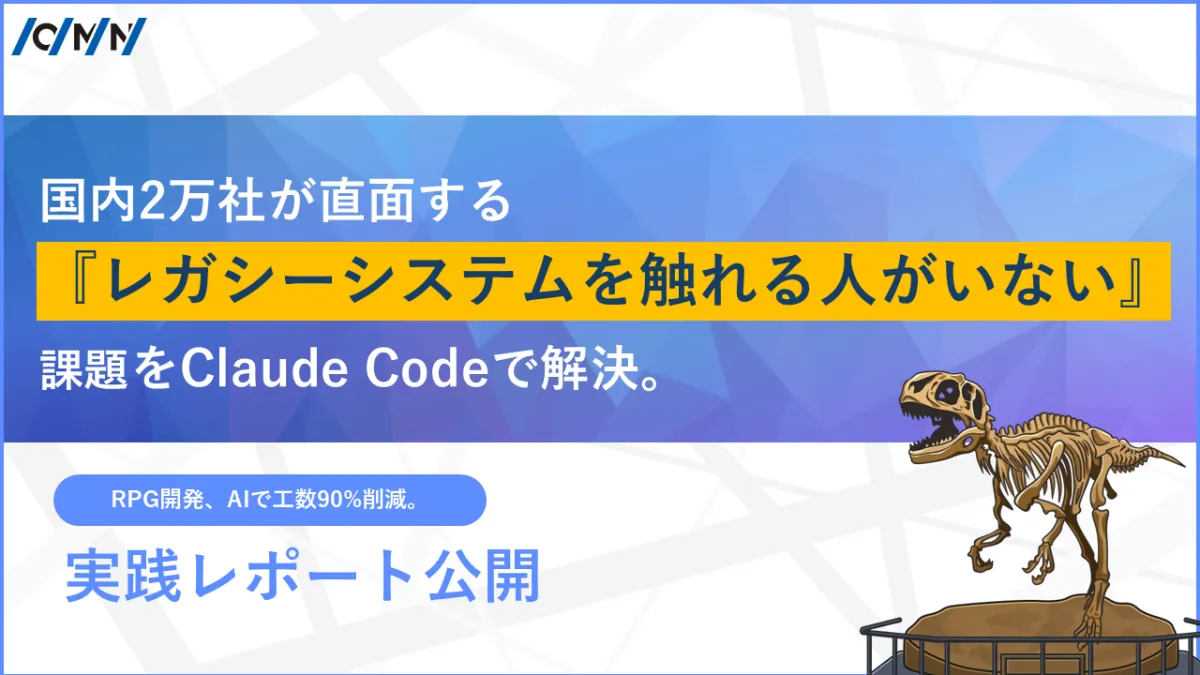
Revolutionizing Legacy Systems: OM Network Leverages AI for Efficient Development
Transforming Legacy Systems with AI
In a groundbreaking report, OM Network, based in Niigata, Japan, has embarked on a transformative journey by integrating their substantial knowledge from over two decades of core development with the advanced capabilities of AI, specifically Claude Code. The company's initiative aims to address the pressing issue of a declining workforce skilled in legacy system management, particularly for the AS/400 platform, which has been utilized since its introduction in 1988. Despite its age, AS/400 remains vital for many SMEs in manufacturing, finance, and distribution sectors across Japan.
The rise of this issue is alarming; approximately 20,000 companies continue to rely on AS/400 systems, while the average age of RPG programmers exceeds 50. This demographic shift has created a significant knowledge gap, as younger engineers are deterred from entering the field due to the unique complexities associated with RPG programming and a scarcity of learning resources. OM Network's report delivers insights from their practical approach, illustrating what happens when they deploy AI in their development processes.
The Challenge of Legacy Systems
The traditional RPG programming language comes with its own set of challenges, including an unusual syntax and strict column positioning requirements. As a result, the custom development of RPG programs often spans four to six days. However, through the collaboration with Claude Code, OM Network managed to reduce this time dramatically to just about four hours, showcasing the potential of AI-driven solutions in legacy system maintenance and development.
Approach Taken
OM Network outlined a two-phase development approach:
1. Initial Development (approximately 30 minutes): Utilizing existing RPG samples, the team had Claude Code automatically generate three program files, inheriting naming conventions, comment formats, and styles from existing codebase.
2. Environment Adaptation and Optimization (about 2-3 hours): The team worked on refining the program to meet the restrictions typical of older RPG environments. This involved stabilizing variable naming conventions and incrementally improving character type checking logic. This collaborative refinement resulted in an efficient correction process that took mere seconds to complete.
Development Efficiency Comparison
The report details a stark contrast in development efficiency:
- - Traditional Method
- Debugging & Adjustments: 1-2 days
- Documentation Creation: Half a day to 1 day
- Total: 4-6 days
- - AI-Assisted Method
- Debugging & Adjustments: 2-3 hours
- Documentation Creation: Several minutes
- Total: Approximately 4 hours
This drastic reduction not only highlights increased productivity but also reduces operational costs, which is critical for SMEs facing rising outsourcing expenses.
Business Impact
OM Network's initiative led to three significant business impacts:
1. Cost Efficiency: Reducing reliance on expensive external contracts fosters an environment where SMEs can maintain their core system development without needing specialized personnel.
2. Quality Enhancement: The AI consistently produces code that adheres to established coding standards, minimizing human errors and resultant code discrepancies.
3. Human Resource Development: By allowing younger engineers to utilize AI as a mentor, OM Network is significantly lowering barriers for newcomers to RPG development, thereby preserving organizational knowledge for future generations.
Conclusion: A New Era for Legacy System Development
While there are current constraints—like the difficulty of full automation and the need for human validation—the potential applications for AI in optimizing the development of legacy systems are vast. Suggested use cases include expediting initial development, acting as an educational tool for younger engineers, and automating documentation processes.
OM Network aims to leverage over 20 years of accumulated experience along with cutting-edge AI technology to enhance their support for core system maintenance and development, providing fast, cost-effective, and high-quality assistance to their clients. This pioneering effort shines a light on the necessity of adopting new technology in navigating the challenges of a dwindling skilled workforce in legacy systems.





Topics Other)
【About Using Articles】
You can freely use the title and article content by linking to the page where the article is posted.
※ Images cannot be used.
【About Links】
Links are free to use.