


The Lifesaving Craft: Achilles Rescue Boats and Their Importance in Disaster Relief Efforts
The Lifesaving Craft: Achilles Rescue Boats
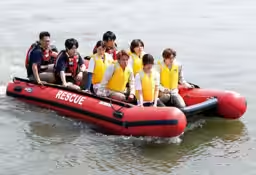
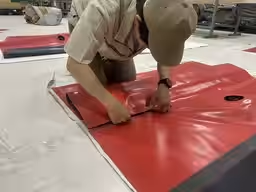
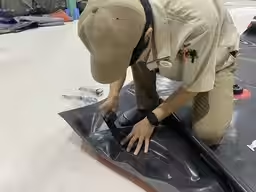
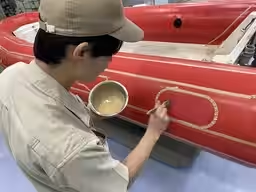
In recent years, the increase in flooding due to climate change has brought a spotlight to the life-saving capabilities of rescue boats. Among those, many are manufactured by Achilles, a company renowned for its dedication to producing these vital crafts nearly entirely by hand in Japan. This article delves into the reasons behind Achilles' commitment to rescuing lives and the stories behind their rescue boat production.
The Evolution of Rescue Operations
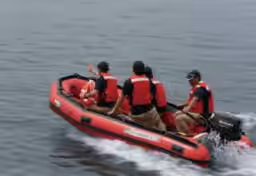
Historically, rescue boats were primarily utilized for traditional water rescues, such as saving individuals drowning in rivers or oceans. However, recent years have seen a shift in focus toward disaster relief, especially during severe weather events where urban flooding occurs. This dramatic change means that the majority of rescue operations we see on our screens today involve rescuers transporting stranded residents rather than saving those in immediate water peril.
As flooding scenarios become more common, it is crucial to understand how to navigate these emergencies effectively. For instance, the Japanese Ministry of Land, Infrastructure, Transport and Tourism notes that once floodwaters surpass knee height (approximately 0.5 meters), walking becomes perilous. Therefore, vertical evacuation, moving to higher ground early, is essential for safety. One common risk is with manhole covers; as excessive water flows into underground sewer systems, strong pressure may dislodge these covers, creating dangerous hidden sinkholes.
Preparing for Increasing Flood Risks
The increasing prevalence of flooding has led many municipalities to reconsider their disaster preparedness strategies. In Japan, there are no standardized national requirements for the number of rescue boats that communities must have. Instead, local governments determine their capacity based on specific regional needs. The recognition of urban flooding, which occurs even far from rivers due to overwhelmed drainage systems, has compelled more communities to invest in adequate rescue resources.
Moreover, the advent of technological solutions, such as drone integration, marks a significant advancement in flood rescue operations. Drones can quickly survey vast areas from the air, providing critical information that speeds up rescue efforts. This synergy between drones and rescue boats exemplifies how modernization plays a crucial role in emergency responses.
Achilles’ Heritage in Rescue Craft Development
For over 60 years, Achilles has been instrumental in advancing water rescue technologies. The genesis of their rescue boats can be traced back to World War II when they developed rubber-coated fabric technology for gas masks. After the war, that same technology evolved into rain boots and eventually, rescue boats around the 1960s, spurred on by orders from outdoor businesses looking for leisure boats. The increasing impact of climate change pivoted their focus, leading them to the rescue boat sector in 2006.
Innovations in Rescue Boat Design
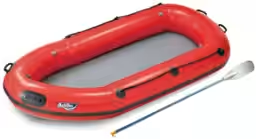
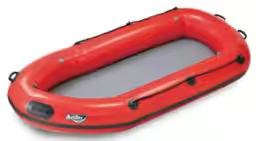
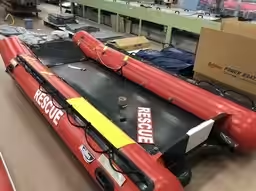
Achilles offers several models of rescue boats. Notable among these is the DEIB-310, designed for immediate use, featuring an inflatable floor for simplicity and maneuverability with paddles instead of oars to facilitate quick boarding and disembarking. The primary craft, FRB-380, is reinforced with high-strength Kevlar® fibers, allowing rapid deployment and improving durability based on lessons learned from the 2011 Tōhoku earthquake.
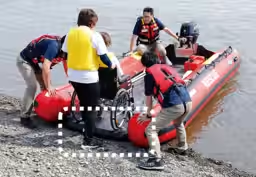
The latest model, LCT-400, emerged following the catastrophic Typhoon Hagibis in 2019. It was designed with a bow ramp to allow easy access for rescue operations, addressing needs voiced during the disaster when rescuers struggled with access to vulnerable populations, such as the elderly and pregnant individuals.
Testing Their Crafts in Real-Life Situations
The true testament to Achilles’ boats lies in their field performance. A poignant story involves the Joso Fire Department in Ibaraki Prefecture, where their rescue boats deployed during the unprecedented Kanto-Tohoku torrential rain in 2015. The rescue team had been maintaining and using their Achilles-boats since 2002, leading to successful rescues when floods occurred over a decade later, underlining the importance of preparedness and reliable equipment.
Beyond Disaster Relief: Unique Applications
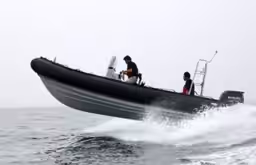
Interestingly, Achilles rescue boats have found alternative uses, such as in junior yacht clubs, where coaches use them to supervise young sailors amid rigorous training sessions. Facing harsh conditions has pushed Achilles to refine their designs continually, resulting in boats that now cater to various applications beyond just disaster situations. Furthermore, they can repair boats over 30 years old upon request, showcasing their commitment to sustainability and community support.
Global Reach and Continued Commitment
Achilles boats are not just limited to Japan; their ARD-730 model, intended for patrol duties, has been utilized in numerous countries through overseas development assistance (ODA), highlighting the company's commitment to humanitarian efforts worldwide.
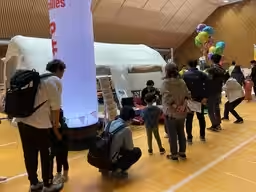
Achilles emphasizes the importance of creating rescue boats that are genuinely effective in dire circumstances. They often participate in disaster preparedness drills to familiarize the community with their products, striving to raise awareness about water safety and rescue measures. By ensuring the highest quality craftsmanship, Achilles hopes to be a reliable partner when the unexpected happens.
In conclusion, Achilles’ dedication to creating life-saving rescue boats represents a significant commitment to disaster relief efforts and community resilience. As the frequency of disastrous flooding increases, the importance of such crafts in ensuring public safety cannot be underestimated.


Topics General Business)

【About Using Articles】
You can freely use the title and article content by linking to the page where the article is posted.
※ Images cannot be used.
【About Links】
Links are free to use.