



Understanding Savings Trends: Japanese Survey Reveals a Stark Divide in Saving Habits
Understanding Savings Trends in Japan
In recent years, the financial landscape in Japan has been characterized by increasing inflation and concerns about future economic stability. As a result, the interest in asset formation has surged. However, the reality of how many individuals are actually saving, their goals, and the strategies they employ for saving money remains largely unexamined. To shed light on this issue, LENDEX, a company based in Shibuya, Tokyo, conducted a comprehensive survey on monthly income and saving behaviors, focusing on a diverse group of 300 individuals aged between 20 and 60.
Key Findings from the Survey
According to the survey results, around 19% of respondents reported saving no money at all each month. In stark contrast, 16% managed to save over 100,000 yen monthly, showcasing a clear division in saving habits among the population. Notably, around 45% of participants admitted to having no specific saving goals, revealing varying levels of financial consciousness.
Monthly Income Distribution
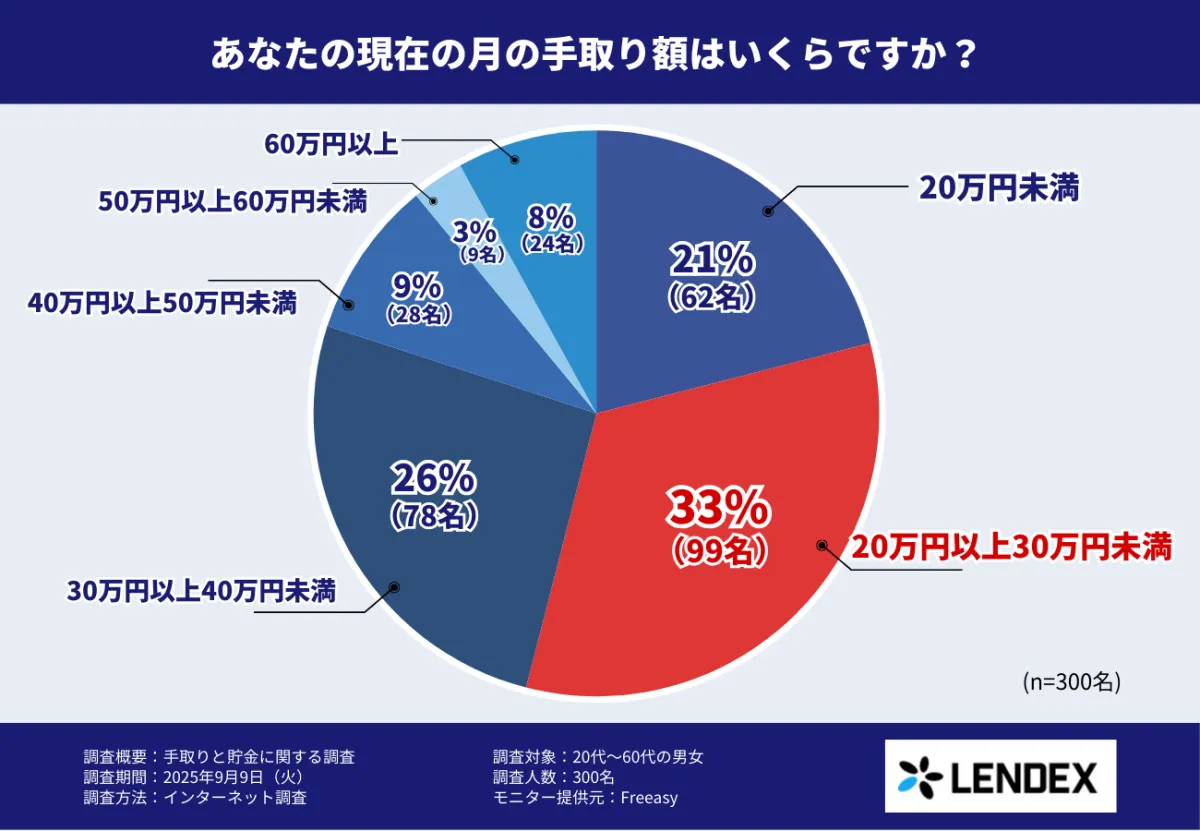
The survey gauged monthly take-home income, revealing that the most common income bracket was between 200,000 and 300,000 yen, accounting for 33% of respondents. Following this group, 26% earned between 300,000 and 400,000 yen, while 21% had incomes below 200,000 yen. This data indicates that nearly half of the surveyed individuals earn less than 300,000 yen a month, underscoring the challenges in saving when faced with living expenses. Particularly alarming is the fact that about 20% earned less than 200,000 yen, which may severely limit their ability to save. Conversely, there is a small contingent, about 20%, earning above 400,000 yen, which suggests that income disparities significantly affect saving capabilities.
Monthly Savings Amounts
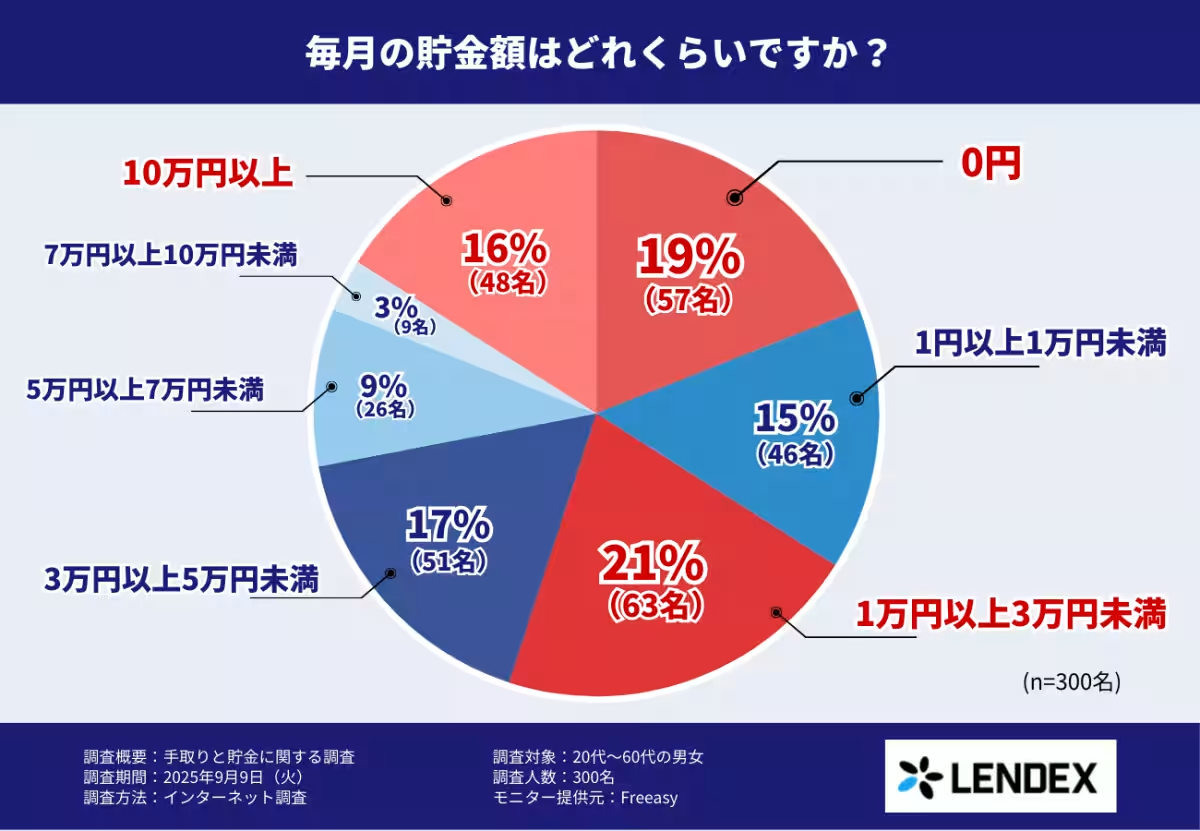
When asked about their monthly savings amounts, 19% reported saving zero yen, highlighting a worrying trend of financial strain for a significant portion of the population. The largest group, accounting for 21%, saved between 1,000 and 30,000 yen monthly, while the higher savings rate, over 100,000 yen, was recorded by 16% of respondents. This stark contrast illustrates a growing polarization in savings behaviors—those struggling to save versus those successfully setting aside substantial amounts each month.
The fact that 19% of participants claim to have no savings indicates a precarious situation, with many unable to prepare for future financial needs. In contrast, the 16% that save over 100,000 yen monthly potentially build significant assets annually, giving them a considerable advantage in terms of long-term wealth generation.
Savings Rates Analysis
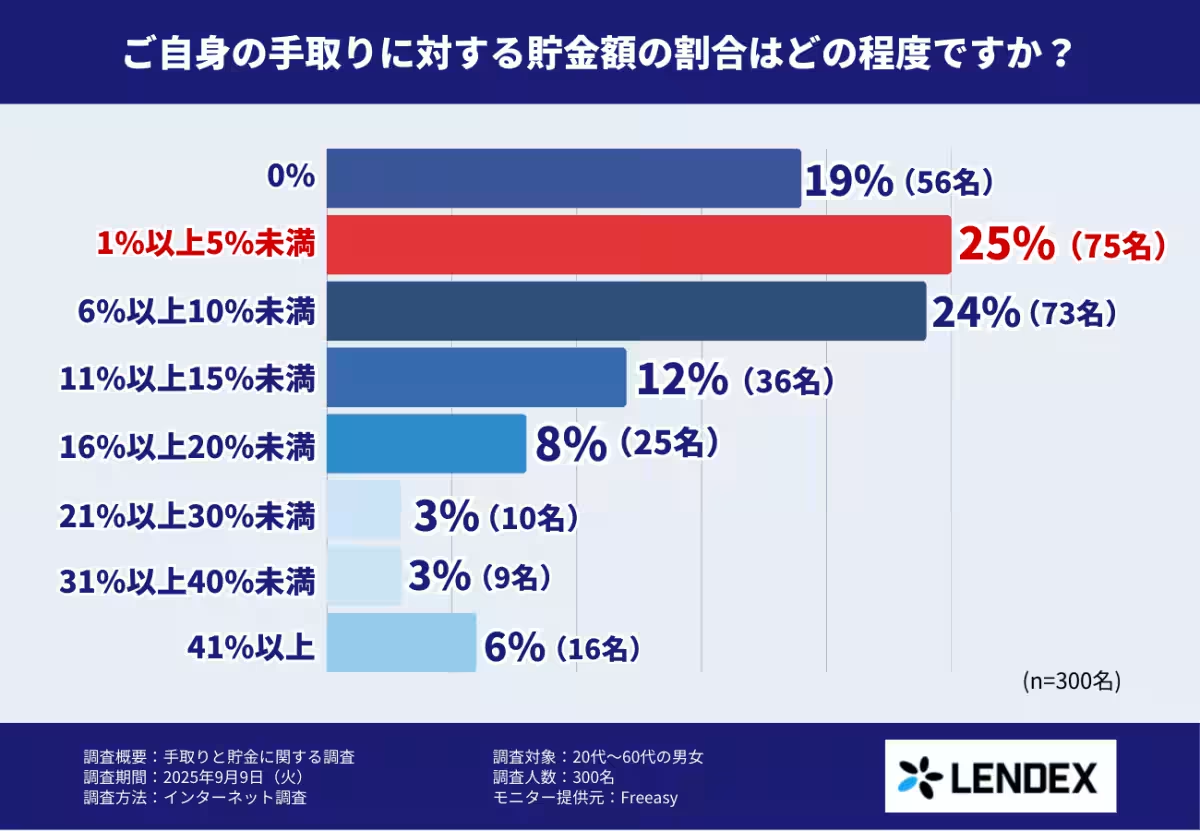
Respondents were also questioned regarding their savings rates relative to their income. The most common response, 25%, indicated a savings rate of between 1% and 5%. This was closely followed by 24% saving between 6% and 10%. Notably, 19% responded that they had a savings rate of 0%, emphasizing that financial pressures prevent many from saving at all.
Summary of Insights
The results of this survey illuminate the stark divide in saving trends within Japanese households. While there exists a subset that cannot manage to save at all, there is also a group committed to diligently saving every month. Furthermore, the findings reveal a disparity in financial goals, from those lacking any saving aspirations to individuals aiming to accumulate over 10 million yen in savings over time.
This contrast underscores the necessity for strategic financial planning rather than relying solely on daily savings or cash hoarding to ensure future financial security. Exploring efficient methods to enhance savings, such as investment strategies, becomes increasingly crucial in assuring household stability and preparing for future needs. As individuals navigate their financial futures, balancing sensible saving habits with strategic money management will play an essential role in achieving economic resilience.
About the Survey
- - Survey Date: September 9, 2025
- - Methodology: Internet-based survey
- - Target Audience: Individuals aged 20 to 60
- - Sample Size: 300 respondents
- - Provided by: Freeasy
Exploring Investment Options through Crowd Lending
As many start to think about investments, one promising opportunity is crowd lending, which allows investors to start small and aim for stable returns. Crowd lending enables investors to lend money to businesses and projects, generating interest income while minimizing risk through diversification across various investments.
For those unsure about where to begin with investments, crowd lending presents a low-barrier entry point. By starting with a small amount, individuals can take the first steps toward building their assets. Let LENDEX guide you in your financial journey at LENDEX.

Topics Financial Services & Investing)
【About Using Articles】
You can freely use the title and article content by linking to the page where the article is posted.
※ Images cannot be used.
【About Links】
Links are free to use.