



Huawei SPN Assists Yunnan Power Grid in Building a Next-Gen High-Speed Network for Clean Energy
Introduction
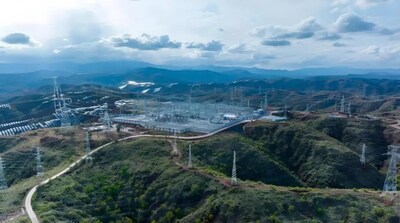
Yunnan Power Grid Co., Ltd. plays a pivotal role as a key energy provider in Southwest China. With the growing demand for clean energy transmission and the urgency for smart grid solutions, they faced significant challenges due to the region's complex terrain and extensive transmission lines. To tackle these formidable hurdles, Yunnan Power Grid has partnered with Huawei, employing the Super Packet Network (SPN) technology to enhance their communication systems.
The Necessity of Innovation
The increasing volume of data and the complexity of service scenarios have intensified the need for a robust communication network. Yunnan Power Grid's ambitious plans are laid out under its 14th and 15th Five-Year Plans, emphasizing the urgent requirement for digital upgrades to support large-scale clean energy initiatives. The traditional methods of energy transmission could not meet the evolving complexities, leading to the quest for innovative solutions like Huawei's SPN.
Evolution of the SPN
Since the initiation of the pilot project in 2022, Huawei's SPN has transitioned from a technical trial to a standard architecture that the entire province of Yunnan can adopt. This strategic deployment in cities such as Zhaotong and Pu'er not only lays the groundwork for future developments but also promises to unlock the full potential of the next-generation network infrastructure.
Bandwidth Bottlenecks Resolved
One of the defining achievements of the SPN rollout is the significant leap in bandwidth capabilities. By breaking through the previous bandwidth limitations of 155 Mbit/s, the SPN network can now support speeds soaring up to 10 Gbit/s. Additionally, at key access points, bandwidth has been elevated to 1 Gbit/s, in alignment with China Southern Power Grid standards. Such improvements facilitate high-speed connections vital for advanced services like real-time video surveillance, elevating operational efficiency across the board.
Enhanced Maintenance Efficiency
The SPN solution has proven instrumental in optimizing operational maintenance. The real-time monitoring capabilities of Huawei's technology facilitate swift identification of issues, substantially reducing inspection times from 30 minutes to just 3 minutes. Maintenance schedules have seen a drastic reduction from over 7 hours to approximately 21 minutes, showcasing a 45.54% drop in facility visits within six months. This efficiency not only reflects direct time savings but also promises lower maintenance costs linked to SDH equipment failures.
Intelligent Service Transport
The intelligence level of service transport has notably improved. Huawei's SPN accommodates a diverse range of energy services, including latency-sensitive teleprotection and high-traffic video streaming, ensuring reliable data transmission. Utilizing FlexE technology enables strict service isolation while optimizing bandwidth reuse, further enhancing the reliability and efficiency of the network. With dual IPv4/IPv6 support, the SPN allows flexible local forwarding and easy integration with IoT frameworks for monitoring and grid management.
Long-Term Investment Protection
Huawei's SPN not only addresses immediate needs but also safeguards future investments. As bandwidth requirements grow, transitioning to even higher speeds—ranging from 25 Gbit/s to 400 Gbit/s—can be seamlessly managed through low-cost upgrades, negating the need for extensive infrastructure overhauls.
Conclusion
The strategic collaboration between Yunnan Power Grid and Huawei highlights a significant advancement in the energy sector, pushing the boundaries of communication technology for optimized clean energy management. With the SPN technology now deployed, the region is poised for a transformative journey towards a smarter, more efficient energy future. To find out more, visit their official site at Huawei's Case Studies.
Topics Telecommunications)
【About Using Articles】
You can freely use the title and article content by linking to the page where the article is posted.
※ Images cannot be used.
【About Links】
Links are free to use.