




Current Status and Future Projections of Lifestyle Disease Management Services in Japan
Overview of Lifestyle Disease Management Services in Japan
In recent years, the importance of managing lifestyle diseases has become more critical in Japan due to its aging population and declining birth rates. Seed Planning Co., Ltd., located in Bunkyo-ku, Tokyo, has conducted extensive research into the market for lifestyle disease management services. This study included interviews with various service providers and surveys of users, resulting in insightful analysis of current market trends and future projections.
Background and Purpose of the Study
Lifestyle diseases, including hypertension, diabetes, and dyslipidemia, require long-term management including regular doctor visits, medication adherence, dietary changes, and exercise. These conditions are also closely linked to severe health risks such as stroke, kidney disease, and dialysis. Consequently, they have become central issues in healthcare policy aiming at cost control and the extension of healthy lifespans. The services to prevent and manage lifestyle diseases support traditional medical diagnoses and treatments, highlighting their vital role in today's healthcare landscape.
Key Findings of the Research
1. By 2026, the market for lifestyle disease management services is projected to reach approximately ¥126.5 billion.
2. Continuous glucose monitoring devices and specified health guidance services are expected to drive market expansion.
3. The market structure showcases a mix of mature and growth sectors.
4. Each service's growth potential and market characteristics were meticulously analyzed.
Market Trends
Market Projections
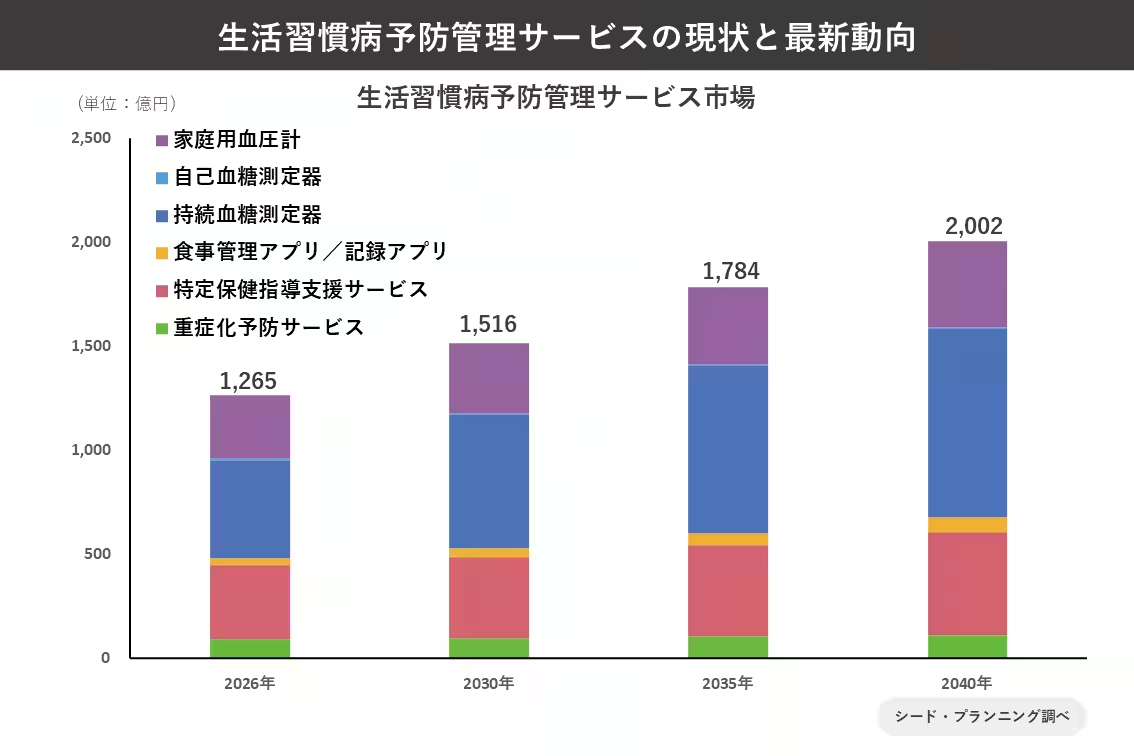
The research estimates that the market will grow from around ¥126.5 billion in 2026 to about ¥151.6 billion by 2030, reaching ¥178.4 billion by 2035 and approximately ¥200.2 billion by 2040. This growth will primarily be fueled by advancements in continuous glucose monitoring devices and mandated health guidance initiatives.
The transition from self-monitoring blood glucose devices to continuous glucose monitors is particularly notable, as these devices are poised to occupy a leading market position due to their convenience and effectiveness. On the other hand, the specified health guidance services remain reinforced by insurance mandates. Despite a decrease in the number of eligible participants, rising implementation and completion rates suggest ongoing market growth.
Mature Markets vs. Growth Segments
While household blood pressure monitors are established in a saturated market, their growth is expected to stem more from replacement demand and rising prices rather than increased unit sales. In contrast, usage of self-monitoring blood glucose devices appears to be on the decline due to users shifting towards continuous monitoring options, although some demand persists among insulin-dependent patients and those needing regular glucose monitoring.
Furthermore, diet and nutrition management apps show a stable user base; however, revenue generation remains challenging due to prevalent free and low-cost models. Although the market is anticipated to grow, price adjustments attributed to inflation may contribute more significantly to revenue increases compared to substantial user acquisition.
Severe prevention services, which relate closely to specified health guidance, have potential for expansion but are expected to grow at a moderate pace due to regulatory constraints and financial limitations faced by insurance providers.
Summary of the Survey
Target Audience:
- - Nationwide coverage
- - Ages 15-99
- - Both sexes
Methodology:
- - Online research focusing on public documentation
- - Engagement with nine key stakeholders, including device manufacturers and health service providers
- - Surveys targeting lifestyle disease patients (screening responses: 770, complete responses: 450)
Survey Timeline:
Conducted from May to June 2026
Conducting Organization:
Seed Planning Co., Ltd.
Research Items
- - Patient realities, including treatment and management habits
- - Awareness and usage of devices and services
- - Epidemiology and treatment trends related to targeted diseases
- - Analysis of pertinent policies (medical remuneration systems, etc.)
- - Device/service-specific analyses covering household blood pressure monitors, glucose meters, continuous glucose monitors, and various management apps, reporting services, and severe prevention services
- - Market size estimations
Conclusion
The future of lifestyle disease management services in Japan seems promising, with forecasts indicating substantial market growth driven by innovative monitoring technologies and proactive health guidance strategies. As the population ages and demands for effective management solutions rise, this sector is likely to play a vital role in shaping the overall health landscape in the country. For further details regarding this research, you can refer to Seed Planning's official page: Seed Planning News.

Topics Health)
【About Using Articles】
You can freely use the title and article content by linking to the page where the article is posted.
※ Images cannot be used.
【About Links】
Links are free to use.